New Arrivals — Browse our catalog for the latest authentic Japanese sword arrivals. Browse →
Articles explaining tachi, katana, wakizashi, tanto, naginata and the geometry of the blade.
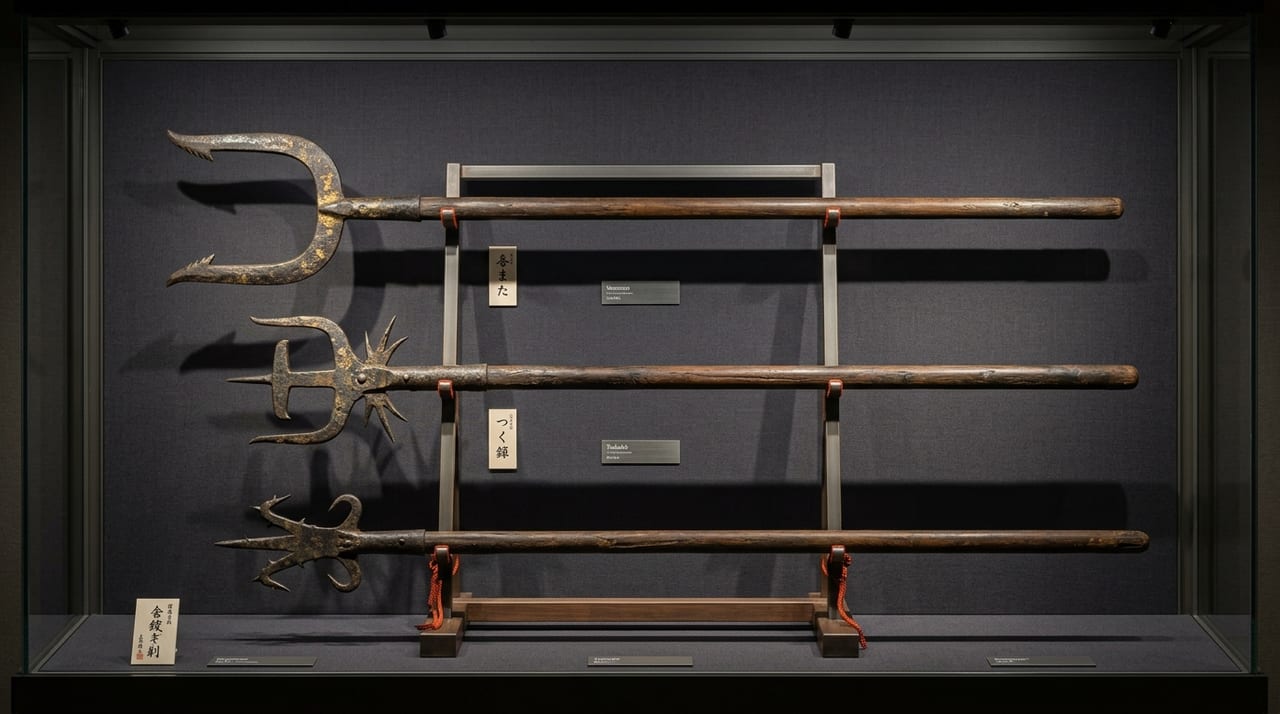
An explanation of the structure and use of the mitsu dōgu (sasumata, tsukubō, and sodegarami) used by the Edo city police to subdue sword-bearing opponents without injury, along with their relationship to the jitte and sword culture.
A practical guide organizing the key criteria for acquiring a tantō, covering purpose, form and construction, jigane and hamon, condition, mei and accompanying documents, and budget, in that order.
This article examines Japanese swords and Western swords across four axes: form, materials and forging, how they are worn, and appreciation culture.
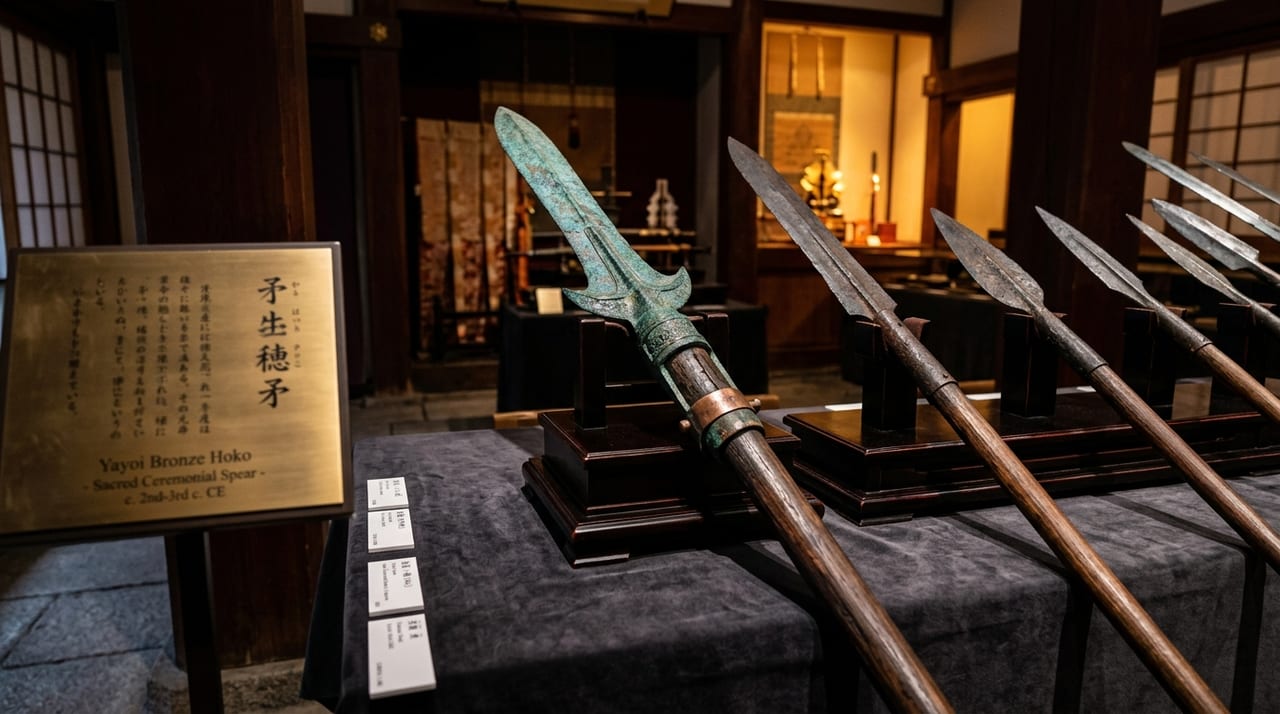
Hoko is a double-edged pole weapon fixed to the tsuka via a fukuroho, and is a precursor to yari and naginata. This article organizes the spellings of hoko, the difference from yari, and the history from Yayoi-era bronze hoko to the Naginataboko of the Gion Festival.
An introduction to how Edo-period kenjutsu schools such as Jigen-ryu, Tennen Rishin-ryu, and Niten Ichi-ryu each shaped their own approach to the sword.
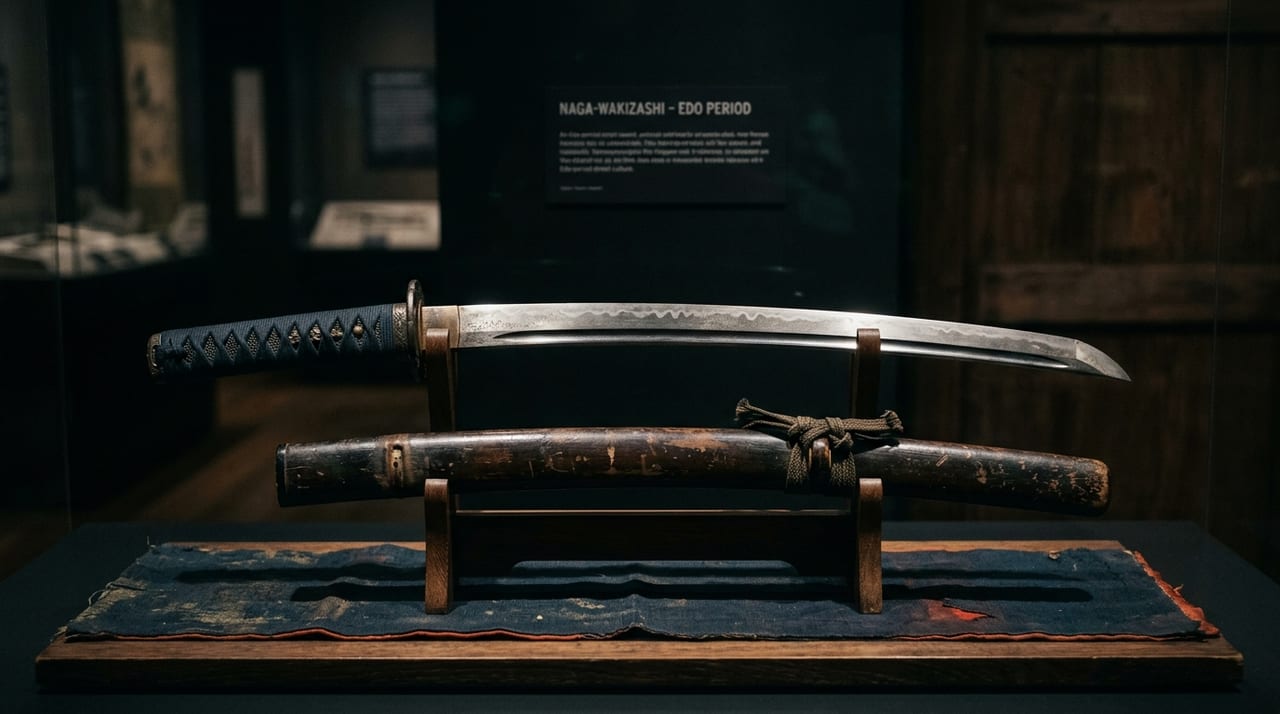
How dōchū-zashi and naga-wakizashi emerged as oversized wakizashi for Edo-period travelers and gamblers, and what their mountings reveal.
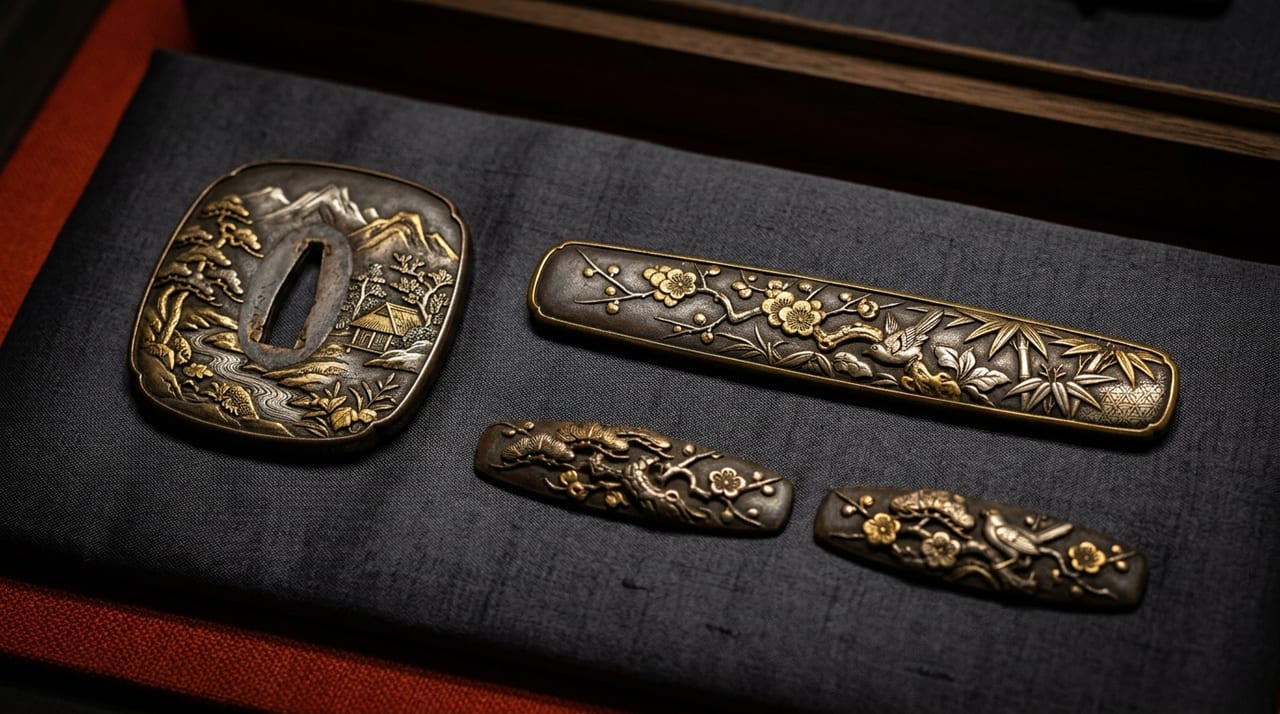
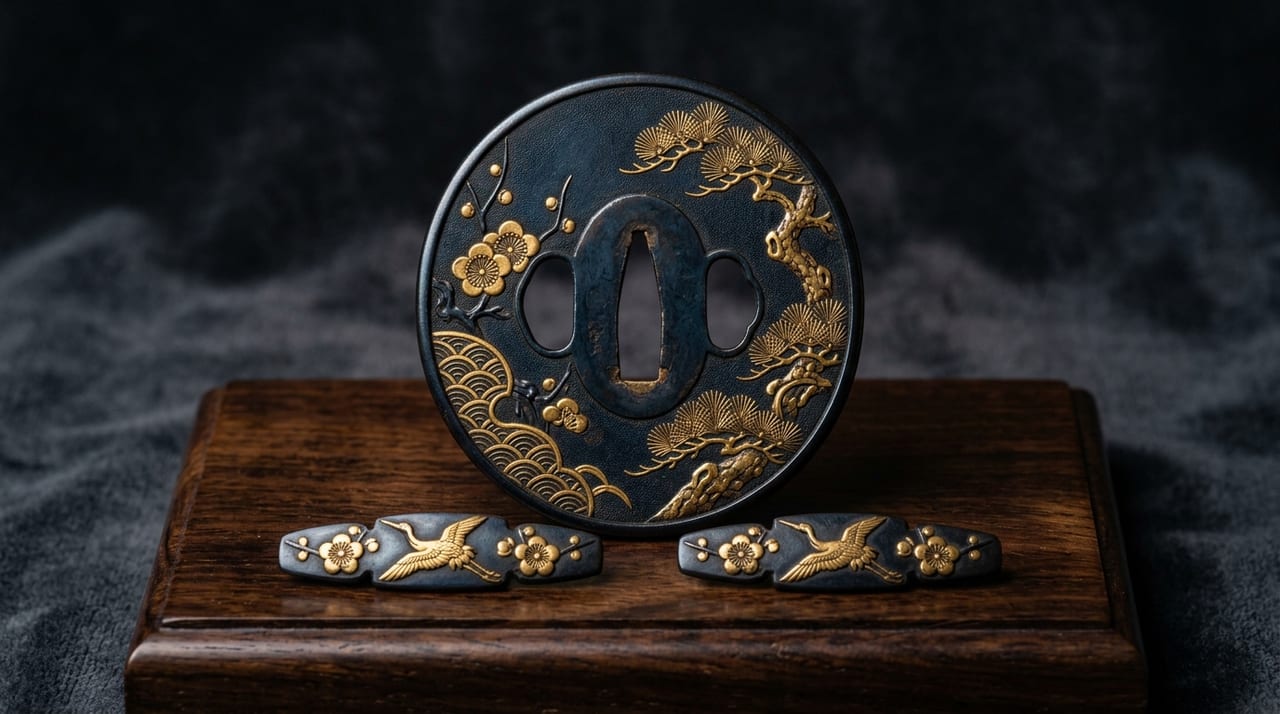
An overview of mitokoromono — the classification of kozuka, kogai, and menuki as a matched three-piece set of sword fittings — centered on the Goto family lineage of shogunal metalworkers.
This article examines the principles behind the strength of Japanese swords — the composite structure of kawagane and shingane — how manufacturing methods changed across kotō, shintō, and guntō, and what has been measured in the absence of destructive testing.
In iai and battōjutsu when pursuing maximum speed, the "kaeshi" (rebound force) and "hikkari" (friction phenomenon) that arise as the blade leaves the saya play a decisive role. These physical phenomena are precisely controlled by the blade's sori, thickness, and tip geometry.
Where exactly are mihaba (blade width) and kasane (blade thickness) measured on a Japanese sword? This article organizes, in accordance with explanations from the Japanese Sword Museum and official materials, the measurement points for nagasa (blade length), sori (curvature), motohaba, sakihaba, moto-gasane, and saki-gasane; the items recorded on registration certificates; and how to read the profile by period from these dimensions.
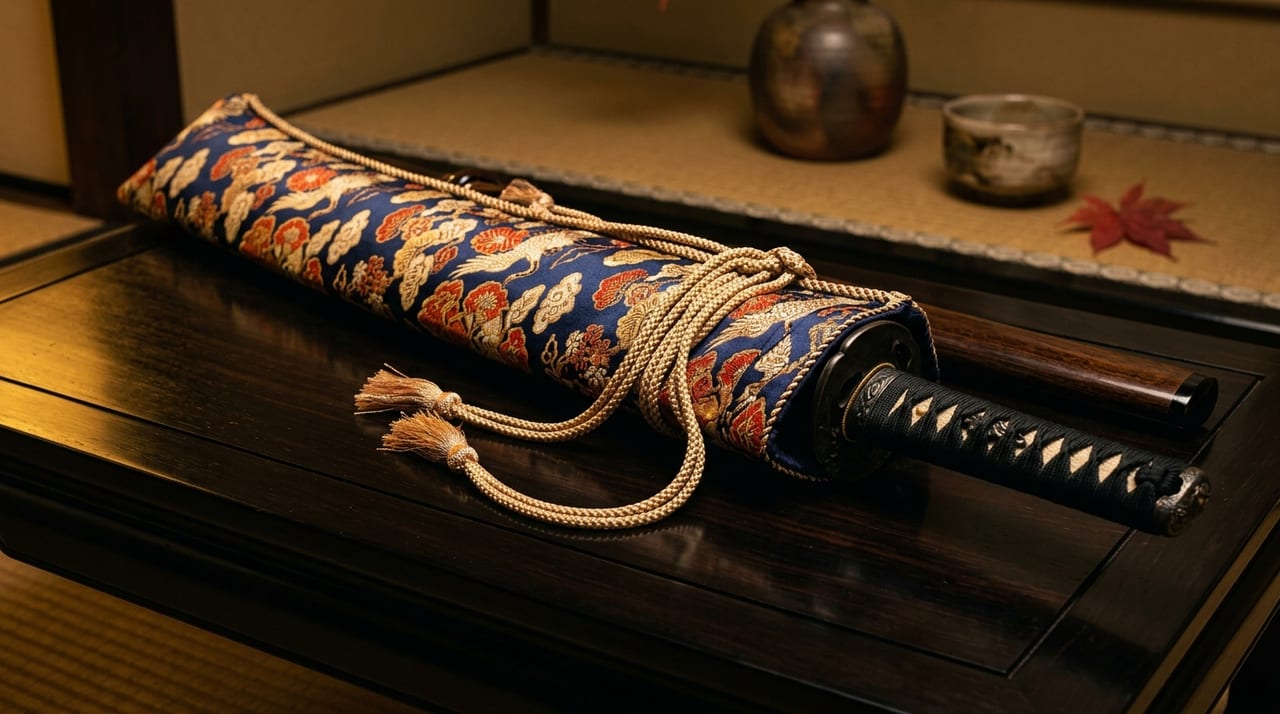
An overview of tōbukuro, cloth bags for wrapping and carrying nihontō, organized by material, use, and historical background.
A reference guide that organizes the specialized kizu terminology appearing in kanteisho and sales descriptions, to help buyers and viewers correctly understand the impact on appraisal.
An explanation of monme, the traditional unit used to express the weight of nihontō and tōsōgu, including its gram conversion and a reference guide to modern blade weights.
The mamorigatana has been used both as a gift to celebrate birth and as a tool to protect the body of the deceased during funerary rites. This article explains the culture of swords as wards against evil — a dimension of sword culture distinct from nihontō as works of art.
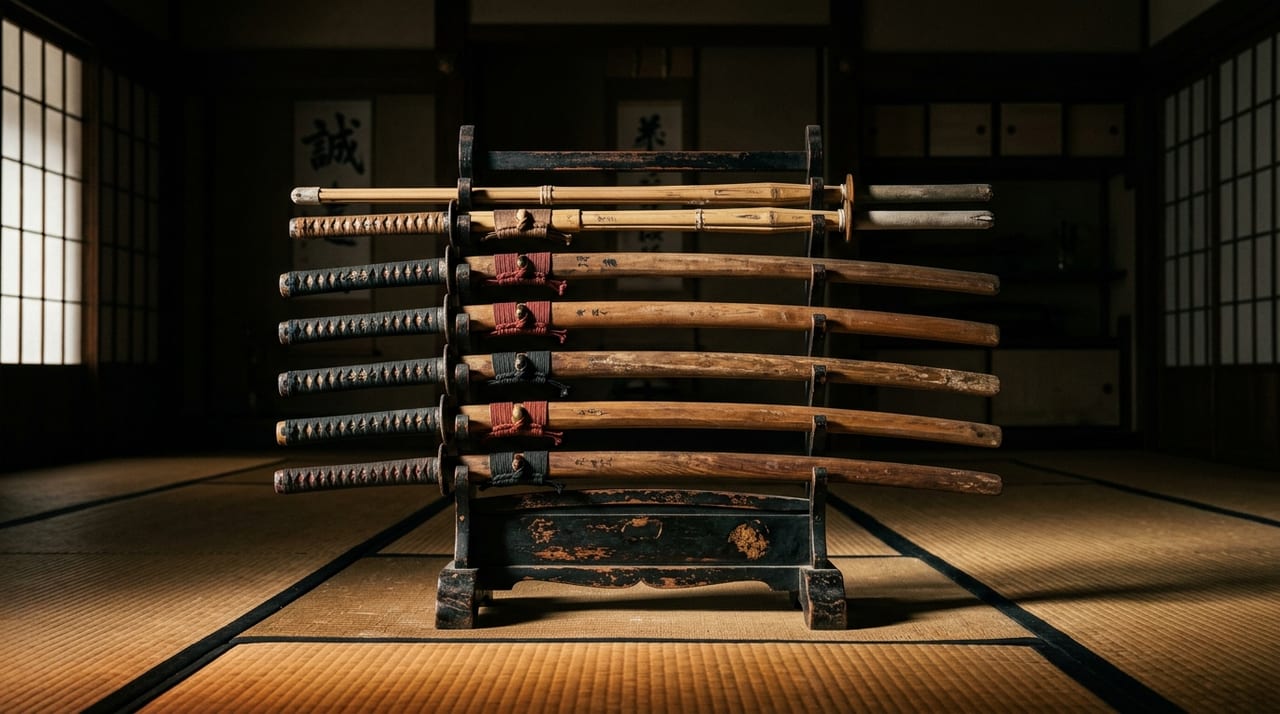
On choosing practice and sword equipment for iai, kendo, and naginata, and practical maintenance, according to one's training stage in modern martial arts
The siege warfare of the Siege of Osaka (1614–1615) demonstrated that long uchigatana were disadvantageous in confined spaces. This insight fed back into the market, and the article explains the process by which tōkō pursued designs that secured cutting performance and structural integrity even at shorter nagasa — the process by which the uchigatana form of the early Edo period came to be established.
The mune is the ridge running along the back of the blade and is classified into four types: iori-mune, maru-mune, kaku-mune, and mitsu-mune. This article explains how the shape of the mune——which reflects the technical traditions of sword schools and the aesthetic preferences of each era——serves as a clue for estimating a sword's attributed school and period of production, and covers the practical aspects of appreciation and kantei.
Moroha-zukuri is a special tsukuri-komi form in which the blade has cutting edges on both faces. This article explains its relationship to the warabite-tō, ken, and hitatsura, and describes period examples from the Kamakura era onward.
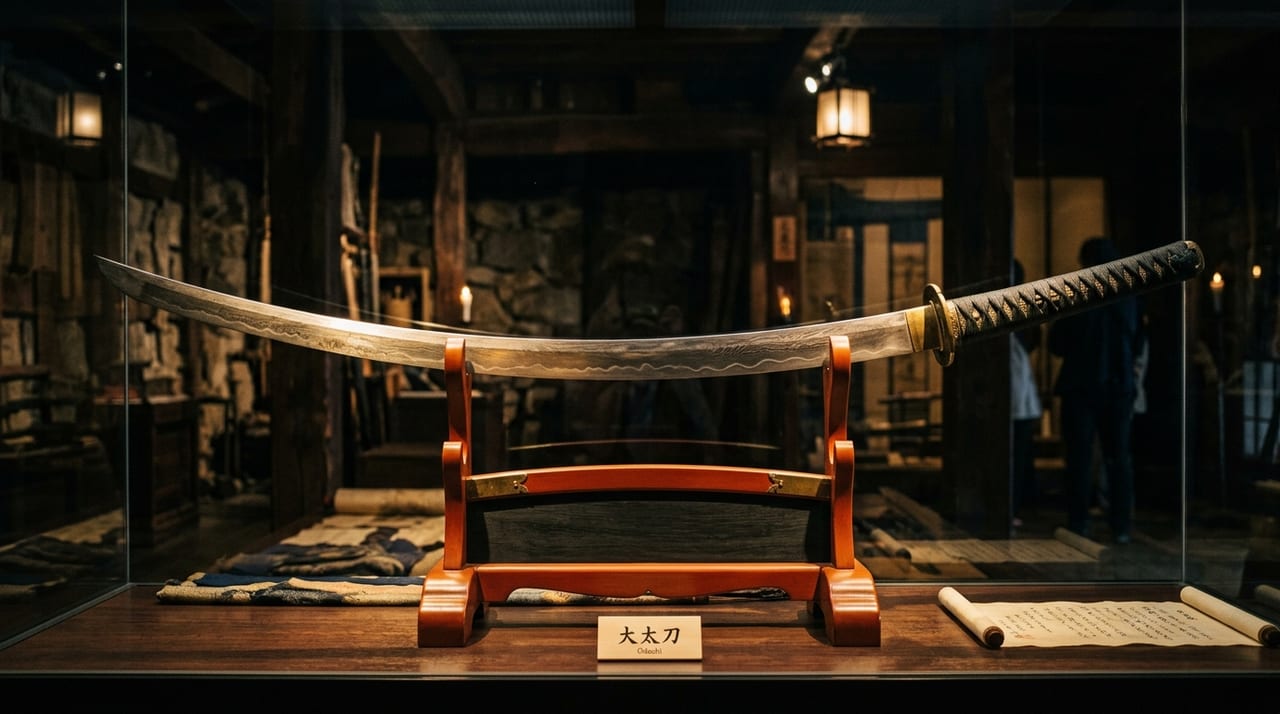
An overview of the classification of ōdachi and nodachi with nagasa exceeding 90 cm, their methods of battlefield use during the turmoil of the Nanbokuchō period, and notable surviving ōdachi.
The kogatana is known as an attached blade fitted into the kozuka of tōsōgu (sword fittings), but it existed as an independent blade even before that association. This article traces the variety in nagasa (blade length), construction, and use, along with its lineage as a bladed weapon.
The nagamaki is a form of Japanese sword distinguished by a tsuka (hilt) roughly equal in length to the blade, and was used on the battlefield by mounted warriors and infantry from the Nanbokuchō through the Sengoku period. This article examines in detail its differences from the naginata and nodachi, notable surviving examples, and the structure of its koshirae (mounting).
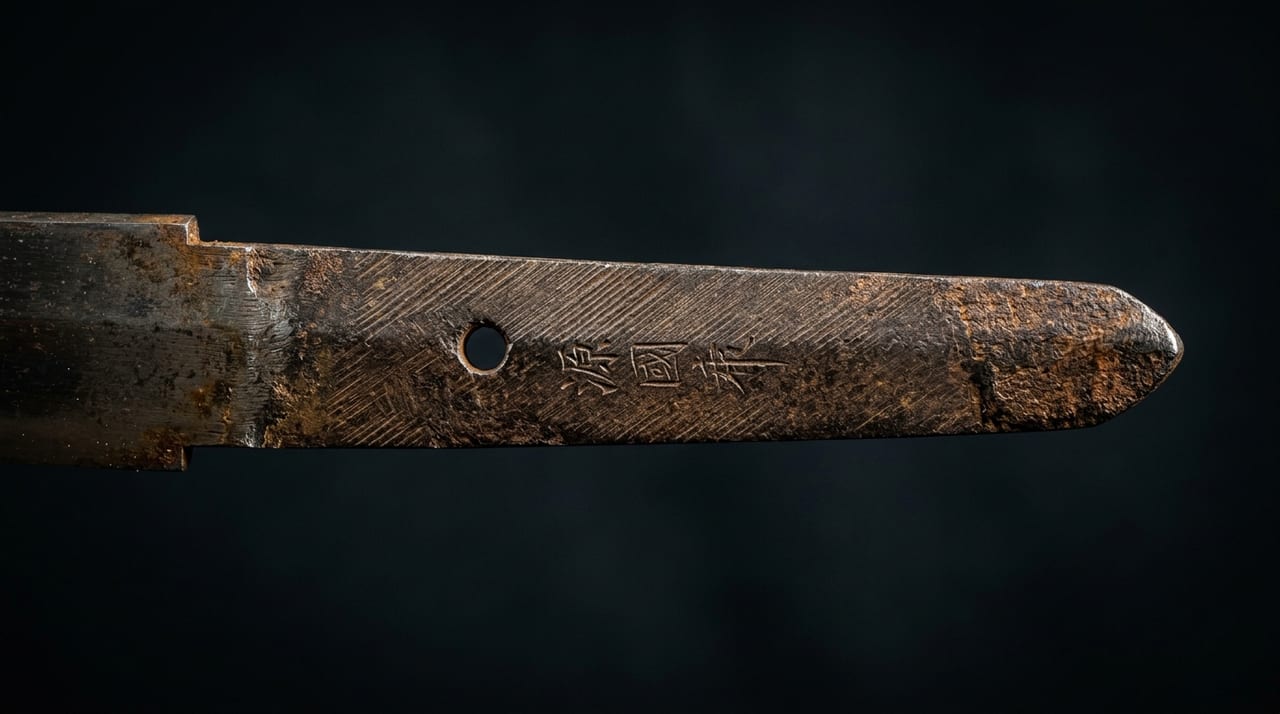
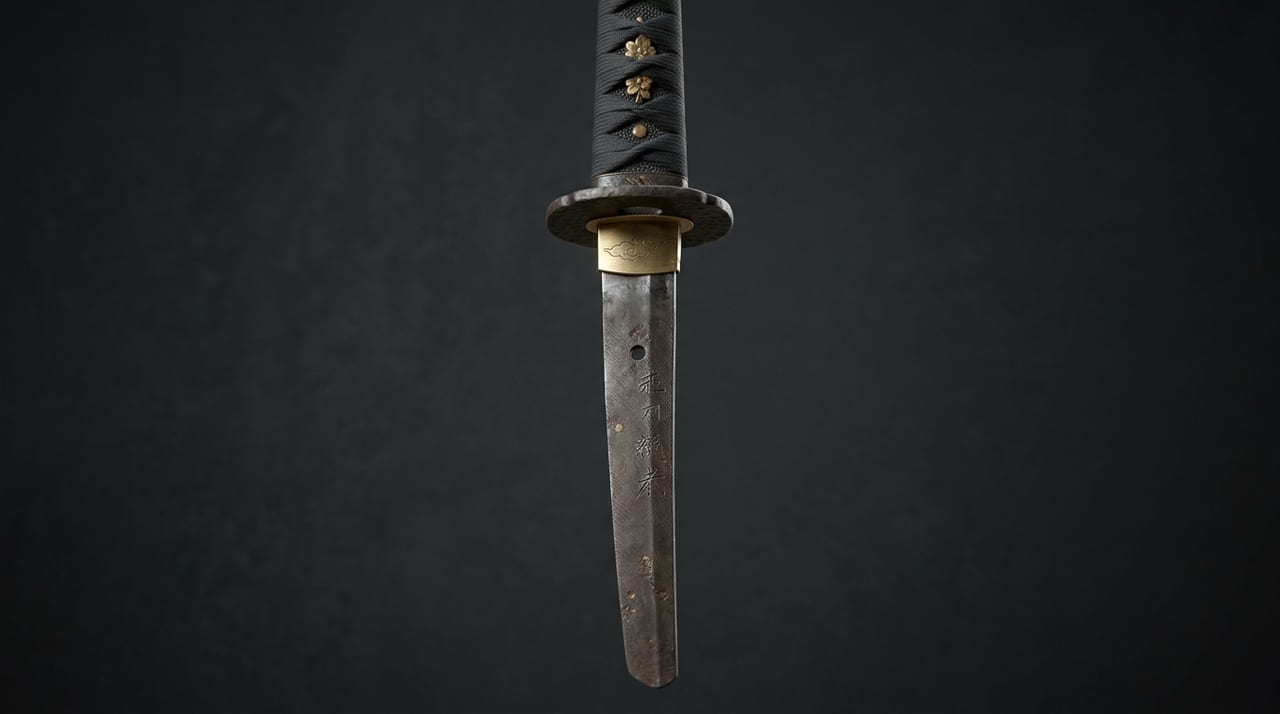
The shapes of the nakagojiri — the terminal end of the nakago — are organized into types such as kurijiri, kengyō, ichimonji, iriyamagata, and furisodegata, and the significance of these as clues for observing a blade's character and for its period and school is explained.
This article examines three distinctive tang (nakago/茎) shapes that depart from the typical contour: kiji-momo-gata (雉子股形), funazoko-gata (舟底形), and tanago-hara-gata (タナゴ腹形). It explains their characteristic profiles and their significance as indicators for determining period and school.
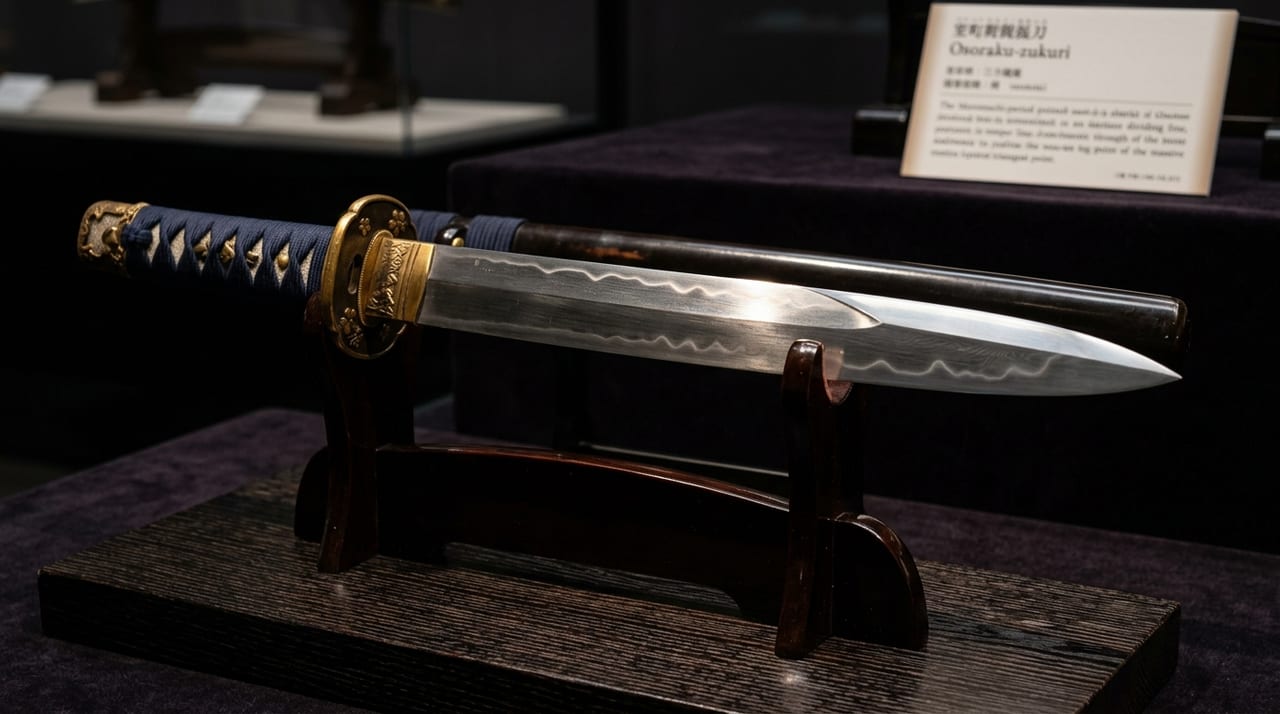
This article covers the form of osoraku-zukuri, in which the yokote drops nearly to the center of the blade and the kissaki extends greatly, the swordsmith Sunshu Sukemune said to be the origin of its name, and the key points of appreciation on tantō and wakizashi.
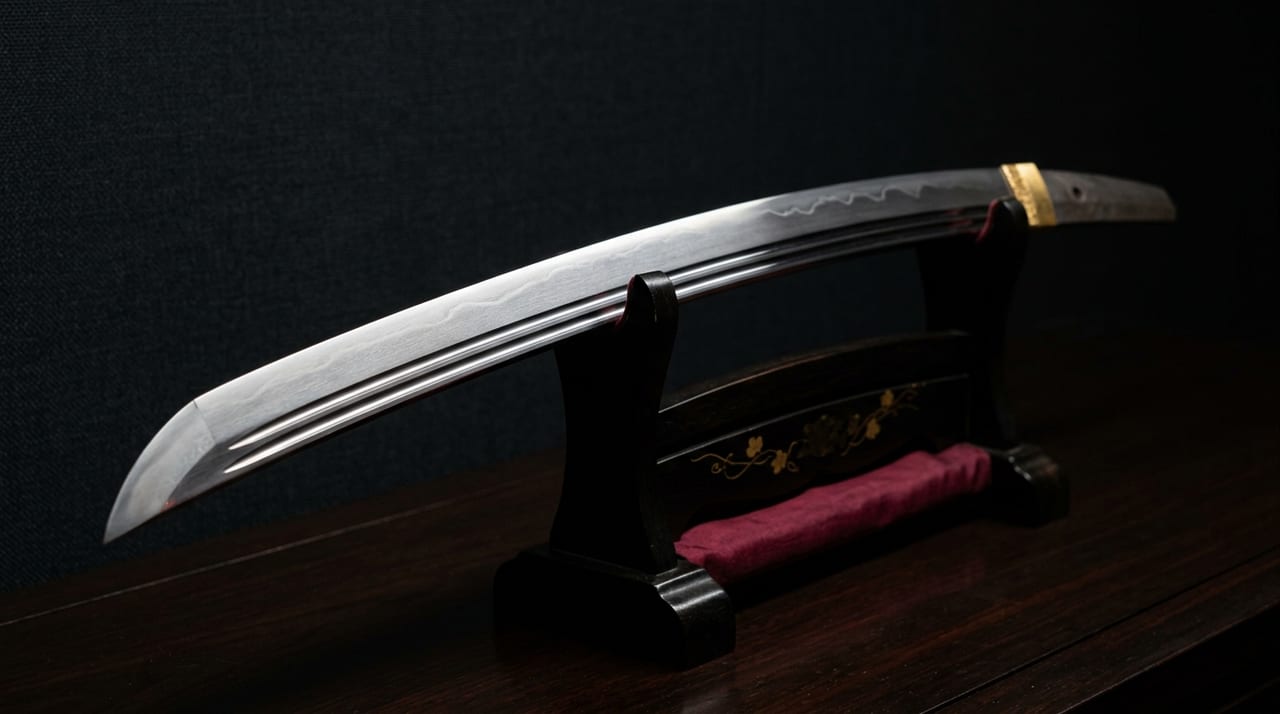
An organized overview of hi, the grooves carved into sword blades, classified by shape into types such as bōhi, futasujihi, koshibi, and tsurehi, along with the treatment of the hijiri (groove terminus) in forms such as kakinagashi and kakitōshi.
This article explains the form of unokubizukuri — a blade construction in which the mune side is shaved down to create a constriction like a cormorant's neck — the background to its frequent appearance in tantō and wakizashi of the Kamakura and Nanbokuchō periods, and the points that distinguish it from kanmuriotoshizukuri.
This article organizes the structure of katakiriha-zukuri — an asymmetric tsukurikomi in which one side is hira-zukuri or shinogi-zukuri and the other side is kiriha-zukuri — along with the significance of the differing cross-sections on each side and key points for observation.
An explanation of the form of the kanmuriotoshi-zukuri blade construction, in which the upper half of the mune is pared away; why it is common in tantō; and tendencies seen in the kotō-period Yamato-den, with a comparison to unokubi-zukuri.
The morphological characteristics of shōbu-zukuri — a blade construction resembling the iris leaf — its differences from shinogi-zukuri and unokubi-zukuri, and tendencies among examples found in Bizen and Mino work of the Muromachi period, organized through observation points of the blade's silhouette.
Classification by blade length. Tachi vs katana, wakizashi vs tanto boundaries, and how to choose.
An explanation of the types, forms, and ritual significance of votive swords (hōnōtō) created and dedicated to shrines and temples. Covering divine-body swords (goshintai-tō), tachi-form votive swords, and small votive swords, with detailed treatment of important extant examples and the history of votive practices.
An explanation of the formal characteristics, design innovations in koshirae, and historical evolution of the bajōzashi — a sword carried by mounted warriors for mounted combat. Delves into the design philosophy of koshi-zori and the practicalities of optimizing the draw.
A thorough explanation of the characteristics of Kiku-ichimonji — which stands at the pinnacle of the Ichimonji school, known as the go-ban kaji of Retired Emperor Go-Toba — together with how to distinguish them in appraisal and the beauty of surviving representative works.
A thorough explanation of the historical position, morphological characteristics, comparison with hira-zukuri, and key points of identification in appraisal for the tantō with its distinctive kiriha-zukuri cross-sectional structure.
The kissaki (blade tip) of Japanese swords changes dramatically according to period and school. This article explains the morphological characteristics of inokubi, o-kissaki, chu-kissaki, and ko-kissaki, and the historical context behind their emergence.
A naginata-gata wakizashi is a sword forged from the outset as a wakizashi with deliberate reference to the forms of the naginata. It follows the morphological characteristics of the naginata: kata-kiriha-zukuri, saki-zori, and a relatively long nakago. This article explains the appraisal differences from naginata-naoshi — reworked pieces produced by shortening a naginata through togi — as well as the background of custom orders in the Edo period and methods of identification in modern trade.
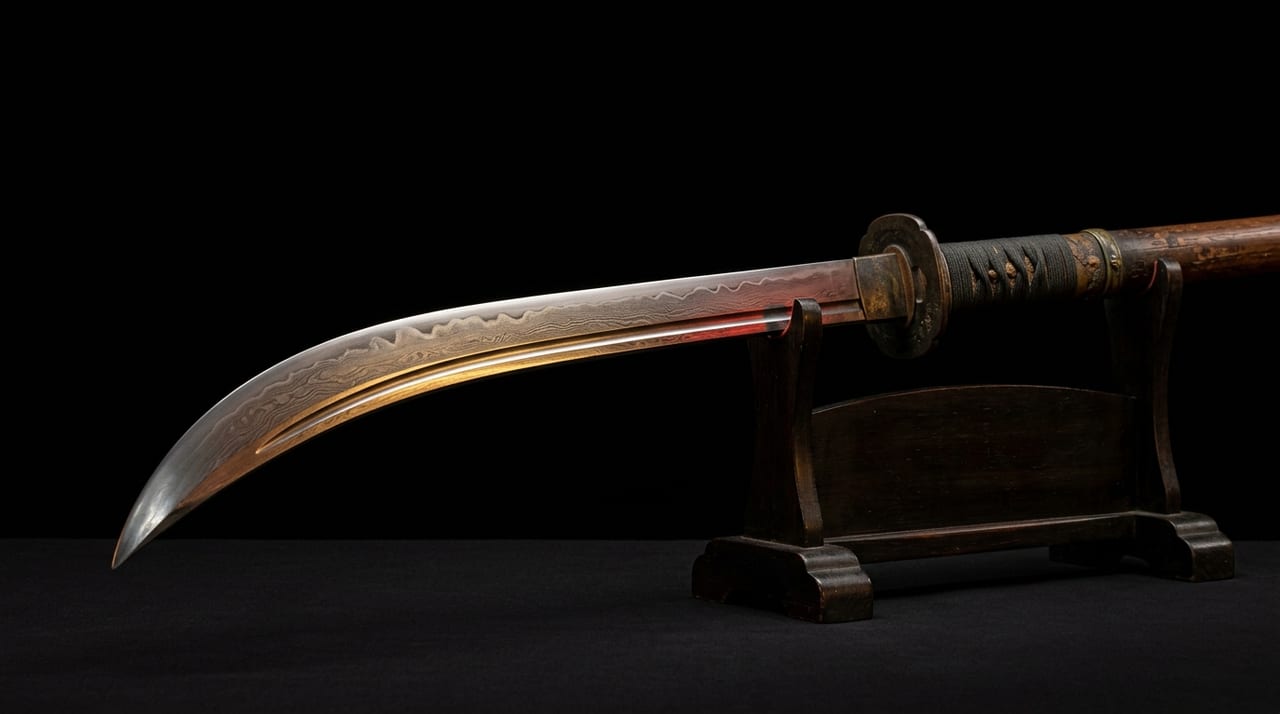
The characteristics of naginata hamon and jigane are explained in comparison with tantō and tachi, discussing the unique polishing challenges that togishi face with long blades and the material appeal of old naginata.
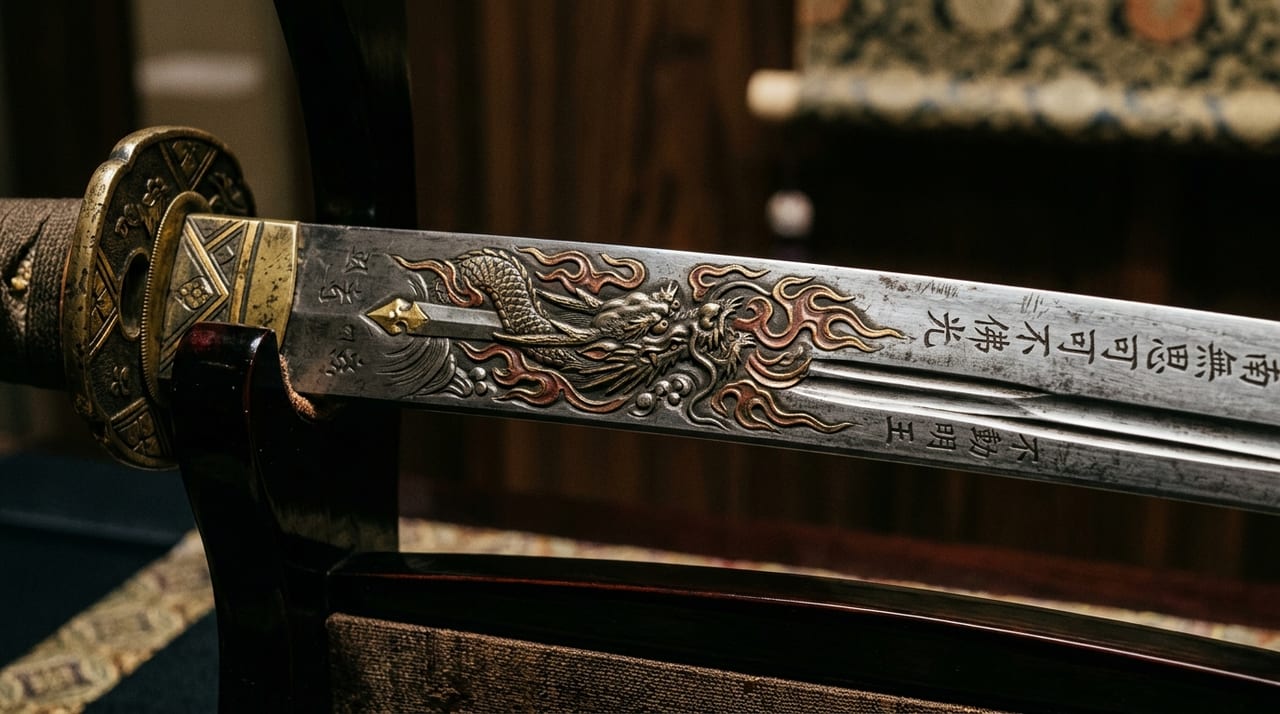
Reading the types of carvings and iconographic meanings applied to Japanese sword blades through the lens of spiritual history and religious history.
An explanation of the system of mythological swords, beginning with the Totsuka-no-Tsurugi (Ten-Fist Sword) that appears in Japan's founding myths. Covers the types, names, and mythological roles of major divine swords in the Kojiki and Nihon Shoki, archaeological and ritual connections to historical swords, and the long-term influence of mythological swords on the spirituality and design of Japanese swords.
Han-tachi koshirae is an intermediate form between tachi koshirae and uchigatana koshirae, a sword-mounting style used as semi-formal attire by court nobles and warriors from the Muromachi through the Azuchi-Momoyama periods. Masterworks demonstrating the advanced skills of metal artisans and lacquerers survive as formal sword-mounted pieces that combine the traditional tachi manner with practicality. This article explains its structure and evaluation.
This article explains the actual methods by which warriors carried their swords in battle during the Sengoku period, examining the relationships among kogusoku, koshigatana, uchigatana, and wakizashi, and clarifying their combinations with armor and their uses.
A detailed explanation of the types, materials, color meanings, school-specific tying methods, and carrying practices of sageo, the braided cord attached to the saya of a nihontō.
The zanba-tō is said to be a sword for "cutting down horses," but historically the boundary between it and the nodachi and ōdachi is unclear. This article explains actual combat use on the battlefield during the Nanbokuchō period, the structure of the nagasa, sori, and tsuka and tactics against horses, and the relationship to extant votive swords.
A detailed examination of the jintachi's physical characteristics, ceremonial significance, decorative mountings, and the masterpieces that survive to this day.
A comprehensive examination of sori (反り), the curvature types that define Japanese sword forms. Presents the expert authentication definitions of three principal categories—koshizori (腰反り), nakasori (中反り), and sakizori (先反り)—together with the historical periods and tactical contexts in which each developed, forging techniques for controlling sori, and the influence of sori variation on sword valuation. An in-depth exploration of the Japanese sword world through this singular, defining element.
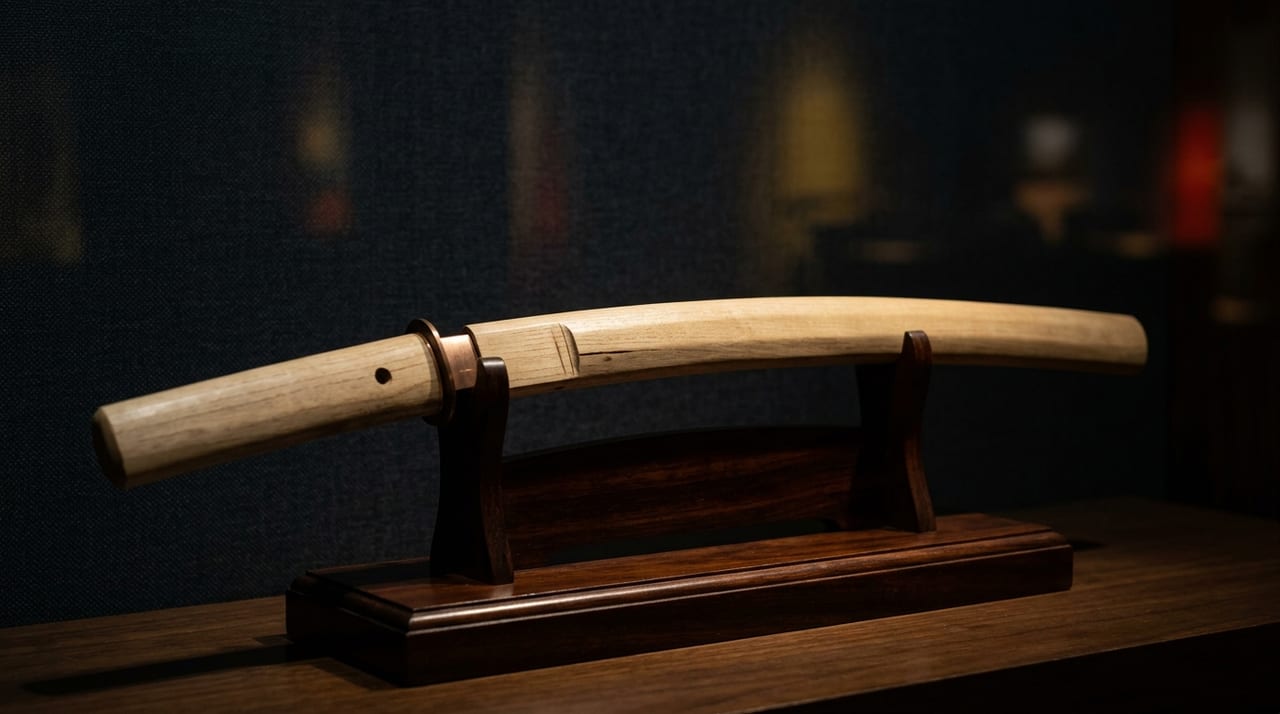
This article explains the role and production process of shirasaya (plain storage scabbard) — the single most important element in preserving tantō (Japanese swords with a nagasa of less than one shaku). Through an examination of the shirasaya craftsman's techniques from wood selection to finishing, the scientific basis for humidity and temperature management, practical uchiko and clove-oil care routines, and a comparison with the long-term conservation systems employed by museums and art galleries, the article systematically organizes the practical management of tantō preservation.
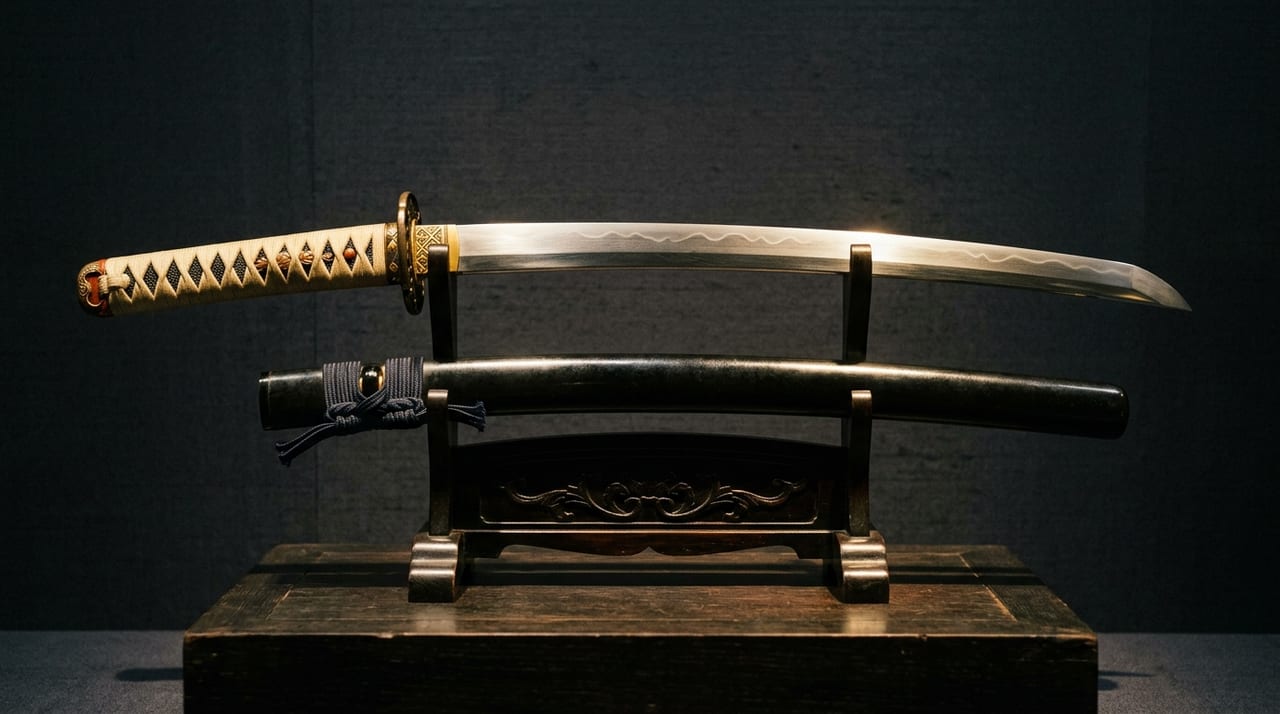
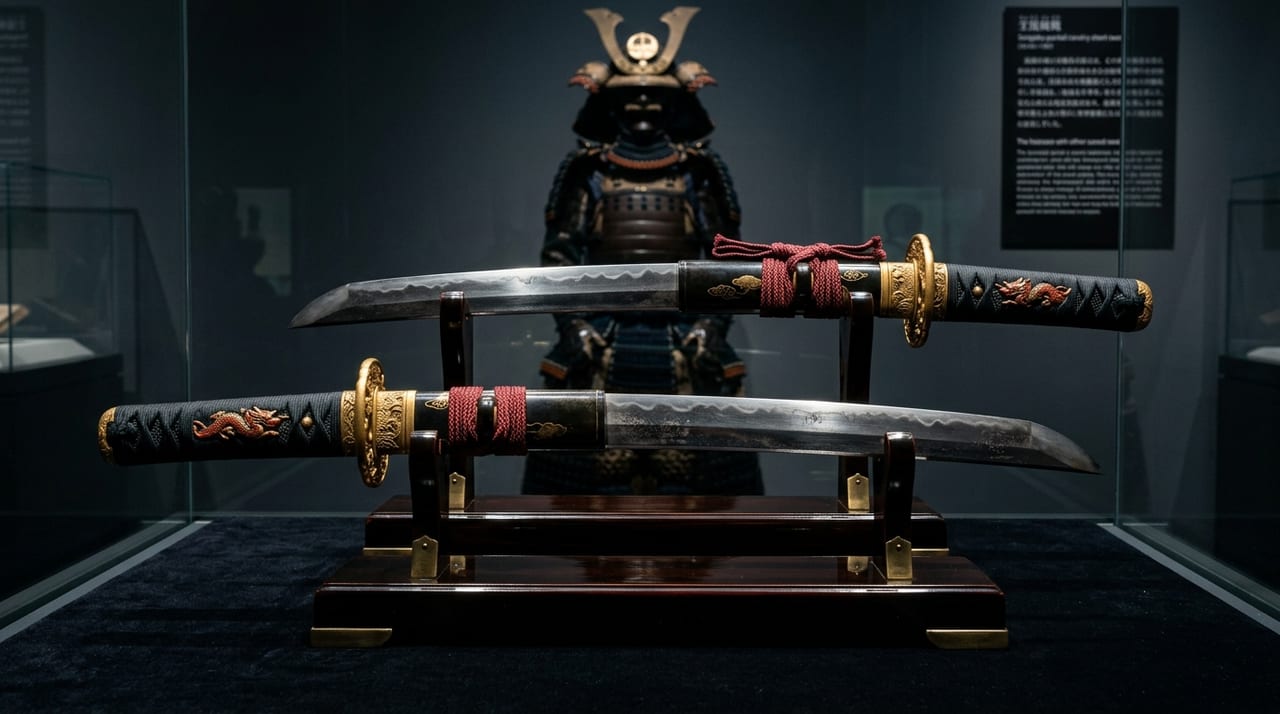
A systematic explanation of the "wakizashi," which samurai of the Edo period carried in combination with a long sword (uchigatana): its size regulations, uses (indoor self-defense, seppuku, coup de grâce), the formality of its koshirae, the characteristics of each production region, and its value assessment in the modern era. Also touches on the cultural significance of "daishō," the combination of the long sword and wakizashi.
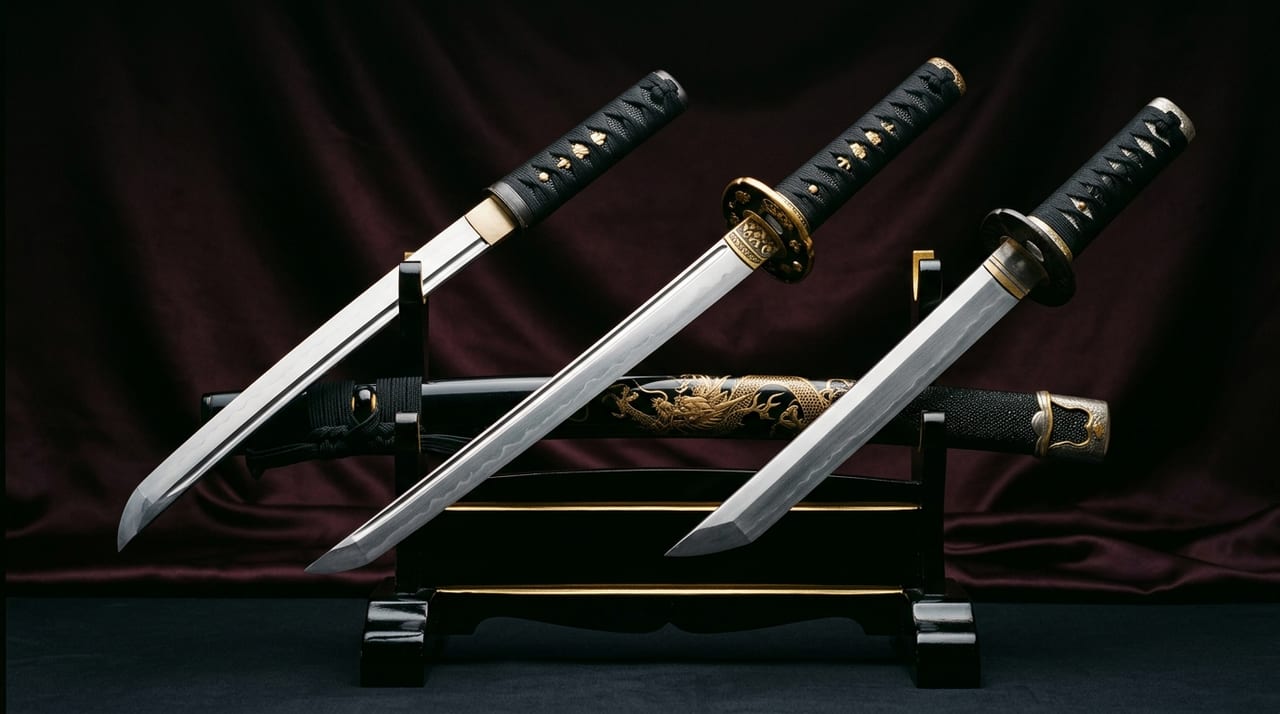
Among bladed weapons that are either shorter than a tantō or share a similar form, this article compares three types: kaiken, koshigatana, and yoroidōshi. It systematically organizes the differences in nagasa, cross-sectional shape, koshirae, and purpose, as well as the role each played in warrior society.
The shinobigatana is an image created by twentieth-century television period dramas and pop culture, with no basis in Sengoku-period historical sources. The grounds for suguha and square tsuba are thin; ninja were actually armed with a focus on firearms and concealed weapons, and their swords are thought to have been ordinary tantō and wakizashi.
An explanation of the structure, purpose, and cultural background of mete-zashi, the self-defense tantō worn on the right-hand (mete) side by mounted warriors of the Sengoku period. The article introduces the contrast with yunde-zashi, the significance of carrying two short blades in cavalry tactics, the morphological characteristics of mete-zashi and extant comparable examples, and its reassessment in the modern age along with its place in tōsōgu (sword fittings) collecting.
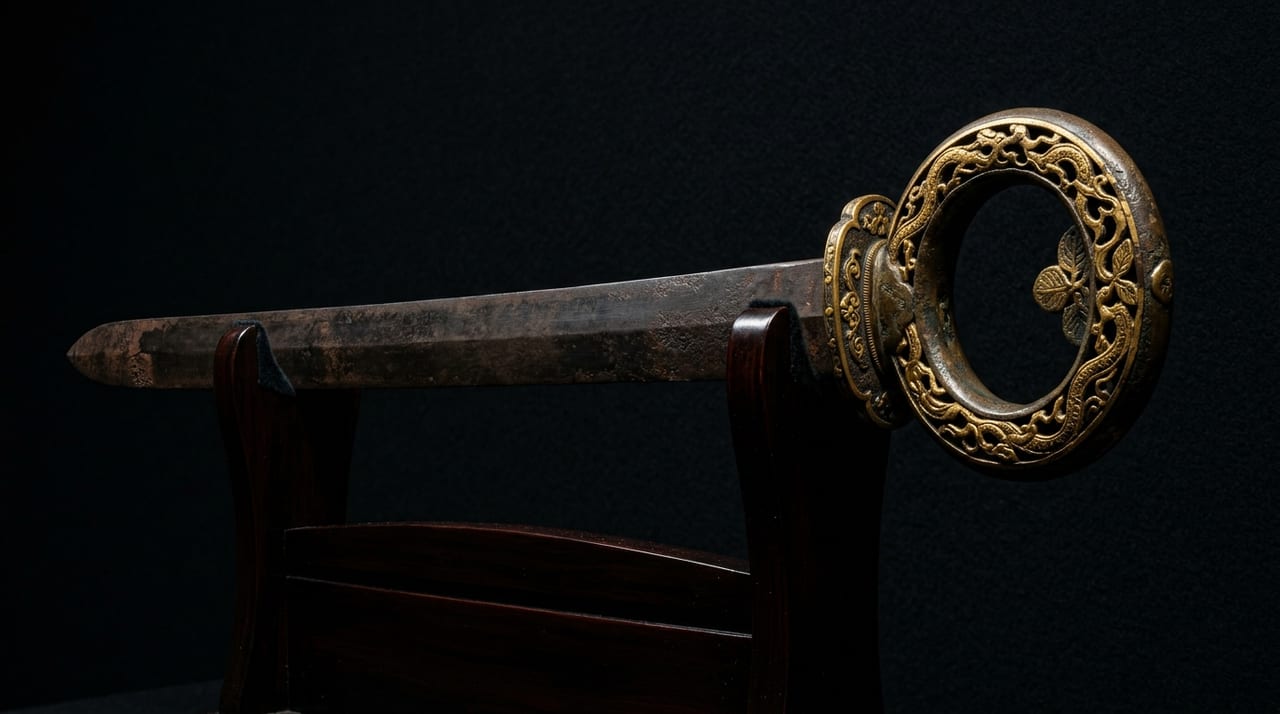
Kantō-tachi are straight swords of the Kofun period bearing a ring-shaped metal ornament at the pommel, transmitted to Japan via the Korean Peninsula from China. In the process of moving from importation in the 4th–5th centuries to domestic production in the 5th–6th centuries, Japan's distinctive metalworking techniques developed, forming an important foundation leading toward the nihontō.
Kirikane is a Buddhist decorative technique using ultra-thin metal foils cut and affixed to create patterns. Applied to sword fittings (tōsōgu) from the late Heian period, the technique flourished under the Gotō family, who combined kirikane with nunome zōgan (布目象嵌) on shakudō (赤銅) to embody the highest standards of samurai ceremonial culture. The tradition continues today in cultural restoration and contemporary sword craftsmanship.
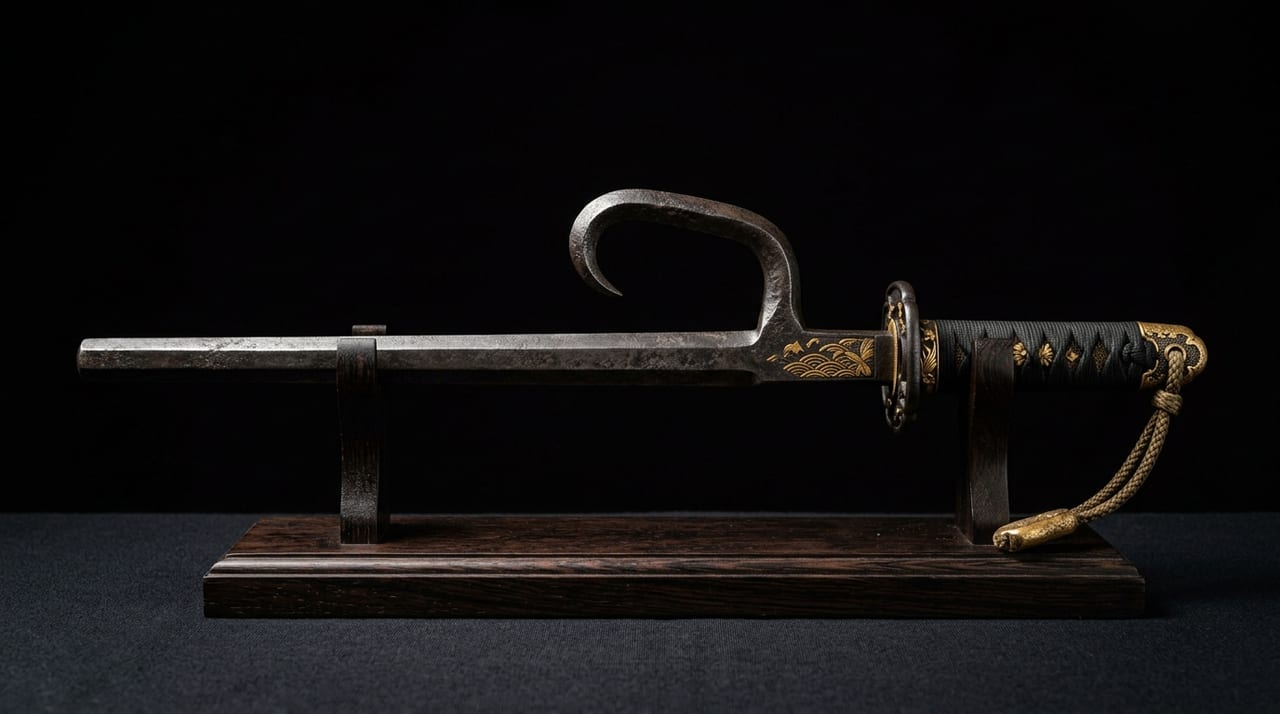
An explanation of the structure and techniques of the jitte used in Edo-period arrests, the history of its manufacture with involvement from sword smiths, and its relationship to the modern sword industry.
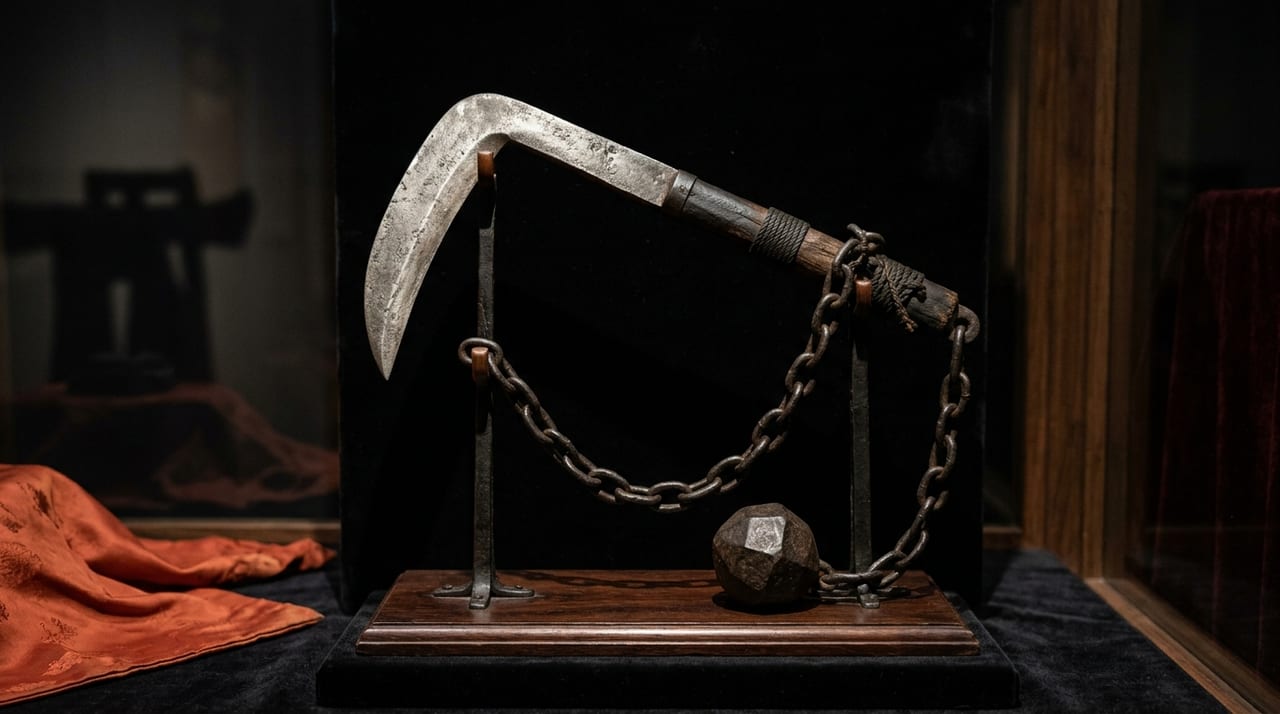
The kusarigama is a uniquely Japanese composite weapon in which a chain and fundo are attached to a kama. Explained from the perspective of a sword dealer: the structure and names of each component, the basics of usage including fundo strikes and entangling, surviving schools such as Isshin-ryū, the historical veracity of the duel legend between Miyamoto Musashi and Shishido Baiken, the reality of the connection to ninja, and the treatment under the Firearms and Swords Control Act (Jūtōhō).
A detailed explanation of the cross-sectional shape of the kirihazukuri blade. Covers its relationship with yoroi-tōshi and naginata-naoshi, the historical background of the Nanbokuchō period, technical characteristics (kasane, edge angle, minimal sori), and appreciation points for extant kirihazukuri swords.