The Science of Blade Strength Across Koto, Shinto, and Gunto: What We Know and What We Don't
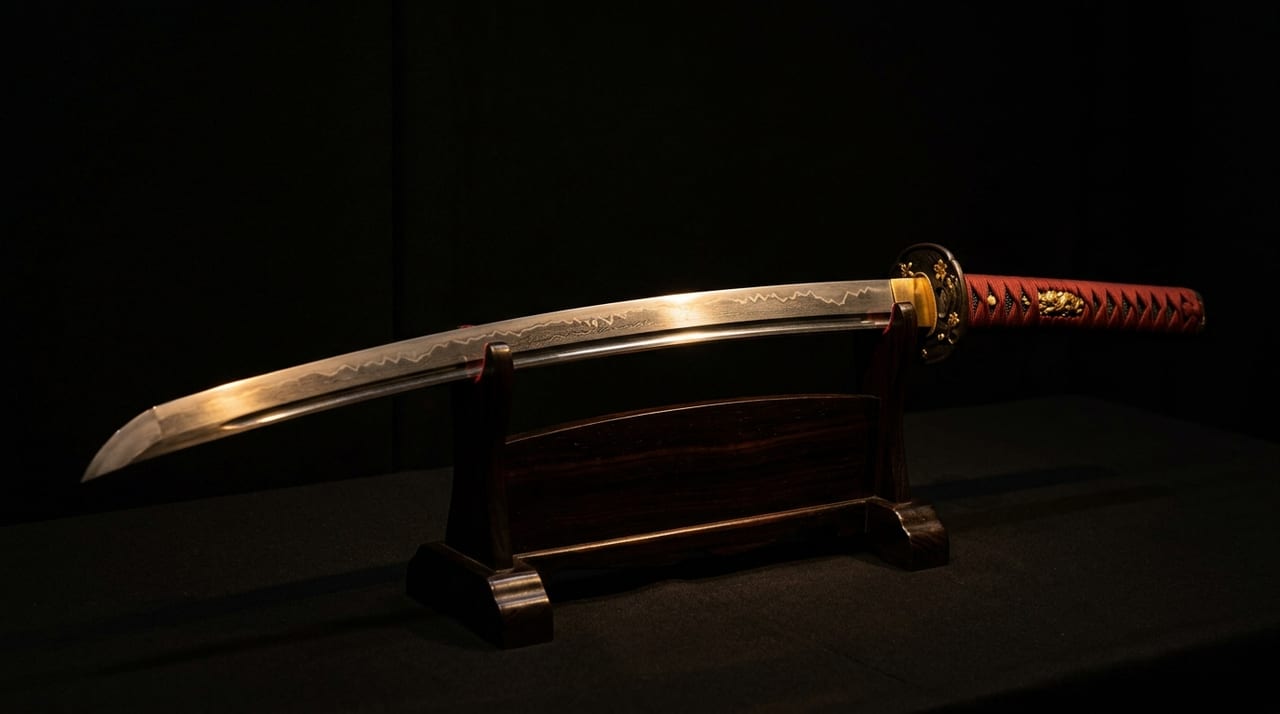 * Image is for illustrative purposes only.
Table of Contents
How are "Unbreakable, Unbending, and Sharp Cutting" Qualities Born?
Japanese swords are praised for being unbreakable, unbending, and having excellent cutting ability, not due to the properties of a single steel material, but rather from a structure combining steels of different hardness levels. The kawagane (outer steel) that covers the outside of the blade is high in carbon content and hard but brittle, while the shingane (inner steel) at the interior is low in carbon content and soft but tough. Research conducted by metallurgist Tawara Kuniichi in the Taisho period using a metallurgical microscope revealed that the composite structure of kawagane and shingane, along with the coexistence of martensite (a hard but brittle microstructure) and pearlite/ferrite (a soft but tough microstructure) generated by quenching, enabled the blade to simultaneously possess hardness and toughness—seemingly contradictory properties.
What Changed Between Koto, Shinto, and Military Blades?
- Koto (before Keicho): Used tamahagane derived from sand iron and tatara steelmaking by region, and incorporated the kawagane and shingane structure through each school's unique forging methods.
- Shinto and Shinshinto (Edo period onward): While the standardization of distributed steel materials progressed, forging methods and quenching techniques continued to be passed down by individual bladesmiths.
- Showa-period military swords: Machine production and mass manufacturing advanced in response to surging demand, and many examples used not only traditional tamahagane but also western steel and steel derived from modern steelmaking represented by Mantetsu swords, with oil-based quenching employed in many cases.
The differences between these three categories should first and foremost be understood as differences in materials and manufacturing methods. During the Meiji period, there were also modern attempts such as improved blades involving Murata Tsuneyoshi, the so-called Murata swords, which mixed Swedish steel with Japanese steel, and the synthesis of traditional techniques and modern metallurgy had already begun before the military sword phase.
The Reality of "Destructive Testing"—What Can and Cannot Be Measured
No substantive data exists comparing the strength of koto, shinto, and military swords tested under identical destructive conditions side by side. This is because most surviving koto and shinto are cultural properties or equivalent artworks, and they are generally not permitted to be subjected to destructive testing. Most scientific knowledge to date, beginning with Tawara Kuniichi's research, has been accumulated through observation of cross-sections obtained during polishing, observation of broken or damaged blades, and hardness measurements (such as Vickers hardness testing) and metallographic analysis conducted on reproduction blades and test samples created by contemporary bladesmiths.
On the other hand, regarding Showa military swords, there are cases where mass-produced specimens considered to have relatively low artistic value have become subjects of research and dismantling studies, and it has been reported that some specimens show uniform microstructure compared to traditionally made tamahagane and hand-forged blades, and exhibit hardness distribution characteristic of oil quenching. This should be understood not as leading to the simple conclusion that military swords are weak, but rather as circumstantial evidence showing that the choice of manufacturing methods prioritizing mass-production efficiency produced strength characteristics different from the traditional composite structure.
- Koto and shinto achieved both strength and toughness by intentionally constructing kawagane and shingane structures through the use of regional tamahagane and school-specific forging methods.
- Military swords are reported to show specimens with hardness distribution and microstructure different from traditional swords as a result of manufacturing choices that prioritized supply volume.
The Attempt to "Make Japanese Swords with Modern Steelmaking" as Seen in Mantetsu Swords
Known as a representative example of modern steelmaking attempts in the Showa period is the Mantetsu sword, which is said to have involved the technical team of the South Manchuria Railway. Research and manufacturing proceeded under the concept of whether Japanese swords could be mass-produced without relying on traditional tatara steelmaking and tamahagane, using modern steelmaking methods based on iron ore produced in northeast China as raw material. This was not merely a matter of making substitutes, but was also a kind of engineering challenge—exploring how far the metallurgical technology of that time could reproduce the performance of Japanese swords.
Research comparing modern steelmaking swords with traditional tamahagane swords demonstrates differences in material composition and microstructure, but sufficient systematic comparative data on actual cutting performance and durability has not been adequately preserved. The reality is that most military sword research remains limited to observation of surviving specimens and accumulation of partial scientific analyses, and it is necessary to interpret various reports while accounting for these limitations.
Non-destructive Analysis as a Practical Alternative
Non-destructive techniques such as X-ray, CT, and X-ray fluorescence analysis respond to the need to understand the internal structure of the blade without compromising its value as an artwork. These techniques can visualize the density distribution and compositional makeup of the internal steel without damaging the blade, and in some cases can even reveal the state of the boundary between kawagane and shingane. While they do not provide direct strength data as destructive testing would, they are considered technologies that will become central to future comparative research because they allow examination of multiple specimens across different examples while preserving their value as cultural properties.
Museums and research institutions displaying Japanese swords are gradually increasing opportunities to publish such analytical results, and this is becoming the foundation for reframing the distinction between koto, shinto, and military swords—not as "which is superior" but as "what design philosophy produced them."
What Should We Expect from Comparative Research?
When discussing differences in strength between koto, shinto, and military swords, what is important is not simple superiority among time periods, but understanding for what purposes and under what circumstances particular manufacturing methods were chosen. Koto and shinto were created to provide versatility that could withstand both combat and ceremony, while military swords were created to meet the different requirement of large-scale supply in a short period. While the means to understand the strength of surviving swords without damaging them are limited, non-destructive X-ray, CT, and X-ray fluorescence analysis, as well as reproduction experiments by contemporary bladesmiths, are fields that are increasingly filling this gap. When appreciating a sword, if one considers not only its shape and hamon but also the manufacturing philosophy under which it was forged, even the same single blade reveals new perspectives.