New Arrivals — Browse our catalog for the latest authentic Japanese sword arrivals. Browse →
Articles on bushido, mythology, cinema and pop culture — the cultural world surrounding the Japanese sword.
Why are swords counted as "ichi-furi," "hito-kuchi," and "hito-koshi"? This article draws on etymological theories from dictionaries and real examples from cultural property designation names to organize the appropriate use for each context.
Examining the popular image of the straight-bladed ninja sword against the historical record, and why it appears to be a modern fictional invention.
Focusing on the tachi carried by the tachi bearer who accompanies the yokozuna's ring entry, this article deciphers the sword culture living within the rituals of Grand Sumo.
An introduction to the origins of the tate-shi profession, specialists who design sword-fight sequences for period dramas, and the realities of a job that balances safety with convincing authenticity.
We trace the history of how kenjutsu practitioners, impoverished by the Sword Abolishment Edict (Haitōrei), preserved their art through public performance exhibitions, eventually culminating in the formation of the Dai-Nippon Butokukai, a nationwide organization.
Even under sakoku, nihontō became known abroad through limited channels such as Nagasaki and Tsushima — as diplomatic gifts in ceremonial exchanges and through the collecting activities of resident foreigners such as Kaempfer and Siebold. This article traces that history.
As interest in Japanese sword culture grows among foreign visitors to Japan, facilities and programs aimed at inbound tourists — including forge visits, iai experiences, and multilingual support at the Japanese Sword Museum — are being developed. This article surveys the current experience offerings and the challenges of turning them into sustainable tourism assets.
With the Kusanagi-no-Tsurugi of the Three Sacred Regalia at the fore, this article explores the deep historical and cultural ties between Shinto and the Japanese sword. Through the significance of dedicated blades, their preservation at shrines, and the evolution of sword veneration, it traces how the Japanese sword developed beyond a mere weapon into a spiritual symbol.
Seppuku is a ritualized form of death in which a warrior cuts open his own belly to demonstrate his innocence or resolve, while kaishaku is the role of striking off the head in order to minimize that suffering. In the warrior society that regarded the Japanese sword not merely as a weapon but as "a mirror of the soul," this form of death was itself deeply intertwined with the view of the sword and with the philosophy of life and death.
Iai is a martial art of sword-drawing said to have been founded by Hayashizaki Jinsuke Shigenobu in the 16th century. This article explains the lineage of development from the Shinmusō Hayashizaki-ryū to the modern All Japan Kendo Federation iai, and the place of iai within sword culture.
Explores a new cultural sphere in which Japanese swords are consumed within the context of pop culture, including the musical version of Touken Ranbu ('Touken Mus'), cosplay costumes, and fan art on social media. Examines the points of connection and friction with traditional collector culture, and considers the changes brought about by younger generations.
NHK's taiga dramas draw large audiences every year, and their depictions of Japanese swords have broadened public interest in sword culture. This article explains the reality of sword historical supervision in recent works such as "Kirin ga Kuru" and "Dō suru Ieyasu," and the role period dramas play in popularizing nihontō.
A study comparing Japanese swords as they appear in popular manga and anime such as "Demon Slayer" and "Rurouni Kenshin" against actual sword culture, history, and construction. Explains the fascinating divergences between entertainment expression and historical fact and technique.
Dojos practicing iaido, kenjutsu, and battōdō have spread across the world, centered primarily in Europe, the Americas, and Asia. We explore the current state of overseas Japanese sword practice communities and the reasons behind their pursuit of shinken.
The sword scenes Kurosawa Akira depicted on film left a powerful impression on audiences around the world. This article explores how the sword was staged in works such as "Seven Samurai," "Sanjuro," and "Yojimbo," and how those depictions relate to the actual culture of the nihontō.
From Eiji Yoshikawa to Shotaro Ikenami, explore how Japanese literature has depicted the sword—its spirit, technique, and symbolism in kengō fiction and period dramas.
The gogatsu ningyō (May dolls) and musha kazari (warrior displays) decorated on Tango no Sekku, the fifth day of the fifth month. This article explains the reasons why sword designs are incorporated into an observance for praying for a child's healthy growth, and the cultural background behind them.
How have swords been handled on the stages of Noh and Kabuki? We decipher the symbolic meaning embedded in celebrated blades that carry the heart of stories, and in the movements and stagecraft involving the sword.
Swords depicted in ukiyo-e, particularly in musha-e. We explore the world of musha-e created by Utagawa Kuniyoshi and others, and the image of the sword that woodblock prints spread among the general public.
A guide to Kyoto's major sword-related shrines and temples, covering Awata Shrine, Fujinomori Shrine, Kenkun Shrine, Kitano Tenmangu, Toyokuni Shrine, and Daikakuji.
The United States, Germany, Taiwan. The current state of nihontō collecting culture abroad.
Sendai domain smiths, Date clan swords, modern events — introducing TOUKENZA's hometown.
Ken-zen ichinyo. Exploring the spirit of Zen that breathes life into the making and appreciation of the nihontō.
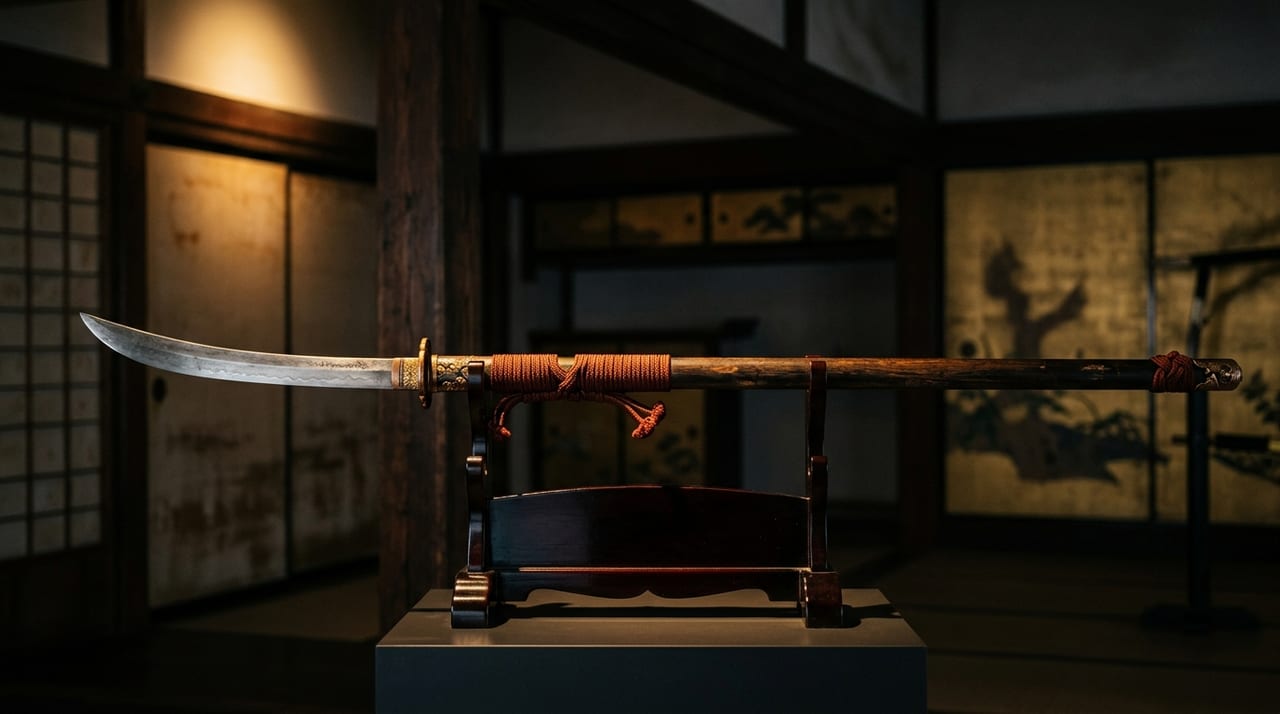
Why did naginata become established as a weapon for warrior-class women? This article historically examines the deep relationship between Japanese women and naginata, from its use in actual combat during the Sengoku period, through the etiquette of warrior households in the Edo period, physical education at girls' schools from the Meiji period onward, and up to modern-day naginata-do.
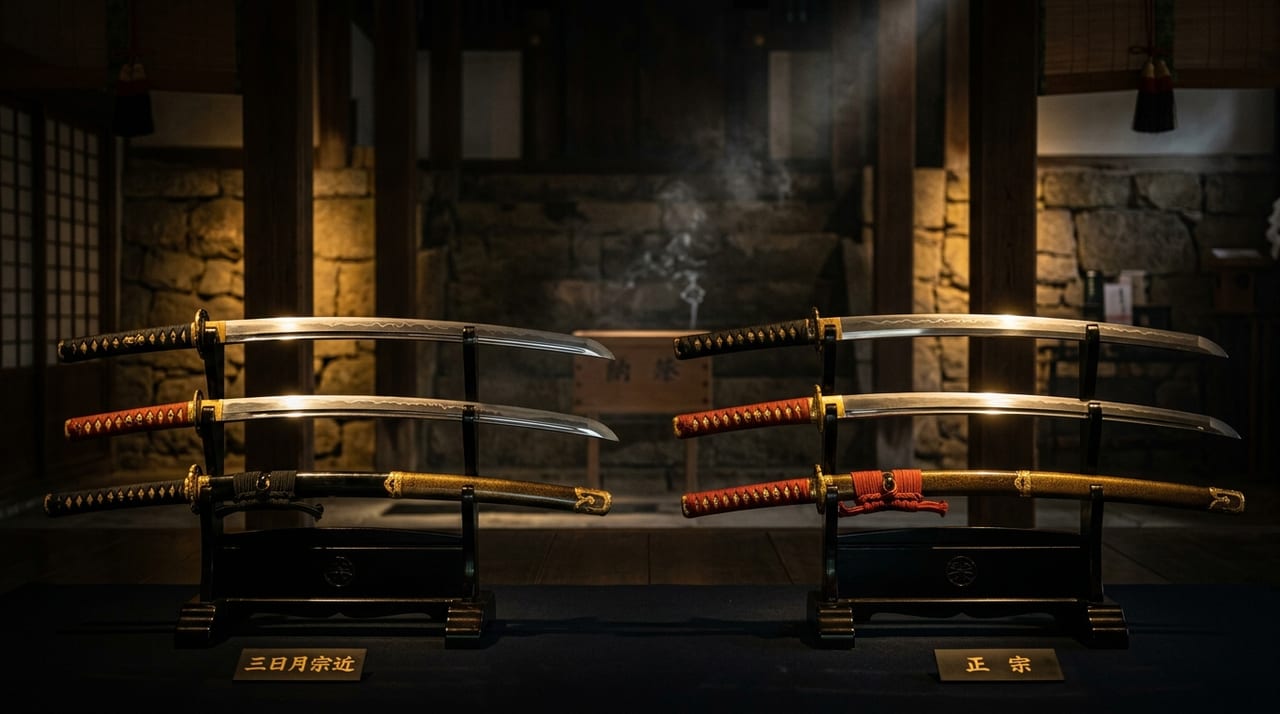
Expert explanations of the histories, current locations, and appreciation points of real famous swords that became famous through Touken Ranbu—including Mikazuki Munechika, Tsurumaru Kuninaga, Yamanbagiri Kunihiro, and Shokudaikiri Mitsutada.
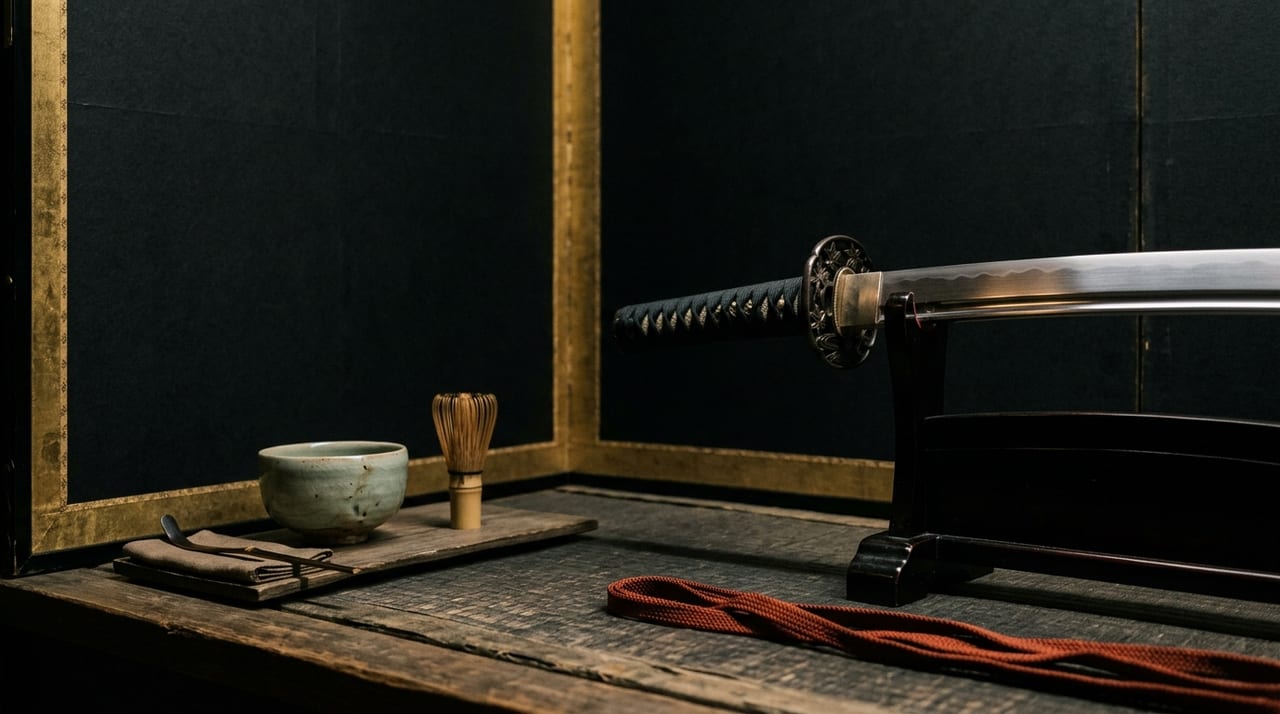
From the Sengoku period through the Edo period, the nihontō and chado (wabi-cha) developed in parallel as the two pillars of warrior culture. This article explores the relationship between Nobunaga's and Hideyoshi's "governance through the tea ceremony" and their sword collecting, the anecdotes surrounding swords that arose at tea gatherings between Rikyū and warrior lords, and the aesthetic resonance between tōkō and tea utensil craftsmen.
How did the samurai of the Edo period wear their swords, in what situations did they draw them, and how did they handle them? The "protocols of the sword" in warrior etiquette carried a spiritual meaning that went beyond practical rules. Drawing on etiquette manuals and warrior codes of the time, this article explains the samurai's code surrounding the sword.
Honjō Masamune, counted among the Five Swords of the Realm, vanished in the postwar turmoil and remains missing to this day. This article explains the history of this legendary blade, attributed to the renowned Kamakura-era master craftsman Masamune, the circumstances of its disappearance, and the current search efforts.
Kusanagi-no-Tsurugi is the mightiest divine sword in Japanese mythology, appearing in the stories of Amaterasu Ōmikami, Susanoo-no-Mikoto, and Yamato Takeru, and is one of the Three Imperial Treasures. This article examines its mythological origins, historical incidents, its current location (Atsuta Shrine), and its relationship to sword culture from multiple perspectives.
Nihontō held in major museums around the world — the British Museum, the Metropolitan Museum of Art, the Musée Guimet, and others. This article explains the circumstances and significance of overseas acquisition, and the role that international sword exhibitions play as cultural diplomacy.
Women of Sengoku were not mere victims of war. Explore their sword culture — protecting themselves with kaiken and defending castles with naginata — through historical examples.
An overview of contemporary art, installation, fashion, and media art inspired by swords. Exploring the aesthetic and philosophical inspiration that samurai culture provides to contemporary creators.
The swords cherished by Date Masamune, and the lineage of smiths retained by the Sendai domain. A history of nihontō seen through the lens of local Sendai.
Kondo Isami's Kotetsu, Hijikata Toshizo's Izumi no Kami Kanesada, Okita Soji's Kashū Kiyomitsu. The story of Shinsengumi warriors and their swords.
The growing interest in nihontō brought about by Touken Ranbu. The emergence of a new fan base known as tōken joshi.
Mikazuki Munechika, Dojigiri Yasutsuna, Onimaru Kunitsuna, Odenta Mitsuyo, Juzumaru Tsunetsugu — the pinnacle of Japanese swords.
The nihontō was never merely a weapon. The multifaceted role of the Japanese sword as the soul of the warrior, a symbol of status, and a work of art.
Etiquette for viewing another person's sword, the steps for drawing a sword, and manners at appreciation gatherings.
From Kurosawa films to Star Wars. The line between truth and fiction in nihontō depictions in film.
"A nihontō can cut through anything," "it never breaks," "Muramasa is a cursed sword." The truth behind myths about nihontō.
From Tomoe Gozen to tōken joshi. An exploration of women's relationship with swords in Japanese history.
Three levels: beginner, intermediate, and advanced. How much do you know about Japanese sword terminology?