The Sword and Zen: The Spirituality Dwelling in the Nihontō
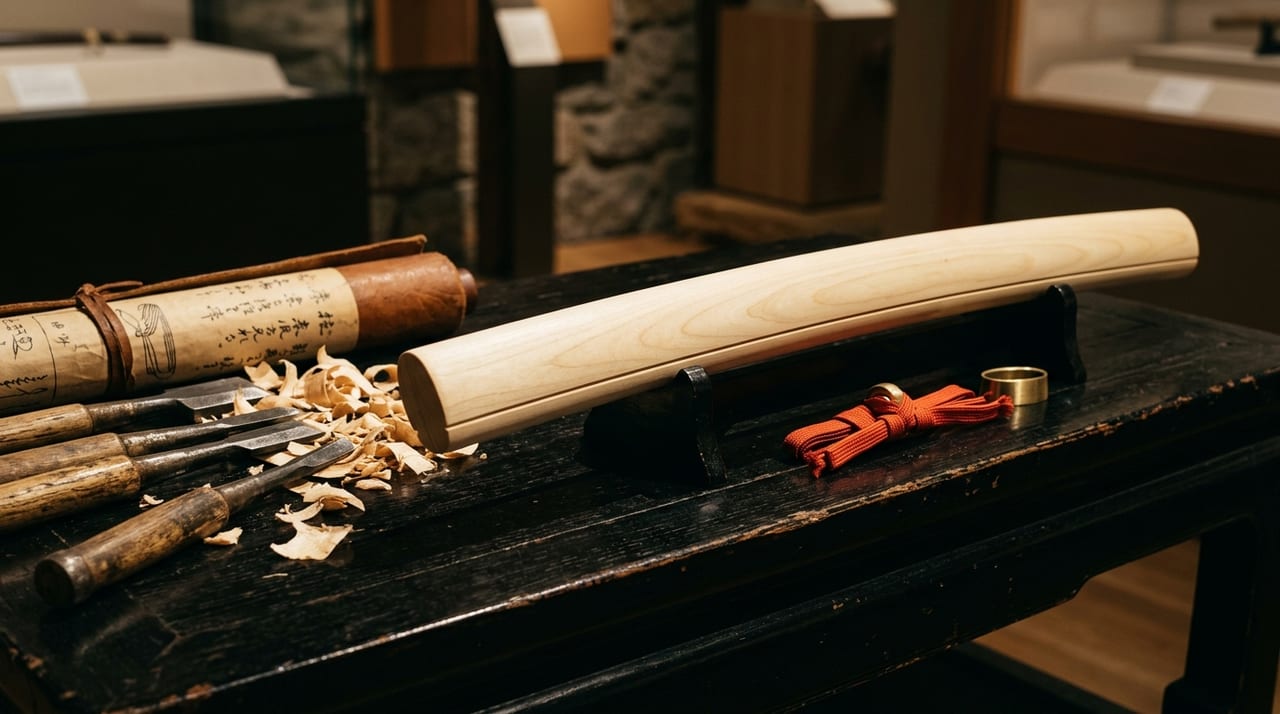 * Image is for illustrative purposes only.
Table of Contents
The Encounter of the Sword and Zen: Where Two Paths Cross
In Japan, the sword and Zen have often been spoken of in a relationship of "ichinyo" — oneness. The sword is an instrument of killing, yet at the same time it is a means of discipline that hones the human spirit to its uttermost limits. Zen seeks direct experience that transcends language and concept. What is the reason these two worlds, which appear to be contradictory, became so deeply intertwined? When we face that question, the essential nature of the nihontō comes into view.
Zen was introduced in earnest into the world of swordsmanship during the Kamakura and Muromachi periods. As warrior society rose to prominence, Zen Buddhism — centered on the Rinzai school — spread among the samurai class. The Zen concept of "mu" — the state in which distracting thoughts are eliminated and all attachments released — became a practical psychological foundation for swordsmen surviving battlefields where life and death were separated by a hair's breadth.
Sword-forging as Discipline: A Dialogue of Flame, Iron, and Soul
Completing a single nihontō demands the kaji's fierce labor and intense concentration of spirit. Tamahagane is selected, and through orikaeshi tanren impurities are removed while tens of thousands of fine layers are formed. This process is not mere metalworking.
Kaji of each tradition — Bizen-den, Sōshū-den, Yamato-den, and others — invariably purified themselves before beginning to forge, strung shimenawa rope in the forge, and offered prayers before the deities. This was considered not a formality but an indispensable spiritual preparation. Watching iron glow red in the flame, the kaji sharpens his senses and listens to the voice of the iron. The phrase "knowing the iron" exists in the world of smithing, and it is nothing other than a Zen-like perception in which intuition and experience are fused — not scientific analysis.
Tsuchioki (the compounding and placement of clay applied to the blade before yaki-ire) is the process in which the tōshō's skill and spirituality appear most vividly. Differences in clay thickness govern the cooling rate during yaki-ire and produce the beautiful hamon. Each hamon is a trace of the tōshō's spirit inscribed in the iron through fire.
| School / Period | Representative hamon |
|---|---|
| Bizen Osafune school | chōji-midare |
| Sōshū Masamune | ō-midare |
| Shintō period | gunome-midare |
Ken-zen Ichinyo: The Thought of Miyamoto Musashi and the Yagyū Shinkage-ryū
The phrase "ken-zen ichinyo" expresses the idea that the discipline of swordsmanship and the discipline of Zen fundamentally aim at the same state of attainment. Among those who discussed this concept most systematically, the names of Yagyū Munenori and Miyamoto Musashi are foremost.
In the Heihō Kadensho written by Yagyū Munenori, it is repeatedly taught that the ultimate secret of swordsmanship is identical to Zen enlightenment. "Mutō no kurai" — the rank of the swordless — is the state in which one can control an opponent without holding a sword, and it directly connects to the Zen concept of "kū" (emptiness). The sword beyond the sword — it is a manifestation of the freedom of a spirit that has released all attachment.
Miyamoto Musashi's Gorin no Sho can also be read as a pursuit of a universal way that transcends swordsmanship. In his later years, Musashi secluded himself in Reigandō cave in Kumamoto, composing the Gorin no Sho while also immersing himself in ink painting and sculpture. The bold brushwork and quiet sense of space seen in those works can be said to be proof that the ultimate secret of the sword and Zen enlightenment were integrated within a single personality.
Mushin and Iai: The Zen State Condensed into an Instant
Among the techniques of the nihontō, iai has a particularly deep affinity with Zen. Iai — performed as a continuous sequence from the state of the sword housed in the saya through the draw, the strike, and the resheathing — is training in seizing the "ki." How iai has been systematized is covered in detail in The Historical Development of Iai.
In Zen there is the saying "heijōshin kore michi" — the ordinary mind is the Way. It means that enlightenment is found not in a special state of mind but within everyday life itself. What the practitioner of iai strives for is close to this state as well. Neither the tension of lying in wait nor the excitement of the draw, but the moment in which the sword moves naturally within a quiet awareness — this is called "mushin."
Mushin does not mean thinking of nothing. It is a state of mind in which thoughts arise but do not linger. The reason a skilled swordsman's movements appear as smooth as a dance is not that he consciously controls his actions, but that years of tanren have taken up residence in the body, so that the body moves before the mind. This is precisely the realization of the Zen "natural state."
Appreciating the Sword: Meditation in Silence
In the modern age, opportunities to use the nihontō as a means of discipline are limited, but the act of appreciation also carries deep spiritual meaning.
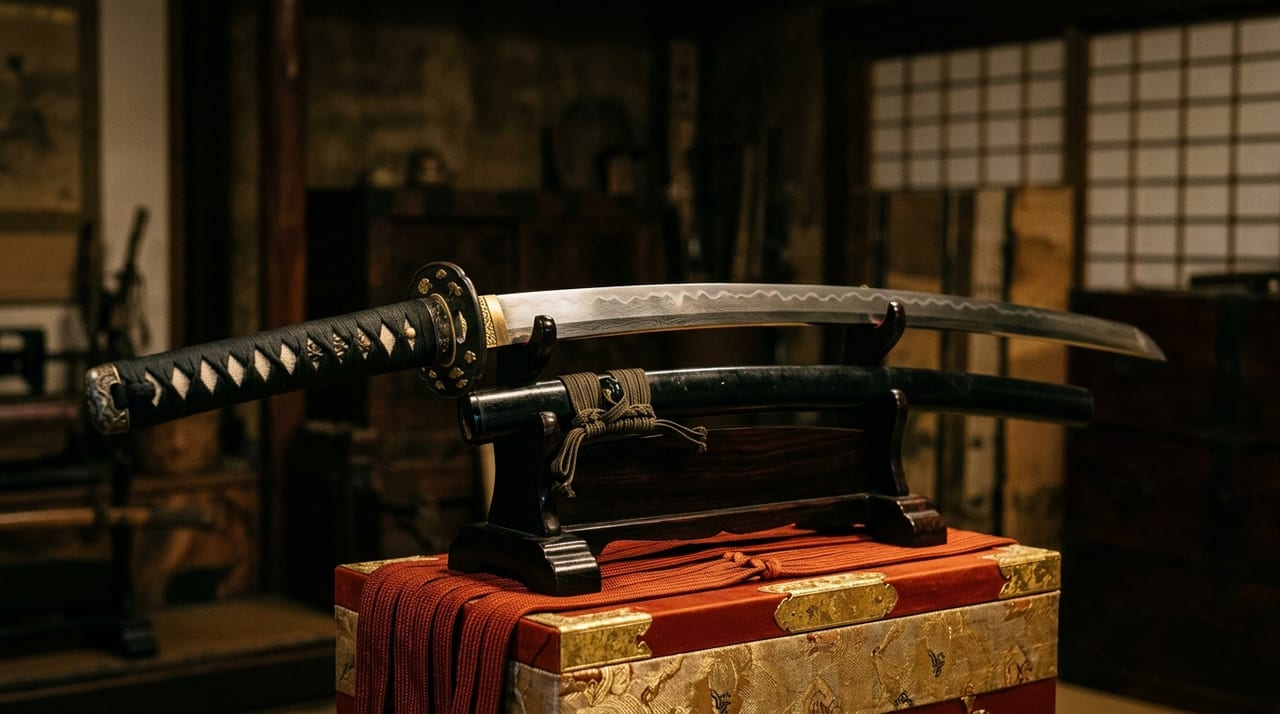
Formal sword appreciation begins with receiving the sword carefully in both hands and drawing it from the saya. The weight and balance of the center of gravity felt within the hand. The surface of the jigane that emerges when light is applied — the expressions of the steel such as itame, masame, and mokume. And when the gaze shifts to the details of the hamon, the awareness of the observer naturally turns inward.
The activities that appear within the hamon — the subtle differences of nie and nioi, and scenes such as kinsuji, sunagashi, and inazuma — are a delicate world invisible without a magnifying glass. When one concentrates on this fine observation, the distractions of daily life naturally recede. This act of directing awareness to a single point is structurally the same as the concentration on breathing in zazen.
When Edo-period daimyo held "tōken kanshō no kai" — sword appreciation gatherings — in the tea room, it was not from mere hobby or the desire to collect. The time spent facing the pinnacle of beautiful craftsmanship in a quiet space was for them a practice for ordering the spirit.
The Spirit of Ken-zen Living in the Modern Age
The environment surrounding the modern nihontō has changed greatly. Yet the essence that the sword and Zen point toward — the way of being in which distracting thoughts are released and one is fully present in this moment — continues to hold universal value that transcends the age.
Modern tōshō still uphold the ancient methods of manufacture and continue to forge using tamahagane. In the words of tōshō designated as Living National Treasures, talk of technique and talk of spirit are inseparably intermingled. There is a tōshō who utters the words, "You cannot lie to the sword." No matter how much skill is lavished upon it, he says, a disturbance of spirit will invariably appear in the blade.
The nihontō is, in a sense, a mirror of the maker's spirit. Zen, too, functions as a mirror that reflects one's own essential nature. The reason these two are said to be one is perhaps that both, ultimately, are paths for confronting the "self."
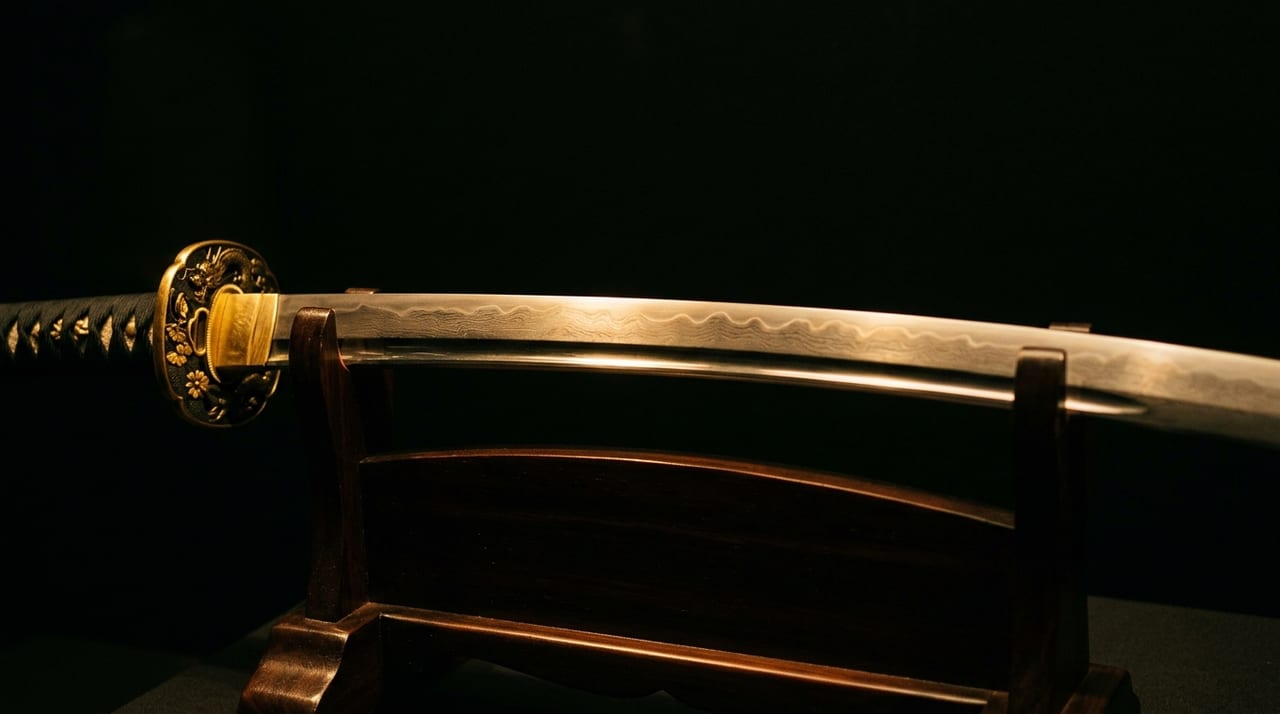
When light runs along the blade, there is a single point where human will and the order of nature intersect. That brilliance is born from the overlapping of more than a thousand years of craftsmen's prayers and the silence of countless practitioners. The sword and Zen — two paths become quietly one in the depths of the forge where iron and flame meet.