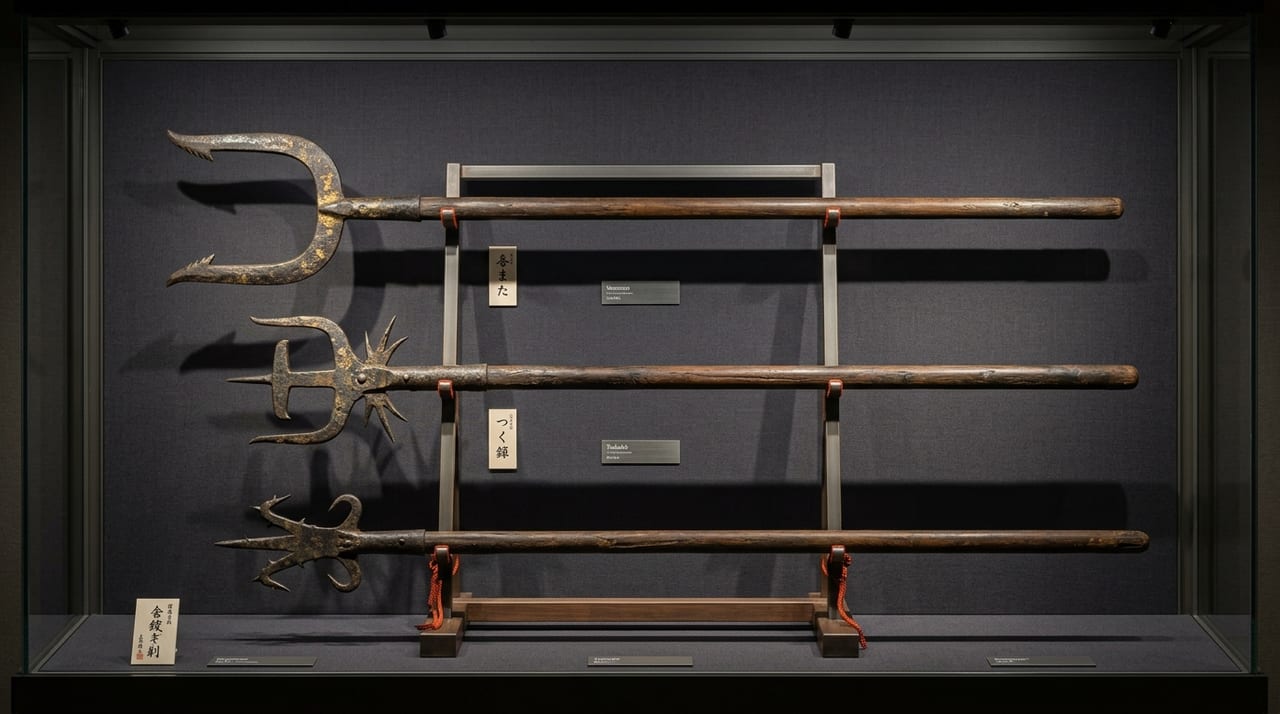
Sword Size Guide — Differences Between Tachi, Katana, Wakizashi, and Tanto
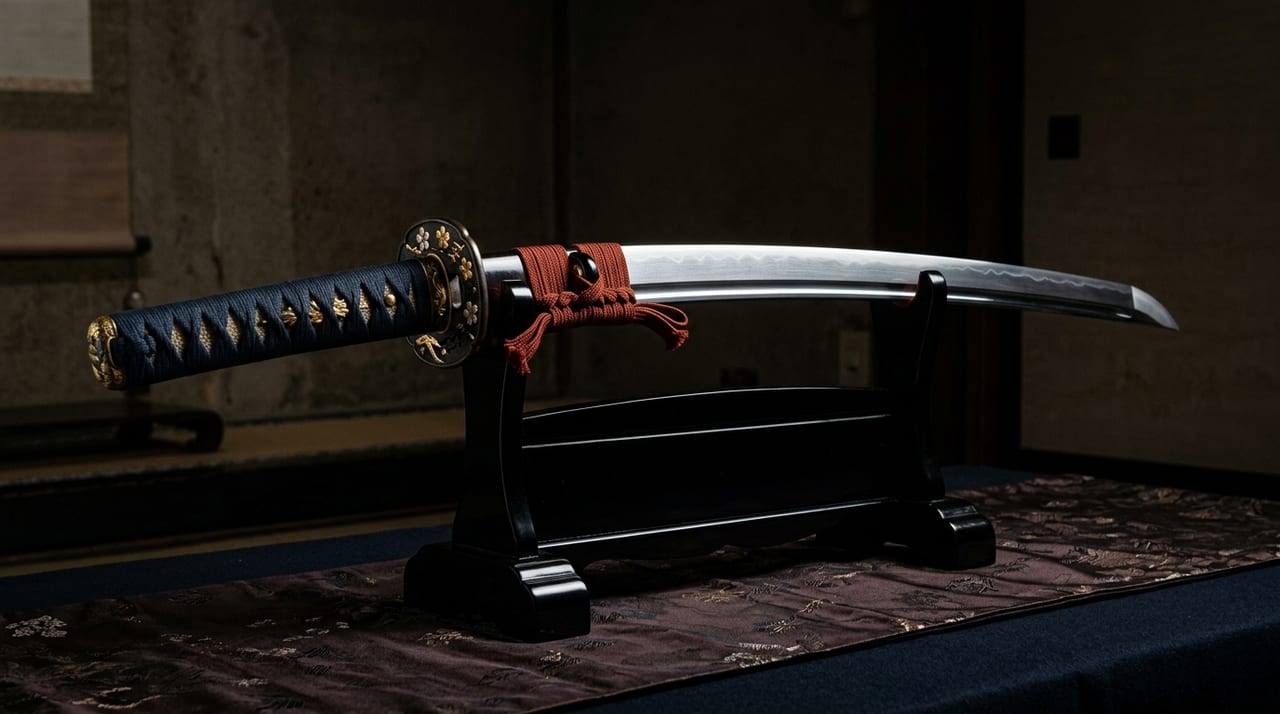 * Image is for illustrative purposes only.
Table of Contents
Japanese Sword Dimensions: What Blade Length Reveals About History and Purpose
When discussing Japanese swords, dimensions are far more than mere numbers. The measured values of each component—blade length (nagasa), curvature (sori), width at the base (motohaba), width at the point (sakihaba), and thickness (kasane)—eloquently reveal when, where, and for what purpose a blade was forged. When appreciating, purchasing, or collecting swords, understanding how to interpret these dimensions is essential.
A summary of typical blade lengths by classification is as follows.
| Classification | Typical blade length |
|---|---|
| tachi | 2 shaku (approx. 60.6 cm) or more |
| uchigatana | 2 shaku (approx. 60.6 cm) or more (standard measure is 2 shaku 3 sun ≈ approx. 70 cm) |
| wakizashi | 1 shaku or more, less than 2 shaku (approx. 30–60 cm) |
| tanto | Less than 1 shaku (approx. 30 cm or less) |
Japan uses the traditional measurement system (shakkanhou) for sword dimensions. Basic conversions are as follows.
| Unit | Conversion |
|---|---|
| 1 shaku | Approx. 30.3 cm |
| 1 sun | Approx. 3.03 cm |
| 1 bu | Approx. 3 mm |
A blade length of "2 shaku 3 sun 5 bu" would therefore calculate to approximately 71.3 cm. Since this notation still appears in sword dealer catalogs and appraisal documents today, it is important to remember these basic conversions.
tachi—The Long Blades Chosen by Kamakura Warriors
The definition of tachi is a blade length of 2 shaku (approx. 60.6 cm) or more, and a signature cut into the omote (outer face) when worn at the waist. The omote refers to the side facing outward when the blade is suspended from the belt. The tachi is worn suspended via fittings passed through the belt with the edge facing downward, in what is called the haitō style.
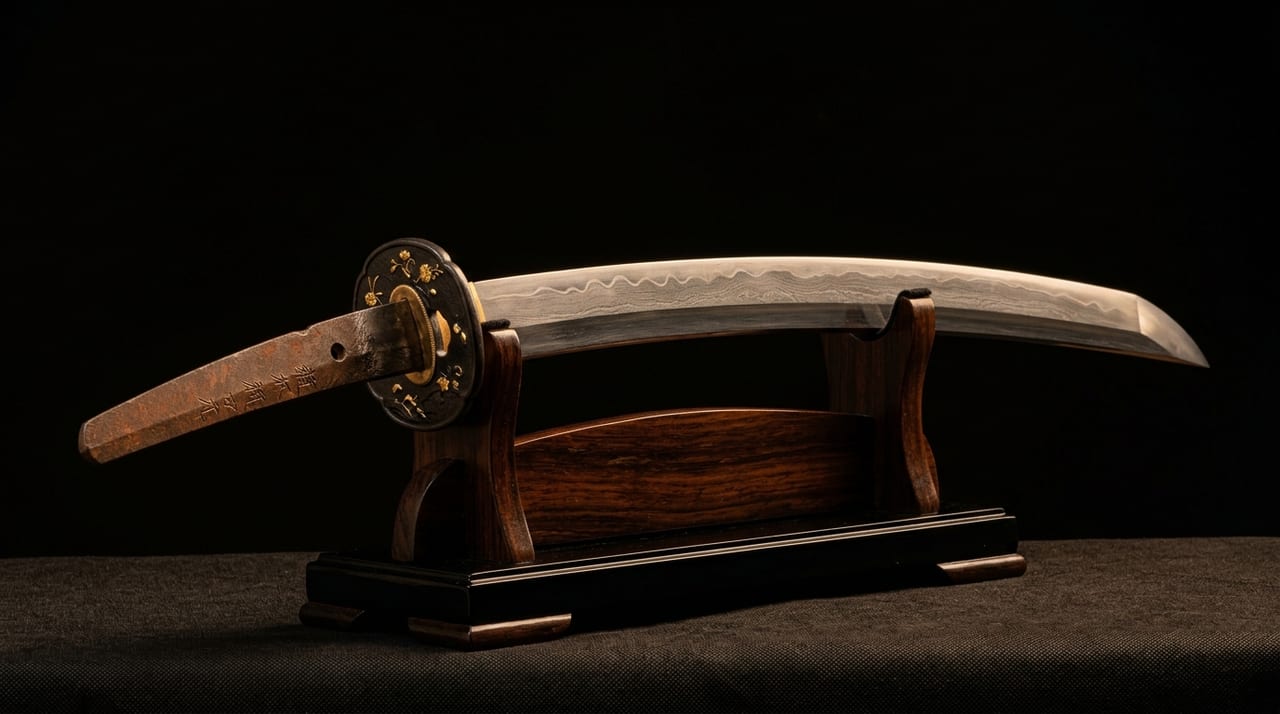
The sori is set comparatively deep relative to the blade length, a characteristic feature of ancient tachi. A tachi with a 70 cm blade length may have a sori of 2 to 2.5 cm. This pronounced curve was optimized for overhead cuts from horseback, and the tachi reached its zenith during the period from the late Heian through the Nanboku-Chō era, when mounted warriors dominated.
Notable examples of tachi include the Dōjigiri Yasutsuna (blade length approx. 80.0 cm), forged by Ōhara Yasutsuna of Hōki Province (founder of the Hōki tradition, mid-Heian period), and the Mikazuki Munechika (blade length approx. 80 cm), designated as a National Treasure. Both exhibit deep curvature and represent rare masterworks that preserve their original form without major reshaping.
uchigatana—The Practical Mainstay That Propelled the Sengoku Period
The uchigatana shares the minimum blade length of 2 shaku with the tachi, but differs in one decisive way: it is worn edge-up thrust through the obi in the sashiryō style. The iaijutsu technique—drawing the scabbard swiftly and cutting in a single motion—became possible precisely because of this way of wearing the blade.
As foot soldiers (ashigaru) rose to prominence during the Muromachi period, ground combat increased, and the more easily maneuverable uchigatana spread rapidly. Compared to the tachi, the uchigatana has a shallower sori (typically 1 to 1.5 cm), and its center of balance is positioned closer to the hilt, affording superior swing speed and handling. The blade length of 2 shaku 3 sun (approx. 70 cm) is most common and is referred to as the "standard measure" (jousun).
The form with minimal difference between motohaba and sakihaba—a "weak" profile—became fashionable from the mid-Edo period onward, while uchigatana from the late Sengoku through early Edo periods, known as Keicho shintou, typically feature broad motohaba and a more robust construction. Even two uchigatana with identical classification and 70 cm blade length will look entirely different depending on their era; understanding the correspondence between form and historical period is one of the great pleasures of sword appreciation.
wakizashi—The "Short" of the Daisho Pair and its Varied Roles
The wakizashi is defined as having a blade length of 1 shaku or more and less than 2 shaku (approx. 30–60 cm). During the Edo period, samurai carried both a long and short sword together in a practice called daisho, and the wakizashi fulfilled the role of the "short" component.
Further subdivisions by blade length are sometimes made: wakizashi around 1 shaku 5 sun (approx. 45.5 cm) are called chu-wakizashi, while those around 1 shaku 8 sun (approx. 54.5 cm) are called o-wakizashi. Some large wakizashi are virtually indistinguishable from uchigatana in appearance, and these subtle boundaries represent one of the challenges in appraisal.
The uses of wakizashi were diverse. Close combat in confined spaces, kaishaku (assisting in ritual suicide), and the courtly convention that one could remain armed with a wakizashi even when required to leave one's primary blade in the lord's presence—the wakizashi served as an indispensable complement to the uchigatana. For modern collectors, it holds appeal because it requires less storage space and often features elaborate koshirae (fittings).
tanto—The Oldest Form and the Foundation of Bladecraft
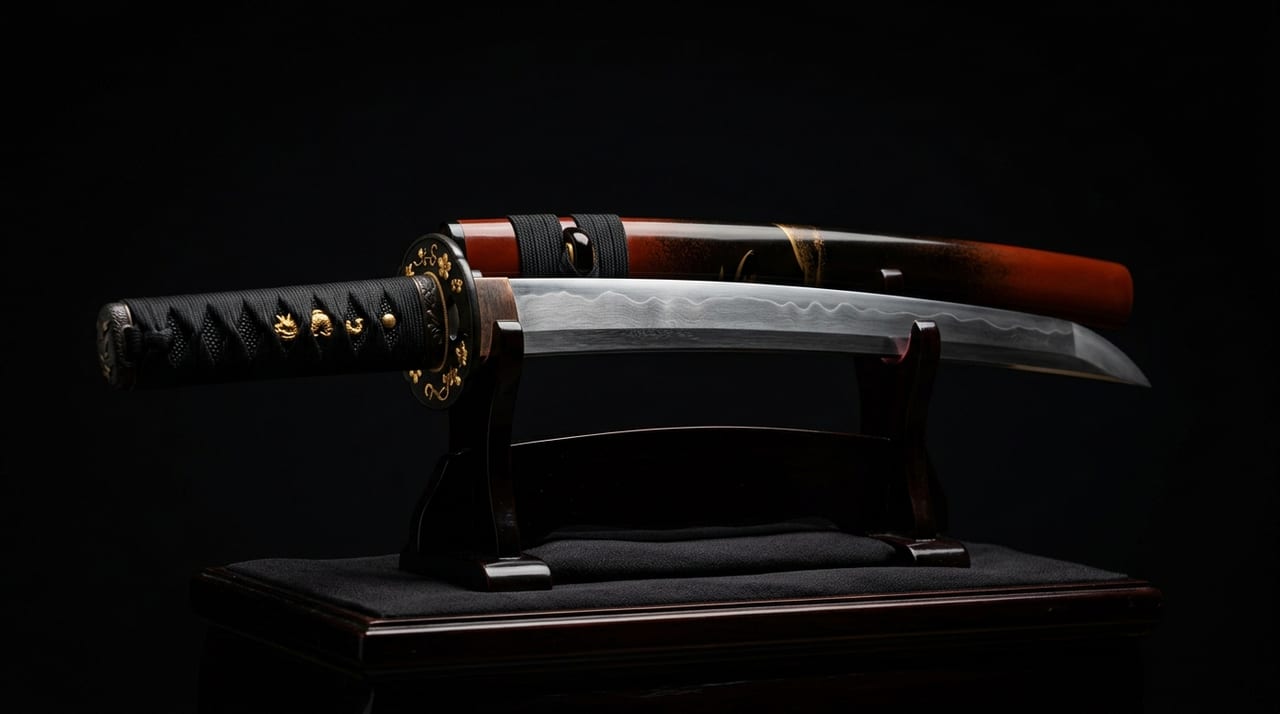
The tanto is defined as having a blade length of less than 1 shaku (approx. 30 cm or less). Production is documented from the Heian period and ranks among the oldest of all sword classifications. The sori is typically absent (most are in the hira style) or exhibits only a subtle inward curve (uchizori).
It was widely used for personal protection and also circulated as a kaiken—a blade carried concealed in the bosom by women. The custom of brides receiving a tanto as part of their dowry persists in some places today, and its symbolic significance remains substantial. Additionally, the sasuga used in ritual suicide (seppuku) is a type of tanto.
The construction of a tanto is delicate, and the jigane (steel quality) and hamon (temper line) can be appreciated up close. Many tanto exemplify the full mastery of their smith, and "beginning sword appreciation with the tanto" is a common practice among enthusiasts. The price range is broad, making it well-suited for newcomers seeking their first piece.
Reading Dimensions and Checking Points When Purchasing
When actually selecting a sword, you should verify not only the blade length but also the following dimensions:
- Motohaba is the width of the blade near the hamachi (the base of the blade edge); for uchigatana, a standard width is approximately 2.8–3.2 cm. A wider motohaba conveys greater weight and presence.
- Sakihaba is the width near the kissaki (point); when the difference between motohaba and sakihaba is small, the sword has a robust appearance, and when large, a more delicate aspect.
- Kasane is the thickness from the mune (spine) toward the edge; greater thickness increases weight and durability.
For a first uchigatana, a blade length of 65–72 cm (2 shaku 1 sun to 2 shaku 4 sun) is easy to handle and displays well on a stand. It is wise to measure in advance the space for a wall-mounted case or sword rack and anticipate the overall length (blade length plus hilt length plus scabbard length). Generally, the overall length is approximately 1.5 to 1.6 times the blade length.
A wakizashi pairs beautifully with an uchigatana as a daisho set and displays far more strikingly when they are displayed together. One enjoyable approach is to acquire one uchigatana first and later search for a wakizashi by the same smith or from the same period. Tanto are often appreciated through side-by-side comparison of multiple examples, making this a category in which collectors readily accumulate pieces.
Dimensions are merely the gateway to the deep world of the sword. Once you hold a blade and feel its weight and curvature in your hands, the "beauty of form" that numbers cannot convey will naturally become clear to you.