Japanese Swords vs. Western Swords: Differences in Blade, Steel, Use and Appreciation
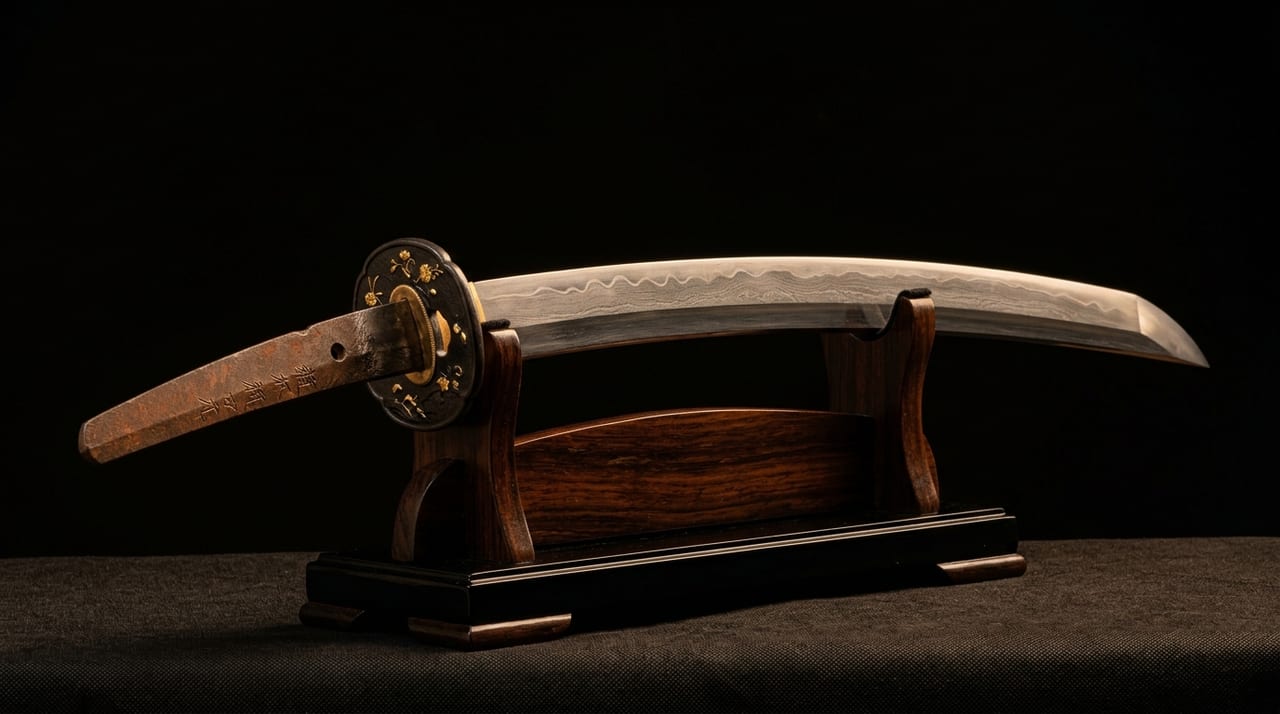 * Image is for illustrative purposes only.
Table of Contents
Japanese swords and Western swords are both classified as "close-range weapons with metal blades," but their origins and design philosophies differ greatly. Because their names are similar, they are often confused with each other; this article clarifies the two through four perspectives: shape, materials, usage, and handling.
Shape Differences: Single-Edged Blade with Curve
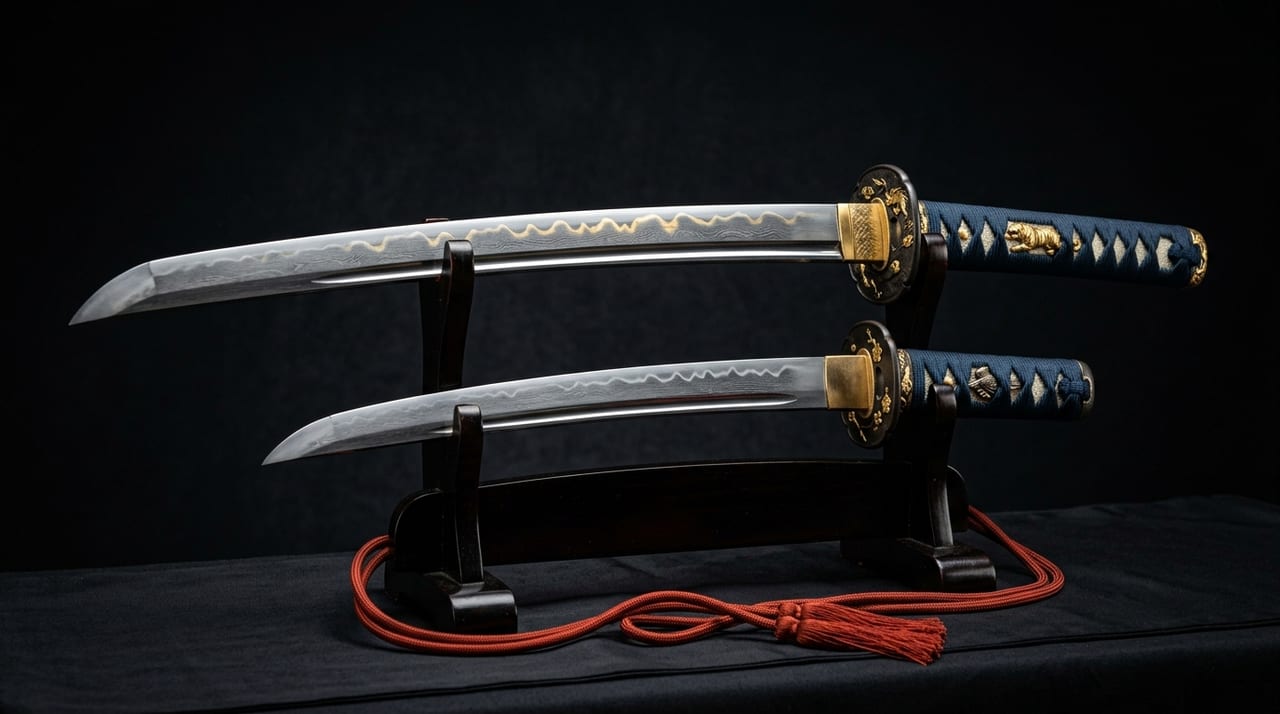
The blade of a Japanese sword is, by principle, single-edged with the blade on only one side, and has a gentle curve toward the mine. The cross-section typically features shinogi construction with a defined shinogi, and the thickness of the metal changes in stages from the edge to the mine.
In contrast, European swords such as longswords often have edges on both sides and straight blades. Some swords, like sabers, have a curve and are single-edged, so not all Western swords are straight. Here we compare with representative double-edged straight swords.
- Japanese sword: single-edged, curved, shinogi construction is standard
- Western straight sword: double-edged, straight blade, often with a fuller in the center
- Common elements: blade, tsuba, tsuka, and saya
The reason for the curve on a Japanese sword is connected to the history of how its shape changed over time. The transition from straight swords to curved tachi is detailed in Heian-Period Tachi: Birth of the Curved Blade and the Rise of Mounted Warriors.
Differences in Materials and Forging Methods
Japanese swords use tamahagane obtained through tatara iron smelting using iron sand as raw material, and are based on a composite structure where a softer steel core (shingane) is wrapped in harder steel (kawagane). This structure is explained in Kawagane and Shingane Steel Structure. Through repeated folding and forging, the steel is refined; clay is applied and the blade is quenched, hardening only the blade portion and revealing the hamon.
Western swords are also made by forging, but the iron-smelting method, type of steel, and heat treatment methods vary depending on the era and region. Rather than simply comparing the two by "which is stronger," it is more appropriate to consider them as results optimized for each sword's intended use and method of combat.
Differences in Usage and Wearing
Japanese swords have their own customs regarding how they are worn: placed in a saya and worn at the waist, or suspended blade-down like a tachi. The differences between tachi and uchigatana are detailed in Tachi and Uchigatana — A Complete Explanation of the Two Major Classifications of Japanese Swords.
Western swords are typically suspended from a sword belt at the waist and developed with the assumption of use alongside shields and armor. In Japan, although armor and swords were used together, there were long periods when the primary weapons were bows, spears, and firearms, and swords served a secondary role or as a symbol of status.
Differences as Appreciated Objects
A major characteristic of Japanese swords is that they are appreciated as both weapons and works of art. Each part—the hamon, jigane, and nakago—offers points of appreciation, and the blade itself becomes an object of viewing. The appreciation of hamon is covered in How to Appreciate Hamon — Reading the Beauty of Japanese Swords.
Western swords are also highly valued among museums and collectors, but Japanese sword culture has particularly developed the emphasis on polishing blades and appreciating hamon. This difference has created unique appreciation terminology and authentication systems specific to Japanese swords.
Cutting Motion and Blade Design
Japanese swords are designed for the cutting motion of hikigiri, where the blade is applied to the target and drawn. The curved blade is smooth to draw from the saya during the draw, and pairs well with the pulling motion. The angle of the blade point and the nikuoki are adjusted to achieve both sharpness and durability.
In contrast, double-edged straight swords have a shape suited for both thrusting and slashing. The groove carved in the center of the blade is often explained as a way to reduce weight while maintaining strength. Japanese swords also have the hi carved to achieve both lightweight construction and strength. While the two share a common approach, the role and design of the hi in Japanese swords also embodies the unique aesthetics of Japanese sword craftsmanship.
Maintenance and Preservation Considerations
Since steel rusts, both swords require maintenance. Japanese swords are preserved by applying a thin layer of oil and avoiding high-humidity environments; the specialized work of togishi has also developed to preserve the condition of the blade. Polishing is not merely cleaning dirt but is a finishing process that enhances the hamon and jigane.
Western swords are also preserved in museums under rust prevention treatment and temperature and humidity control. A distinctive feature of Japanese swords is that the daily maintenance practices themselves—application of uchiko powder, wiping, and oiling—have been passed down as part of the culture.
Differences in Names and Classification
Japanese swords have classifications by blade length (katana, wakizashi, tanto, etc.) and by wearing style such as tachi and uchigatana. Additionally, classifications by school (Gokaden) and era (koto, shinto, shinshinto) have developed, resulting in a rich vocabulary for identifying individual swords. While Western swords also have classifications by era and form, Japanese swords stand out in the uniquely developed culture of authentication that infers the maker and origin from the characteristics of the hamon, jigane, and nakago.
Summary
The differences between Japanese swords and Western swords can be organized along multiple axes: single-edged versus double-edged, presence or absence of curve, materials and heat treatment, wearing style, and appreciation culture. Rather than which is superior, it is easier to understand when considering that each culture's demands are reflected in the form. To compare actual Japanese swords, you can view the blades currently listed on TOUKENZA's online catalog.