Tachi of the Heian Period: The Birth of the Curved Blade and the Rise of Mounted Warriors
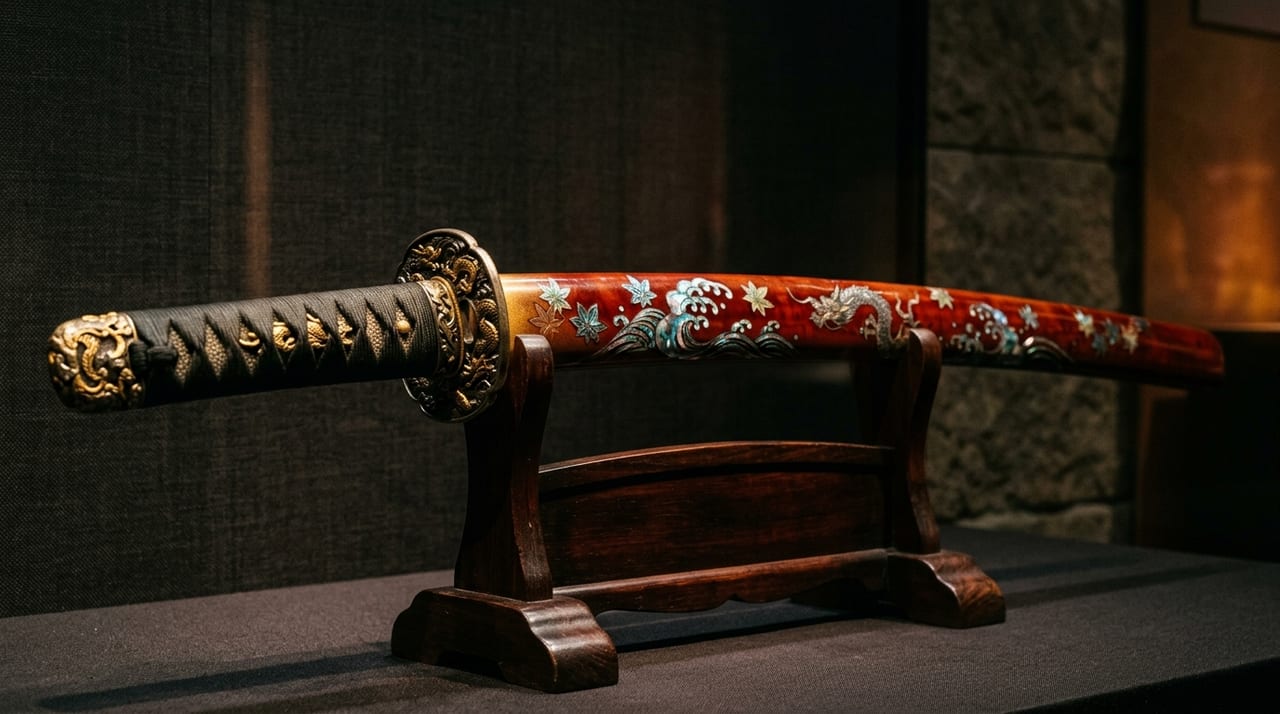 * Image is for illustrative purposes only.
Table of Contents
Straight Swords to Curved Swords: The Revolutionary Transformation of Early Heian
Before the Nara period (710–794), nearly all swords used in Japan were chokutou (straight swords). Based on continental technology from China and the Korean peninsula, famous examples include the warabi-te-tou and keitou-tachi, featuring straight blades designed for thrust and cutting motions by foot soldiers. The warabi-te-tou, named for its distinctive form where the nakago-gashira (pommel) curled inward like fern shoots, was incorporated into Japanese sword-making techniques through contact with the northern Emishi cultural sphere.
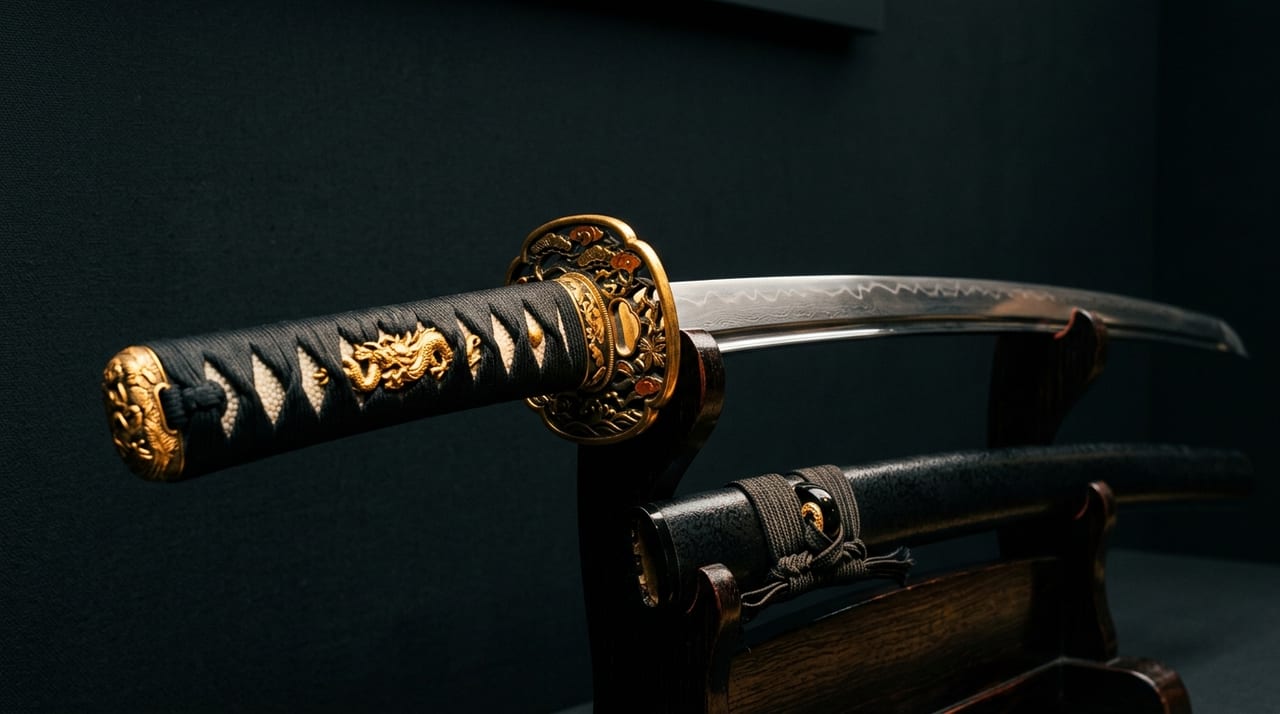
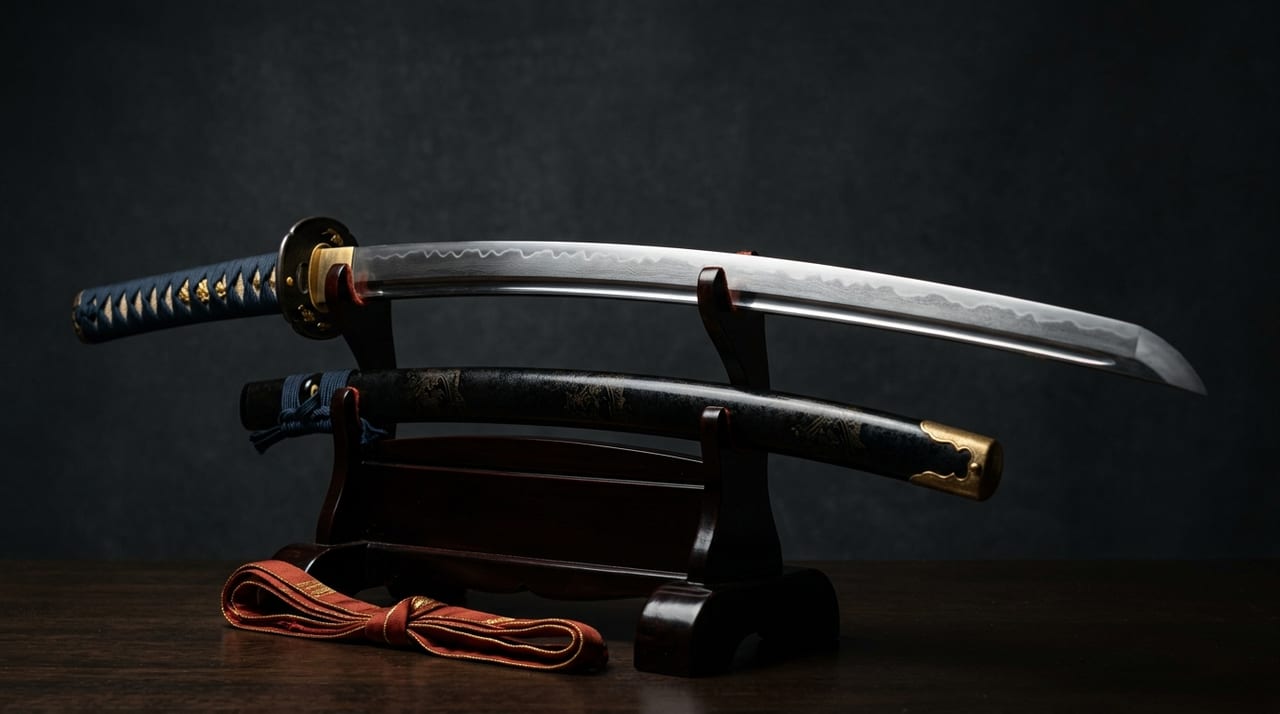
Upon entering the Heian period, straight swords were rapidly replaced by curved blades bearing sori (curvature). Traces of curvature appear in works from the late 9th to early 10th centuries, and by the 10th–11th centuries, the tachi (curved sword) became standardized with pronounced sori. Behind this transformation lay a fundamental change in combat itself—the shift from massed infantry formations to mobile warfare centered on mounted warriors. Sword shapes evolved steadily in response to the fighting methods each era demanded.
The Development of Mounted Warfare Tactics and Its Link to Blade Shape
In mid-Heian, horse-raising and horsemanship technologies advanced dramatically in the eastern provinces (Kanto and Tohoku). Samurai established a complex combat style of shooting arrows from horseback, then drawing swords for close-range combat.
Straight swords possessed fatal weaknesses in mounted warfare. First, drawing from the waist while mounted was difficult. Furthermore, a straight blade aligned poorly with the downward-diagonal slashing motion executed from horseback, greatly reducing cutting efficiency.
Curved blades offered two functional advantages:
- Ease of drawing—The sori allows the blade to slide naturally along the scabbard's inner wall during drawing, enabling swift extraction even from horseback.
- Improved cutting ability—A curved blade naturally produces a "pulling cut" motion upon contact, increasing cutting efficiency with the same force. This aligned especially well with diagonal downward slashing from horseback, delivering decisive strikes even through armor.
Smiths deliberately designed this sori as koshi-zori (hip curvature), achieving both functional beauty and practical superiority.
Structural Innovations of the Tachi: From Attachment Method to Form
Heian-era tachi differed fundamentally from later uchi-gatana (striking swords) in several respects.
First, the attachment method differed. The tachi was worn edge-down (ha-sage), suspended from the waist belt (haku) at an angle. This was designed for mounted use and suited the motion of diagonal drawing from the body's side. It represents a fundamentally different concept from the later Edo-period uchi-gatana's "edge-up, worn-at-hip" style.
As for blade characteristics, Heian-to-Kamakura era tachi typically featured strong koshi-zori, with the deepest curvature closer to the hilt than the balance point. Standard blade length (ba-chou) was approximately 73cm. The nakago was kept long and securely fixed with habaki and mekugi. The grip, wrapped with samegawa (shark skin) and braided cord, provided grip security during intense mounted combat.
This era also saw development of the distinctive hamon called choji-midare (clove-flower pattern). This complex, wave-like temper line, a technique perfected by Bizen smiths, represented both beauty and strength, earning praise throughout subsequent ages.
Formation of Smith Collectives: The Dawn of the Kotou (Old Sword) Period
Late Heian marked the earliest phase of the kotou (old sword) period, when renowned smith collectives formed regionally, establishing prototypes of local schools (den).
Yamashiro (modern Kyoto) - The Sanjo and Awataguchi schools produced the highest-quality swords of the Heian-Kamakura era. Sanjō Munechika, legendarily the earliest great master, created "Mikazuki Munechika" (Crescent-Moon Munechika), counted among the Five Heavenly Swords and designated a National Treasure. Its graceful choji-midare and refined jihada radiate the sophistication of court culture itself.
Bizen (modern Okayama) became the largest sword-producing center of the kotou period. "Ko-Bizen" (Ancient Bizen) from the Heian period is extremely rare in surviving examples and is treasured as among the finest ancient swords today. Rich iron-sand deposits from the Yoshii River basin, quality charcoal, and abundant water resources supported Bizen smithing's prosperity. Masters such as Tominari and Masatsune established the foundation for the later Osafune school's grand legacy.
The Birth of the Samurai and the Symbolic Meaning of the Tachi
The Heian period was the first era in history when the samurai (warrior) class emerged in a clearly defined form. As court guard units declined into formality, regional lords organized private military forces, rallying under the leadership of clan patriarchs like the Genji and Heike.
Through this process, the tachi transcended mere weaponry to embody samurai status, oath, and honor. A lord granting a tachi to a retainer signified trust and authority; shrine dedication represented an oath to the gods. The tachi was indispensable in samurai coming-of-age ceremonies and often accompanied warriors to their graves.
During the Genpei War (1180–1185) of late Heian, the tachi shone as the supreme weapon. Through successive battles at Ichinotani, Yashima, and Dannoura, samurai wielded the tachi to display martial prowess, their deeds vividly inscribed in military chronicles. The sword was both a battlefield tool and a "vessel of the soul" housing the samurai spirit.
The Era When the Prototype of Japanese Swords Was Established
The form of a "curved single-edged blade" established in the Heian period became an unchanging standard in subsequent Japanese sword history. The Kamakura period witnessed further development of sword culture, and through the Mongol invasions (1274, 1281), blades evolved toward more robust construction. Though blade forms transformed—through the nodachi of the Northern and Southern Courts period to the uchi-gatana of the Muromachi period—the design philosophy of sori discovered by Heian smiths remained consistently transmitted.
Standing before Heian-era tachi preserved at Tokyo National Museum or Kyoto National Museum, one is overwhelmed by the keen essence radiating across a thousand years. The refined jihada, traces of layered forging folded repeatedly, the gently curved blade—all testify to how Japanese sword culture was born from the fusion of elevated aesthetic sensibility and advanced technique.