The Shinshinto Era: How the Tenpo Reforms and Revivalism Shaped a New Tradition of Sword Making
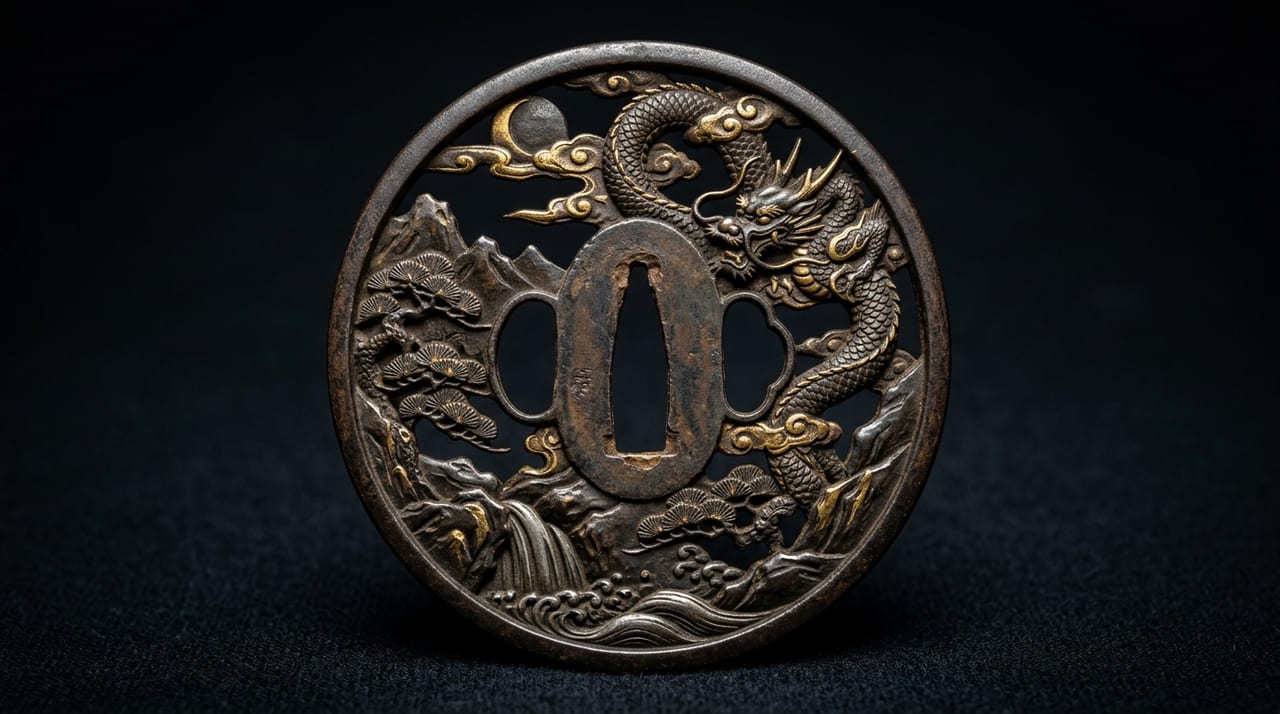 * Image is for illustrative purposes only.
Table of Contents
What is the Shinshinto Period——A Sword Revival Movement in the Late Edo Period
The history of Japanese swords is broadly divided into three periods: "koto" (ancient swords), "shinto" (new swords), and "shinshinto" (newer swords). Koto refers to pre-Keichō (until around 1596), shinto refers to the Keichō to Genroku period (1596–1780), and shinshinto refers to the late Edo period through early Meiji (1780–1876).
The core characteristic of the shinshinto period was its conscious return to ancient swords—especially masterpieces from the Kamakura to Nanboku-chō periods—as opposed to the shinto period's pursuit of contemporary styles. This revivalism was not mere nostalgia but a deep ideological movement rooted in the political and social crisis of the era. While the master craftsmen of the shinto period had certainly produced brilliantly ornamental works, there emerged a shared recognition among shinshinto smiths that the original practical functions of the sword—sharpness, curvature, and strength of the spine—had been neglected.
The Tempō Reforms and Sonnō Jōi——The Era Transformed the Sword
The shinshinto period coincided with an era when Japan faced enormous pressure from both within and without.
- Foreign Crisis: From the late 18th century onward, Russian and British ships frequented Japanese coastal waters, and the 1808 Phaeton Incident (British warship invasion of Nagasaki) rapidly elevated the importance of coastal defense. Demand for practical combat blades increased again, and calls for "functional swords, not display pieces" reached the sword smiths.
- [The Tempō Reforms](/eras/tempo-reform-swords) (1841–1843): The shogunate reforms under Senior Councilor Mizuno Tadakuni aimed at prohibiting luxury and rebuilding finances, creating an atmosphere of avoidance toward elaborately decorated fittings and ornamentation-first styles that made extensive use of gold and silver. As society demanded overall tightening, awareness of the sword as a spiritual pillar of the warrior class heightened, and ancient traditional techniques that could withstand practical use regained attention.
- Rise of Sonnō Jōi Thought: Toward the end of the shogunate, ideology calling for a return to Japan's traditional values centered on the emperor spread among samurai and intellectuals. Respect for ancient swords resonated with this spiritual climate, and "recreating the masterpiece blades of Kamakura" became not merely a technical challenge but an expression of will to preserve Japan's traditions.
Suishinshi Masahide——Pioneer of Revivalism
The most important theoretical and practical pioneer of shinshinto revivalism was [Suishinshi Masahide (1750–1825)](/smiths/masahide).
Masahide, a native of Dewa Province (Yamagata), honed his skills in Edo before publishing his work "Touken Bengi" (Investigations of Swords) in 1797, in which he criticized shinto-period style and advocated a return to koto. The core of his criticism was: "Shinto smiths sacrificed sharpness and steel quality in pursuit of excessive ornamentation and visual beauty." This argument created great waves in the sword world of the time.
Masahide himself thoroughly researched and practiced various ancient forging traditions including the Bizen, Soshu, and Yamato schools, systematically organizing the characteristics of the hamon and steel that each tradition produced. In the Bizen tradition, he consciously reproduced the elegant choji-midare hamon and the texture of densely packed itame steel; in the Soshu tradition, the powerful appearance of a broad straight-edged blade with abundant ara-nie formation. His pursuit was not mere imitation but an inquiry into the very essence of the forging method—why ancient swords took such forms. His disciples became the next generation of master smiths that carried the shinshinto period forward.
Taikei Naotane and Minamoto Kiyomaro——The Peak of Shinshinto
[Taikei Naotane (1778–1857)](/smiths/naotane) was a particularly important figure among Suishinshi Masahide's disciples. A native of Dewa Province (modern Yamagata), Naotane excelled at "recreating the Bizen tradition" and produced works possessing steel beauty and hamon elegance approaching Kamakura-period Bizen blades. The sight of fine ko-itame skin tightly packed, with golden lines and sand patterns flowing through a milky white steel surface, evokes the masterpiece blades of old Bizen. Even today his works are called "the peak of shinshinto," and several are designated National Treasures or Important Cultural Properties.
Equally indispensable is the master smith of the same era, [Minamoto Kiyomaro (1813–1854)](/smiths/kiyomaro). A native of Shinano Province (Nagano), Kiyomaro began his path as a sword smith through self-study and established his own distinctive style specializing in the Soshu tradition in Edo. Based on either straight-edged or gunome-midare hamon, his blades feature abundant nie at the edge, with brilliance like stars scattered across night sky gleaming against the steel's deep black. Itame skin with flowing reflections displays an expression as though the entire blade comes alive depending on viewing angle. Due to his early death at age 42, few works exist, but all extant pieces are highly valued as masterpieces and were treasured by the samurai of the bakumatsu period as ideal blades.
Stylistic Characteristics of Shinshinto——Restoration of Ancient Methods and Technical Innovation
Recovery of the Steel (Jigane): The master smiths of the shinshinto period recovered the steel quality that had declined during the shinto period by refining the number of folding-and-hammering cycles and adjusting carbon content. Giving depth and luster to the rich forging skin of mokume and itame patterns was emphasized.
Diversity of Hamon and Mastery of Traditions: A diversity of hamon emerged through conscious reference to the various traditions of ancient blades (Bizen, Soshu, Yamato, and Yamashiro schools), and it became not uncommon for a single smith to employ multiple traditions. The flexibility to choose traditions according to a patron's preference and purpose demonstrates the sophisticated technical adaptability demanded of smiths in this era.
Return to the Ancient Shape (Sugata): A return from the excessively wide and pointed "shinto shape" that was fashionable in the shinto period to the refined sword shape of the Kamakura through Nanboku-chō periods is evident. The elegant proportions with deep curvature, a compact kissaki, and consideration of blade thickness were re-evaluated as functional beauty conceived with practical combat in mind.
The Abolition of Swords and the End of the Shinshinto Period——Transmission to the Modern Era
The shinshinto period came to an end with the Edict on the Abolition of Swords in Meiji 9 (1876). Demand collapsed rapidly with the prohibition on carrying swords, and many sword smiths lost their livelihoods. Yet the techniques and aesthetic sensibilities accumulated during this period were not completely lost but were inherited by certain smiths even after the Meiji Restoration.
The "contemporary sword smiths" from the Taishō through Shōwa periods aimed for even greater heights, building on the methodology of ancient tradition revival established by the shinshinto masters. Tracing the technical lineage of sword smiths recognized today as Living National Treasures, the source stream in many cases reaches back to the shinshinto master smiths.
Shinshinto blades are established today as an independent genre, evaluated by aesthetic standards distinct from koto and shinto. "Shinshinto character"——the sincere respect for ancient blades and the tension of modern will striving to transcend them——continues to radiate deep allure to sword enthusiasts. The blade forged by the sense of crisis in the era shaken by the Tempō Reforms has not lost its luster even 150 years later.