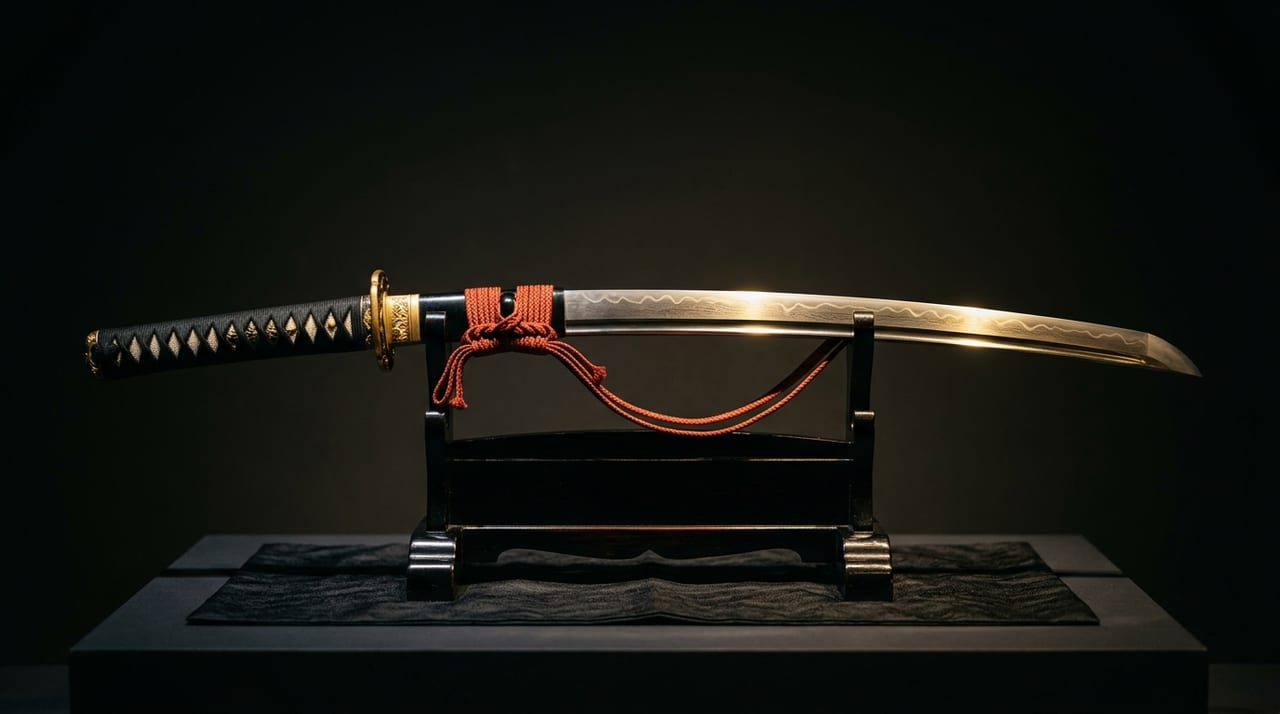
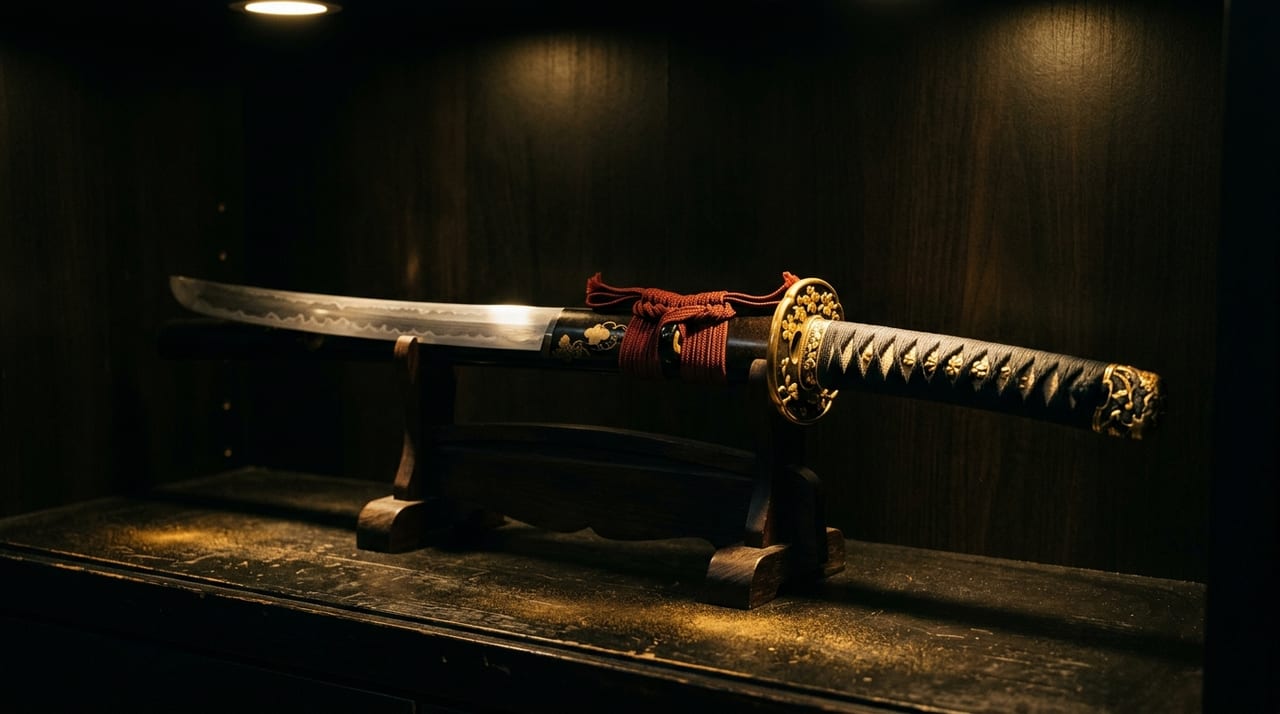
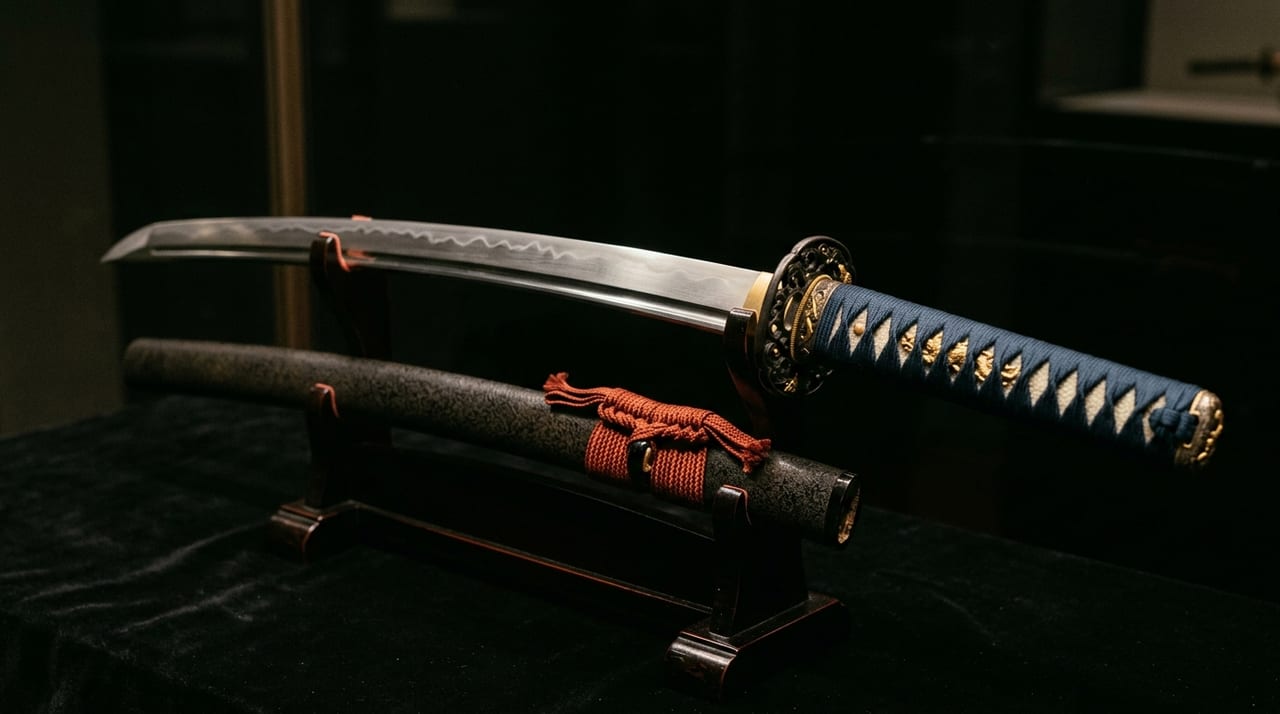
One Hundred Years of Sword History in the Early Edo Period — The Sword Culture Shaped by Military Rule and Kanbun Shintō, from Sekigahara to the Eve of Genroku
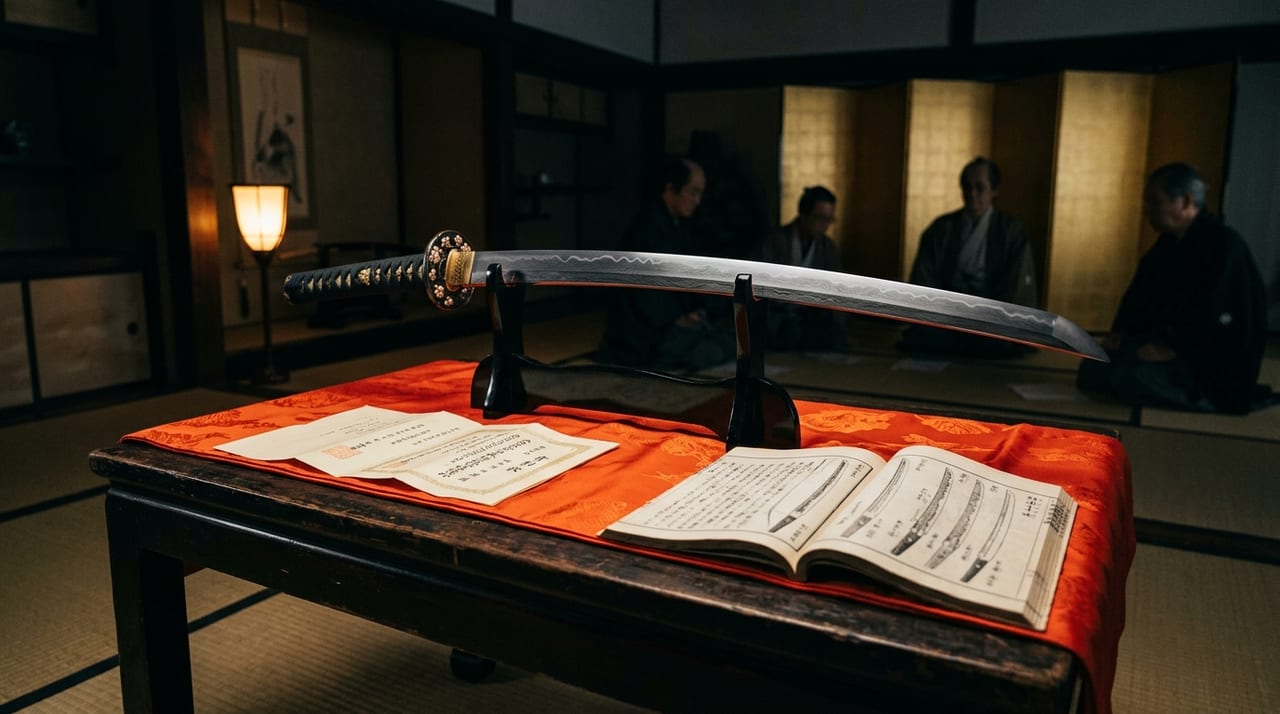 * Image is for illustrative purposes only.
Table of Contents
The Transformation of Sword Demand Born from the Battle of Sekigahara
In Keichō 5 (1600), the Battle of Sekigahara ended with the establishment of Tokugawa Ieyasu's supremacy. This historical turning point also became a major catalyst for transformation in the sword industry. The mass demand for swords that had peaked during the Sengoku period cooled rapidly, and the era that had called for mass-produced kazuuchi-tō (quantity-made swords) began giving way to an age in which individual quality and aesthetic value were prized.
Throughout the Keichō to Genna years (1600–1623), swords inherited from many Sengoku warlords circulated in the market. In this period, when the echoes of war had not yet faded, demand for kotō with practical combat functionality remained strong, and appreciation for the works of old master craftsmen was growing. At the same time, as the Edo shogunate began adopting policies to control and favor tōkō of the major production centers, the conditions for producing new swords (shintō) were being put in place.
This transition was also a change that directly affected how tōkō made their livelihood. The focus shifted from forging large numbers of practical swords for battle to crafting each sword with the utmost quality for a limited clientele, and the more skilled a tōkō was, the more his careful, commission-by-commission workmanship came to be valued.
From Kan'ei to Jōō: The Dawn of Edo Shintō
The Genna and Kan'ei years (1624–1644) were a period in which the foundations of sword culture in Edo were laid. Under the rule of the third shogun Tokugawa Iemitsu, military governance was reinforced and various institutions designed to curtail the military power of the daimyo (including the formalization of the sankin-kōtai system of alternate attendance) were put in place, while the wearing of swords by samurai was institutionalized as a symbol of status.
One noteworthy development in sword production during this period was the relocation of tōkō to Edo. Skilled tōkō from traditional production centers such as Osaka, Kyoto, and Bizen were summoned to Edo and served as official swordsmiths for the shogunate. While retaining their inherited techniques, they developed styles suited to the demands of the new market that Edo represented.
Among the characteristics of swords from this period is a change in sugata (the overall form of the blade). A transition began from the wide mihaba and heavy Keichō Shintō form that had been fashionable during the Sengoku period toward a slimmer and more supple shape. The shape of the nakago also changed, and the way the mei was inscribed came to reflect the characteristics of the era. The details of the nakago finishing and the cutting of the yasurime also display the distinctive style of this period, and in later appraisal these elements, together with the calligraphy of the mei, serve as clues for determining the period.
The Emergence of Kanbun Shintō — An Innovation in Sword Form
The Manji and Kanbun years (1658–1673) represent one of the most important turning points in the sword history of the early Edo period. It was during this period that the distinctive sword form known as Kanbun Shintō was established.
The characteristics of Kanbun Shintō lie in the combination of a relatively narrow motohaba with a large differential from the sakihaba (making the distinction between base and tip clearly apparent), a medium kissaki, and a moderate sori. This was the result of pursuing a refined appearance over practicality, and reflected the social demand for a sword as an accomplishment befitting a samurai in a time of peace.
Among the representative tōkō who were active in this period, Nagasone Kotetsu Okisato stands out. Kotetsu, who had relocated to Edo from Echizen Fukui, took the world by storm with his distinctive jigane and richly animated hamon, earning fame as "the foremost tōkō of Edo." His swords commanded high prices even in his own time, and his popularity was such that later generations would say "there are many swords bearing a forged mei of Kotetsu."
In Osaka, Inoue Shinkai (the second Izumi no Kami Kunisada, who later took the name Shinkai) was active. The swords of Shinkai, the foremost representative of Osaka Shintō, were known for their sharp and brilliant hamon and dignified sugata, and were widely sought not only by samurai but also by the prosperous merchant class.
Today, when seeking a sword attributed to Kotetsu or Shinkai, the presence or absence of a kanteisho (appraisal certificate) issued by an authoritative appraisal institution is an important basis for judgment, alongside the sword's provenance. Because popular tōkō's works have a history of many forgeries circulating in later ages, confirming whether a piece comes with a kanteisho is considered the fundamental principle in collecting.
From Enpō to Jōkyō: The Maturation of the Sword Market
Throughout the Enpō to Jōkyō years (1673–1688), the sword market matured further. A sword distribution network centered on the three cities of Edo, Osaka, and Kyoto was established, and the authority of the Hon'ami family in appraisal and the issuing of origami certificates became firmly entrenched.
During this period, the axis of evaluation for sword value was shifting from mere superiority of materials and technique toward the prestige of the mei, the presence of a kanteisho, and the authenticity of provenance. The buying and selling of famous swords became incorporated into the monetary economy, and swords began to take on the character of speculative collectibles. Origami were documents in which the Hon'ami family certified the authenticity and value of a sword, and obtaining one carried great significance in enhancing a sword's standing. Today's kanteisho system is also regarded as drawing on this tradition of provenance appraisal.
Sword Culture on the Eve of Genroku — The Transition from Military to Civil Governance
After the Tenna and Jōkyō years (1681–1688), under the rule of the fifth shogun Tokugawa Tsunayoshi, the shogunate's political direction shifted decisively from military governance to civil governance. On the eve of the Genroku period (1688–1704), samurai society's view of the sword underwent a decisive transformation.
The notion of "a sword for actual combat" receded, and the idea of "the sword as a work of art and ceremonial accoutrement expressing samurai dignity" came to the fore. The sword shifted its central function from battlefield implement to token of social standing, and its criteria of evaluation gradually changed from "sharpness" to "beauty," "provenance," and "the prestige of the mei." The view of swords not merely as weapons but as furnishings that spoke of a family's rank and lineage also spread.
The one hundred years of the early Edo period were an era that served as a bridge from the Sengoku sword culture to the Edo sword culture. The transition from utility to aesthetics, the transition from mass production to individual craftsmanship, and the change in the social standing of tōkō — these multifaceted transformations led to the splendid sword art of the later Genroku culture and the mid-Edo period.
Key Perspectives for Appreciating and Collecting Early Edo Shintō
When appreciating and collecting shintō forged in the early Edo period, having the following perspectives will deepen one's understanding.
- Reading changes in sugata: The characteristics of the sugata — the differential between motohaba and sakihaba, the size of the kissaki (point), and the position of the sori (curvature) — serve as clues for estimating the approximate period of production.
- Checking the nakago and mei: The finishing of the nakago, the yasurime, and the calligraphy of the mei are important elements for identifying the tōkō and period, and form the basis of expert appraisal.
- Prioritizing the presence of a kanteisho: The more popular a tōkō was, the more likely forged mei are to be in circulation; therefore, confirming whether an authoritative appraisal institution's kanteisho is attached is the first step in judging authenticity.
- Researching provenance and lineage: Which family a sword has descended through, and whether supporting documents other than origami and kanteisho survive, constitute evidence corroborating the sword's provenance.
These perspectives can be understood more deeply by bearing in mind the changes that swords underwent during the turbulent one hundred years of the early Edo period — from utility to aesthetics, from mass production to individuality, from weapon to furnishing.