The Battle of Sekigahara (1600) and Sword Culture: Blades of the Realm-Deciding Battle and the Postwar Reordering of Sword Order
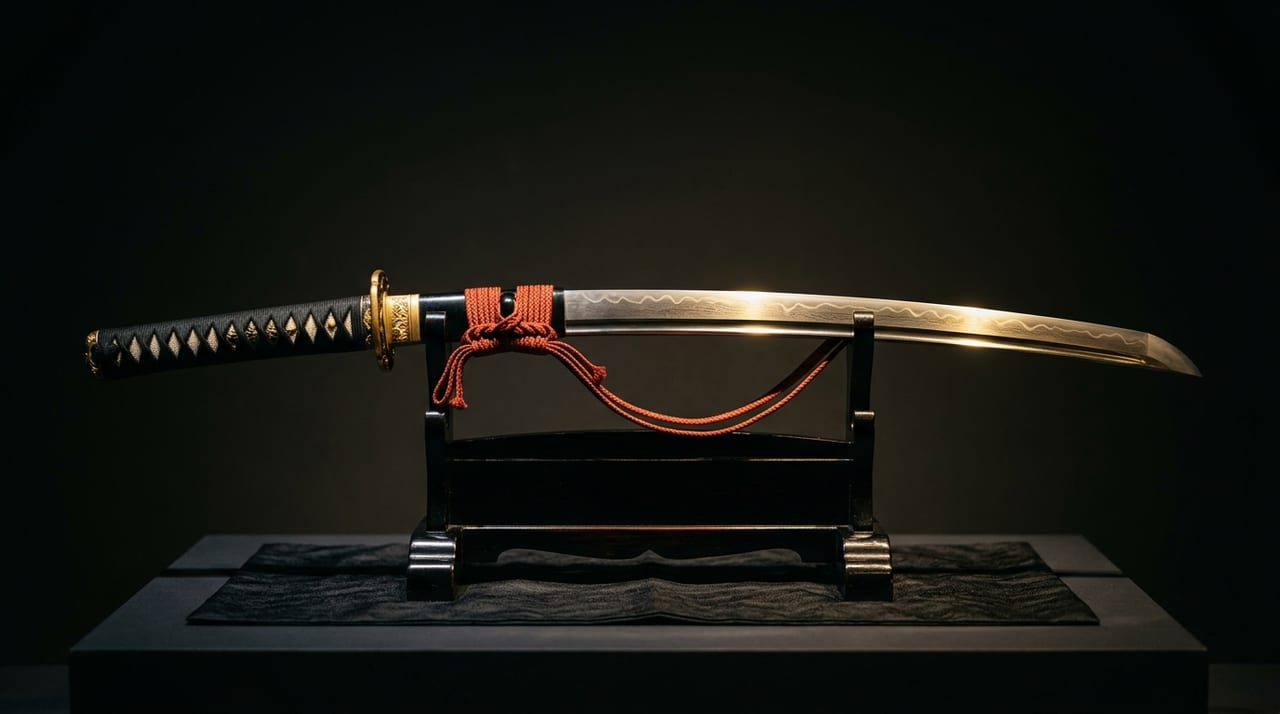 * Image is for illustrative purposes only.
Table of Contents
The Great Armies of East and West Gathered at the Turning Point
On the 15th day of the 9th month of Keicho 5 (October 21, 1600), in Sekigahara, Mino Province (present-day Sekigahara Town, Fuwa District, Gifu Prefecture), the Eastern Army under Tokugawa Ieyasu as its leader clashed with the Western Army nominally led by Mouri Terumoto but effectively centered around Ishida Mitsunari. After the death of Toyotomi Hideyoshi the previous year, the balance of power within the system of Five Regents and Five Bugyo broke down, and the conflict between Ieyasu and Mitsunari escalated into a political struggle that divided the daimyo of the entire nation. The battle was fought by tens of thousands of troops from both sides in the narrow basin of Sekigahara, and the fate of the realm was decided in merely half a day of combat, making it a decisive battle of unprecedented scale and speed even by the standards of the Sengoku period.
Hideyoshi's young heir, Toyotomi Hideyori, was still a child, and the maneuvering among the daimyo over who would hold actual power in the government turned into armed conflict when Ieyasu moved to subdue Uesugi Kagekatsu. With the great daimyo of the nation largely divided into either the Eastern or Western camp, and localized battles breaking out across various regions, the Battle of Sekigahara itself was the engagement that determined the outcome. What gives this battle its historical significance is that it was not merely a conflict between two great daimyo, but a battle in which the very system of governance of Japan in the post-Toyotomi era was at stake.
Firearms, Spears, and Swords—the Division of Labor Among the Weapons that Sustained the Battlefield
By this era, firearms and long spears had already become the main force in battles, and at Sekigahara too, both armies deployed musketeers and spear phalanxes at the forefront as they faced each other. Swords and blades served as supplementary weapons, demonstrating their true value in close combat when battle descended into confusion or in the melee that followed the breakthrough of enemy lines. Specifically, swords were employed in the following situations:
- Close combat by slashing into enemy ranks broken by spears
- Delivering the finishing blow after a soldier had fallen from his horse or been pinned to the ground
- The final stroke in taking an enemy commander's or soldier's head
The taking of heads was directly connected to an important procedure in post-battle reward allocation (head inspection) that proved one's military accomplishments, so the sword was not merely an instrument of killing and wounding, but also served as a tool to make military achievements visible. Even after the Western Army's complete collapse due to the defection of multiple units, including Kobayakawa Hideaki's betrayal, fierce close combat continued on the battlefield. Among these, the withdrawal campaign of Shimazu Yoshihiro's forces, who drove straight through the enemy encirclement and withdrew from the battlefield despite the tide turning against them, would be remembered for generations to come as an example of how a small force broke through a siege and escaped the field. The more chaotic the retreat became, the more crucial the sword became as the last resort when spears broke and firearms ran out of ammunition.
The Swords of the Defeated, Confiscated for the Winners
Ishida Mitsunari, leader of the Western Army, was captured shortly after the battle and executed in Kyoto. It was the custom of the time that weapons and swords belonging to generals of the defeated army or from daimyo houses that were destroyed or had their domains confiscated would become targets of confiscation or redistribution as rewards by the victors, and the postwar settlement of Sekigahara was no exception. Weapons left in castles and mansions were confiscated and redistributed as rewards to meritorious generals or as symbols of Tokugawa prestige. While it is difficult to trace the provenance of individual swords through reliable historical records, the structure itself in which the ownership of swords changed hands and their documented histories (lineages) were rewritten following large-scale battles is a common feature of sword history during the Sengoku period, not limited to Sekigahara alone. As numerous daimyo houses that had sided with the Western Army were pushed into confiscation of domains or extinction, swords that had been passed down through old families flowed out into the market and to other houses in various regions, and this became one of the factors that complicated the provenance relationships of swords in later eras.
Reward Allocation and Daimyo Repositioning Drove Sword Demand
What was particularly significant in the postwar settlement of Sekigahara was the massive reward allocation and repositioning of daimyo by Ieyasu. Most daimyo who sided with the Western Army saw their domains reduced or confiscated entirely, while daimyo who sided with the Eastern Army and Ieyasu's own house and hereditary vassals gained new territories through increases in domain and transfers. Daimyo houses that received new domains needed to rebuild their procurement systems for weapons and swords as they reorganized their new castle towns, leading to the recruitment of official smiths and the protection and advancement of existing master blades throughout the country. This was a continuation of the flow whereby groups of sword-smiths had been dispersed and reorganized with each battle throughout the Sengoku period, and Sekigahara was an especially significant turning point that triggered large-scale movement of both people and techniques. For daimyo houses whose castle towns rapidly expanded due to domain increases, there was an urgent need to assemble a complete set of weapons in a short period of time, which simultaneously drove up demand not only for sword smiths but also for polishers, scabbard makers, and handle wrappers and other craftspeople involved in sword production. The postwar settlement of a single battle remade the entire distribution of craftspeople involved in sword production.
From Combat Blades to Swords of Peace—A Turning Point in the Age
With the victory at Sekigahara, Tokugawa authority was largely established, and after becoming shogun three years later, the Edo shogunate was opened. While the battle itself was a culmination of the practical sword combat techniques of the late Sengoku period, the Tokugawa rule that began immediately afterward was also the starting point of a long process in which swords would gradually transform from practical fighting tools into symbols displaying rank and status, and ultimately into objects of aesthetic appreciation. Sekigahara was the watershed moment in Japanese sword history when the center of gravity shifted from "swords for fighting" to "swords for governing the realm." The value standards for sword-making that had previously prioritized durability to withstand the rigors of actual combat gradually shifted over the following decades toward placing greater emphasis on aesthetic elements such as the elegance of form and the visual appeal of the hamon pattern. The single day's battle at Sekigahara simultaneously marked both the end of one era and the beginning of another in the long history of the Japanese sword—a profound significance that only becomes visible when viewed from the perspective of later generations.