Toyotomi Hideyoshi and Hideyori: Sword Policy in the Azuchi-Momoyama Period
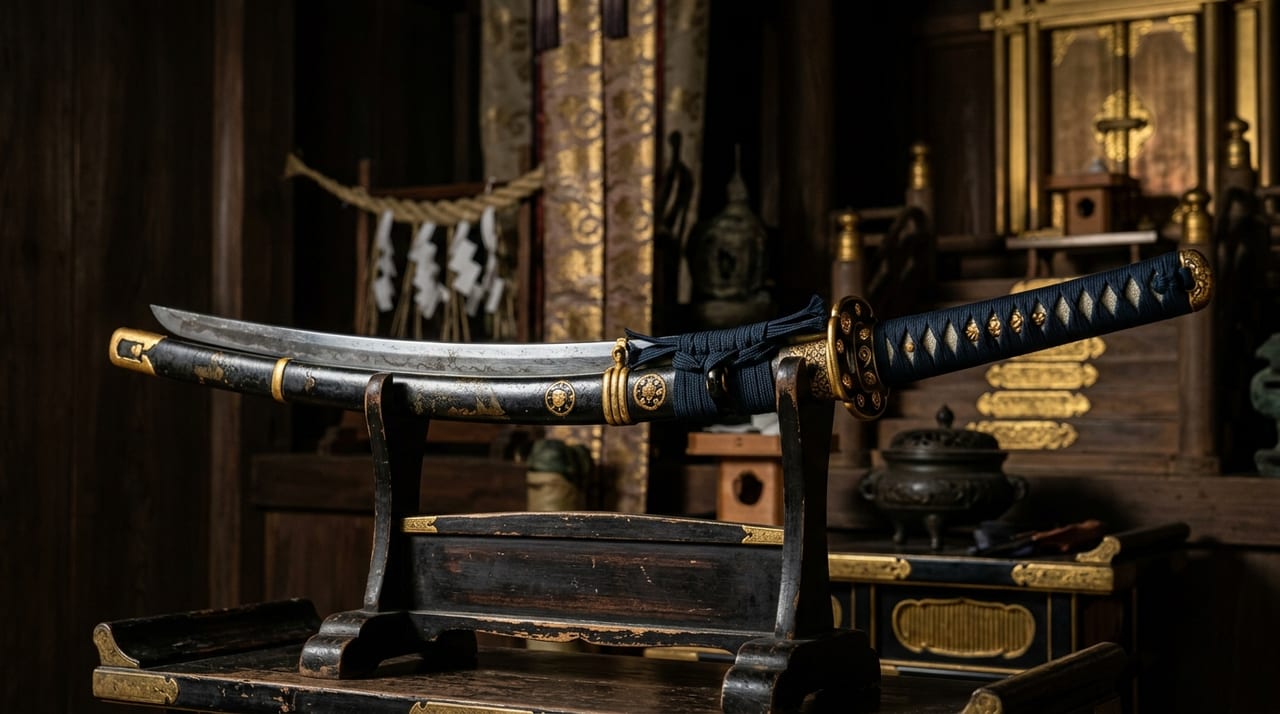 * Image is for illustrative purposes only.
Table of Contents
Toyotomi Administration and the Historical Background of Sword Control
Toyotomi Hideyoshi (1537-1598) was a Sengoku daimyo who succeeded Oda Nobunaga's unification efforts and completed the full unification of the nation. Beyond merely military unification, Hideyoshi advanced the centralization of national armament and the regulation of sword culture, laying the foundation for the social hierarchy and weapons controls that would lead to the subsequent Edo shogunate. In this process, swords were redefined not merely as weapons, but as symbols of power.
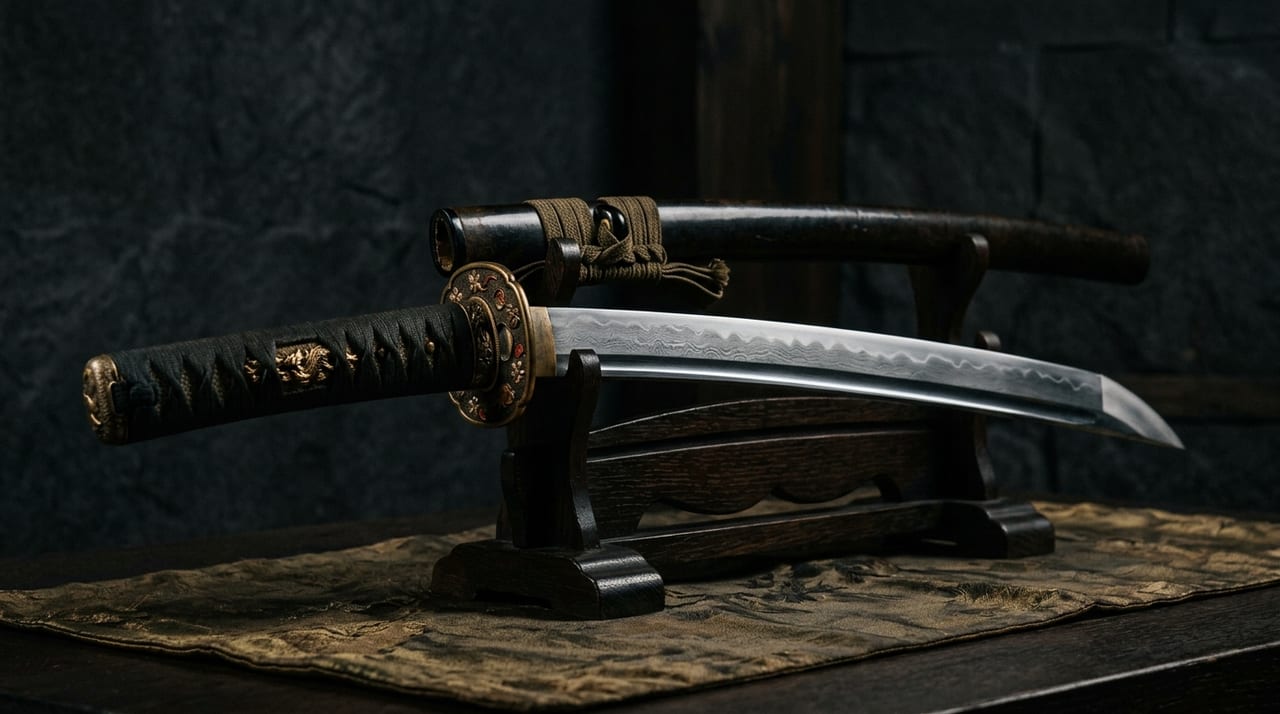
The foremost sword policy implemented by Hideyoshi was the "Sword Hunt Edict (Katanagari Rei)" (Tensho 15, 1587). This edict called for the confiscation of swords, spears, and other weapons from farmers, temples, and shrines throughout the nation, consolidating them into central armories. The purposes of the Sword Hunt Edict were as follows:
- Prevent peasant rebellions
- Prohibit anyone other than samurai from possessing swords
- Thoroughly centralize control of weapons under Hideyoshi
This policy formed the core of Hideyoshi's governance strategy.
Specific Implementation and Social Impact of the Sword Hunt Edict
The Sword Hunt Edict was implemented particularly strictly in Tosa Province under Chosokabe Motochika's rule and in the territories of Otomo Sorin in Bungo Province. The number of confiscated swords was enormous, with records indicating that it reached several million blades. These weapons were sometimes repurposed as nails and metal fittings for the Great Buddha Hall (Rushana Buddha statue) in Kyoto. Such large-scale confiscation was not merely disarmament, but part of a strategy to reorganize the power structures throughout the nation around Hideyoshi.
The Sword Hunt Edict was not merely a weapons regulation, but also a policy aimed at fixing social classes. Hideyoshi clearly distinguished the social hierarchy and established a rigid status order of "samurai, farmers, artisans, merchants" (shi-no-ko-sho). The treatment of swords under this order was divided by status as follows:
| Status | Treatment Regarding Swords |
|---|---|
| Samurai | Obtained the privilege to wear swords |
| Farmers | Possession of swords became a serious violation deserving of capital punishment |
With the establishment of this status system, sword ownership became directly linked to power.
As Hideyoshi constructed his power base centered on Kyoto and Osaka, the Sword Hunt Edict became the means to simultaneously achieve nationwide disarmament and political unification. Regional lords also acknowledged the implementation of the Sword Hunt Edict within their territories by becoming subordinate to Hideyoshi. Through this process, Hideyoshi's unification of the realm was achieved not only at the military and political levels, but also at the social and cultural levels.
Hideyoshi's Palace and the Development of Lavish Sword Ornamentation Culture
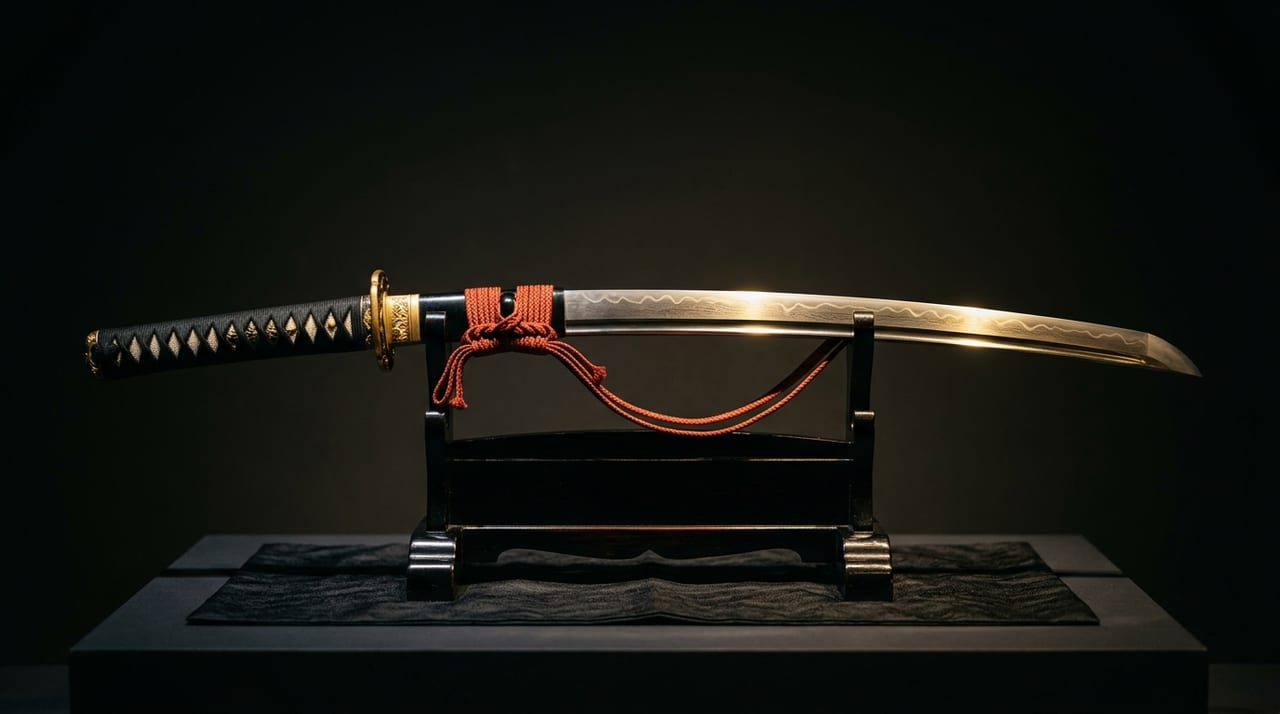
On the other hand, Hideyoshi himself favored flashy and lavish sword ornamentation, and the daimyo under his influence also expended enormous sums to acquire lavish sword ornamentation in order to curry his favor. Just as Hideyoshi employed Sen no Rikyu, the master of the tea ceremony, Hideyoshi's palace gathered Japan's finest sword smiths, and competition in the creation of famous swords flourished.
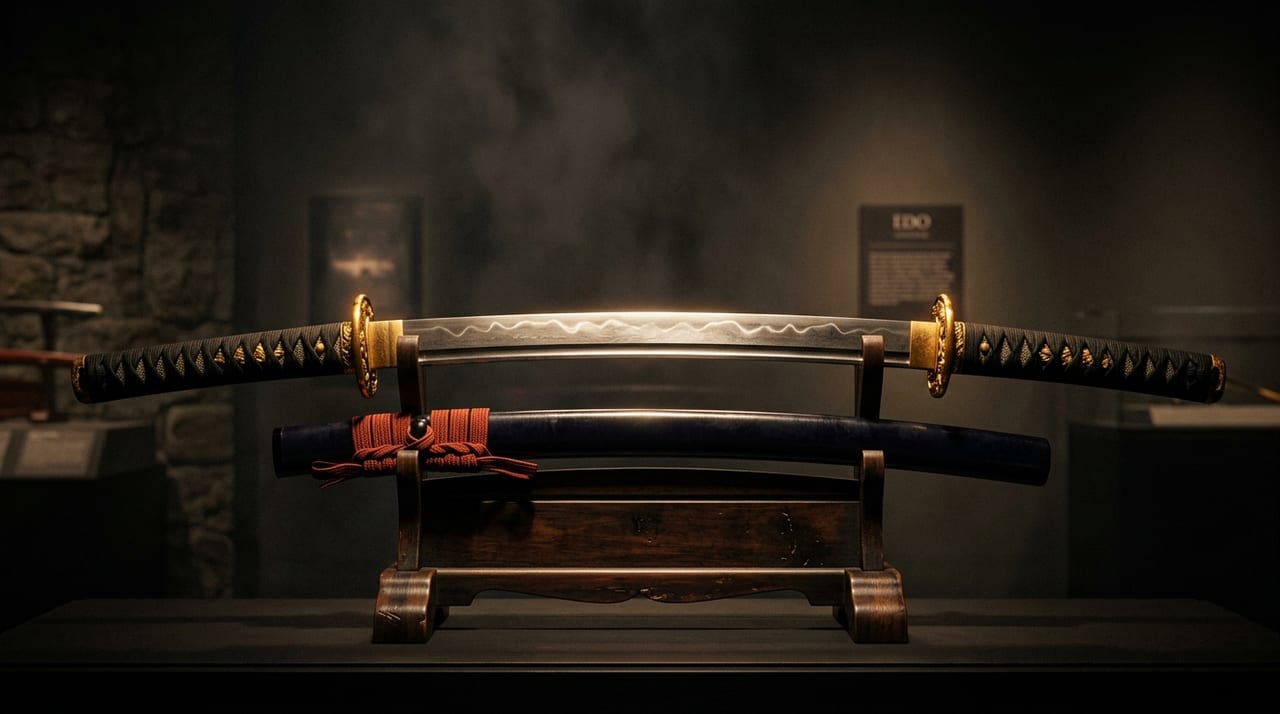
Master sword smiths of the Azuchi-Momoyama period such as Horikawa Kunihiro and Umetada Myōju flourished under Hideyoshi's patronage. Horikawa Kunihiro in particular earned Hideyoshi's trust and is said to have forged many famous swords. The swords produced by these master craftsmen were treasured as "Hideyoshi's works" and later came to be treated as National Treasure-class famous swords. Through these sword smiths, Hideyoshi orchestrated sword culture as a symbol of power and governance.
With the completion of Hideyoshi's unification of the realm, cultural development in Kyoto and Osaka also accelerated. The Azuchi-Momoyama period was a time when not only sword culture but culture in general—including the tea ceremony, flower arrangement, and Noh theatre—blossomed. Through Hideyoshi's active support of these cultural activities, swords transcended from mere practical weapons to become works of fine art and craft.
Toyotomi Hideyori and Osaka Castle's Sword Culture
Hideyoshi's son, Toyotomi Hideyori (1593-1615), inherited the position of Kanpaku Taiko after Hideyoshi's death. Though Hideyori did not possess the same governing ability as Hideyoshi, he carried on Hideyoshi's will and, together with Yodo-dono (Hideyoshi's concubine and Hideyori's mother), maintained the authority of the Toyotomi clan. Osaka Castle continued to function as a cultural center, and many sword smiths gathered seeking Hideyori's patronage.
In the Winter Campaign of Osaka (1614) and the Summer Campaign of Osaka (1615), the Toyotomi clan was destroyed by the Edo Shogunate led by Tokugawa Ieyasu. In these campaigns, Hideyori and Yodo-dono committed suicide, and the Toyotomi clan was completely annihilated. With the fall of the Toyotomi, the swords and sword ornaments beloved by Hideyoshi and Hideyori were either presented to the Edo Shogunate or preserved as treasured items of daimyo families.
The Profound Impact of Oda-Toyotomi Period Sword Policy on Later Generations
The sword control policies established by Hideyoshi were inherited by the subsequent Edo Shogunate. The status system and weapons regulations of the Edo period were all extensions of Hideyoshi's Sword Hunt Edict and sword policies. The order that only samurai held the right to wear swords was strictly maintained throughout the 260 years of the Edo period and continued until the Meiji Restoration.
The "centralization of weapons control" and "symbolization of swords as power" accomplished by Hideyoshi became a watershed in Japanese sword culture. On one hand, it was a means for the ruling class to strip weapons from farmers, but on the other, it positioned swords at the same high cultural level as the tea ceremony and Noh theatre. One could say that precisely because the Sword Hunt Edict prohibited private ownership of swords, sword smiths were able to concentrate all the more on producing high-quality blades that met the expectations of those in power.
There is also interest in how the governance and sword culture of Hideyoshi and Hideyori will be depicted in the NHK Taiga drama "Toyotomi Brothers!" (broadcast in 2026). At the Tokugawa Art Museum, the "NHK Taiga Drama Special Exhibition: Toyotomi Brothers!" is scheduled to display actual swords and sword fittings that Hideyoshi and Hideyori favored. Through these exhibitions, it will be possible to again recognize how the sword policies and culture of the Oda-Toyotomi period shaped later Japanese society.
Summary—Hideyoshi's Position in Sword History
Toyotomi Hideyoshi's Sword Hunt Edict and sword control policies represent an extremely important turning point in Japanese sword history. Hideyoshi redefined swords not merely as weapons, but as symbols of power and culture, and thoroughly centralized control over them to the capital. At the same time, Hideyoshi patronized master sword smiths and led the development of lavish sword ornamentation culture, elevating swords to a privileged position as fine art and craft for those in power. Without Hideyoshi's sword policies, the hierarchical society of the subsequent Edo period and the sword culture that supported it would not have existed. Through this period, swords were completely transformed into a presence symbolizing the order and power structure of Japanese society.