New Arrivals — Browse our catalog for the latest authentic Japanese sword arrivals. Browse →
Articles on investment, export, dealers, market trends, and digital transformation in the sword industry.
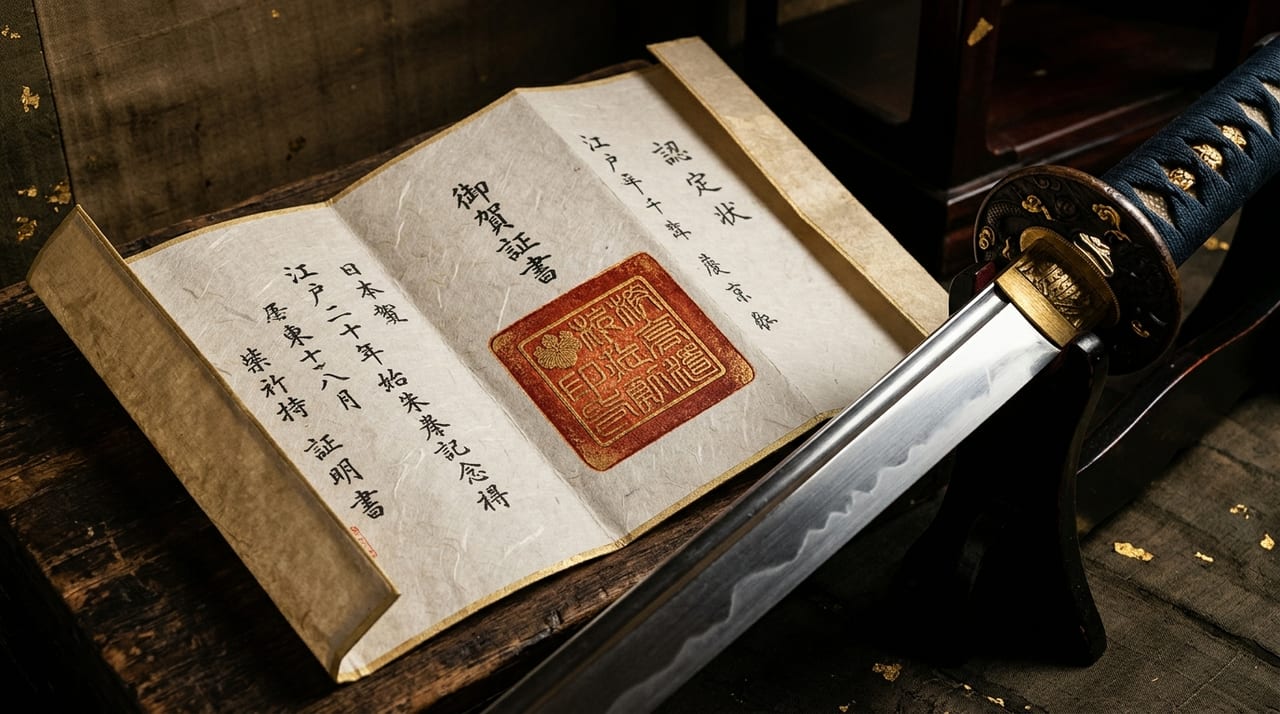
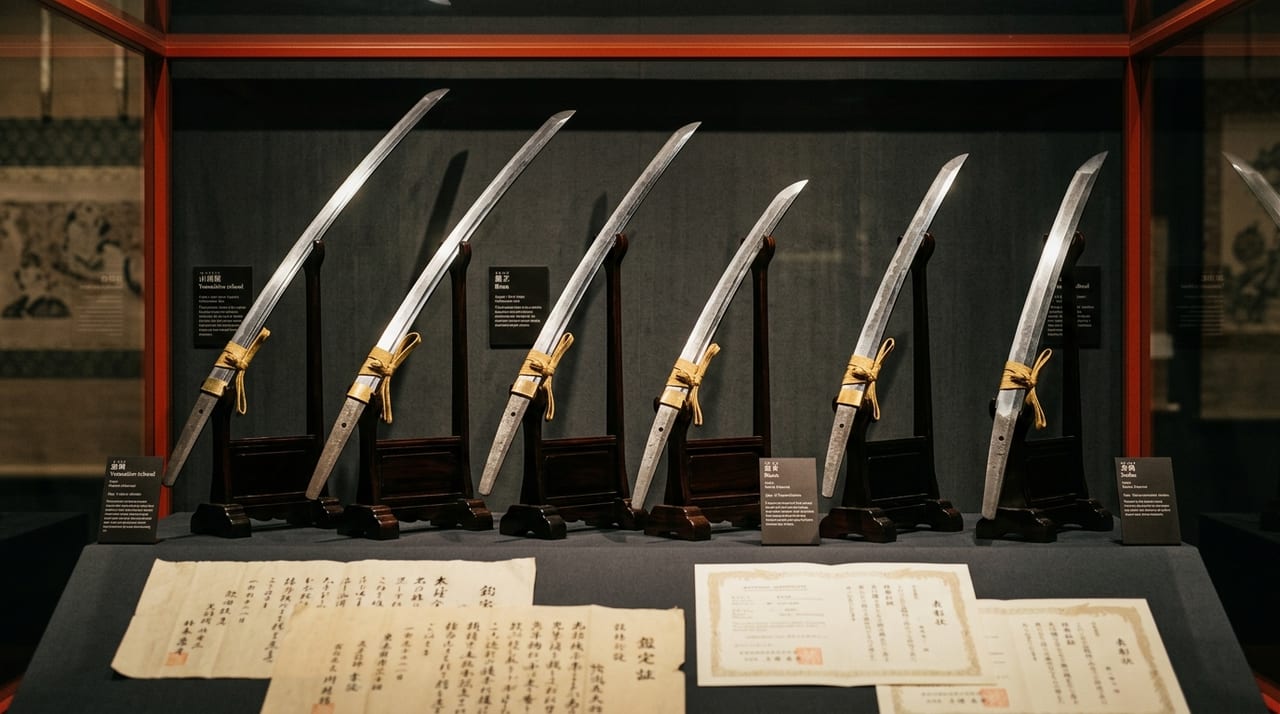
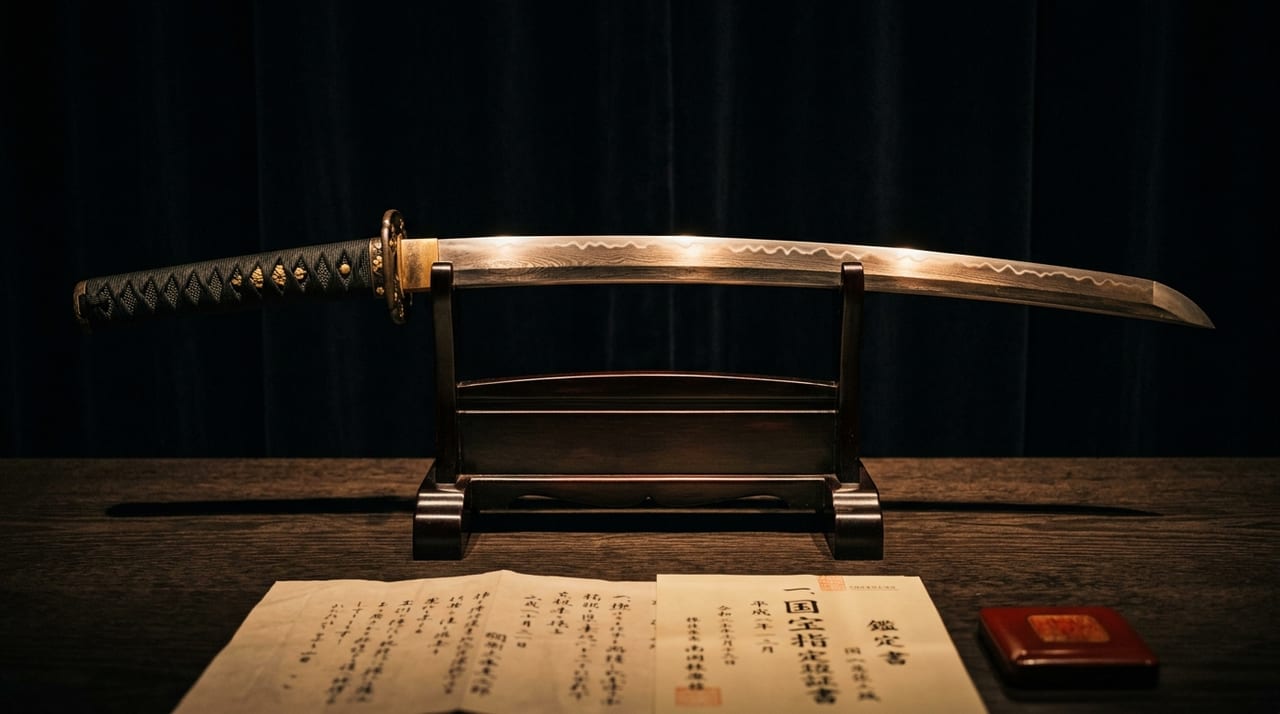
Origami is the kanteisho issued by the Honami family during the Edo period. This article explains the contents of origami, the shirozuke, the etymology of "origami-tsuki," and the differences from modern kanteisho.
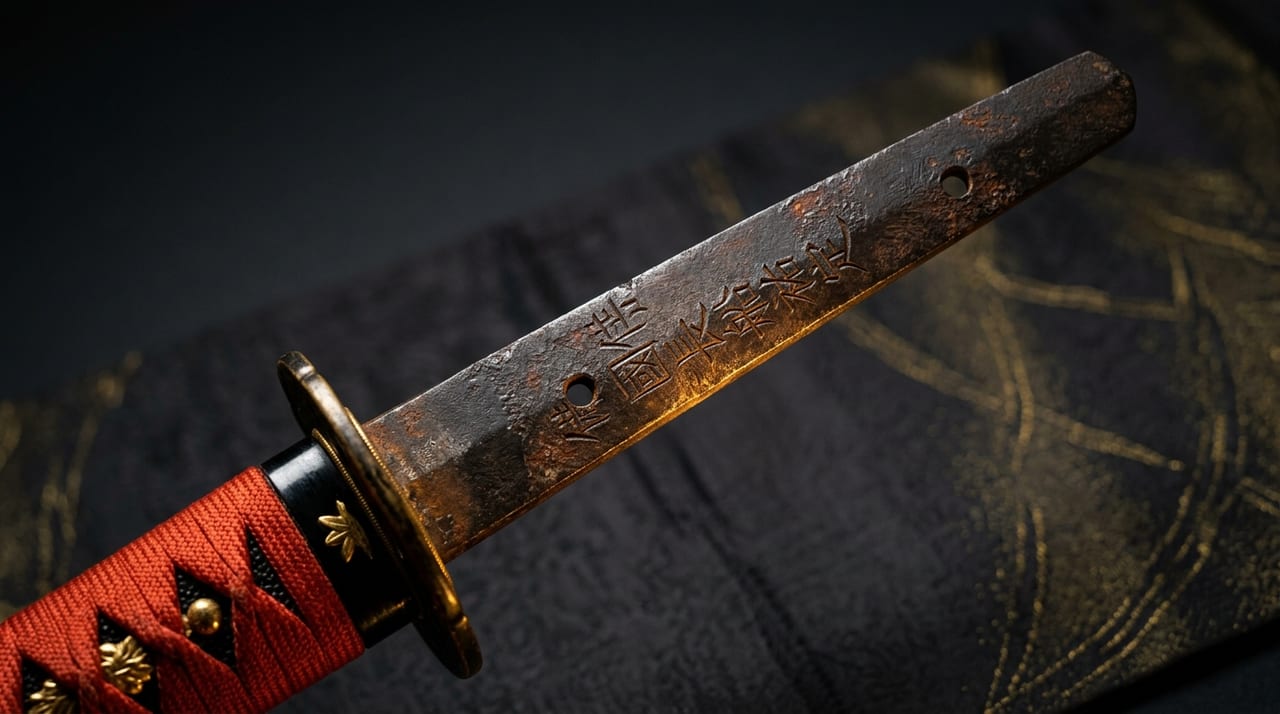
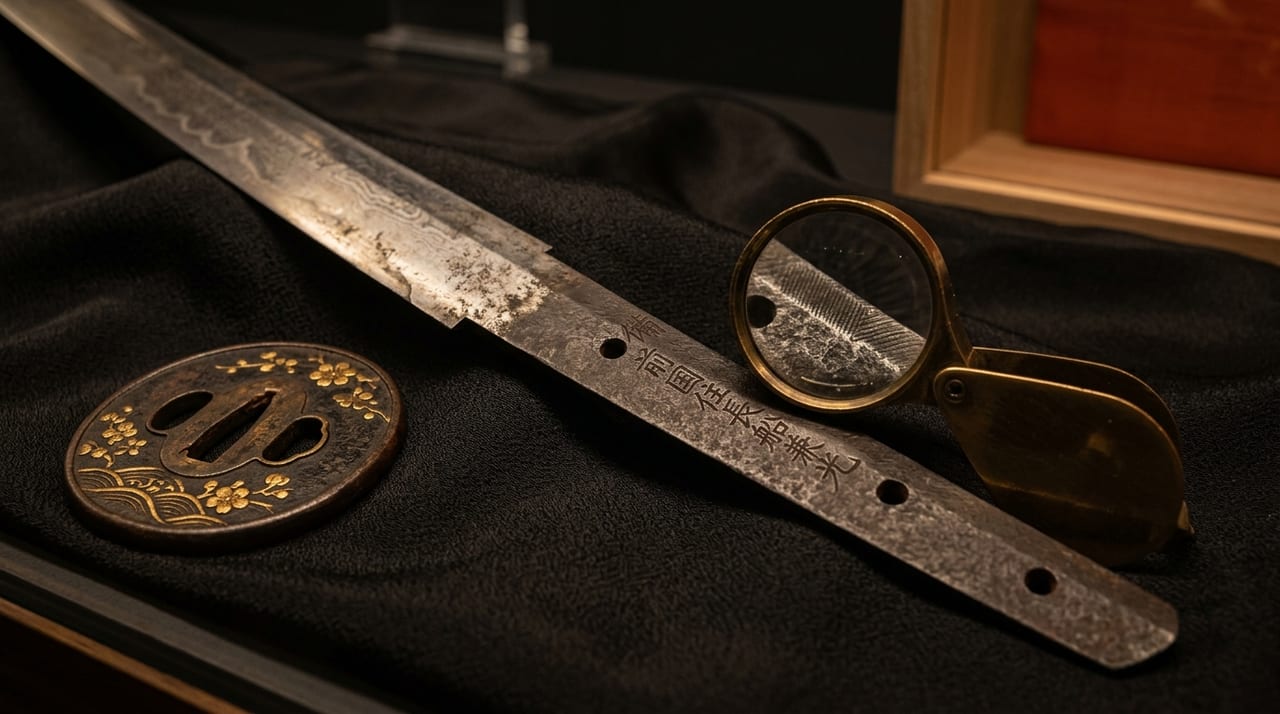
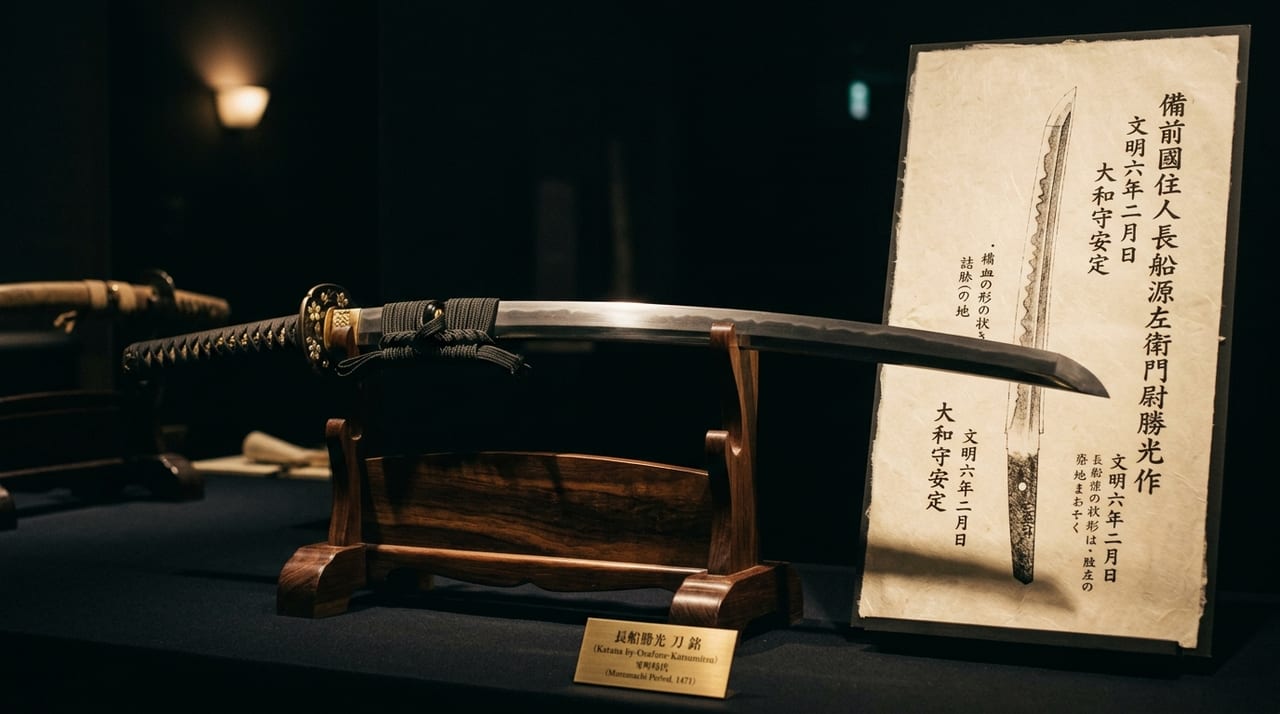
The two-character mei that inscribes the tōkō's name concisely, and the long mei that includes dates and place of residence. This article covers the difference in position between tachi mei and katana mei, and the fate of mei after suriage.
This article organizes the key points on blade-carrying regulations, wrapping methods, and what to confirm with shipping carriers when transporting a nihontō within Japan.
This article explains the typical methods used by fake shopping sites, fake SNS accounts, and phishing emails targeting nihontō as high-value art objects, along with the checkpoints to verify before making a purchase.
The training system for nihontō craftsmen began with the Edo-period apprenticeship system, was disrupted by the Sword Abolishment Edict (Haitōrei) and the prohibition on sword-making during the occupation, and eventually transformed into the postwar sword-making approval system. Tracing this historical evolution, this article examines the realities of modern disciple training and the structural background of the deepening shortage of successors.
For purchasing nihontō, which span a wide price range from hundreds of thousands to tens of millions of yen, this article organizes the commonly considered payment options — including credit card installments, bank loans, and buy-now-pay-later services — along with the key points to verify.
Against a backdrop of changing housing conditions and growing collections, this article organizes the rising demand for temperature- and humidity-controlled trunk rooms and art storage services, and considerations for choosing them.
This article organizes the practical aspects of obtaining funds using nihontō as collateral, covering pledge-based pawnbroking under the Pawnbroker Business Act, leaseback arrangements, and the handling of registration certificates.
This article traces the history of how the business model that Edo-period sword dealers built through credit relationships with samurai households transformed after the Sword Abolishment Edict (Haitōrei) into the fine-art market, then into specialist shops and department-store exhibitions during the Shōwa and Heisei eras, and finally into modern online sales.
An explanation of why buying and selling on Japanese sword e-commerce sites falls under the secondhand article dealer license requirements of the Secondhand Articles Dealer Act, the three identity verification methods required for non-face-to-face transactions, and the obligation to keep entries in the secondhand articles ledger.
The secondhand dealer permit required for sword dealers and their three obligations, procurement channels, factors affecting price, the notification of change of ownership and export procedures, and pre-sale maintenance — all aspects of Japanese sword retail practice, organized in accordance with official sources.
An explanation of the judging structure of the NBTHK-sponsored Shinsakumeitōten and the impact of award records on the careers and industry reputations of modern tōshō.
Cross-border e-commerce payments for nihontō, which are high-value goods ranging from hundreds of thousands to millions of yen, carry inherent risks including card screening barriers and chargebacks. This article organizes the practical measures merchants should take.
The Japanese sword industry has long been considered male-dominated, but against the backdrop of the "tōken joshi" boom and the spread of online trading, this article draws on publicly available information to examine how women's entry into the industry is progressing.
A guide to the steps involved in selling a registered sword to an overseas collector. Covers the Agency for Cultural Affairs' antique export inspection certificate, export declaration to customs, return of the registration certificate, delivery terms and cancellation clauses to include in the contract, record-keeping for the export tax exemption, and the CITES export approvals and permits required for ivory, tortoiseshell, and shark skin on koshirae.
No official market-size statistics exist for the nihontō market. This article reads the contours of the market through the alternative indicators that the industry actually consults — such as the number of registration certificates issued and the activity volume of appraisal bodies.
As generational turnover among sword dealers becomes an urgent matter, this article explains the structural challenges the industry faces — including a shortage of successors, the difficulty of transmitting specialized knowledge cultivated over decades, and the opacity of business information — as well as new paths to succession that make use of digitization and online sales.
An explanation of the reality of the replica sword and iai practice sword industry, which differs from genuine swords in every aspect: legal regulation, manufacturing process, and distribution channel. The article organizes the industry structure from domestic manufacturing centered on Seki City to competition with inexpensive imported products and the connection between the iai population and the genuine sword market.
Modern tōshō can produce only a limited number of swords due to the required number of forging days per blade, while also confronting three raw material challenges: tamahagane supply constraints, the depletion of natural whetstone sources, and the increasing difficulty of obtaining charcoal and other traditional materials. This article surveys the current state of each challenge and the practical responses that tōkō are adopting.
This article explains the changes brought to the Japanese sword industry by domestic and international e-commerce platforms, auction sites, and marketplaces since the full-scale expansion of nihontō online distribution in the 2010s. It analyzes the structural transformation of the industry from multiple perspectives, including the transparency of price formation, direct connections to overseas demand, and the adaptation strategies of long-established sword dealers.
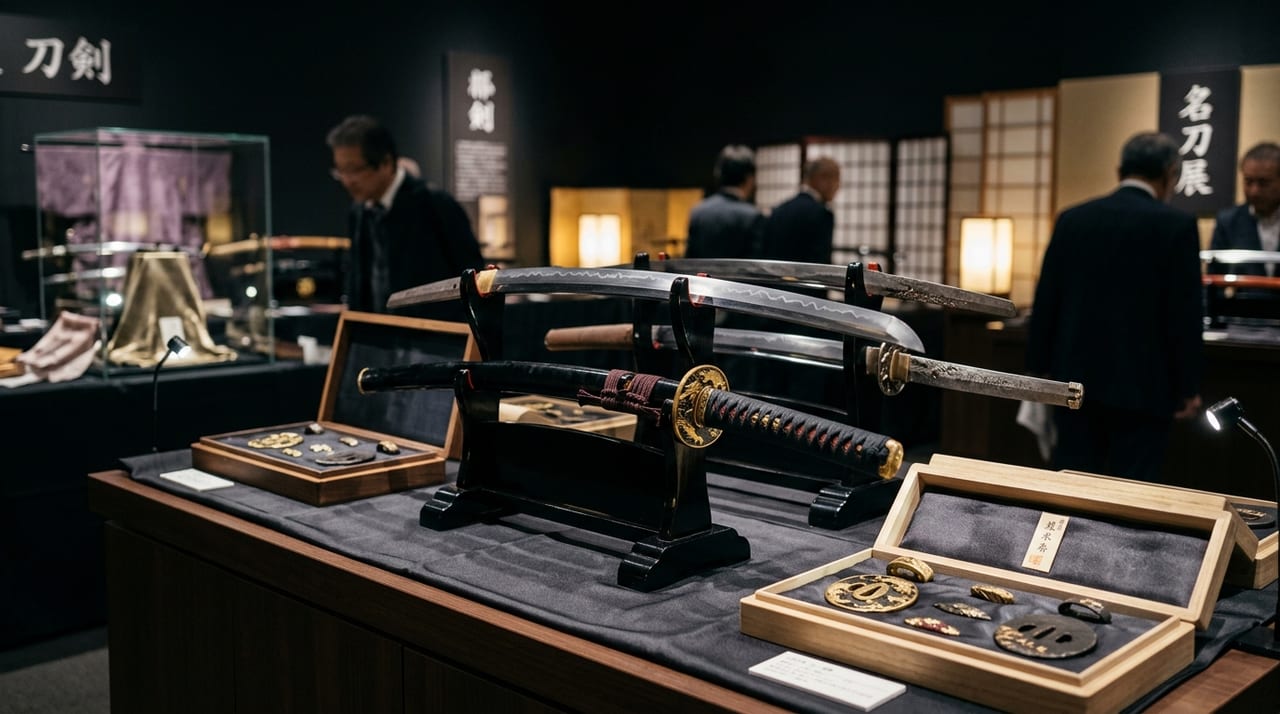
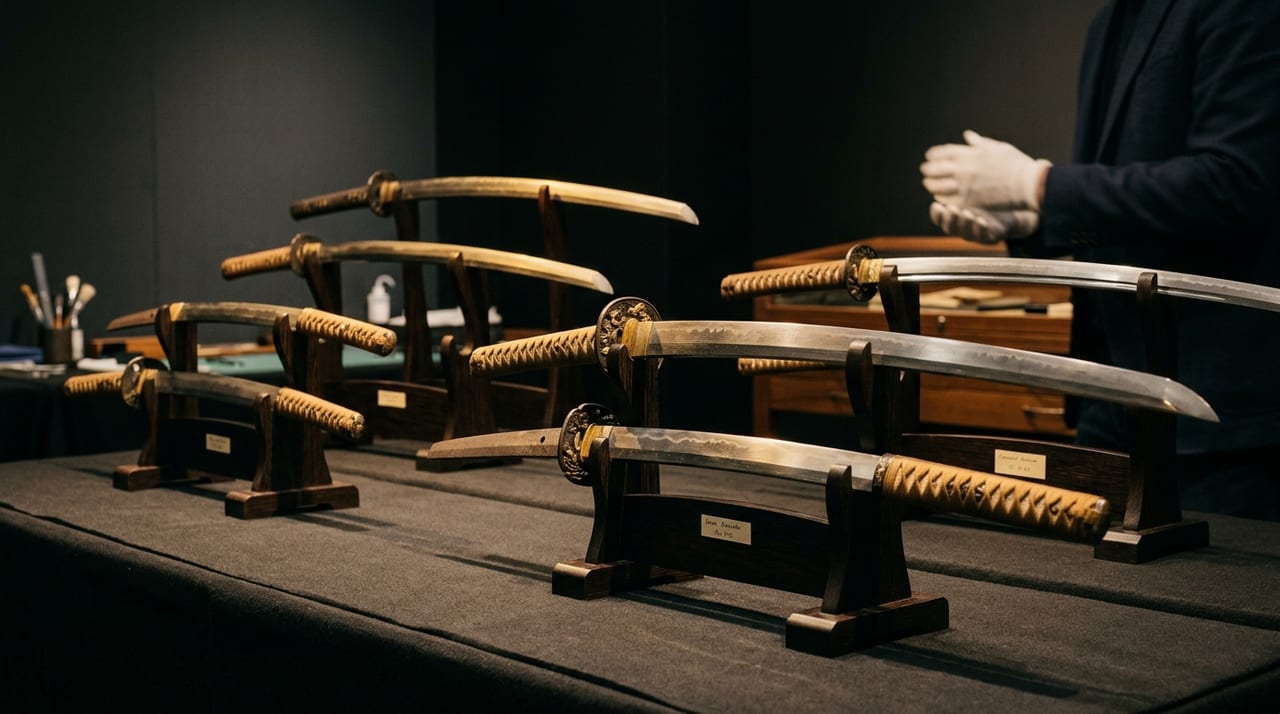
An overview by season of the major annual events related to Japanese swords, including sword markets, exhibition sales, and appraisal meetings. Provides information for collectors who wish to attend in person, along with the characteristics of each event and trends in items offered.
On the sets of period dramas, films, and stage productions, genuine registered swords and elaborate prop swords are used. This article explains the work of specialist contractors who handle their procurement, management, and lending, and their connection to the sword industry.
Tōza 2026 is the largest Japanese sword exhibition and sale fair in western Japan, functioning as a complement to online sales. This article covers the event outline for March 2026, the significance of building industry networks, craftsman demonstrations by togishi (polishers) and tsukamakishi (hilt wrappers), and the appraisal and purchasing system for swords with registration certificates.
Collecting Japanese swords has long been a hobby prone to isolation, but the spread of social media and video platforms has revitalized online communities. This article examines how modern sword collectors connect with one another, the culture of information sharing, and the differences from in-person exchange.
This article organizes the reality of subscription-type and membership services spreading through the nihontō industry, and explains the forms and challenges of monthly subscriptions, information delivery, and digital communities, as well as their influence on the purchasing behavior of collectors and enthusiasts.
The Sword Hunt edict (Katanagari) of 1588 was not merely a disarmament order but a historic industry-restructuring event that fundamentally transformed the structure of Japanese sword distribution, production, and ownership. This article analyzes from the perspectives of economic history and social history the effects that the institutionalization of the separation of warriors from farmers had on tōkō, sword distributors, and the warrior class.
Latest market analysis — popular smiths, trending categories, and future outlook.
A comprehensive overview of the chūmon-uchi (custom-order, made-to-order) market for contemporary tōshō. This article analyzes in detail the flow of cost, lead time, and specification decisions; completed commission cases from Japan and abroad; the current state of intermediary channels being transformed by digitalization; and future growth potential.
An overview of the history and activities of Japanese sword enthusiast organizations in Europe, with a focus on Germany, France, and the United Kingdom, and an examination of the reality of local appraisal and trade.
An explanation of the current state of copyright protection for tōshō's sword-making drawings, original hamon patterns, and mei, along with legal countermeasures against counterfeit swords and the counterfeit mei problem.
An explanation of lawful methods for disposing of nihontō that are no longer needed. Covering all steps under the Firearms and Swords Control Act (Jūtōhō) — from verifying the registration certificate and reporting to the police, to selling to a sword dealer or donating to a museum — with a breakdown of approximate costs.
Explains insurance claim procedures for Japanese sword owners who encounter theft, fire, or flood damage. Covers the full process from choosing insurance types to negotiating with loss adjusters and reaching settlements, covering every step of the compensation application process collectors face.
A practical guide to the process of confirming registration certificates, filing transfer notifications, obtaining appraisals, and selling nihontō inherited as part of an estate, focusing on legal requirements, tax considerations, and coordination with sword dealers.
An explanation of how the intangible cultural property system and the Selected Conservation Techniques system, established under the Act on Protection of Cultural Properties, support the transmission of skills among sword-related craftsmen such as tōkō, togishi, and saya makers. The article also introduces the realities and challenges of the Living National Treasure system.
A kyōdō kajiba (shared forge) is a system in which multiple tōkō share equipment such as furnaces and fuigo to reduce individual fixed costs. This article explains pioneering examples from Shimane, Fukuoka, and Gifu; the economic benefits and operational challenges; how to utilize municipal subsidies; and the challenges and prospects for wider adoption across the industry.
Examining the reality of regional promotion agreements forged between sword-producing areas such as Bizen, Seki, and Satsuma and their local governments and tourism associations, as well as the commercial and cultural value of production-area branding.
Tracing the history of specialist magazines that supported the dissemination of knowledge and market formation in the nihontō industry, this article examines the role played by Tōken Bijutsu and Tōken Shunjū and their transformation in the digital age.
A practical guide exploring how established sword dealers in an industry that has entered the age of the internet and social media acquire and maintain customer trust — covering word of mouth, review sites, handling inbound foreign visitors, and countermeasures against the circulation of fakes, all specific to the trust-building know-how of the sword trade.
A guide to the practical procedures, permits, packaging, pricing, and negotiation techniques involved in exhibiting nihontō at overseas art fairs and international trade shows.
A complete guide explaining in detail the legal procedures, practical packaging, customs declarations, and destination-country regulations involved in shipping nihontō overseas.
Beginning with scholarly records by sword enthusiasts after the Sword Abolishment Edict (Haitōrei), nihontō specialist books developed through the founding of the NBTHK and the launch of the journal Tōken Bijutsu in 1948 (Shōwa 23), a golden age of publishing from the Shōwa 40s through the 60s, and the digital transformation since the Heisei era; this article explains the role these works played in spreading knowledge and the transformation of publishing distribution.
This article analyzes the serious state of the personnel shortage in the nihontō industry from the three fields of craftsmen, sword dealers, and researchers, and explains the challenges of training successors and ways to break through them.
A comprehensive guide to the practical knowledge first-time bidders at Japanese sword auctions need in order to win. Covers everything required for a satisfying purchase: registration and catalog research at domestic and international sales, reading the market, the bidding process on the day, legal procedures, shipping precautions, and common mistakes.
A thorough explanation of the registration certificate system required for the legal possession of nihontō in Japan. A practical guide covering the provisions of the Act for Controlling the Possession of Firearms or Swords and Other Such Weapons (Jūtōhō), notification procedures at prefectural Boards of Education, responses when a registration certificate is lost, changed, or inherited, and procedures for taking swords overseas.
A detailed account of the workplace experience and internship programs that tōshō, togishi, sayashi, and other craftspeople in each specialty have opened to young people, and their effectiveness for skill transmission.
Gimei refers to a tōkō's mei engraved on the nakago (tang) of a nihontō that has been added later or falsified by another hand. This article explains the five types — nochimei, kaizanmei, togidashimei, daitsukemei, and keizusashōmei — along with methods experts use to detect them, such as calligraphic style analysis and observation of chisel marks, as well as practical measures to reduce risk when purchasing.
This article explains the operational realities of Japanese sword specialty shops from the perspective of inventory management. It concretely examines the realities sword dealers face in inventory management: appraising purchase prices, designing consignment fee structures, the logic of passing on restoration and polishing costs, and controlling inventory turnover periods.
An explanation of the mechanics of nihontō trading at sword markets, auction events, and antiques markets held across the country. Covers the division of roles among organizers, consignors, and visitors; the differences between auction events and fixed-price sales; the realities of consignment fees and buyer's premiums; major venues and event timing; and the changes brought about by the shift to online formats.
Nihontō served not only as domestic gifts but also as tools of diplomacy from the Muromachi period through the Edo period. This article explains the reality of sword diplomacy in which the shogunate families presented swords to Korea, Ming China, the Ryukyu Kingdom, and the Dutch, and the influence this custom continues to exert on contemporary gift-giving culture.
The tōkō meikan (swordsmith directory) is a reference work that systematically records swordsmiths' names, art names, provinces of residence, periods of activity, and lineages, making it an indispensable tool for identifying a tōkō from a mei and for preventing confusion between different individuals sharing the same mei. This article explains a professional's method for researching swordsmiths, from deciphering mei characters to comparing school lineages and provinces.
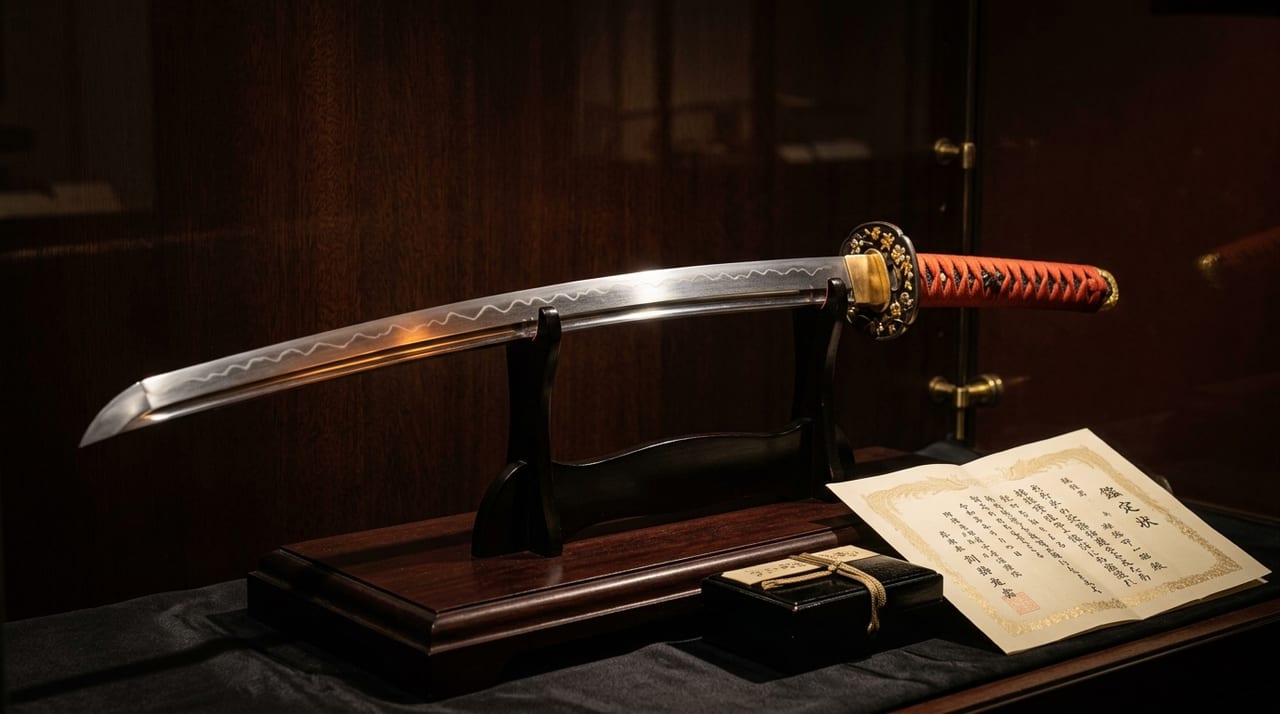
When a sword dealer appraises a sword, they carry out a four-stage process: verifying the registration certificate, authenticating the sword, evaluating its condition, and assessing market prices. This article explains in detail the professional evaluation process — from appraisal points such as jigane, hamon, and mei, through to determining the purchase price.
The Yamada Asaemon family carried out tameshigiri under official shogunate sanction during the Edo period and established the wazamono ranking system as a framework for evaluating sword performance. This article explains their history and influence on the sword industry.
An analysis of the fundraising innovations that furusato nōzei and crowdfunding have brought to the nihontō and sword industry, and their impact on the transmission of traditional craft.
This article explains the technique of oshigata — the transfer of the shape, hamon, and mei of a Japanese sword onto paper — and explores the history of the sword-recording culture from the Edo period to the present day, as well as the industrial significance of oshigata in appraisal and distribution.