Japan Intangible Cultural Heritage System for Nihonto — How the State Certifies Swordsmith, Polisher, and Scabbard Maker Crafts
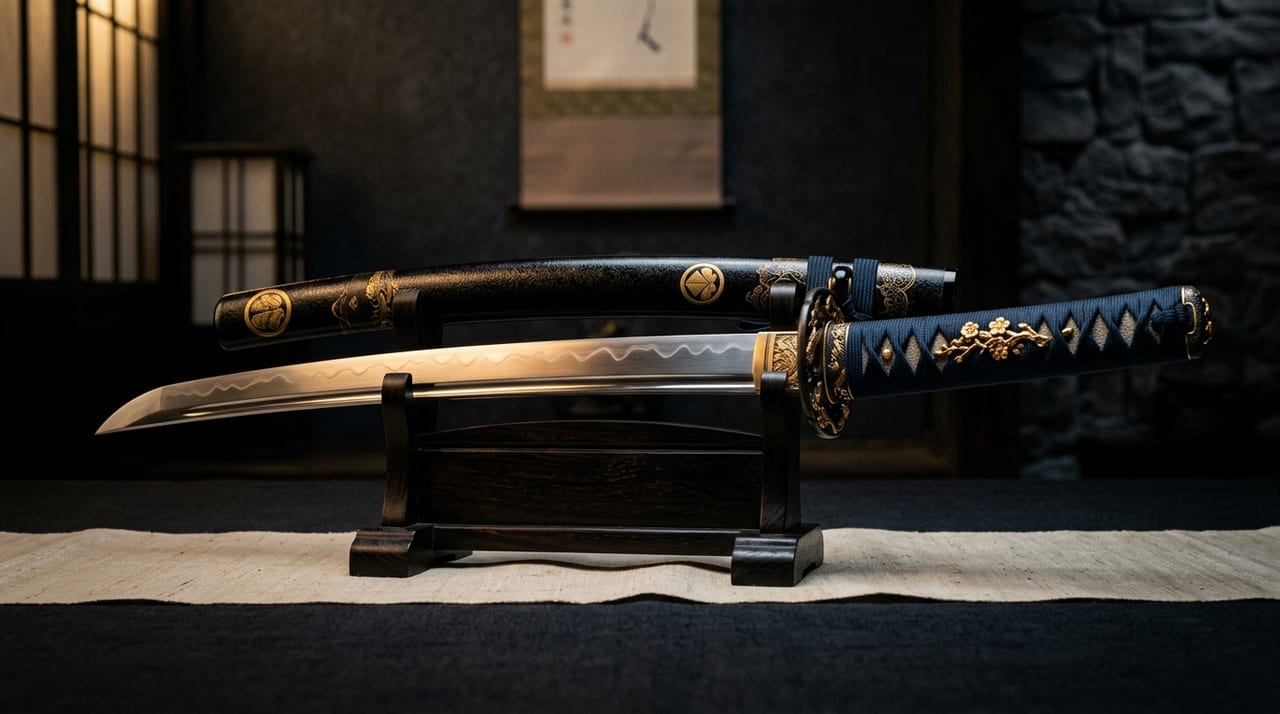 * Image is for illustrative purposes only.
Table of Contents
Intangible Cultural Properties and the Art of Japanese Swords—Why the State Protects "Technique" Itself
While Japanese swords in their completed form are protected as National Treasures and Important Cultural Properties, the "technique itself" that produces these swords is also subject to legal frameworks. The Cultural Properties Protection Act establishes a framework for protecting intangible cultural properties including performance arts, craft techniques, and performing arts, and the techniques related to Japanese sword-making such as forging, polishing, and scabbard production are included within this scope.
The traditional craft techniques directly involved in sword production become nearly impossible to restore once their practitioners are lost. The sensory ability to judge the fire color of tamahagane, the empirical knowledge of determining temperature by the sound of water during heat treatment, the subtle shifts in finger pressure a polisher applies to the whetstone—these are all embodied knowledge that cannot be fully conveyed through text or video, and are living culture transmitted from master to apprentice. The intangible cultural property system is a national framework designed to protect such "human technique."
Designated Holder Recognition and "Designated Preservation Techniques"
The protection system for intangible cultural properties has a two-tiered structure. The first tier is the designation of Important Intangible Cultural Properties and recognition of their holders, whereby the state designates important intangible cultural properties and recognizes individuals or groups who embody such techniques at an advanced level as holders or holder groups. Individual holders recognized through individual designation (the so-called "Living National Treasures") receive special government subsidies (¥2 million per year) (Agency for Cultural Affairs "Intangible Cultural Properties"). In the sword field, holders have been recognized historically in "Japanese Swords" (sword-making) and "Sword Polishing," with notable examples including Miyairi Akihira (sword smith), Gassan Sadaichi (second generation, sword smith), Honami Hishu and Ono Mitsutaka (both recognized in 1975, polishing), Fujishiro Matsuo (recognized in 1996, polishing), Nagayama Mitsuki (recognized in 1998, polishing), and Honami Mitsushi (recognized in 2014, polishing).
The second tier is the "Designated Preservation Techniques" system, which selects and provides support for techniques that are essential to the preservation and restoration of important cultural properties but have very few successors. Techniques such as sword polishing, shirasaya production, and scabbard lacquering are targeted, and subsidies to holder groups or individuals and grants for successor training programs are provided. This system functions to support practitioners more broadly and pragmatically than the Living National Treasure system.
The Reality of Recognized Sword Smiths and Polishers
Sword smiths recognized as Living National Treasures are expected to maintain their technical level at the time of recognition while also taking responsibility for cultivating successors. Many designated holders accept young apprentice sword smiths during their training period and continue private master-apprentice relationships as part of a private academy model, but economic sustainability remains a challenge.
Polishers are fewer than sword smiths, with only dozens of full-time practitioners nationwide. Scabbard makers, handle wrappers, and metal workers (tsuba makers, menuki makers, etc.) are even fewer, and in some techniques the actual number of practitioners has declined to single digits.
Most individuals who aspire to become sword smiths undergo long-term apprenticeship as live-in disciples under recognized masters, mastering the entire process from tamahagane selection through forging and heat treatment, before being recognized as independent practitioners. This master-apprentice system has been passed down within the industry since ancient times, separate from the cultural property protection framework, and most intangible cultural property holders have acquired their techniques through this traditional apprenticeship. Similarly for polishers and scabbard makers, the primary model of human resource development involves long-term apprenticeship under a master craftsman before independence, and a system for completing techniques through formal education alone has not been established.
Challenges in the Intangible Cultural Property System and New Initiatives
A challenge often cited in the current system is the "individual dependency" of recognition. Recognition as a Living National Treasure is inherently an individual designation, and once that person passes away, the public protection of the technique is lost. There is a risk that social transmission of the technique may be severed if there are no successors. To address this problem, recent efforts have included expansion of "group designation" in addition to individual recognition, and systematization of technique documentation through video and written records.
Technology documentation projects conducted jointly by the Tokyo National Museum and sword museums are underway to record the work of master sword smiths in 4K video and archive it along with explanatory texts. Additionally, some prefectures have established their own "Intangible Cultural Property Successor Training Subsidies," providing living expense allowances and tool costs to young apprentice craftspeople during their training.
Coexistence of the Sword Industry and the System—Voices from the Field
There are practical limits to the number of swords a sword smith can produce. The Rules for Approval of Artistic Sword Production do not set annual production limits (Rules for Approval of Artistic Sword Production (e-Gov Legal Search)). However, examination standards by prefectures specify the number of forging days per sword (tachi, katana, and naginata require 15 days or more; wakizashi and tanto require 10 days or more), which practically limits production capacity (Aomori Prefecture "Approval of Artistic Sword Production" Examination Standards). Craftspeople in finishing processes such as polishers and scabbard makers have lower public recognition compared to sword smiths.
The sword industry as a whole continues ongoing dialogue between industry organizations and the Agency for Cultural Affairs to make the intangible cultural property system framework more effective. From 2025 onward, "strengthening technical succession support" has repeatedly appeared on the agenda in discussions on revisions to the Cultural Properties Protection Act, and future institutional improvements have become an important policy issue directly linked to human resource development in the sword industry.
NBTHK Certification and the Relationship with Intangible Cultural Property Recognition—Perspectives for Sword Selection
When considering the purchase of a sword, there is often confusion about the difference between "intangible cultural property recognition" and "NBTHK (Japan Art Sword Preservation Society) certification." While intangible cultural property recognition is an evaluation given by the state regarding the technical level of individual craftspeople such as sword smiths or polishers, an NBTHK certificate of authentication represents the results of authenticating an individual sword as a "work of art," examining its era, maker, and quality, and the subjects and frameworks of evaluation are different. Therefore, even works created by Living National Treasures or designated preservation technique holders undergo separate NBTHK authentication, and certificates are issued.
Practical checkpoints to consider when selecting a sword include the following:
- Whether the signature (maker's name) carved on the nakago matches the authentication details stated in the certificate
- The era and quality evaluation content stated in the certificate
- The presence or absence of documents showing provenance (the history of previous ownership)
- Preservation condition (absence of rust or blade chipping, polishing condition)
Works by artisans recognized as intangible cultural property holders tend to be valued for their technical rarity, but rather than judging value based solely on recognition status, it is important in practice to make a comprehensive assessment including the contents of the certificate and the preservation condition of individual works.
It is desirable to make such confirmations by handling physical examples in actual shops, cross-referencing the certificate details, and consulting with specialized dealers. Information about the intangible cultural property recognition system itself can also be confirmed through materials released by the Agency for Cultural Affairs and sword museums to verify the latest recognition status.