Nie-deki and Nioi-deki — The Texture of the Temper Edge Determined by the Aggregation State of Martensite Particles Composing the Hamon and School Preferences
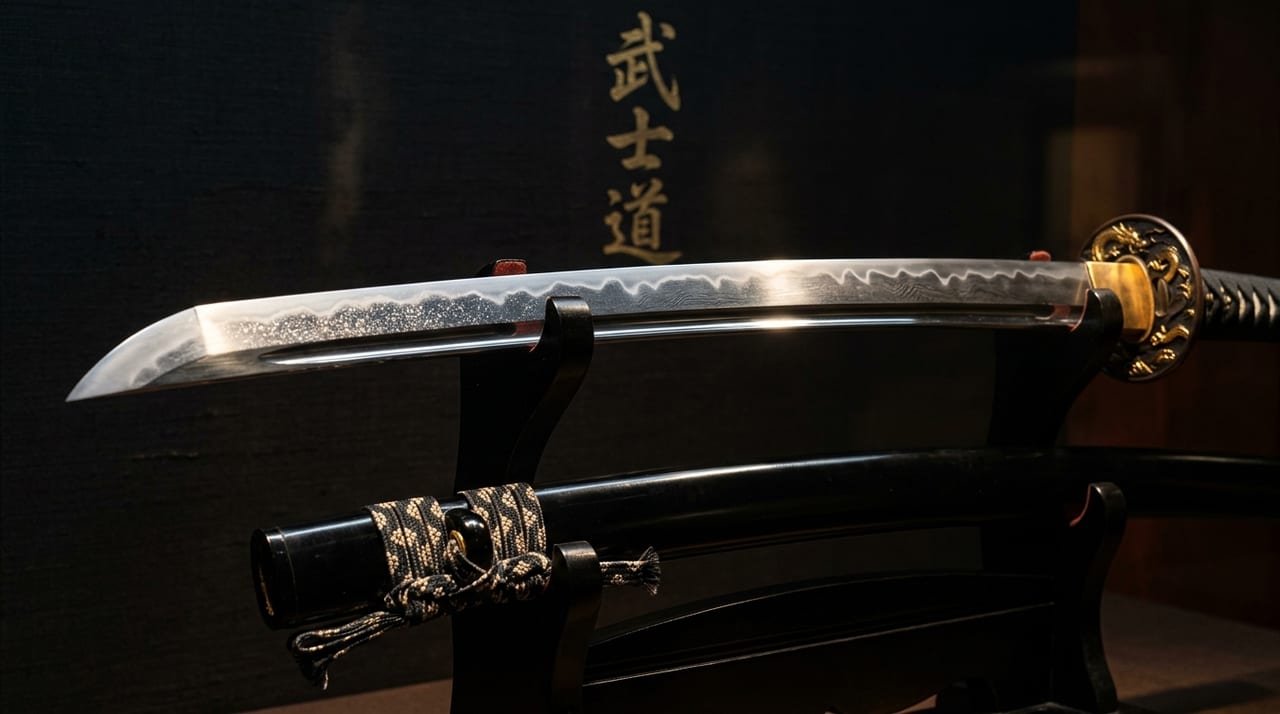 * Image is for illustrative purposes only.
Table of Contents
The Essence of the Hamon — An Aggregation of Martensite Particles
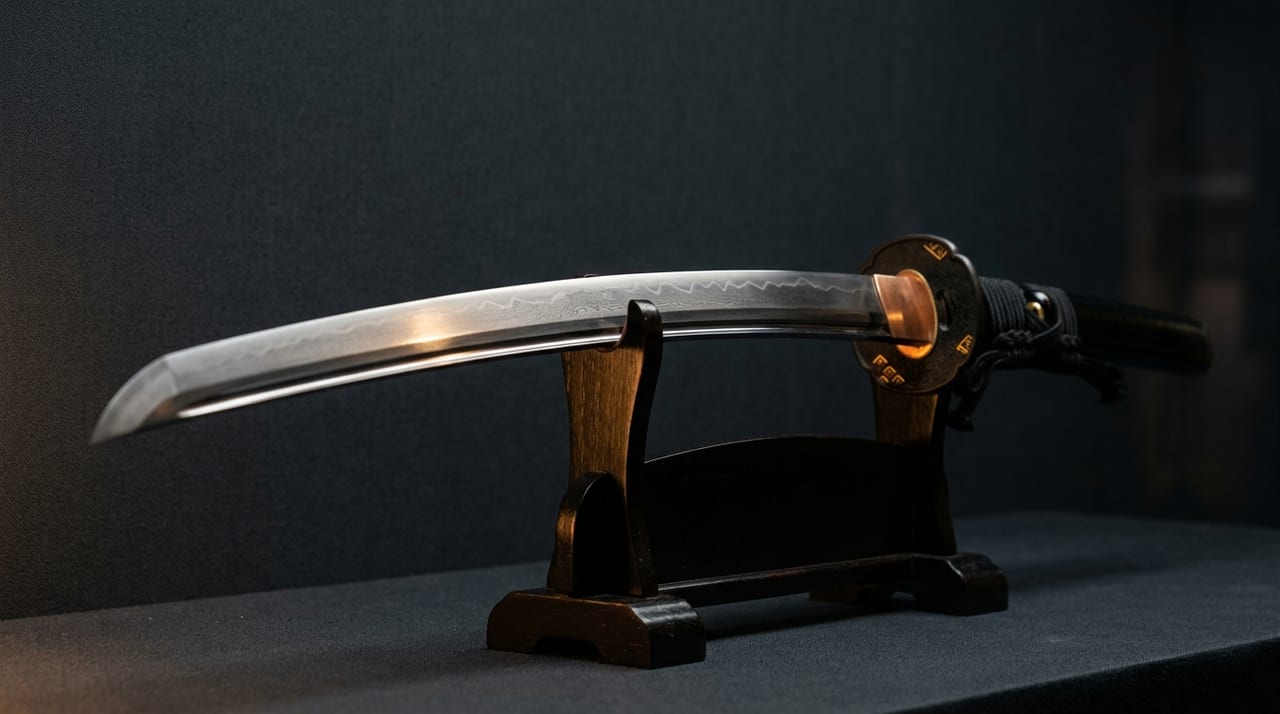
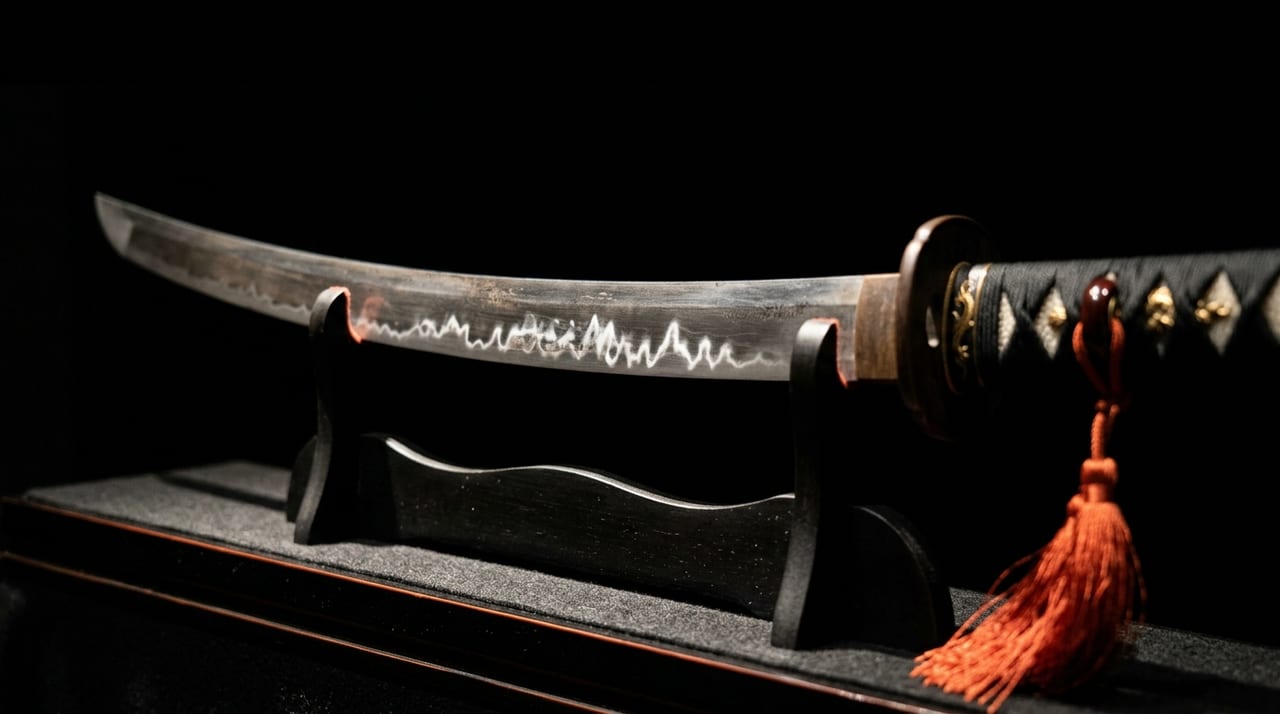
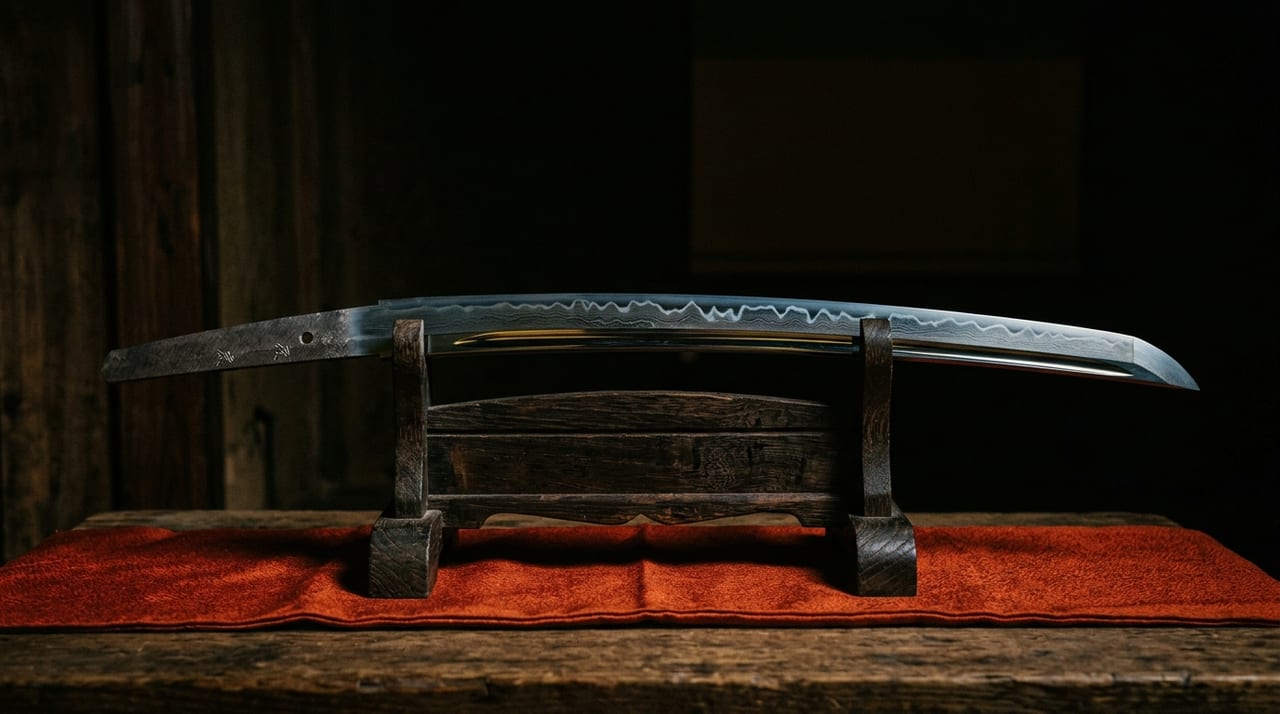
The hamon of a Japanese sword is a band-like structure formed by the aggregation of martensite particles—the hardened microstructure generated during yaki-ire (quenching). The coarseness, density, and aggregation state of these particles give rise to the two fundamental qualities of hamon: nie-deki and nioi-deki.
Today, electron microscopy and metallographic analysis have elucidated the mechanism by which the hamon forms, yet tōshō have empirically mastered the relationship between these two qualities and the corresponding forging techniques through centuries of experience. Understanding the nie and nioi of the hamon is one of the most fundamental pieces of knowledge for appreciating Japanese swords.
What Is Nie? — The Character of Coarse-Grained Martensite
Nie refers to a structure in which martensite particles have gathered in a relatively large and coarse state. Observed with the naked eye, the characteristic feature of nie is that white, glittering particles appear as distinct granules along the hamon edge.
To view this, illuminating the sword with soft natural light from a window or a dedicated light rather than a direct light source such as fluorescent lighting will enhance the three-dimensional appearance and make it more clearly visible.
- ara-nie: Nie that appears as large, distinct granules. Creates a bold, powerful impression.
- ko-nie: Nie that appears more uniform, fine, and even. Produces an orderly, dignified hamon.
The formation of nie is greatly influenced by the cooling rate during yaki-ire. Rapid cooling (water temperature, cooling duration) tends to accentuate nie, and this connects to the technical context in which the tōkō of Sōshū-den excelled.
What Is Nioi? — The Haze of Fine-Grained Martensite
Nioi refers to a state in which martensite particles are distributed in an extremely fine and uniform manner. The particles are too small for individual grains to be identified, and the hamon edge appears as a white mist that looks as though a haze has settled over it.
The characteristic of nioi is that when the sword is observed while moving the light source, the hamon changes in a gently undulating manner. There is none of the granular texture of nie; instead, the entire hamon edge emerges as a thin white band. The term nioiguchi expresses the sharpness and tightness of this appearance of the hamon edge.
Nioi is found most often in swords of the Bizen-den tradition. In particular, the chōji hamon created by the tōkō of the Osafune school are renowned for their beauty grounded in nioi. Those in which the nioi appears uniform and tight are described as "bright nioiguchi," and this is regarded as a hallmark of superior Bizen swords.
The Coexistence of Nie and Nioi — The Formation of Kinsuji and Sunagashi
In actual swords, a state of purely "only nie" or "only nioi" is rather rare; in most cases, both coexist. The special phenomena created by this coexistence are kinsuji and sunagashi.
- kinsuji: An accumulation of nie in narrow, glittering linear streaks within the hamon. This is a phenomenon created at points where the hamon changes in a complex manner, or by subtle local temperature differences during yaki-ire. Swords with abundant kinsuji are said to have rich "hataraki" and are highly regarded for appreciation.
- sunagashi: A state in which fine nie particles are distributed in a band-like flow along the hamon. Seen frequently in swords of Sōshū-den and the Nanbokuchō period, it is an important element that gives the hamon a sense of dynamic movement.
The abundance of these "hataraki" is regarded as a hallmark of a superior hamon and constitutes an important evaluation criterion in sword appraisal.
School Preferences — Differences between Sōshū, Bizen, Yamashiro, and Yamato
There are clear tendencies in how nie and nioi are employed depending on the school.
| School | Hamon Characteristics | Representative Tōkō |
|---|---|---|
| Sōshū-den (Sagami Province) | Characterized by nie-deki. Ara-nie and large nie stand out as granules along the hamon edge, and nie also appears as a scenic element in the jigane (ji-nie). A bold and powerful technical hallmark. | Okazaki Masamune, Yoshihiro, and others |
| Bizen-den (Bizen Province) | Based on nioi-deki, with the nioiguchi of the chōji hamon appearing sharply tight. Characterized by a uniform and orderly hamon beauty. | Osafune Mitsutada, Nagamitsu, Kanemitsu, Norimitsu, and others |
| Yamashiro-den (Yamashiro Province) | Many have a gentle hamon combining ko-nie with nioi. Known for delicate hamon described as "nioi-gachi ko-nie tsuku." | Awataguchi Yoshimitsu (Tōshirō) and their school |
| Yamato-den (Yamato Province) | Many have suguha, characterized by a pure hamon mixing nie into nioi. | Tegai School, Taima school, and others |
Yaki-ire Technique and the Control of Nie and Nioi
The temperature and cooling rate that a tōshō employs during yaki-ire are the greatest factors determining the balance between nie and nioi. High-temperature yaki-ire with rapid cooling tends to develop nie, while low-temperature yaki-ire with gradual cooling tends to promote the formation of nioi.
However, as present-day tōshō attest, this control does not proceed according to theory. Countless variables intertwine—the composition of the steel, the water temperature, the condition of the furnace, the seasonal air temperature—and each quenching produces a different result. The unpredictability of yaki-ire, expressed as "the mood of the fire," is one of the elements that heightens the mystique of Japanese sword-making.
Deciphering the beauty of nie and nioi is not merely the acquisition of appraisal knowledge; it can be said to be an encounter with the essential appeal of the Japanese sword—the interplay of the chemical reaction of iron and fire with the skill of the craftsman.