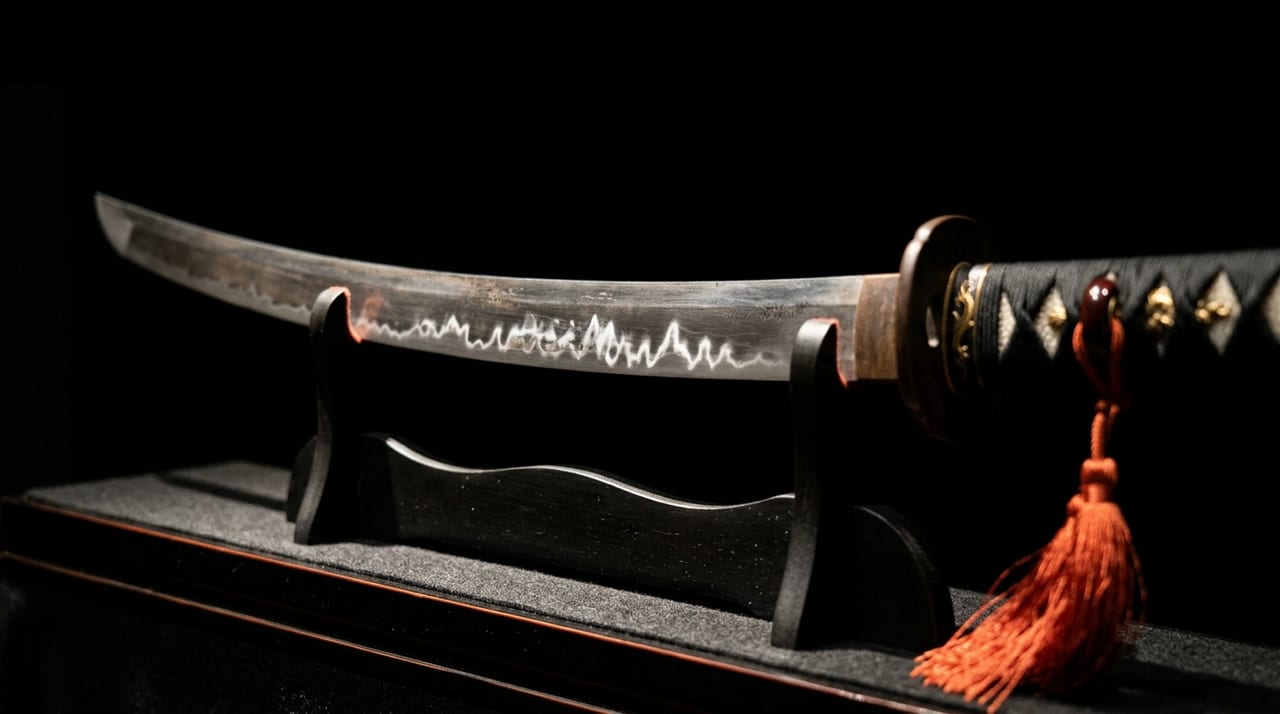
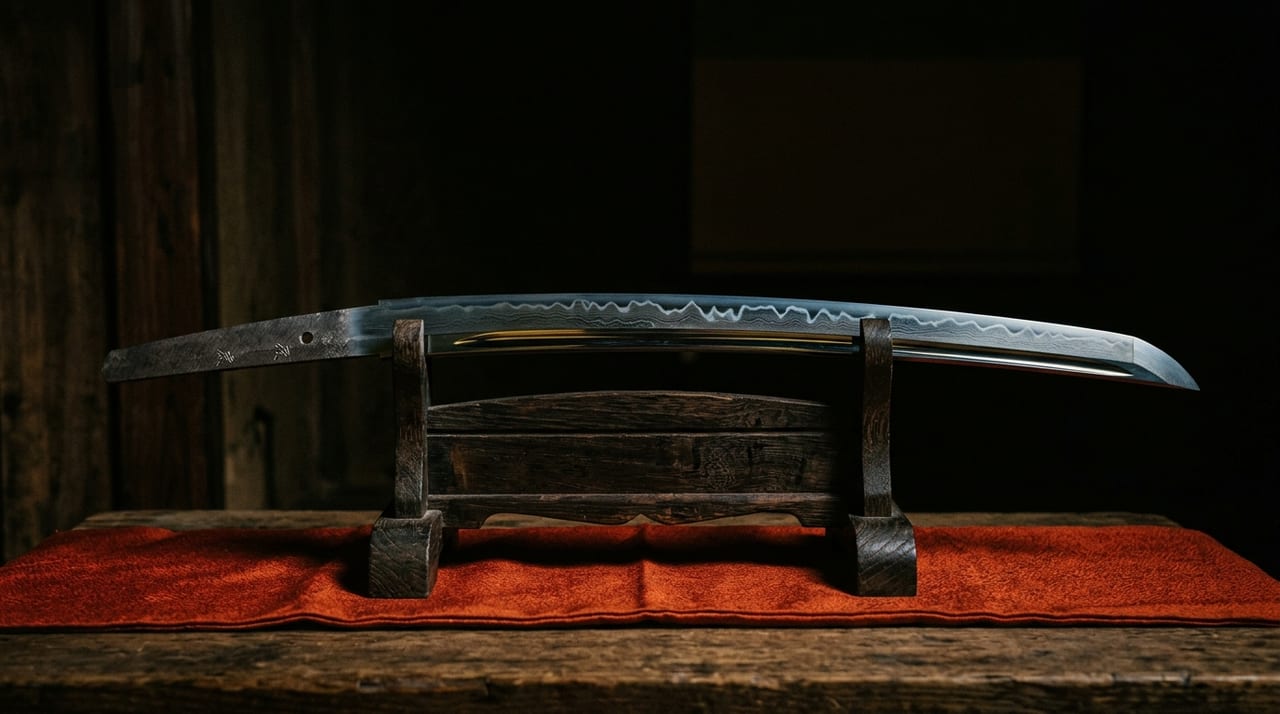
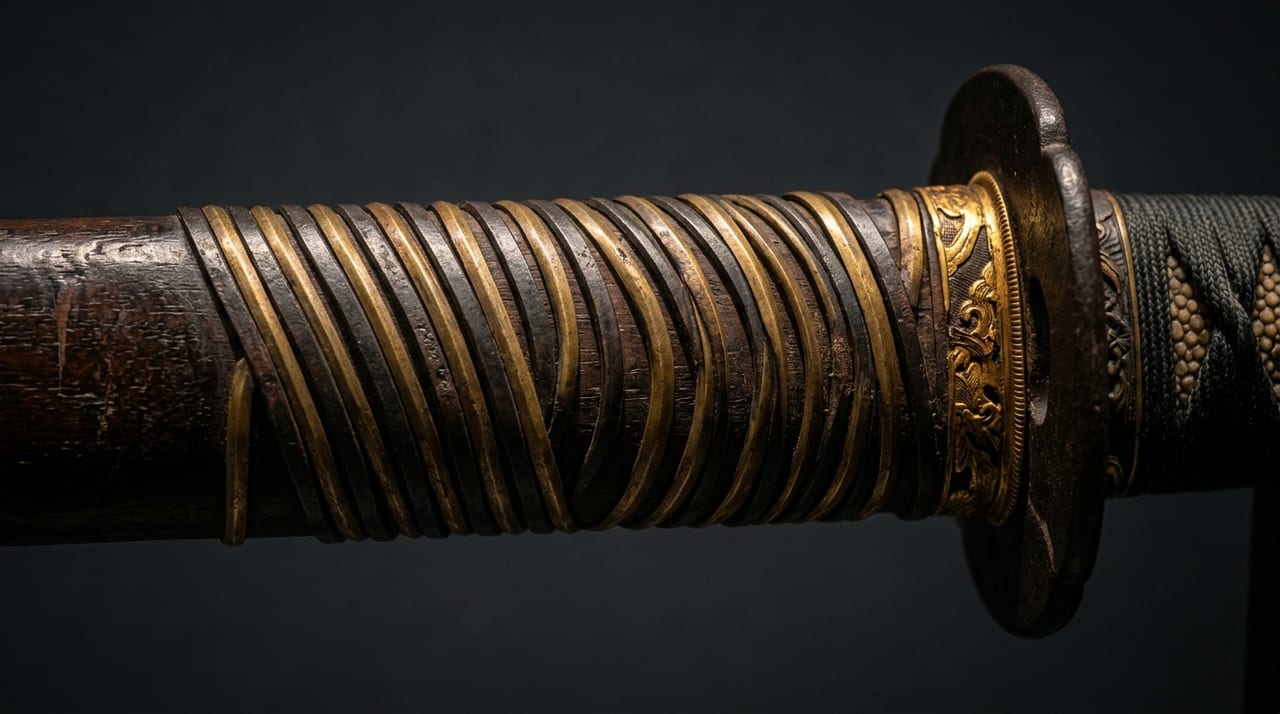
Measuring and Evaluating Blade Dimensions: Judging Quality from Length, Curvature and Weight
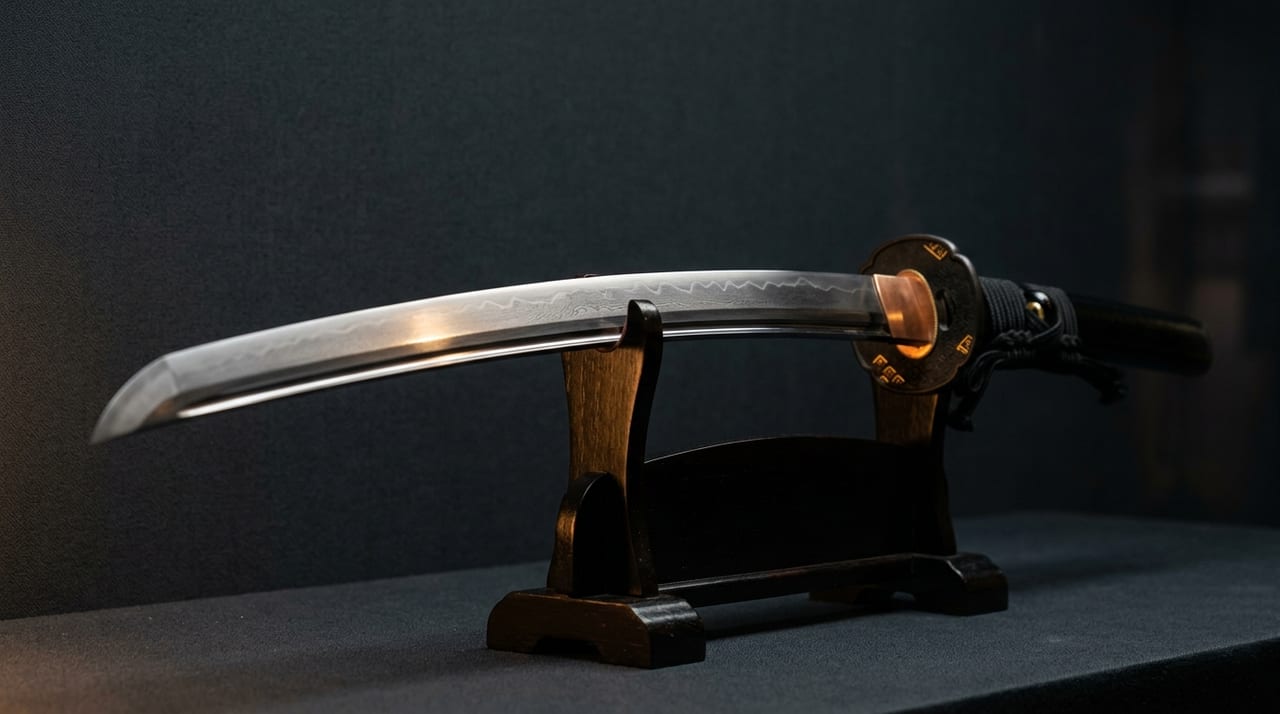 * Image is for illustrative purposes only.
Table of Contents
A sword's dimensions, if you view them as merely numbers, are nothing more than specifications. However, when you read how the blade length, curvature, base width and tip width, thickness, and weight are combined, you can see to a considerable degree in what era that sword was made, what purposes it was intended for, and whether it has been transmitted in sound condition. In this article, we organize the fundamentals of how and where sword dimensions are measured, from the basic principles to how to connect numerical values to evaluation.
How Are Sword Dimensions Measured
Japanese swords have conventional methods of measuring dimensions. Since the numbers will vary if the method of measurement differs, even for the same sword, it is important to first establish the measurement standards when reading the numerical values in catalogues and certificates of authenticity.
Blade Length (Hachō)
Blade length is the distance measured in a straight line from the ha-machi (the ridge on the blade side) to the tip of the kissaki, without following the curve of the blade. It is also called ha-watari. Note that you measure using a straight ruler or measuring stick, not along the arc of the curved blade. The length of the nakago is not included.
Curvature (Sori)
Curvature is expressed as the distance from the straight line connecting the mune-machi and the tip of the kissaki to the point where the spine is furthest from that line. The numerical value indicating the depth of the curvature is measured on the spine side using this straight line as the reference. For details on the differences in the position of the curvature, such as koshi-zori (curvature near the hilt), chu-zori (curvature in the middle), and saki-zori (curvature near the tip), see About Japanese Sword Curvature (Sori).
Base Width, Tip Width, and Thickness
- Base width: The width from the blade edge to the spine near the ha-machi.
- Tip width: The width near the kissaki (slightly before the yokote line).
- Thickness: The thickness of the spine. Both base thickness and tip thickness are recorded.
The difference between base width and tip width greatly influences the impression of the sword's shape. A small difference gives a dignified appearance, while a large difference creates an elegant, refined appearance that tapers toward the tip.
Nakago Length and Overall Length
Nakago length is the distance from the ha-machi to the end of the nakago. When viewing the overall length of the sword, add the nakago length to the blade length. For details on the design and finishing of the nakago itself, see Design and Finishing of the Nakago.
Reading Sword Types and Eras from Blade Length
Blade length is the most straightforward indicator for distinguishing sword types. Generally, swords of two shaku (approximately 60 centimeters or more) are classified as tachi or uchigatana, those of one shaku or more but less than two shaku as wakizashi, and those of less than one shaku as tanto. However, this classification is merely a guideline, and swords of borderline length are judged by considering the signature, the style of the mountings, and the conventions of the era in which they were made.
The dimensional differences for each type are summarized in Sword Size Guide, and the relationship between purpose, tactics, and length is covered in Japanese Sword Blade Length and Use. Here, we will focus only on the points to consider when viewing blade length.
- Does the sword's length fall within what is natural for that sword type?
- Compared to swords of the same type from the same period, is it not extremely long or short?
- Is the weight proportionate to the length?
- Are the nakago length and the position of the mekugi holes consistent with the current blade length?
The last point is particularly important. In some cases, swords that were originally longer have had their nakago shortened in later periods, a process called suriagé. Suriagé was performed in response to the demands of the era or to accommodate the physique of the wearer, and is not itself a defect; rather, it is a clue to the sword's provenance. However, if the signature has been cut away, this can affect its evaluation, so it is important to verify this together with the condition of the nakago.
Evaluating Curvature and Weight in Combination
Evaluation of dimensions does not depend on a single numerical value alone. The "balance" of the sword is read from the combination of curvature and weight, along with blade width and thickness.
Amount and Position of Curvature
Even with the same amount of curvature, the impression of the sword differs depending on where it bends. A sword that curves deeply near the hilt is commonly seen in tachi from older eras. Conversely, a sword with shallow curvature that curves uniformly overall represents a shape designed for use as an uchigatana worn at the hip. When observing the amount of curvature, you can also check whether there is any warping or unnatural bending by standing the sword upright and viewing it from the spine side during appreciation.
How to Evaluate Weight
Weight is evaluated not by the numerical value itself, but by whether it is light or heavy "relative to the blade length and blade width." Weight is sometimes recorded in momme, a traditional unit, and the conversion method is explained in What is Momme—A Guide to Understanding Japanese Sword Weight Through Traditional Units.
When evaluating, an important point to note is what is included in the weight. The weight will differ greatly depending on whether it is the weight of the naked blade (the blade without its scabbard) or the weight including the habaki and shirasaya. When comparing, always align the conditions to be the same.
General Trends Indicated by Numerical Values
- A sword with wide blade width and thick spine gives an impression of weight and grandeur.
- A sword with narrow blade width and thin spine creates an impression of lightness and slenderness.
- A sword whose tip width is close to its base width has a large point and a dignified appearance.
- A sword whose tip width is significantly narrower than its base width is commonly seen in tachi from older eras.
These are merely tendencies, and there are no few exceptions. Individual swords must be evaluated comprehensively, taking into account the forging, hamon, and characteristics of the nakago as well.
Measurement Checkpoints for Distinguishing Quality
When actually checking dimensions, you can calmly evaluate the sword's condition by examining the following points in order.
Polishing Wear and Blade Width
With each polishing, a sword's blade width is reduced slightly. Swords that have undergone many years and multiple polishings may have become narrower than their original blade width. Check whether the difference between base width and tip width, and the thinness of the spine, fall outside the standard appearance of the era.
Left-Right Symmetry
When viewing the blade from directly above or below, check whether the lines of the spine and blade edge naturally align. Abrupt bending or twisting may indicate distortion from quenching or later repairs. For details on how curvature is created, see Sori Curvature Control Technology.
Cross-Referencing with Records
Check whether the dimensions listed in catalogues, certificates of authenticity, or sales pages match the actual dimensions of the sword. Since the recorded values may be based on different measurement standards, awareness of which position each item—blade length, curvature, base width, tip width, thickness, and nakago length—was measured from will reduce misunderstandings.
Comprehensive Judgment
Dimensions are merely one factor in judging a sword's quality. Evaluation only becomes valid when combined with elements such as the condition of the jigane, hamon, the authenticity of the signature, and preservation condition. Even if a sword's dimensions fall outside the standard for its era, if there is a convincing provenance such as suriagé or re-polishing, it is not necessarily a defect. It is important to take an approach that avoids being overly influenced by numbers and instead reads the sword while observing its overall appearance.
Summary
Reading sword dimensions is the process of imagining the sword's shape, era, purpose, and the history of its transmission from a list of numbers. Blade length serves as a guide to type and era, curvature provides clues to the sword's shape and purpose, and weight and blade width serve as indicators of the sword's balance and soundness. By grasping the measurement standards and viewing multiple numerical values in combination, you can become better at discerning sword quality. On the sword list, the dimensions of offered swords are listed by item, so please use the perspective explained here to compare the numerical values and sword shapes in the Online Catalog.