The Technology of Controlling Sori — The Mechanisms by Which Thermal Deformation and Sori Correction During Yaki-ire Determine the Form of the Nihontō
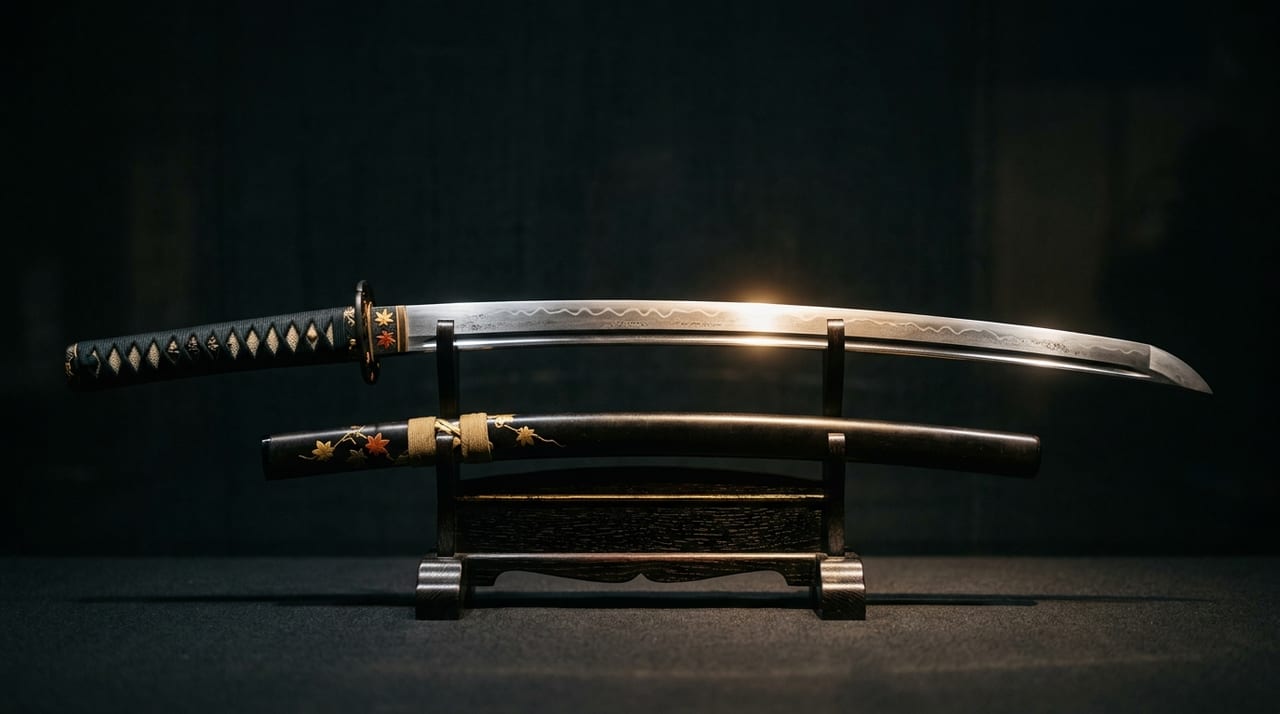 * Image is for illustrative purposes only.
Table of Contents
How Sori Is Born in the Nihontō
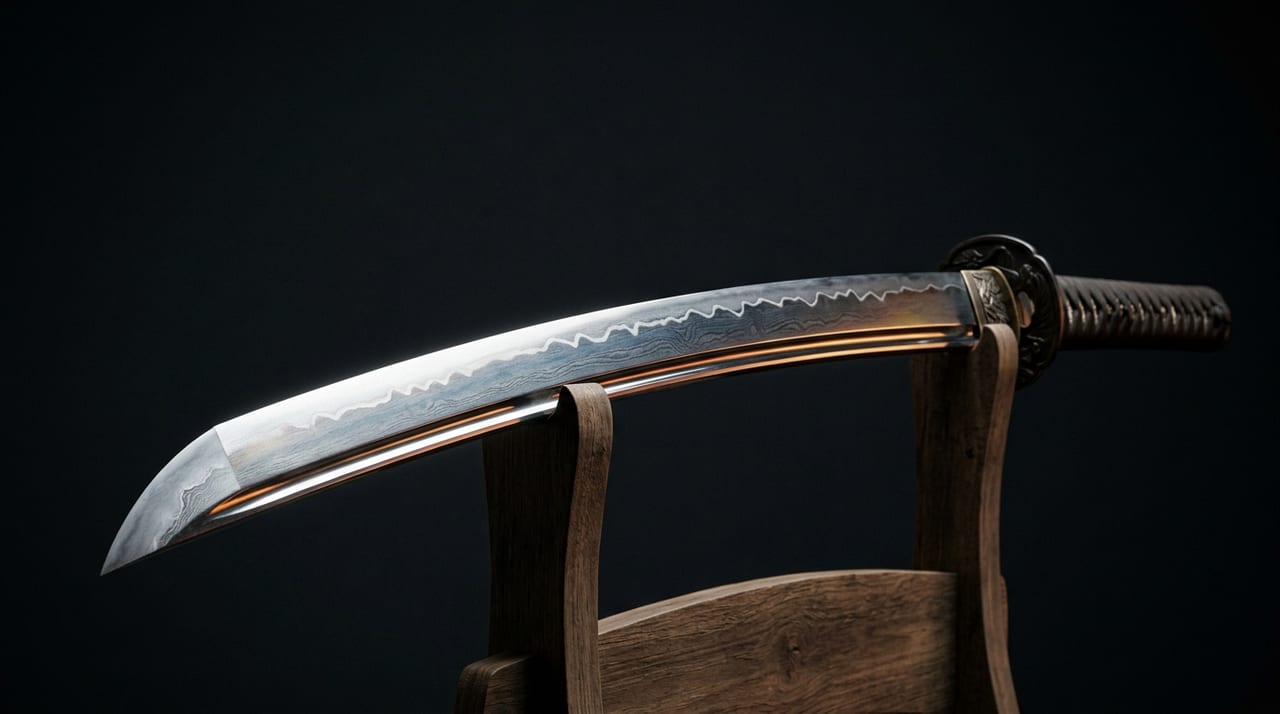
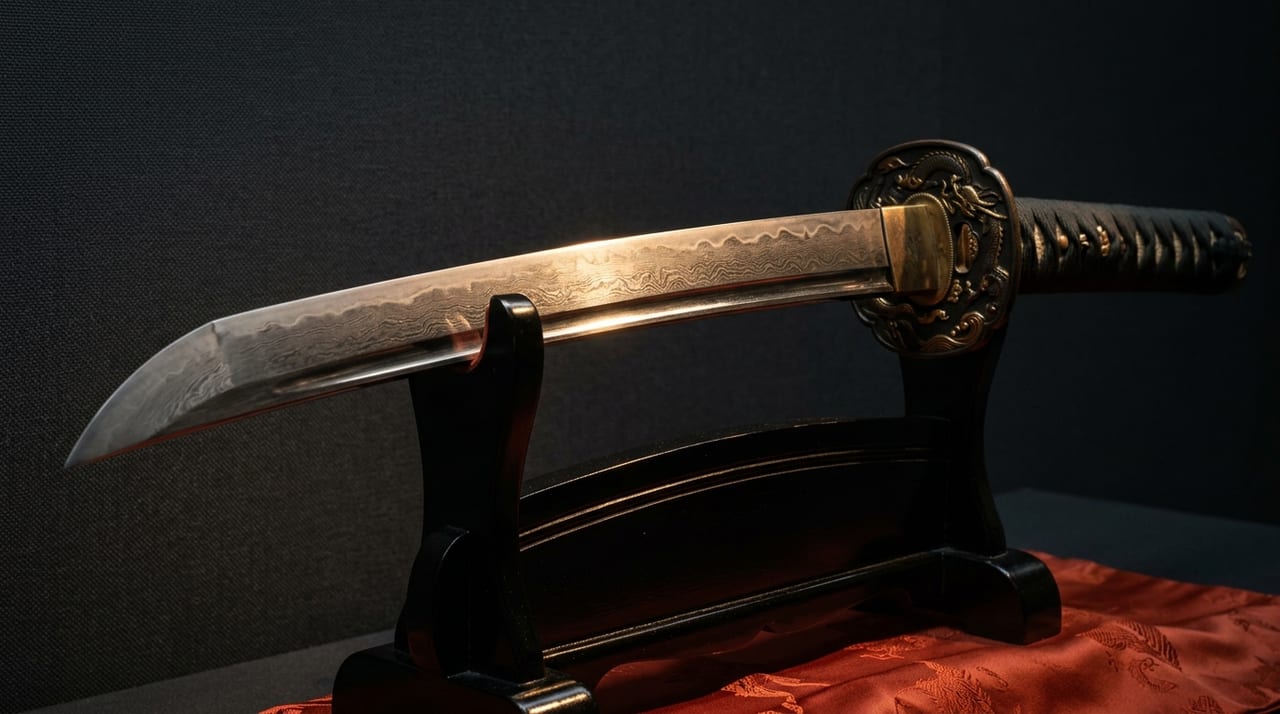
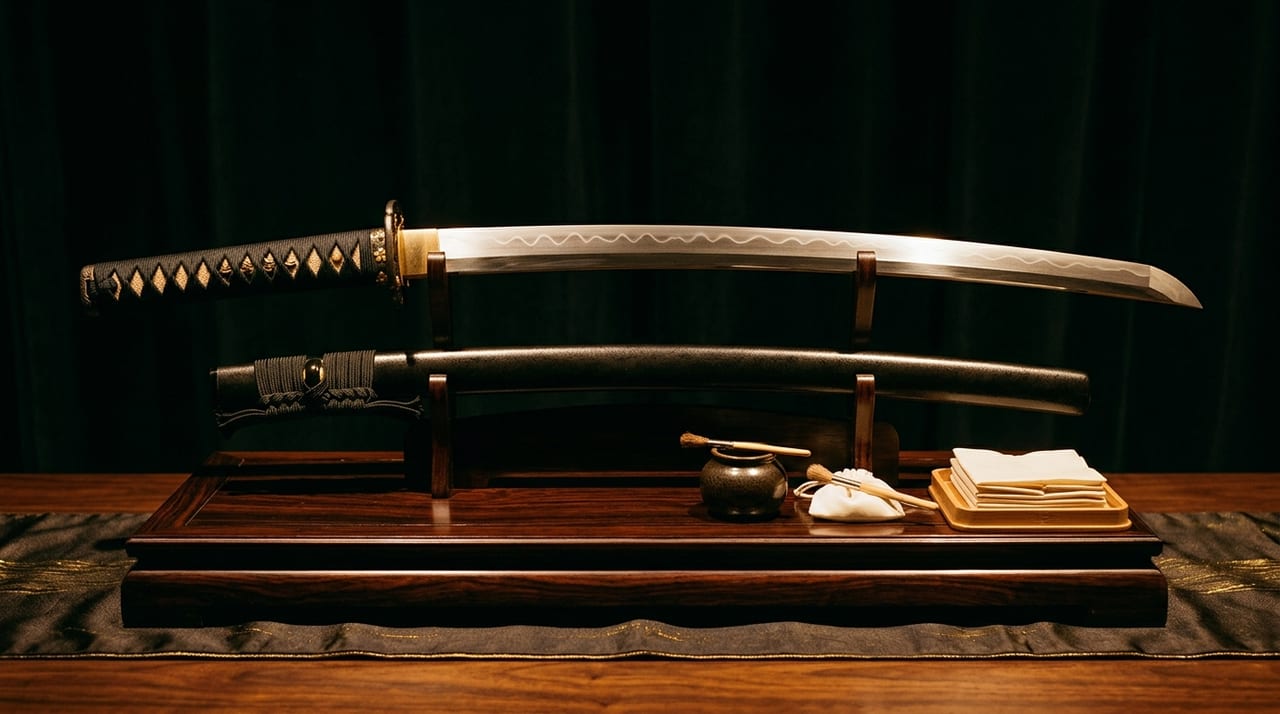
The characteristic curve of the nihontō — "sori" — is intentionally designed yet fixed in its final form for the first time through the process of yaki-ire. This is not a matter of the tōshō "building in" the sori beforehand; rather, it is the product of an extremely precise heat-treatment design in which the shape of the blade is designed with the anticipated amount of post-yaki-ire deformation in mind.
The formation of sori involves a complex interplay of structural transformation of the steel (martensitic transformation) and the physical phenomena of thermal expansion and contraction. Understanding this phenomenon means touching the very heart of nihontō production technology. Modern materials science research has reconfirmed that the sori of the nihontō is not merely an aesthetic element but also a functional design that simultaneously optimizes cutting performance, portability, and durability.
The Blade Before Yaki-ire — "Reverse Sori" as a Design Mechanism
Sori is produced during the yaki-ire process (Touken World, "How Nihontō Are Made"). Before yaki-ire, the blade is shaped with minimal sori in anticipation of this. This is a design that anticipates the deformation caused by yaki-ire — soto-zori (bending outward).
In the yaki-ire process, the blade is heated to approximately 900–1,000°C and then rapidly cooled in water (or oil, in the case of some tōshō). During this rapid cooling, the steel on the cutting-edge side (the side that receives yaki-ire) transforms into martensite, while the back side (the mune side) does not receive the full quench and therefore exhibits different contraction behavior. This difference acts as a force that "bends the entire blade toward the cutting-edge side," producing soto-zori.
Martensitic Transformation and Volume Change
The most important phenomenon that occurs during yaki-ire of steel is "martensitic transformation." When rapidly cooled from the high-temperature austenite state, a structure called martensite is formed in which carbon is dissolved in supersaturation.
Martensite has a greater specific volume (volume per unit mass) than austenite. In other words, through yaki-ire, the steel on the cutting-edge side changes in the direction of volumetric expansion. This expansion has the effect of "elongating" the cutting-edge side relative to the mune side, and becomes the primary driving force that causes the blade to bend into soto-zori.
Furthermore, thermal contraction from rapid cooling is also added. Because the cutting-edge side is thinner than the mune side (thinner = smaller heat capacity = cools faster), the contraction from rapid cooling occurs faster on the cutting-edge side than on the mune side. This asymmetry in contraction also contributes to the bending deformation of the blade.
As the sum of these complex mechanical effects, the blade after yaki-ire deforms in the direction of soto-zori. The tōshō predicts the amount of this deformation from experience and designs the blade shape before yaki-ire (with a slight reverse sori), thereby obtaining the desired sori shape after yaki-ire. The precision of this predictive ability is considered one of the most important indicators of a tōkō's level of mastery.
The Effect of Tsuchioki Patterns on Sori
What has a major influence on the amount and distribution of sori is the pattern of "tsuchioki" — the distribution of thickness of the refractory clay applied to the blade before yaki-ire.
By applying the clay thinly on the cutting-edge side and thickly on the mune side, a difference in cooling speed during rapid cooling is created. The cutting-edge side cools quickly and martensite is formed, while the mune side cools slowly and a pearlite structure is maintained. This difference in cooling speed plays a decisive role in the formation of sori.
By varying the distribution of clay thickness for each part of the blade, the tōshō can intentionally produce 'koshi-zori' (peak of sori near the lower third), 'naka-zori' (peak near the center), and 'saki-zori' (peak near the upper third). However, this control is not simple; since numerous variables are involved — including the thickness and width of the blade, the carbon content of the material, and the water temperature — things do not always go according to theory.
Post-Yaki-ire Sori Correction — "Sori-naoshi"
There is no guarantee that the blade after yaki-ire will have the expected sori. When problems arise such as too much sori, too little, or a disordered shape, the tōshō performs a correction work called "sori-naoshi."
However, a blade that has already been through yaki-ire is hardened, and it is extremely difficult to change its shape through ordinary tanren. The following methods have traditionally been used for sori-naoshi.
- Immediate correction after water quenching (in-water correction): Immediately after yaki-ire, while the blade is still at a high temperature (approximately 200–300°C) and has some remaining flexibility, the sori is quickly adjusted using wooden boards or dedicated correction jigs. This method requires instantaneous judgment and skilled force adjustment, and can only be performed by tōshō with extensive experience.
- Correction by low-temperature heating: A method in which, after yaki-ire, the blade is heated to a low temperature of approximately 150–250°C (also called 'yaki-modoshi') and then correction is applied. By relieving internal stress while maintaining the martensitic structure, room for shape modification is created.
- Shape adjustment through polishing: When the sori is only slightly off, the togishi (polisher) may also adjust the visual balance of the sori by polishing certain areas of the blade more heavily during the polishing stage. However, this is not a fundamental structural change, and excessive polishing damages the soundness of the blade.
The Effect of Sori on the Practical Characteristics of the Sword
The amount and shape of sori directly affects the practicality of the sword.
- Swords with koshi-zori (common in the Kamakura period): The center of gravity is lower, and the impact on the hands during a downward swing is reduced. This is a shape optimized for the action of cutting down from horseback.
- Swords with naka-zori (common in the Muromachi period): Well-balanced and capable of handling both mounted and infantry combat, this is a versatile sori shape. It became the standard sori for the uchigatana.
- Swords with saki-zori (some swords of the Edo period): The kissaki forms an acute angle, excelling at thrusting, while control during cutting strokes is difficult. There are also schools that consider saki-zori advantageous for the drawing motion in iai.
The Essence of Nihontō Technology Shown by Sori Control
The technology of sori control is one of the most important indicators for measuring a tōshō's level of skill. In order to obtain the desired sori in the "one-shot" process of yaki-ire, it is necessary to carefully adjust all of the following: blade design, tsuchioki pattern, water temperature management, and yaki-ire speed.
This technology, which from the perspective of modern metallurgy can be described as "complex control of controlled non-equilibrium transformation and thermal stress," has been refined by Japanese tōshō over hundreds of years through pure experience and intuition, without scientific theory. Within the curve of sori lies an encounter between the craftsman's skill and science.
Focusing on the shape of the sori when choosing a sword is also one entry point for broadening the range of appreciation.