Reading Sword Quality from Heat Colors — A Connoisseur's Guide to Judging Blade Color, Hardness, and Heat Treatment Success in Nihontō
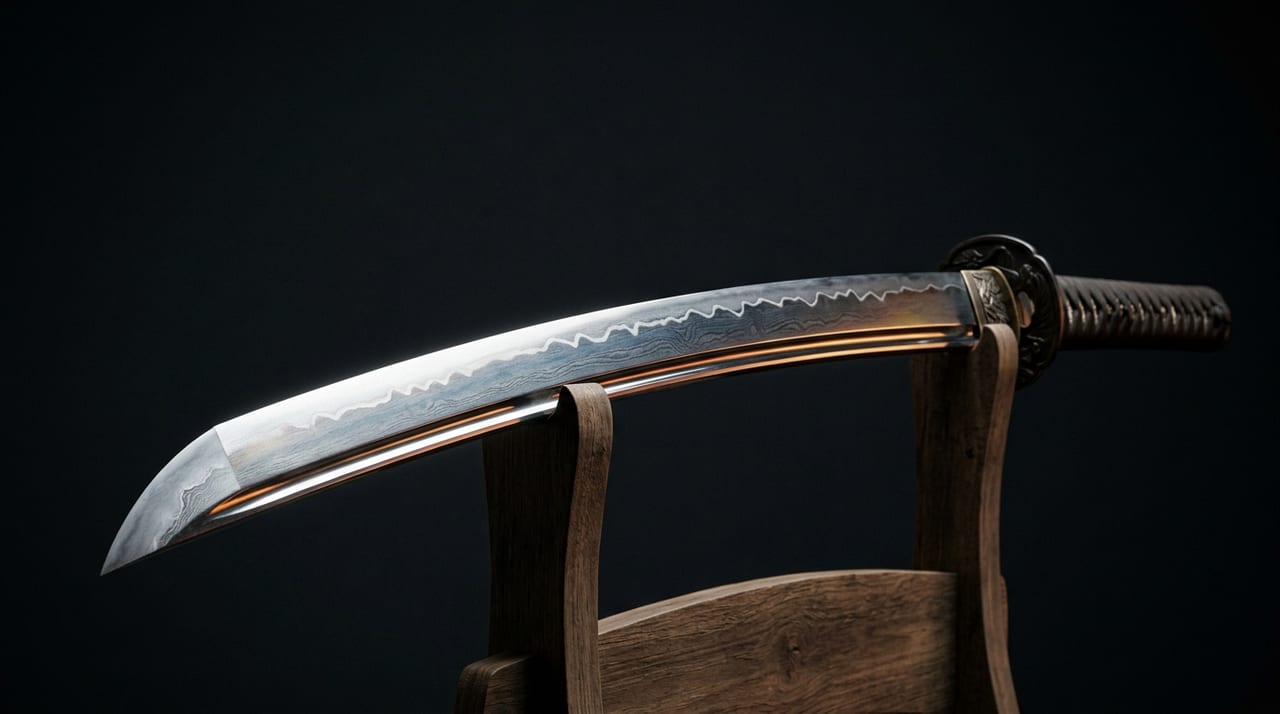 * Image is for illustrative purposes only.
Table of Contents
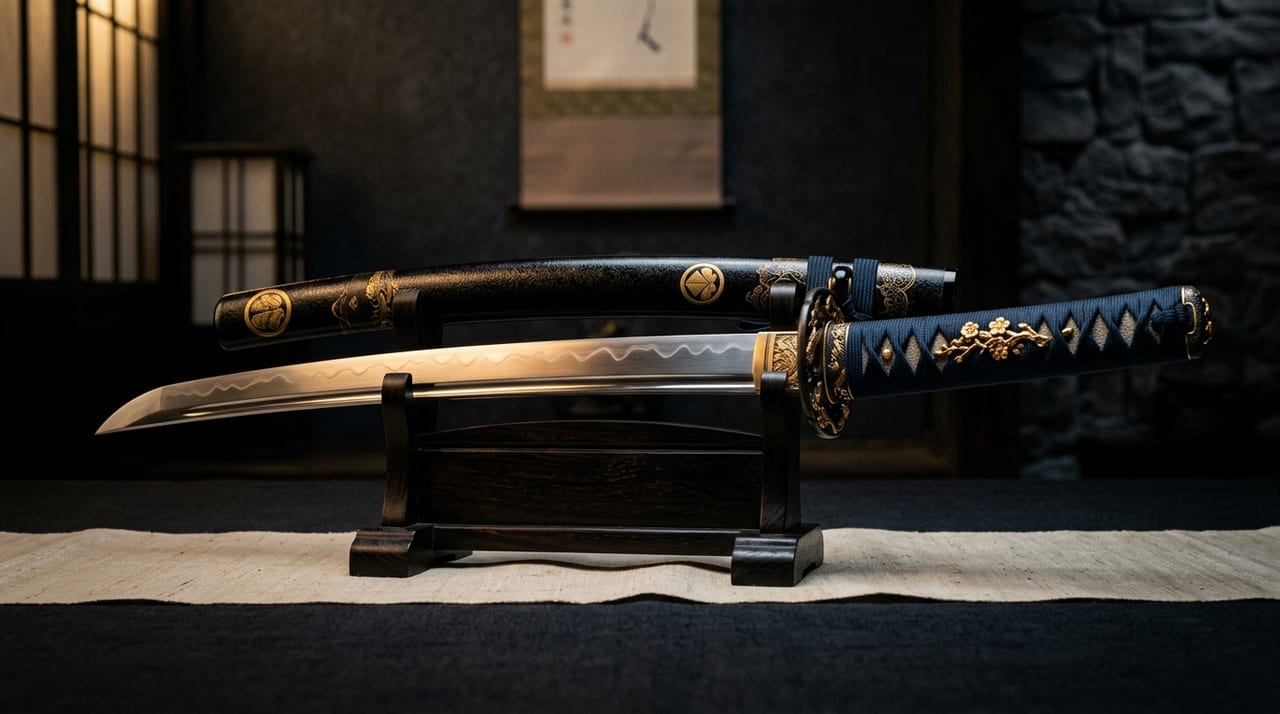
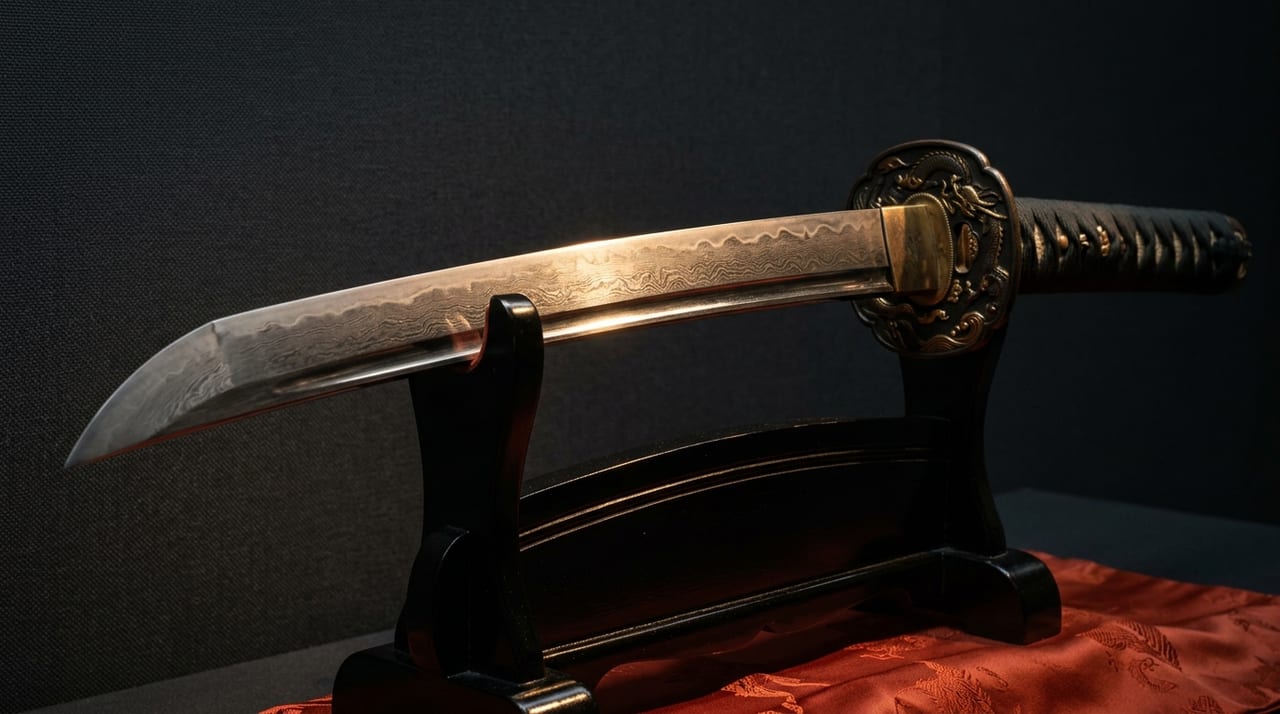
The striking whiteness of a nihontō's hamon and the deep blue-gray close to black of the jigane are not merely visual beauty. Those colors are also a record telling the story of what temperature history the steel passed through in the process of yaki-ire. Polishers and tōshō have judged a sword's hardness, toughness, and whether heat treatment succeeded by reading the hue of each part — the blade edge, the jigane, and the mune. This article organizes the way of reading this oxidation color, known as yakiiro, together with its metallurgical background.
The Relationship Between Yaki-ire and Oxidation Color
A nihontō blade achieves its hardness through yaki-ire, in which tamahagane is heated to a high temperature and then rapidly cooled. The microstructure that forms at the edge of the hamon in this process is the hard crystalline structure called martensite, and the brightly gleaming white portion of the hamon is the result of this structure being brought out through togi.
The oxidation color that forms on the steel surface, on the other hand, changes systematically with heating temperature, holding time, and cooling rate. At low temperatures only a very thin oxide film forms on the steel surface, appearing as a pale yellow, but as temperature rises the hue shifts through gold, red-purple, blue, and then a grayish blue. This is because as the oxide film grows thicker, light interference occurs and the apparent color changes. Tōshō have used this color change as a substitute indicator in place of being able to directly observe the steel's internal microstructure.
In terms of modern metallurgical engineering, this is based on the same principle as the phenomenon known as temper color. The technique of estimating temperature by observing color has long been used in the heat treatment of cutting tools and tool steels as well, but in the case of nihontō the distinctive feature is that by combining this with tsuchioki — the technique of applying yakiba-tsuchi in the shape of the hamon — entirely different cooling rates are created between the blade edge and the body, deliberately producing a distribution of hardness.
How Color Appears Differently on the Blade Edge, Jigane, and Mune
Looking at a single sword blade, colors of distinctly different character appear on the blade edge, the jigane, and the mune (peak).
- Blade edge: The part where the hardest martensitic structure forms through rapid quenching, which when polished finishes to a clear white. Near the boundary line of the hamon (nioiguchi), structures called nioi — in which fine particles appear like mist — and nie, which appear as individual grains, can be observed, and the way these appear also reflects the quality of heat treatment.
- Jigane: Because the clay is applied more thickly here, cooling is more gradual, and a relatively soft structure close to pearlite remains. The color tone becomes a slightly bluish gray to near-black, and the forging grain pattern (jihada) rises to the surface.
- Mune: As the part where the clay is thickest and cooling is slowest, the color often becomes an even more subdued tone than the jigane, and it retains a low-hardness, tough character.
It is precisely this gradation of color tone and hardness across these three areas that constitutes the structural ingenuity by which nihontō have achieved the seemingly contradictory properties of "not breaking, not bending, and cutting well," and the differences in color serve as visible evidence of that design philosophy.
Why Can Craftsmen Judge the Success of Heat Treatment from Color Alone?
Since it is impossible to cut open a blade and examine the cross-sectional microstructure under a microscope, craftsmen must infer the internal condition from external information. What serves as a clue here is the empirical rule that there is a certain correspondence between oxidation color and crystalline structure.
In a blade where rapid quenching has been carried out appropriately, hard martensite aligns densely, so the jihada after polishing appears uniformly white and clear, and the line of the nioiguchi stands sharply. Conversely, when cooling is insufficient or the heating temperature is too far below target, the transformation to hard structure is incomplete, causing the boundary of the hamon to appear blurred or a cloudiness to appear in the whiteness. It can be said that the accumulated verification over many years — repeatedly carrying out the same process and each time breaking blades to check the cross-section — cultivated the "eye" to read the state of the microstructure from the indirect information of color.
Furthermore, color change serves as an important criterion for judgment not only in the moment immediately after heating, but also during the togi process. Polishers constantly check whether the blade edge has become discolored by frictional heat generated during polishing, and if the blade does become discolored from heat during polishing, this is taken as a sign that tempering has inadvertently progressed and hardness has decreased.
Signs Appearing in Failed Yaki-ire Color
When yaki-ire does not go as intended, several typical signs appear in the color.
- The boundary of the hamon does not become even, but instead partly breaks off or blurs — indicating the possibility that heating was uneven
- The entire blade edge appears white and cloudy — indicating the possibility that rapid quenching was insufficient and soft structure is mixed in
- Extreme discoloration patches (strong bluish or purplish unevenness) appear on the surface of the yakiba — indicating localized overheating or uneven cooling
- The whiteness characteristic of hard structure reaches even into the jigane toward the mune — indicating the possibility that the tsuchioki was too thin and the entire blade was rapidly quenched
A blade body in which such signs appear risks having parts that should be hard actually lacking hardness, or conversely, parts that should retain toughness having hardened and become prone to fracture. Disorder in color has been treated as a mirror reflecting disorder in the internal microstructure.
Why Color Judgment Is Difficult
Judgment by yakiiro is a practical method backed by experience, but it is not infallible. First, the appearance of the same blade body can change greatly depending on the lighting conditions at the time of observation. Since the impression of the hue can easily shift with natural versus artificial light and the angle at which light strikes, a stable observation environment is essential for judgment.
Second, differences in the composition of the steel itself affect how the color appears. Because tamahagane varies in carbon content and impurity levels depending on its origin and degree of smelting, individual variation arises in how the oxidation color manifests even under the same temperature and cooling conditions. Accordingly, the way of reading color must inevitably be a relative judgment taking into account the particular characteristics of the steel that the tōkō uses, rather than a single absolute standard.
Third, the way color appears also changes depending on how the togi is finished. Since the degree of reflection looks different for the same microstructure depending on the fineness of the polishing and how the luster is brought out, a certain level of connoisseurship experience is required of those who view the completed blade body. It is precisely this large number of variables that is the reason why assessing yakiiro is considered a skill that cannot be acquired overnight.
Conclusion
Yakiiro is a clue that, through the physical phenomenon of oxide film thickness on steel, reflects the heat treatment history within the blade body. By reading the differences in color that the different cooling rates on the blade edge, jigane, and mune each produce, craftsmen have judged whether the balance of hardness and toughness has been achieved as intended. At the same time, it is also true that the reading is easily influenced by variables such as lighting and differences in the steel, and the way of reading color becomes a skill with practical accuracy only through the accumulation of experience. Knowing this delicate color information that resides in the blade body should provide one perspective through which to appreciate the depth of the nihontō as a work of craft.