New Arrivals — Browse our catalog for the latest authentic Japanese sword arrivals. Browse →
Articles tracing sword culture and historical events across every era, from ancient Japan to the modern age.
A survey of the provenance of famous swords — including Heshikiri Hasebe, Nikkō Ichimonji, Nihongō, and Hakata Tōshirō — handed down to the Kuroda clan, lords of the Fukuoka domain, traced through the connections between individuals.
How far can the tachi depicted in the Heike Monogatari and the Taiheiki be used as historical fact? We compare narrative patterns with actual tachi and lay out the steps for drawing on them in sword history.
How did the "gō" attached to famous swords such as Mikazuki Munechika, Onimaru Kunitsuna, Heshikiri Hasebe, and Yagen Tōshirō come about? This article explains the difference between gō and mei, and the naming patterns based on appearance, anecdotes, religious associations, and everyday objects.
A clash in newly opened Kobe between Bizen Domain troops and foreign residents. An account of the circumstances leading to Taki Zenzaburō's seppuku and the diplomatic ordeal that confronted the newly established Meiji government.
An explanation of the Myōhono-tei Incident of Genji 1 (1864) from the perspective of swords. The person who actually wounded the individual was not the Shinsengumi but Shiba Tsukasa, a warrior of Aizu Domain, and the weapon used was not a sword but a spear. The tension with Tosa Domain that arose from the misidentification was brought to a close by the seppuku of both Shiba Tsukasa and Asada Tokitarō.
A look back at the destabilization campaign carried on by the anti-shogunate faction even after the restoration of imperial rule, the burning of the Mita Satsuma domain residence by pro-shogunate forces, and the last urban combat in Edo leading up to the Battle of Toba-Fushimi.
In Genji 1 (1864), after Chōshū domain was branded an enemy of the court at the Kinmon Incident, the Zokuron-ha seized power within the domain and carried out a series of purges: the seppuku of three karō, the beheading of four military advisors, and the execution of the Eleven Martyrs of the Kinoe-ne Purge at Noyama Prison. Through the ritual distinctions between seppuku and beheading, and the swords used in each, this article examines the true nature of the domain's internal struggle.
An explanation of the Battle of Shirakawa-guchi, one of the fiercest engagements of the Boshin War, from the perspective of nihontō. Introduces the months-long struggle over a strategic point on the Ōshū Kaidō and the realities of close-quarters combat in an era of firearms.
An examination of the Battle of Utsunomiya Castle — one of the fiercest engagements in northern Kantō during the Boshin War — from the perspective of Japanese swords. Introduces the offensive and defensive operations of Hijikata Toshizō and other former-shogunate forces, and the reality of sword-wearing during the transitional period into the age of firearms.
This article explains the background of the Akita War, in which Kubota Domain — having withdrawn from the Ōuetsu Reppan Dōmei to side with the new government — came under attack from the surrounding allied domains, and examines the actual state of the swords worn by the warriors of that time.
An account of the circumstances in which the Sekihōtai, which served as the vanguard of the new government forces while raising the banner of halved land tax, was executed as a false imperial army following a change in policy, together with an explanation of the actual arms of the sōmōtai.
An explanation of the founding of the Mimawarigumi, the shogunate-authorized security organization, and the circumstances surrounding the bearing of swords. Introduces various theories regarding the status-based differences from the Shinsengumi and their involvement in the assassination of Sakamoto Ryōma (the Ōmiya Incident).
The incident in which Sakamoto Ryōma was attacked at the Teradaya inn in Fushimi in Keiō 2, examined through the lens of the actual weapons of the time — pistol, spear, and sword.
This article reads the custom of rewarding retainers who had distinguished themselves in battle with swords — a practice prevalent from the Sengoku period through the early Edo period — through the provenance of the two kokuhō (National Treasure) swords "Heshikiri Hasebe" and "Daihannya Nagamitsu."
The Goseibai Shikimoku, established in 1232, is not a legal code that directly regulates the specifications of swords or the etiquette of carrying them. This article examines, from two angles — the penal provisions and the sword-carrying customs recorded in the Azuma Kagami — how the articles punishing wounding and killing indirectly restrained the use of force in Kamakura warrior society.
An examination of the change in status brought about by leaving one's domain, and the relationship to the practice of sword-wearing that was nonetheless maintained, drawing on real examples from Bakumatsu rōshi such as Sakamoto Ryōma.
This article examines how the mercantilist economic policies pursued by Senior Councilor Tanuma Okitsugu — namely the recognition of kabunakama and monetary policy — affected the distribution structure of swords and the production of swords during that era.
This article explains how Western-style military reform changed samurai sword-wearing practices over the ten-year period from the Sanpatsu-Dattōrei of 1871 to the Chōheirei of 1873 and the Sword Abolishment Edict (Haitōrei) of 1876.
This article traces how the norms of warrior society around kirisute gomen and tsujigiri transformed in the atmosphere of aversion to killing spread by the Shōrui Awaremi no Rei of the fifth shogun Tokugawa Tsunayoshi.
How swords were actually used at the realm-deciding Battle of Sekigahara, and how the postwar reshuffling of daimyo domains reshaped demand for swords and their craftsmen.
An overview of the Aizu Kanesada blade attributed to Shinsengumi vice-commander Hijikata Toshizo, and the sword culture of the Shinsengumi.
This article explains the sword-length regulations established by the Edo shogunate, the convergence on "teisun," the prevalence of suriage, and the connections to the social order of sword-bearing such as the daishō two-sword combination and myōji taitō.
In Kannin 3, the Toi invaded Tsushima, Iki, and Hakata Bay. This article explains, from the perspective of Heian-period sword history, how local warrior bands under the command of Fujiwara no Takaie repelled them using tachi and bows.
An overview of Japan's three legendary spears—Nihongo, Otehagi, and Tonbogiri—and where they stand today.
An overview of the Japan-Korea diplomatic and trade route during the Edo period, with the Tsushima domain as its gateway, and the role that swords played within it.
This Tenka Goken blade, forged by Heian master Gojo no Kuninaga, was presented to Emperor Meiji and remains an Imperial Household treasure today.
Juzumaru Tsunetsugu is the only Tenka Goken worn by a Buddhist priest, showcasing Bitchū Aoe craftsmanship and connections to Saint Nichiren and Kuon Temple.
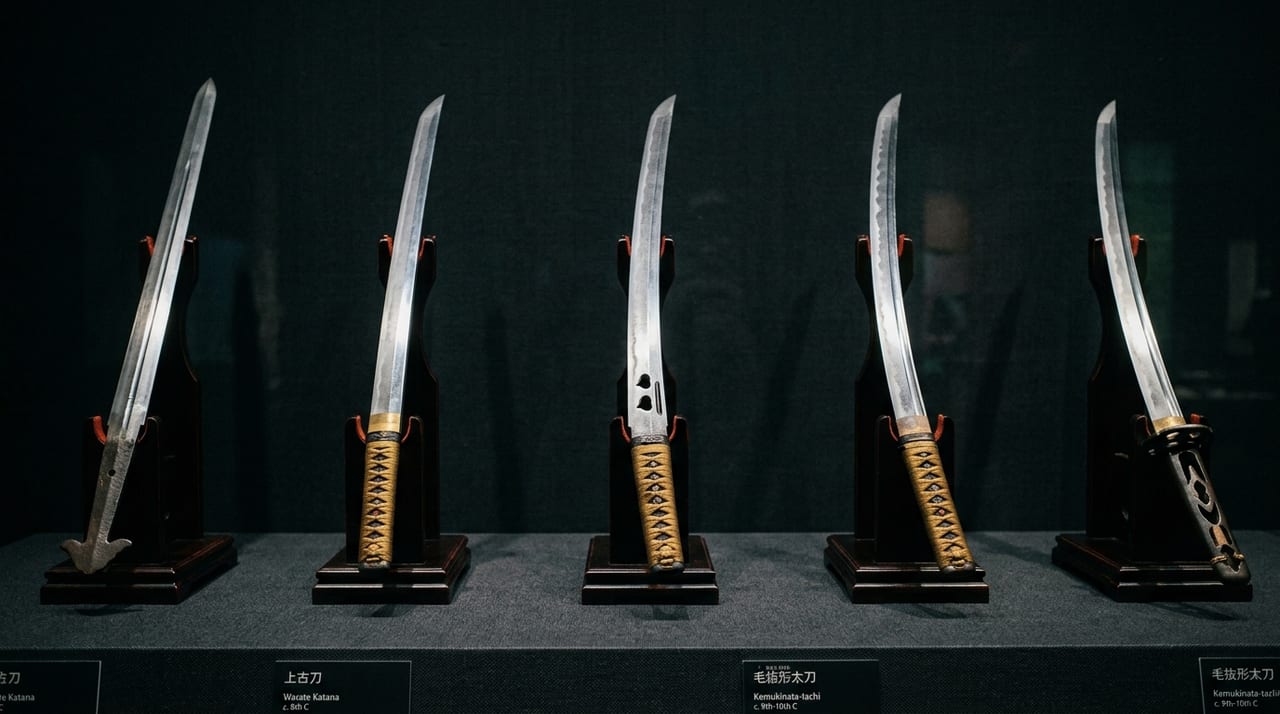
Why did the form of Japanese swords change so dramatically from the Kofun period to the Heian period? A historical turning point that deciphers the shift from straight swords to curved tachi through the development of military tactics and metallurgical technology.
The Nanbokuchō period (1336–1392) is known as the golden age of Japanese swords, but it was also the nascent era of "samurai collections," in which warriors began personally collecting and accumulating famous blades. The large-scale circulation of swords generated by warfare combined with an aesthetic interest in renowned blades, laying the groundwork for sword appreciation in the later Muromachi culture.
The 1590 Siege of Odawara marked the completion of Toyotomi Hideyoshi's unification of Japan. This large-scale military campaign is historically examined for how it affected the supply and demand of swords, production centers, and the movement of craftsmen.
As the term "ken-zen ichinyo" suggests, the sword has been positioned in warrior society as a tool of spiritual cultivation that transcends mere weaponry. This article explores the influence of Zen Buddhism, the philosophies of the Yagyū Shinkage-ryū and Kyōshin Meichi-ryū schools, and the relationship between the sword and the mind as described in Miyamoto Musashi's writings on strategy.
The Shimabara Rebellion, which broke out in 1637, was the largest uprising in early modern Japan and was large-scale actual combat in the peaceful early Edo period. Through the struggle between the rebel forces entrenched in Hara Castle and the shogunate army, we consider the reality of nihontō and other weapons in an age of peace.
The Battle of Nagashino in 1575 is known as the engagement in which the firearms tactics of the Oda–Tokugawa coalition broke the Takeda cavalry. This article examines, in keeping with the historical record, the role that the Japanese sword played in close-quarters and pursuit fighting during this battle in which firearms take the spotlight.
The introduction of firearms to Tanegashima in 1543 greatly transformed Japan's battlefields and weapons systems. This article examines, from a historical perspective, the role that Japanese swords continued to play in close combat and grappling on the battlefield amid the spread of the new weapons, and the transformation of demand for swords.
Based on historical records, this article traces the fate of swords damaged by fire—known as yakemi (焼身)—and recounts anecdotes of Nobunaga's beloved swords said to have been lost at Honnō-ji.
Ōdenta Mitsuyo, one of the Five Heavenly Swords, is a National Treasure tachi (太刀) attributed to Miike Tenta Mitsuyo, founder of the Miike school in Chikugo during the late Heian period. This introduction traces the provenance of this celebrated blade, which passed from the Ashikaga family through Toyotomi Hideyoshi to the Maeda family, and is currently housed by the Maeda Ikutoku Foundation.
The sacred swords preserved at Tōdaiji Shōsōin have as their foundation the personal effects of Emperor Shōmu, and represent the finest achievements of Tenpyō culture as recorded in the Kokka Chinpōchō. This article introduces the ceremonial swords, led by the Kingin Den Kazari no Karatachi, as well as the history of the Yōhōken and Inhōken, which were rediscovered in the Meiji era.
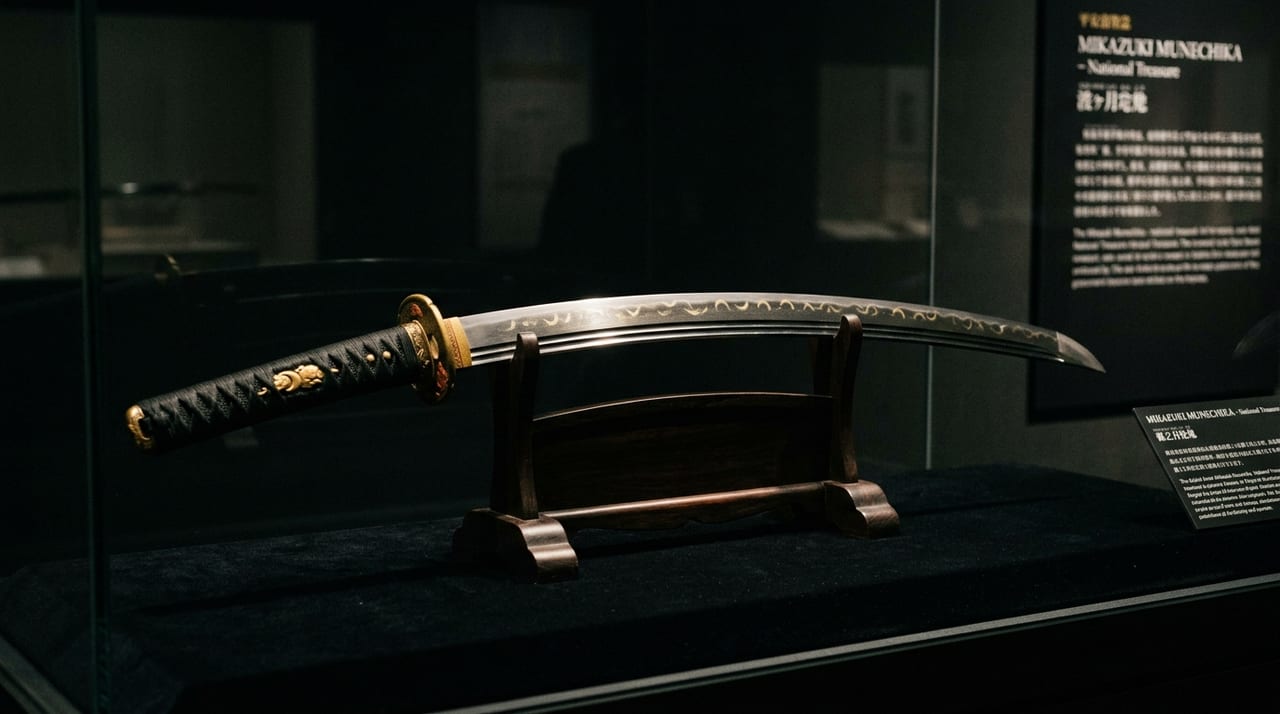
Mikazuki Munechikas (三日月宗近), one of the Five Heavenly Swords (天下五剣), is a National Treasure tachi said to have been made by Sanjō Munechikas (三条宗近), a master swordsmith of Kyoto during the Heian period, and is housed in the Tokyo National Museum. This article introduces the elegant hamon featuring a succession of crescent moon-shaped uchinosuke (打除) markings, and its transmission from Kōdai'in (高台院) to the Tokugawa shogunate.
Onimaru Kunitsuna, one of the Tenka Goken (Five Swords Under Heaven), is a celebrated blade traditionally attributed to Kunitsuna, a master swordsmith of the Awataguchi school in Kyoto during the Kamakura period, and is currently held as an imperial possession and managed by the Imperial Household Agency. Its provenance spans centuries, passing from the Hojo clan through the Ashikaga, Oda, Toyotomi, and Tokugawa families to the Imperial household.
An overview of Sakanoue no Tamuramaro, who led the conquest of the Emishi as Sei-i Taishōgun, and his relationship with the warabite-tō used in Emishi society in the northeast. The role played by the sword culture of the eastern provinces in the transitional period from straight swords to blades with sori is examined.
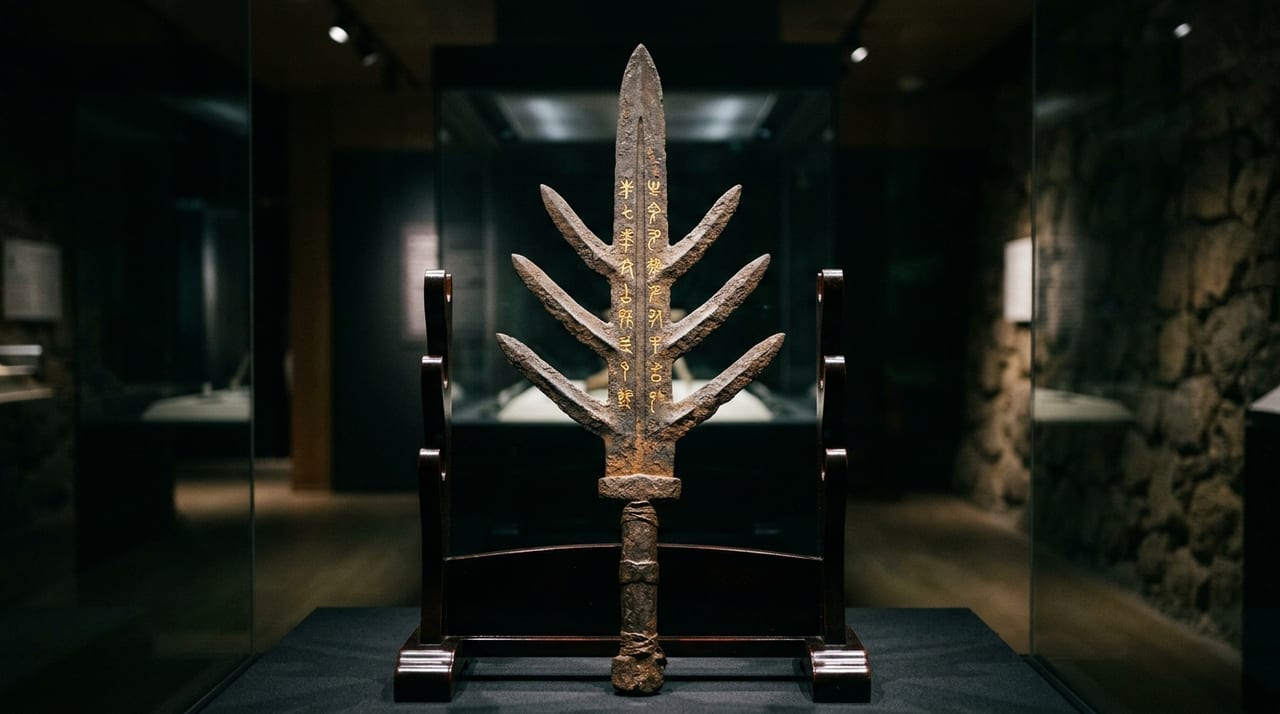
The Nanatsusaya-no-Tachi, preserved at Isonokami Jingū in Tenri, Nara Prefecture, is an ancient sword designated kokuhō (National Treasure), known for its distinctive form with branching blades on either side and its gold-inlaid mei (signature). This article examines the circumstances of the gift from the Baekje king to the king of Wa as described in the mei, and the international relations of 4th-century East Asia.
How did sword culture transform during the age of Matsudaira Sadanobu (松平定信), who led the Kansei Reforms (1787–1793)? This study examines how, as society regained stability after the turmoil of the Temmei Famine and the smashing of shops, a new intellectual current emerged: a reconsideration of swords' aesthetic values and the prelude to the shinshintō (新々刀) movement.
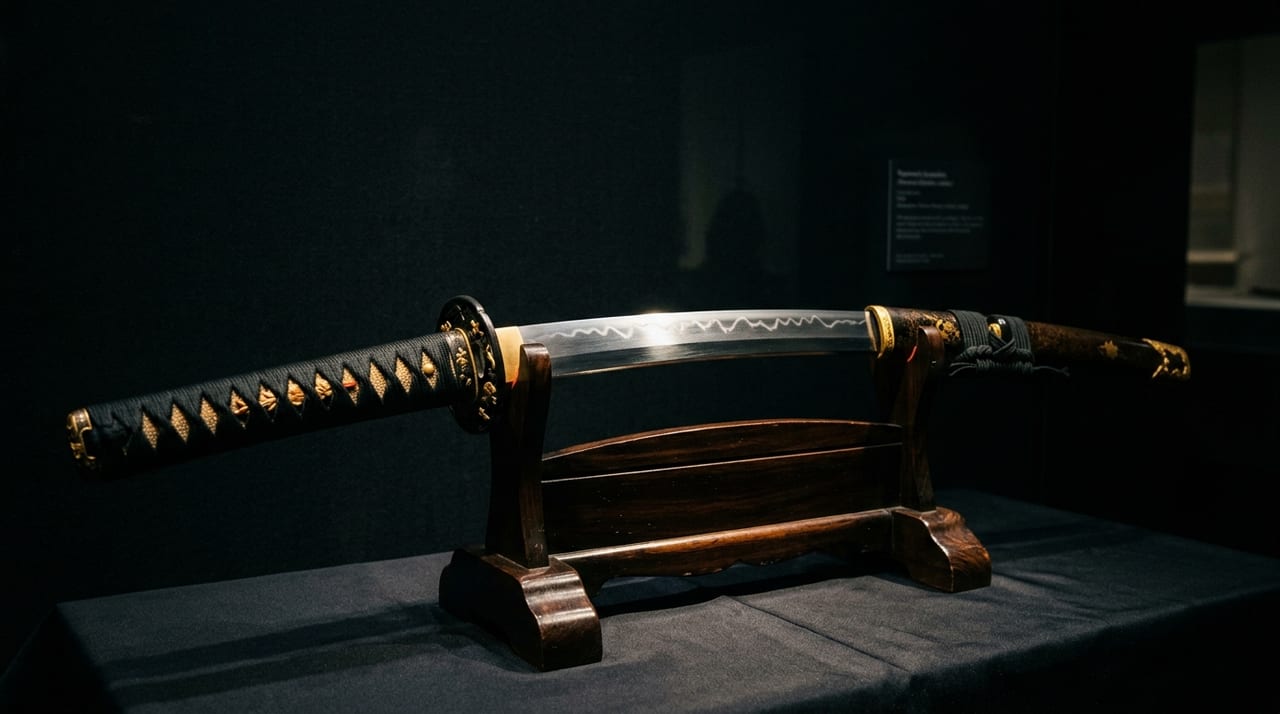
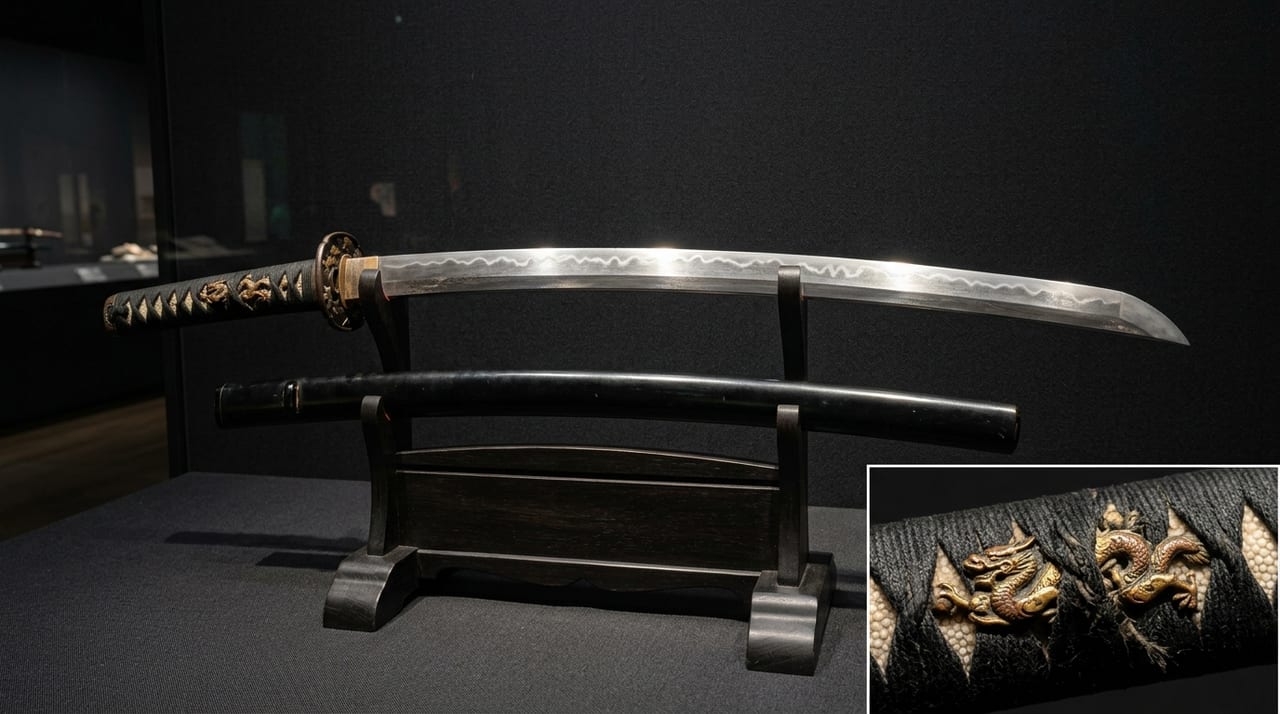
"Enishi wo Musubu Katana" (Katana That Bind Us), held at the Kyoto National Museum in spring 2026, is an educational project that uses kokuhō and jūyō bunkazai to help visitors understand swords as a medium connecting historical figures, power, and aesthetic sensibility through sword appreciation. The exhibition enables everyone from beginners to enthusiasts to learn about sword culture.
In the war economy of the Sengoku period, weapon procurement costs struck directly at a daimyo's finances. This article explains the market realities of the weapons trade that underpinned the back side of warfare — the going rates and acquisition channels for swords, spears, and firearms; the compensation systems paid to tōkō; and price negotiations during bulk procurement — from the perspectives of economic history and distribution history.
An examination of the large-scale confiscation and dispersal of swords during the Winter and Summer Campaigns of Osaka (1614–1615), followed by the Tokugawa shogunate's reorganization of the sword trade after the fall of the Toyotomi clan.
The Genpei War (1180–1185) was Japan's first prolonged nationwide internal conflict. This article analyzes in detail the impact of the war on sword demand and craftsmen migration, from the perspective of the supply side—sword forgers and blade makers.
An exploration of how the turbulent Bunkyu, Genji, and Keio years (1861–1868) intertwined the sonnō jōi movement with sword culture, shaping the sword-carrying customs of patriots, rōnin, and samurai, and directing the activities of swordsmiths.
The demand for swords driven by the warfare of the Nanbokuchō period (1336–1392) brought rapid expansion and technological innovation to the tōkō industry. The technologies established during this golden age — including the organization and division of production, the development of new hamon such as those of the Sōshū-den, and improvements in the compensation and status of tōkō — became the foundation for the subsequent development of sword-forging.
The Kyotoku Uprising (1455-1483), a 28-year civil war in Kanto, disrupted sword supplies from major production centers, forcing northern Kanto sword craftsmen (toukou 刀工) to achieve independence and establish local production. As the onban kaji (御番鍛冶) court-appointed smiths system ceased functioning, regional lords directly employed local smiths to produce mass-made swords (kazuuchi gatana 数打ち刀). This transition from reliance on central workshops to autonomous local manufacturing marked the beginning of geographic diversification in sword-making traditions that would characterize the Sengoku period.