The Odawara Campaign (1590) and Japanese Swords: How the Final Siege of Unification Shaped the Blade Industry
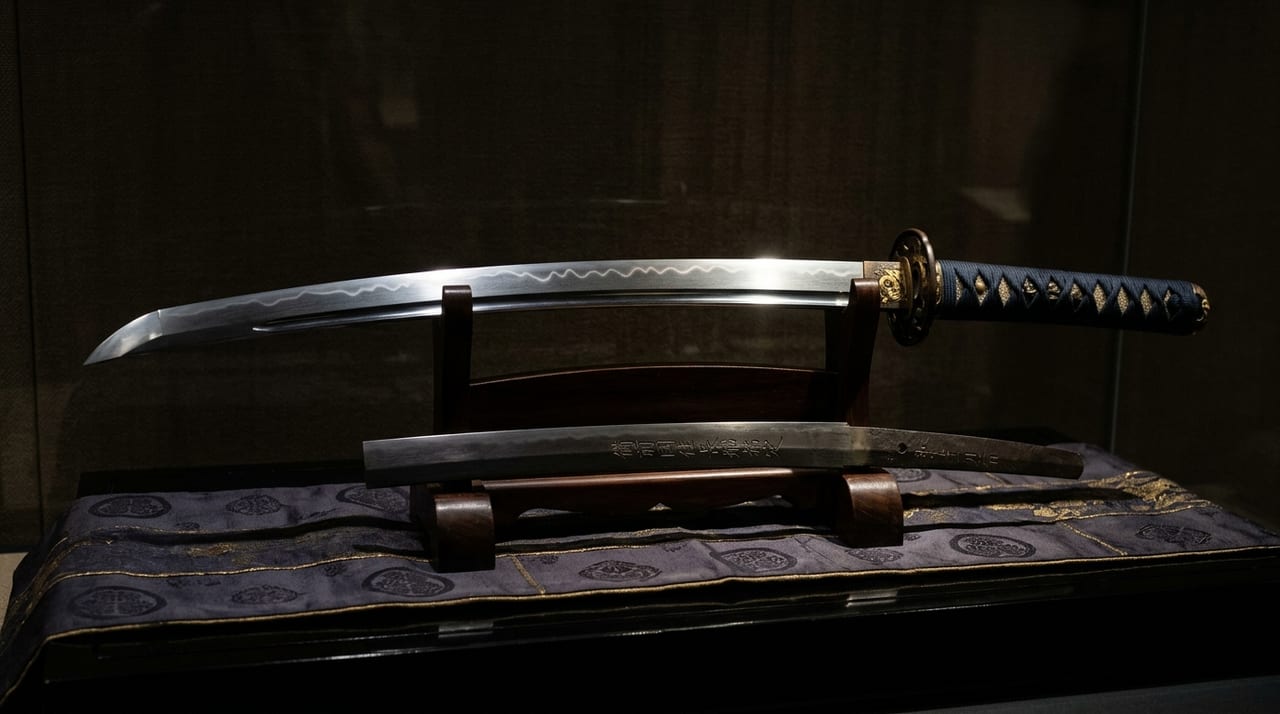 * Image is for illustrative purposes only.
Table of Contents
The Final Chapter of Unification——The Historical Significance of the Siege of Odawara
In 1590 (Tenshō 18), Toyotomi Hideyoshi forced the surrender of the Go-Hōjō clan, the dominant power of the Kanto region, effectively bringing to a close the Sengoku period that had lasted over a century. This Siege of Odawara was one of the largest siege campaigns of the Sengoku period, mobilizing over 200,000 troops, and concluded with the opening of the castle by Hōjō Ujinao after approximately four months of siege (April to July).
In the history of swords, this campaign is regarded as one of the important turning points. This is because the end of large-scale wartime demand and the transition to a peaceful era fundamentally changed the quality, quantity, and direction of sword production.
The Final Wave of Sword Demand Generated by Massive Troop Mobilization
In the Siege of Odawara in which over 200,000 troops participated, demand for combat-ready swords, spears, and naginata temporarily surged. In particular, demand for mass-produced practical swords called "kazu-uchi-gatana" increased, and records remain of swordsmiths from Mino, Bizen, and Soshu responding to large orders.
On the other hand, Toyotomi daimyo and powerful military leaders sought specially commissioned swords from renowned masters during this opportunity, and it was an excellent stage for Shintō-period swordsmiths to demonstrate their skills. The honor of "presenting a sword to the realm's ruler" had the effect of raising a swordsmith's reputation dramatically.
Swordsmiths in Go-Hōjō Territory and Changes in Production Centers
The area around Sagami Province (present-day Kanagawa Prefecture), the base of the Go-Hōjō clan, had accumulated a sword culture continuous from the Kamakura period. Some swordsmiths who inherited the techniques of the Soshu tradition had deep connections with the Hōjō clan, and it is said that some were forced to relocate their workshops or cease operations due to the changed circumstances following the castle's surrender.
After the campaign, Tokugawa Ieyasu, who was given control of the Kanto region, established his base at Edo Castle and began organizing official court swordsmiths. This laid the foundation for Edo's later sword-forging culture. The manner in which the migration of swordsmiths to the Kanto region influenced the formation of regional production centers during the Shintō period is also one of the points of discussion in sword history research.
The Sword Hunt Edict (1588) and Its Connection to the Campaign
Two years before the Siege of Odawara, in 1588 (Tenshō 16), Toyotomi Hideyoshi issued the Sword Hunt Edict. This edict, which confiscated swords from peasants and religious institutions, was part of social reform to thoroughly implement the separation of military and agricultural classes.
It is said that some of the large quantities of swords confiscated through the Sword Hunt were melted down and converted into agricultural tools and bells, but the actual circumstances varied greatly by region, and not all swords were confiscated. However, the direction toward "limiting the social classes that could possess swords" had the effect of restructuring the subsequent sword market around the samurai class.
The end of practical warfare demand in the Sengoku period through the Siege of Odawara and the limitation of sword possession among peasants through the Sword Hunt Edict——the interaction of these two historical events became a major catalyst in fixing swords as "the exclusive property of the samurai."
Post-Campaign Settlement and the Fate of Famous Swords
After the campaign, swords held by the Go-Hōjō clan were distributed among various daimyo as spoils of war. Hideyoshi himself was known to have been an enthusiast of fine swords, and records also remain of him bestowing swords as rewards for their service in the campaign.
As the dissolution, transfer, and replacement of Sengoku daimyo were repeated, famous swords were repeatedly dispersed and recollected among various households. This formed the preparatory stage for the phenomenon of "daimyo family sword organization" seen in the early Edo period, making the period after the Siege of Odawara an unmissable turning point in the history of sword distribution.
The Approach to the Shintō Era
The Siege of Odawara, positioned just before the concept of "Shintō"——that is, the classification distinguishing swords made after the Keicho era (1596-1615) from kotō——represents the "final period of kotō" in sword history.
Among the swordsmiths mobilized for the campaign, many inherited the techniques of kotō while responding to the demands of the new era, and the blades produced during this transitional period are evaluated by appraisers as "sue-kotō" (late kotō). As peace approached, swords shifted from being "tools of war" to increasingly taking on aspects of "symbols of samurai prestige" and "works of art"——this major transformation began with the completion of unification in 1590.
Perspectives on Appreciating and Collecting Sue-kotō
Sue-kotō from around the period of the Siege of Odawara form a relatively accessible category in the modern sword market. From the perspective of appreciation and collection, the first point to grasp is that even among sue-kotō, there is a wide range in quality between "kazu-uchi-gatana" and "chūmon-uchi."
| Type | Characteristics |
|---|---|
| Kazu-uchi-gatana | Mass-produced practical swords that responded to high demand. The shape and jihada tend to show roughness characteristic of mass production |
| Chūmon-uchi | Individual blades commissioned by military commanders or prominent figures. Often meticulously crafted with the swordsmith employing their full technical skill, and evaluations vary greatly even among contemporary works from the same production region |
By comparing the finishing of the tang, the style of the signature, and the density of the jihada, one can to some extent discern these differences even from photographs.
Moreover, because swords from the end of the Sengoku period have survived both actual combat and long histories of transmission, when selecting swords from this era, one should grasp the following points as fundamental considerations.
- Check whether the blade has been polished-up (a modification where the tang is shortened to change the overall length)
- Confirm the soundness of the blade edge and jihada
- Carefully cross-reference the condition shown in photographs with the information in the certificate of appraisal
- Clarify any unclear points with the seller before purchase
Viewing Swords Within Historical Context
When one views an individual sword while understanding major historical turning points such as the Siege of Odawara, the historical circumstances behind the blade's form and signature come into view in three dimensions. For example, if a sword bears a dated signature from around the Tenshō or Bunroku eras, one can understand that it was forged during the final period of the Sengoku era's demand. With a polished-up kotō, one can imagine its provenance passing through two eras: the practical warfare of the Sengoku period and the formality of the Edo period.
When reading the descriptions on product pages and the information in certificates of appraisal, if one develops the habit of viewing the date of manufacture overlapped with historical events of that era, the act of selecting swords itself becomes an activity of historical understanding.