The Ōnin-Bunmei War and the Sword Industry — The Historical Background of How a Decade of Conflict Scattered the Bizen Swordsmith Community and Its Impact on Sword Production
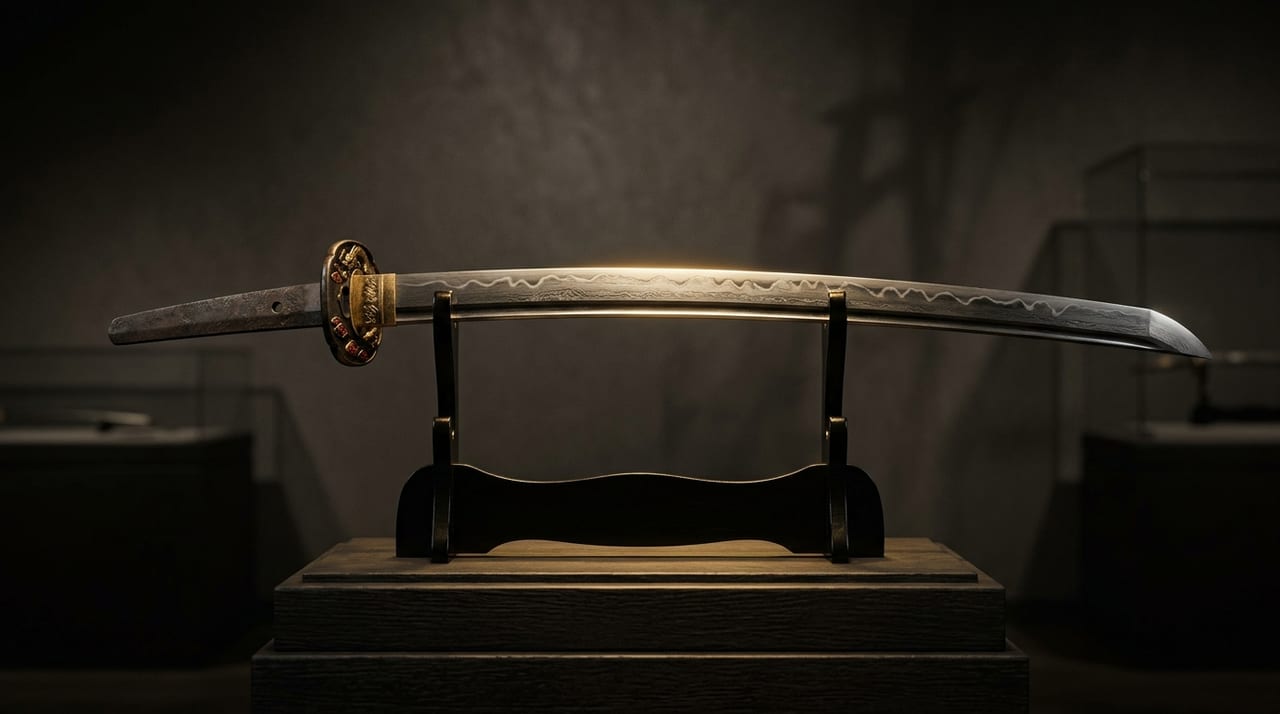 * Image is for illustrative purposes only.
Table of Contents
What Was the Ōnin-Bunmei War?
The Ōnin-Bunmei War, which began in the first year of Ōnin (1467) and continued until the ninth year of Bunmei (1477), was a large-scale civil war that erupted from the intertwining of disputes over succession to the post of kanrei of the Muromachi shogunate and the question of the shogun's heir. The Eastern Army (the Hosokawa faction) and the Western Army (the Yamana faction) clashed with Kyoto as their principal battleground; over roughly ten years of fighting, wide swaths of Kyoto's urban districts were burned down, and many cultural institutions, workshops, and craftsmen's communities suffered devastating blows.
This conflict was not merely a political dispute; it had a grave impact on Japanese society, economy, and culture. For the sword industry in particular, it marked a major turning point in the kotō era — the golden age of medieval Japanese swords.
Bizen Province — The Largest Sword-Production Center of the Medieval Era
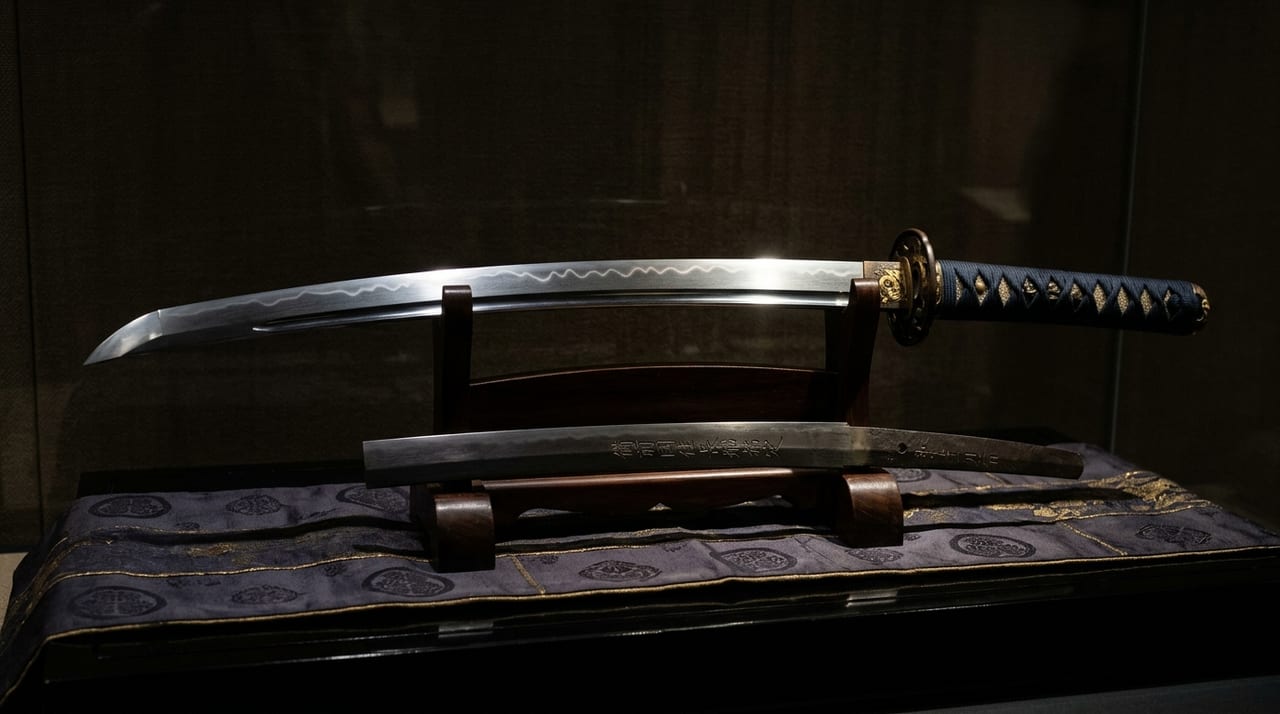
Before the Ōnin War, Bizen Province (the southeastern part of present-day Okayama Prefecture) was known as the largest sword-production center in Japan. Bizen had developed a distinctive kaji culture known as "Bizen swords," and a large community of tōshō had formed centered on the area of Osafune. Multiple schools — the Osafune School, the Ichimonji School, the Fukuoka Ichimonji School, the Yoshii School, and others — coexisted, vying with one another in skill while producing large quantities of high-quality swords.
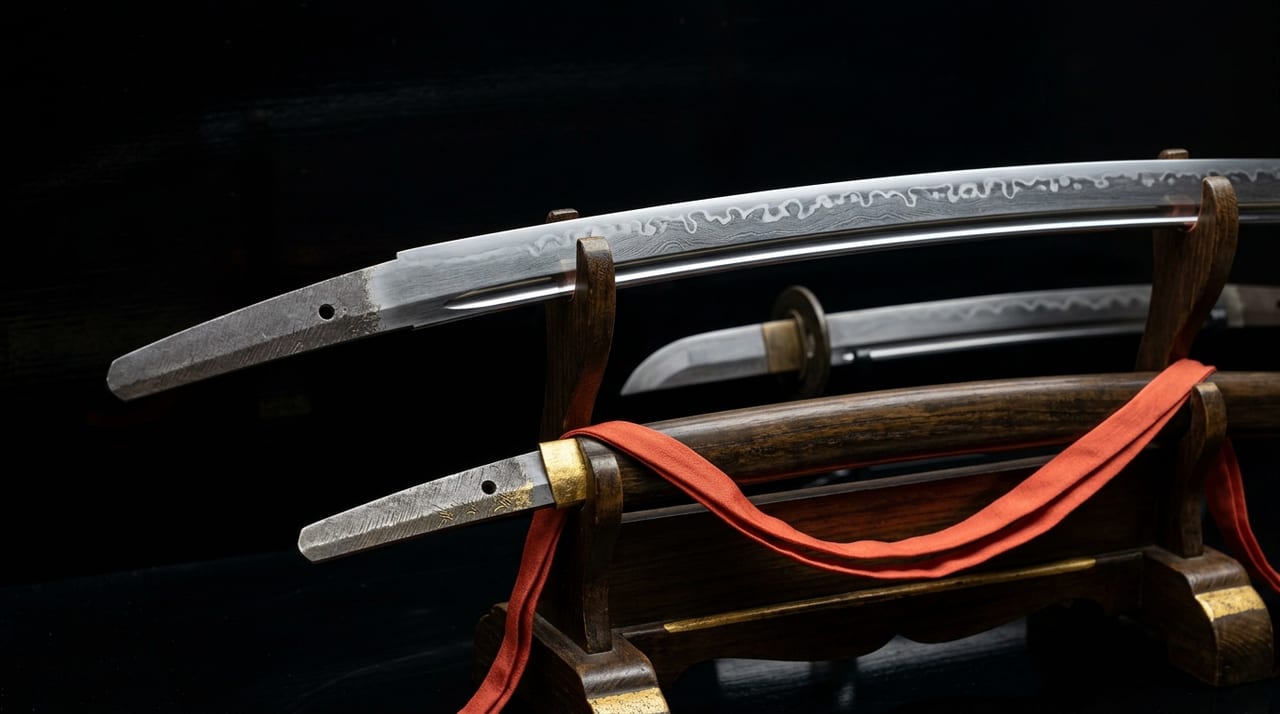
Bizen Province had favorable geographical conditions for sword production, with iron-sand deposits nearby and well-developed water transport. It also lay along the San'yōdō road at an important transportation hub, and functioned as a supply base for the shogunate and samurai houses across the country. Bizen swords from before the Ōnin War were highly regarded for their beautiful hamon (complex patterns centered on chōji-midare) and superior jigane, and were also prized as presentation gifts to the shogunate and powerful daimyo.
The Direct Impact of the War on Sword Production
The Ōnin War brought about a sudden change in demand for swords in Kyoto. While the prolonged fighting caused weapons consumption to surge, the conflict disrupted distribution across the country, making it difficult to procure materials and sell finished products. Workshops in and around Kyoto suffered direct damage from the fighting, and many craftsmen were forced to flee.
The tōkō of Bizen, though at a remove from Kyoto — the direct theater of war — could not remain unaffected. Their patrons — prominent temples, shrines, court nobles, and shogunate officials in Kyoto — fell into disorder, and commissions dropped sharply. Furthermore, as the authority of the shogunate collapsed, public order deteriorated across the country, and local power-holders (kokujin lords and shugo daimyo) increasingly moved to establish their own sword-production capacity.
The Wide-Area Dispersal of Swordsmith Communities
Even after the Ōnin-Bunmei War subsided, political instability in Japan continued. As kokujin uprisings broke out frequently in many regions and the spirit of gekokujō grew stronger, the tōkō of Bizen began moving to various parts of the country in search of new patrons. This movement is said to have been not merely the migration of one or two individuals, but an organized relocation of master-disciple relationships and school communities.
- Seki in Mino Province (the southern part of present-day Gifu Prefecture; present-day Seki City, Gifu Prefecture) experienced further rapid growth as a sword-production center during this period and established its foundation as a cutlery town that continues to the present day. It should be noted that the Mino-den itself was already established before the Ōnin War, having been founded by Shizu Saburō Kaneuji of Yamato origin (during the Kenmu era) and Kaneshige, who moved from Echizen, in a form that merged the Sōshū-den and Yamato-den. The migration of Bizen tōkō contributed to the expansion of sword production in Mino, but it was not the Bizen swordsmith community that founded the Mino-den. Mino swords would go on to achieve high demand as practical combat swords of the Sengoku period, distinguished by their pointed kissaki and sharp hamon.
- Movement toward Sagami (present-day Kanagawa Prefecture) has also been confirmed, and there are lineages that laid the groundwork for the later shintō era.
- There were also swordsmith communities that moved southward in response to invitations from powerful daimyo across Kyushu (such as the Shimazu and Ōtomo), and this became the catalyst for the birth of distinctive kaji traditions throughout Kyushu.
The Transformation of Bizen Swordsmiths Who Remained
The tōkō communities that remained in Bizen were not immune to the effects of the war either. In order to survive amid the collapse of their patronage systems, they were forced to shift from high-quality, small-scale production to the mass production of practical weapons. The intricate chōji-midare hamon that pre-Ōnin Bizen swords had possessed would gradually give way to more simplified suguha and ko-midare patterns.
This change is sometimes described negatively as "the decline of Bizen," but it can also be understood as a rationalization that responded to the demands of the age. In a market that demanded large quantities of swords throughout the Sengoku period, Bizen continued to be a major production center. Even amid mass production, it maintained a certain level of quality and continued to supply swords to samurai houses across the country.
The Diversification of Sword Culture Brought About by the War
With the Ōnin-Bunmei War as the turning point, Japanese sword culture shifted from concentration in a particular production center to dispersal and diversification across the country. This was not a simple decline, but also became the catalyst for each region to develop its own distinctive sword culture. The reorganization of the various traditions — Mino-den, Sōshū-den, Yamato-den, and Yamashiro-den — and the formation of sword cultures with their respective regional characteristics can be said to be products of this period of historical upheaval.
The classification known to later sword researchers as the "Gokaden" — Bizen, Yamashiro, Yamato, Sagami, and Mino — solidified through the political and social upheaval of this era. The disruption that the war brought to the sword industry became, in the long run, the source of the geographical diversification and technical innovation of Japanese sword culture.