The Ōnin War and the Sword Industry — How the Conflict Transformed the Production Structure of Bizen and Mino and the Structural Changes in Sword Distribution
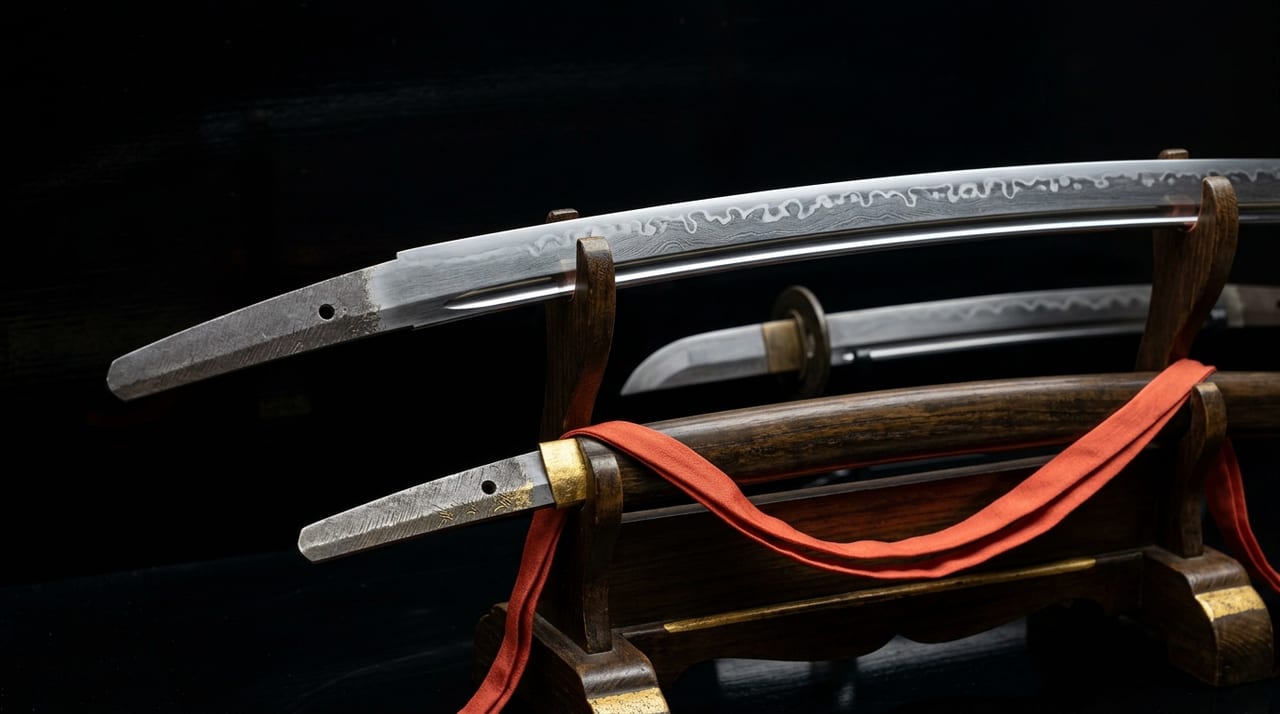 * Image is for illustrative purposes only.
Table of Contents
The "Ōnin War," which lasted from Ōnin 1 (1467) to Bunmei 9 (1477), left widespread and deep scars on Japan's politics, society, and culture. Its impact extended to the Japanese sword industry, fundamentally transforming the structure of sword production and distribution that had existed before. This article analyzes the Ōnin War as a "turning point in sword industry history," examining the diverging fortunes of the two major production centers — Bizen (present-day Okayama Prefecture) and Mino (present-day Gifu Prefecture) — and the arrival of the era of mass production of kazuuchimono (production-grade swords).
The Sword Industry Before the Ōnin War — The Dominance of Bizen Osafune
Before the Ōnin War, Japan's sword industry was in a state that could be called the "monopoly of Bizen Osafune." Tōkō from Yamashiro, Yamato, Sōshū, and Mino certainly existed, but Bizen Osafune held an overwhelming position in terms of production volume, quality, and distribution networks.
Bizen Osafune's prosperity had multiple reasons.
- It was close to sources of high-quality iron sand (the Chūgoku Mountains), and charcoal resources for smelting fuel were also abundant.
- A distribution network utilizing the waterways of the Osafunegawa and Yoshiigawa rivers was well developed, with a system in place for distributing finished swords nationwide via the Seto Inland Sea.
- The brand as a "producer of fine swords" going back to the Ashikaga shogunate and the Retired Emperor Go-Toba had been established, and demand from the court nobility, warrior class, and temples and shrines was stable.
In the decade before the Ōnin War (the 1460s), multiple workshops were established in Bizen Osafune by tōkō following the lineages of Nanbokuchō-period master smiths such as Kagemitsu, Kanemitsu, Nagayoshi, and Motoshige, and it is estimated that annual production accounted for more than half of national demand, including the eastern provinces.
The Impact of the Ōnin War — A Direct Blow to Bizen Osafune
When the Ōnin War broke out, Bizen Osafune suffered a double blow. The first blow was the "severance of distribution networks." The conflict disrupted overland and maritime traffic along the San'yōdō road and the Seto Inland Sea, making it difficult to transport Bizen swords to Kyoto and the Kinai region, which had been their main markets.
The second blow was the "sudden change in demand." During peaceful times, demand for swords centered on individual commissions — ordering a single high-quality sword over several years. However, as the conflict intensified, what daimyo and kokujin lords sought was "swords for actual battle that could be obtained in large quantities immediately." The elaborate production process of Bizen swords — the formation of complex hamon through tsuchioki and yaki-ire — was poorly suited to this new demand.
Furthermore, conflict also reached Bizen itself, and the workshops in Osafune sustained direct damage. Historical records from during the war confirm that Osafune tōkō temporarily dispersed. Amid this turmoil, some tōkō left Bizen and relocated under powerful daimyo in various regions. This "dispersal of tōkō" became the catalyst for the techniques previously concentrated in Bizen to spread throughout the country.
The Rise of Mino Swords — Responding to Battlefield Demand
The sword industry that rapidly rose to prominence following the Ōnin War was that of Mino (present-day Gifu Prefecture). The center of Mino was Seki, where a group of tōkō collectively known as "Seki kaji" were concentrated.
The reason Mino swords were able to meet wartime demand lay in their "rational production process." The techniques in which Mino tōkō excelled were not the intricate chōji hamon of Bizen, but hamon based on the practical gunome and suguha. These were processes that could achieve stable quality in a relatively short time and were suited to mass production.
Mino was also located at "a strategic point for overland transportation." Mino Province sat at the intersection of the Tōkaidō, Nakasendō, and Hokurikudō roads, and the sword industry centered on Seki enjoyed advantages for distribution to both eastern and western Japan. As the upheaval of the Sengoku period placed greater emphasis on overland logistics, Mino held an advantageous position compared to Bizen, which depended on water transport.
From after the Ōnin War through the Sengoku period, the number of tōkō in Mino Seki increased rapidly. In particular, lineages such as "Kanemoto" and "Kanesada" established reputations as wazamono — swords of superior cutting ability — and came to receive commissions from Sengoku warlords throughout the country. The Mino sword "Magoroku Kanemoto" is one of the most widely used uchigatana of the Sengoku period and appears repeatedly in military treatises and war chronicles.
The Establishment of the Kazuuchimono Economy — The Separation of Mass Production and Quality
The decisive change that emerged in the sword market after the Ōnin War was the spread of kazuuchimono. Kazuuchimono refers to swords produced in large quantities through standardized, rationalized processes rather than through individual commissions.
Production of kazuuchimono was centered in Mino but also took place in Bizen. Quality was inferior to that of custom-made swords (individually commissioned precision works), but prices were significantly lower and large-scale procurement was possible. When Sengoku daimyo were equipping armies of several thousand to tens of thousands of soldiers, it was impossible to equip everyone with a commissioned masterwork sword. Kazuuchimono filled this demand.
The establishment of the kazuuchimono economy produced a "two-tier structure" in the sword industry.
| Tier | Practitioners | Target / Characteristics |
|---|---|---|
| Upper | Commissioned works by master smiths | High-priced, high-quality pieces for daimyo and senior warriors |
| Lower | Mass-production tōkō and forge workshops making kazuuchimono | Low-priced, standard pieces for foot soldiers and lesser warrior families |
This two-tier structure continued into the Edo period and beyond, becoming the distant ancestor of the current market structure of "works by Living National Treasures vs. mass-produced iai swords."
The Dispersal of Kyoto Tōkō — Accelerating the Spread of Techniques
The Ōnin War also brought devastating damage to Kyoto, and the tōkō of Yamashiro (Kyoto) suffered a severe blow as well. Some of the Kyoto tōkō with lineages such as Sanjō, Awataguchi, and the Rai School sought safe ground amid the conflict and relocated to various regions.
This "dispersal of Kyoto tōkō" resulted in the spread of the advanced techniques previously concentrated in Kyoto throughout the country. For example, it can be confirmed from genealogical records that the techniques of the Rai School later influenced tōkō in distant regions such as Satsuma and Kishū. The regional dispersal of techniques meant the collapse of production centers in the short term, but in the long term contributed to raising the overall level of sword-making techniques across all of Japan.
Conclusion — The New Order of the Sword Industry Created by the Ōnin War
The Ōnin War brought the following structural changes to the Japanese sword industry.
- The distribution dominance of Bizen Osafune collapsed, and emerging production centers centered on Mino and Seki rose to prominence.
- A mass production system for kazuuchimono was established, and the sword market transformed from "a market of quality" to "a two-tier market of quantity and quality."
- The geographic dispersal of tōkō progressed, accelerating the nationalization of techniques.
To understand the swords of the Sengoku period — from the nameless kazuuchimono used by foot soldiers to the masterwork commissioned pieces cherished by powerful warlords — it is essential to know this industrial structure created by the Ōnin War.