Bishū Osafune Morimitsu — The Pinnacle of Ōei Bizen, A Complete Portrait of the Representative Bizen Tōkō of the Early Muromachi Period
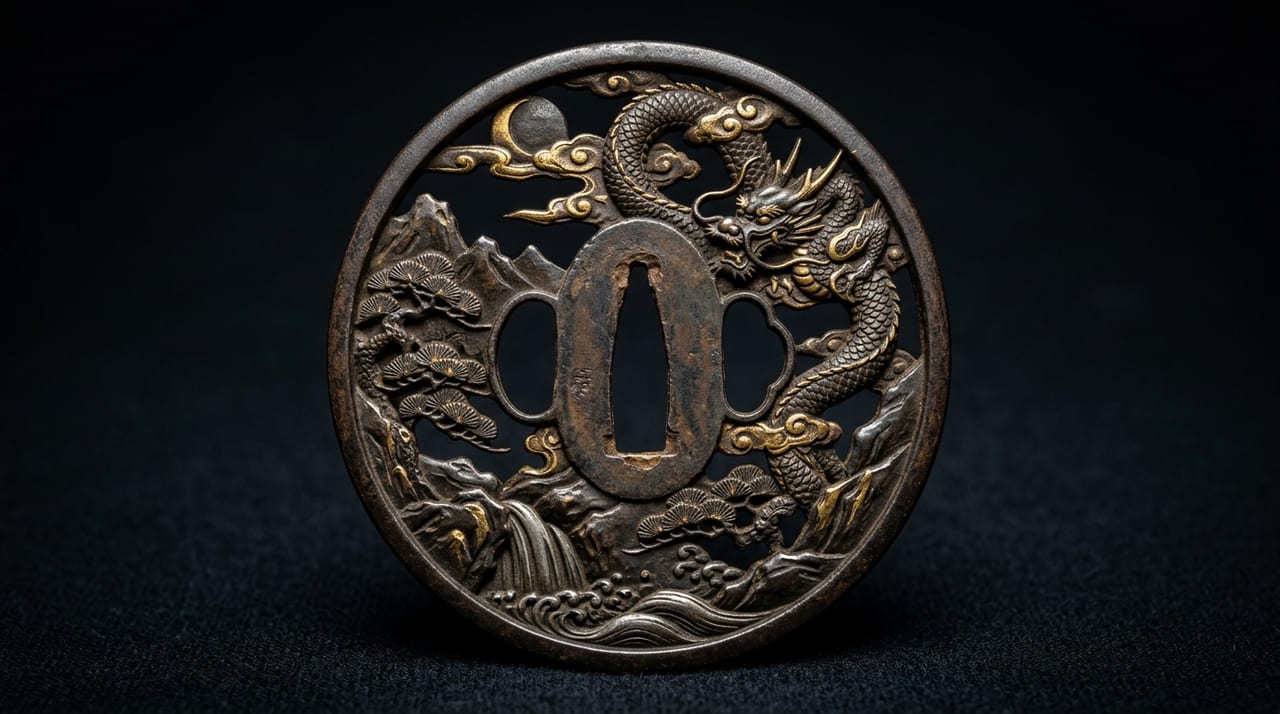 * Image is for illustrative purposes only.
Table of Contents
The Era of Ōei Bizen and Bishū Osafune Morimitsu
The Ōei era (1394–1427) of the early Muromachi period was a time when the authority of the Ashikaga shogunate was stable and the courtier and warrior culture of Kyoto flourished in full bloom. During this period, a group of tōkō known as "Ōei Bizen" was active in Bizen Osafune (present-day Setouchi City, Okayama Prefecture), inheriting the great tradition of Bizen-den — which began with Mitsutada, Nagamitsu, and Kagemitsu of the Kamakura period — in the Muromachi style.
The three tōkō who best represent this Ōei Bizen are Morimitsu, Yasumitsu, and Moromitsu, and it is conventional to refer to them collectively as the "Three Lights of Ōei" (Ōei sankō). As contemporaries who left many stylistically similar works, they are sometimes confused during authentication. However, experienced appraisers distinguish them by the fine details of the hamon (temper line), the texture of the jigane (steel of the blade surface), and the calligraphic style of the mei (signature).
Morimitsu's Sword-Making Style — The Finest Expression of Ōei Bizen
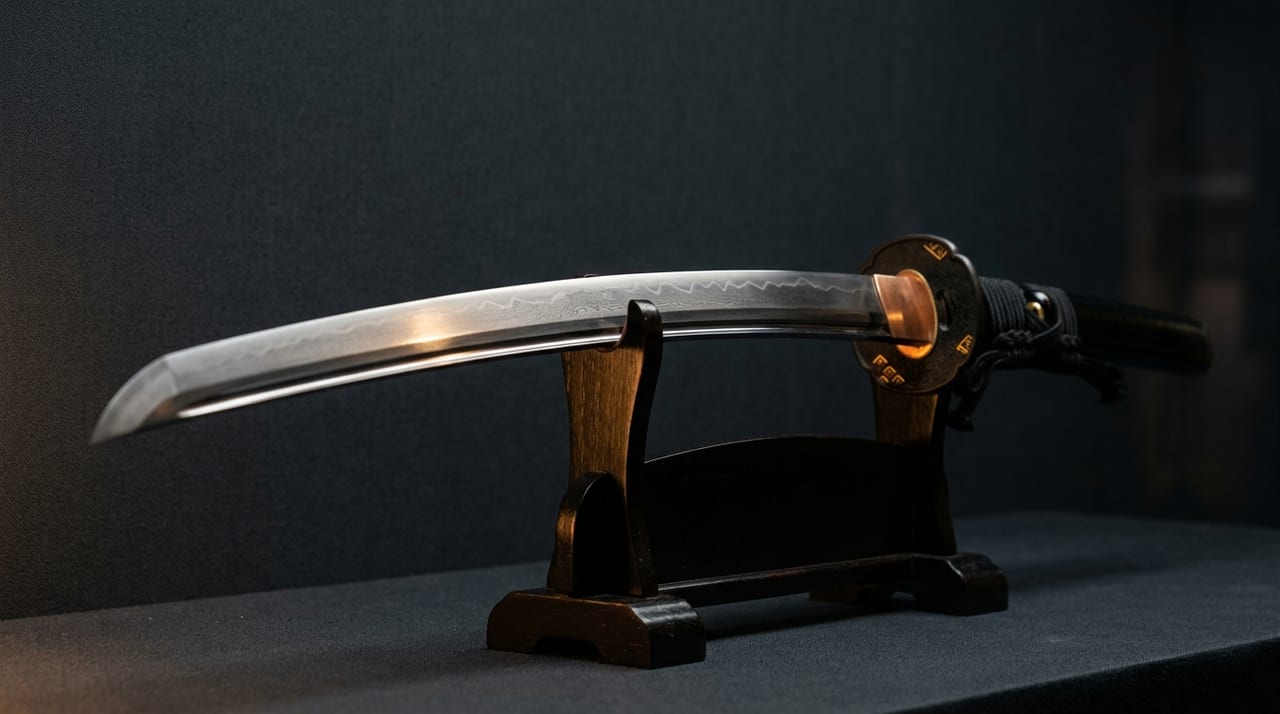
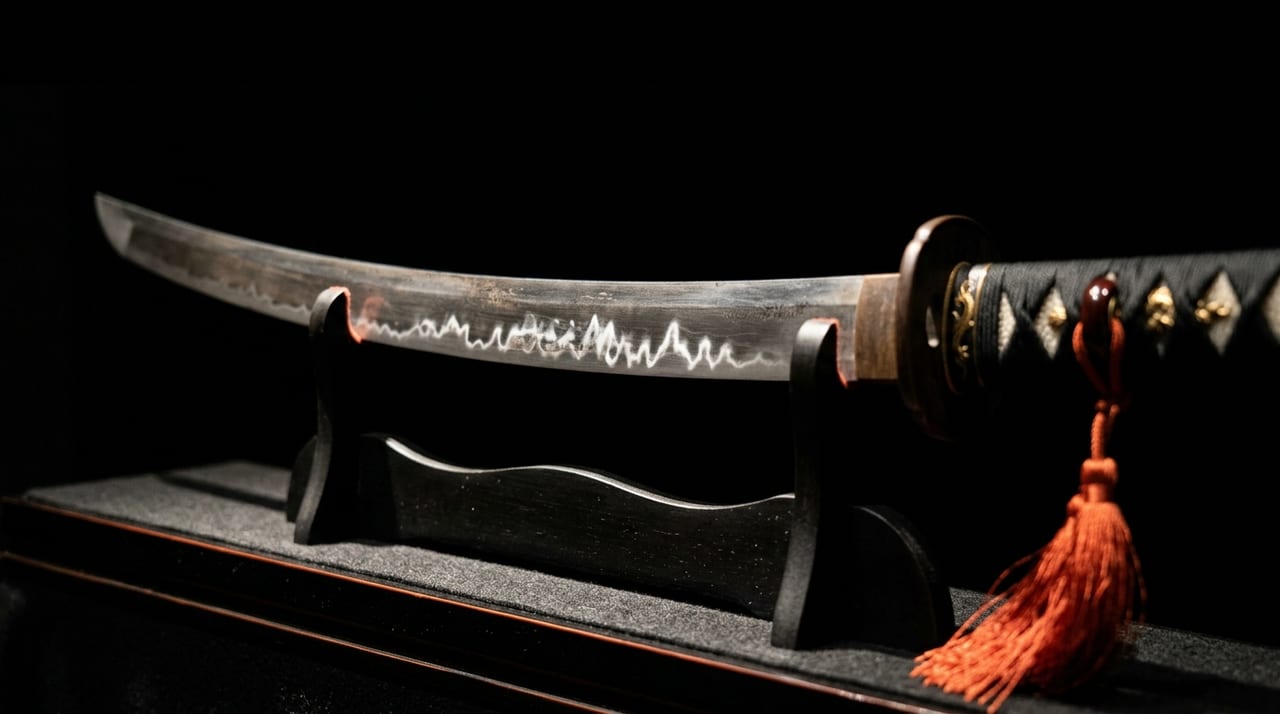
Jigane (steel of the blade surface): Morimitsu's jigane is based on "finely packed ko-itame hada," which is the orthodox form of Bizen-den, and is characterized by a lustrous, bright jigane color. It is so typical of "Bizen hada" that later appraisers frequently cite it as a textbook example. The utsuri appears clearly, and the shadow-like white glow that runs along the hamon makes the blade all the more beautiful.
Hamon (temper line): The primary hamon of Morimitsu is "gunome-chōji," in which chōji is mixed into gunome with open bases, and it holds the significance of reviving in the Ōei era the aesthetic of chōji that Kamakura Bizen smiths such as Kagemitsu and Motoshige had perfected. Morimitsu's gunome-chōji has large, rounded heads and is rich in variation. The balance — where the hamon has an orderly regularity without becoming monotonous — is the very core of the appeal of Morimitsu's swords. The nioiguchi (edge of the temper line) is bright and clear, and nie (visible martensite crystals) are distributed finely and uniformly.
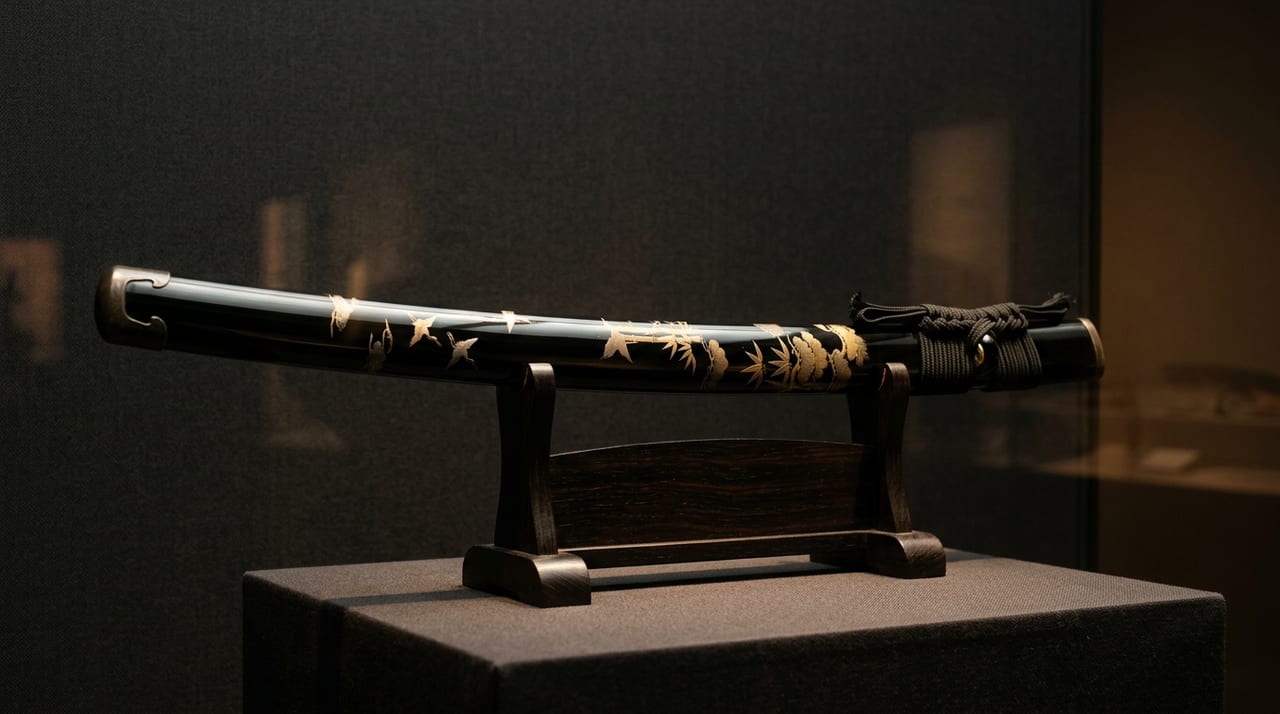
Form (sugata): As the Ōei era corresponds to a period of stability for the Muromachi shogunate, the grand ōdachi of the Nanbokuchō period receded, and tachi and uchigatana of more practical, refined dimensions became mainstream. Morimitsu's swords also have a good balance of mihaba (blade width) and kasane (blade thickness), and many have an elegant form with beautiful koshi-zori. The kissaki (point) is modest, ranging from ikubi to medium-sized, lending an understated impression that enhances the overall balance.
Mei (signature): The typical mei of Morimitsu reads "Bishū Osafune Morimitsu," and works bearing a nenki (date of production) survive to this day. The calligraphic style of the mei is a strong regular script (kaisho), and the distinctive way in which the character for "Mitsu" is written serves as an important clue in the identification of mei. Since false mei (gimei) are also in circulation, a comprehensive evaluation of not only the mei but also the hamon and jigane is essential.
Representative Works and Surviving Examples
Multiple works by Morimitsu have been designated as jūyō bunkazai (Important Cultural Property) or jūyō bijutsuhin (Important Art Object), and they are held in the following institutions.
- Tokyo National Museum (multiple swords designated as jūyō bunkazai)
- Japanese Sword Museum (NBTHK, Society for the Preservation of Japanese Art Swords)
- Votive offerings at shrines and temples across Japan (Atsuta Shrine, Sumiyoshi Taisha, etc.)
Among notable examples, several tachi with Ōei-era nenki (chōji-midare, long blade length, mei "Bishū Osafune Morimitsu") are held in multiple museums, and each is regarded as "the pinnacle of Ōei Bizen," fusing the grandeur of Kamakura Bizen with the refinement of the Muromachi period. TOUKENZA's era-by-era guide also allows you to trace the evolution of sword styles during this period.
Comparison with Yasumitsu and Moromitsu — The Three Lights of Ōei
Comparison with Yasumitsu and Moromitsu, who represent Ōei Bizen alongside Morimitsu, is a topic that collectors and researchers constantly debate.
Characteristics of Morimitsu: The chōji are large and have rounded heads, and there is a rich sense of movement throughout. The slight darkness of the jigane and the clarity of the utsuri are characteristic of Morimitsu.
Characteristics of Yasumitsu: The chōji are finely detailed and orderly, and the nioiguchi (edge of the temper line) is particularly bright. The jigane gives a slightly brighter impression than Morimitsu's.
The difference between the two is often summarized as "richness for Morimitsu, delicacy for Yasumitsu." Which ranks higher depends on personal taste and context, but all three are highly regarded in terms of the number of kokuhō (National Treasure) and jūyō bunkazai (Important Cultural Property) designations, and they are rightly spoken of together as the "Three Lights of Ōei."
The Evolution of Japanese Sword Styles as Seen Through Ōei Bizen
The Ōei era was a transitional period bridging "the legacy of Kamakura" and "the new styles of Muromachi." Morimitsu's swords most vividly embody this transitional period, and serve as important material for research into the history of Japanese swords as "living proof" that the tradition of chōji-midare — which began with Mitsutada and Kagemitsu of Kamakura Bizen — lived on into the Muromachi period.
Part of the reason why Bizen Osafune as a production center has a history of nearly 1,000 years lies in the fact that "bridging tōkō" such as Morimitsu and Yasumitsu in each era inherited the technical traditions of the center while meeting the demands of new times. Understanding the Three Lights of Ōei is also to understand how the Bizen-den brand has maintained its value across the ages.
The Value of Ōei-Era Swords — The Significance of Dated Works
Among Morimitsu's works, tachi and tantō inscribed with a nenki reading "the Xth year of Ōei" are particularly highly valued both in terms of authentication reliability and market evaluation, because their date of production is clear. Authentic dated works are also materials that empirically demonstrate the degree of technical mastery the Bizen Osafune school had achieved in the early Muromachi period.
Surviving dated works by Morimitsu span both the early and late periods of the Ōei era (1394–1427), allowing one to observe the evolution of his style — the early works retain strong traces of the Kamakura style, while the later works show increasing Muromachi-style refinement. This evolution provides an important baseline for research into the periodization of "Ōei Bizen."
The 1,000 Years of the Bizen Osafune School and Morimitsu's Place Within It
Bizen Osafune has been a center of sword production since the Nara period, and continued to function as the center of Japanese sword-making for approximately 1,000 years, through the Kamakura, Nanbokuchō, Muromachi, Sengoku, and Edo periods. Within this long history, Morimitsu occupies a special position as "the tōkō who bridged the golden age of Kamakura into the Muromachi period."
Morimitsu brilliantly revived in the Ōei era the elaborate chōji-midare established by the late Kamakura smiths Kagemitsu and Motoshige — the refined aesthetic of Bizen that had once receded under the pressure of the large-scale swords and hitatsura style of the Nanbokuchō period. This is why Ōei Bizen is described as "a revival of Kamakura Bizen," and it is one of the reasons why Bizen-den has continued to be cherished across the ages.