Rai Kunimitsu — The Pinnacle of the Yamashiro Rai School in the Late Kamakura Period: A Complete Portrait of the Greatest Tōkō the Rai School Produced, Including a Kokuhō Sword
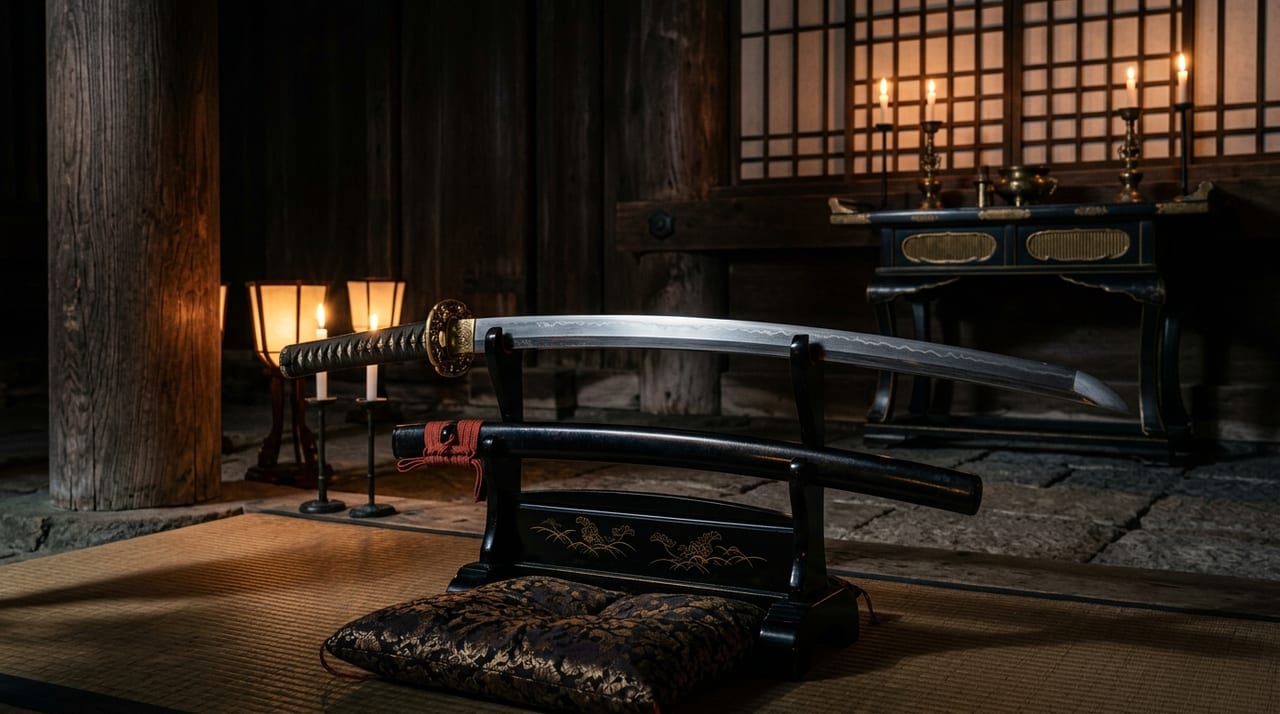 * Image is for illustrative purposes only.
Table of Contents
Who Was Rai Kunimitsu?
Rai Kunimitsu was a tōkō who was active in Yamashiro Province (present-day Kyoto Prefecture) roughly during the first half of the 14th century, spanning the late Kamakura period through the early Nanbokuchō period, and he occupies an unshakeable position in the history of nihontō as the greatest master of the Rai School.
The Rai School was a group of tōkō based in Yamashiro Province. Its name — "Rai," meaning "of foreign origin" — is said to derive from a tradition that its ancestors came from Hizen in Kyushu (present-day Saga and Nagasaki Prefectures). With Rai Kuniyuki as the school's founder, the Rai School produced outstanding tōkō including Rai Kunitoshi, Rai Kunimitsu, and Rai Kunitsugu, and reached its height during the late Kamakura period as a leading lineage of Yamashiro-den.
Rai Kunimitsu is also called one of the "two supreme masters of the Rai School" alongside Rai Kunitoshi, and comparing the works of the two is one of the central themes of connoisseurship.
Rai Kunimitsu's Swordmaking Style — The Finest Flower of the Yamashiro Rai School
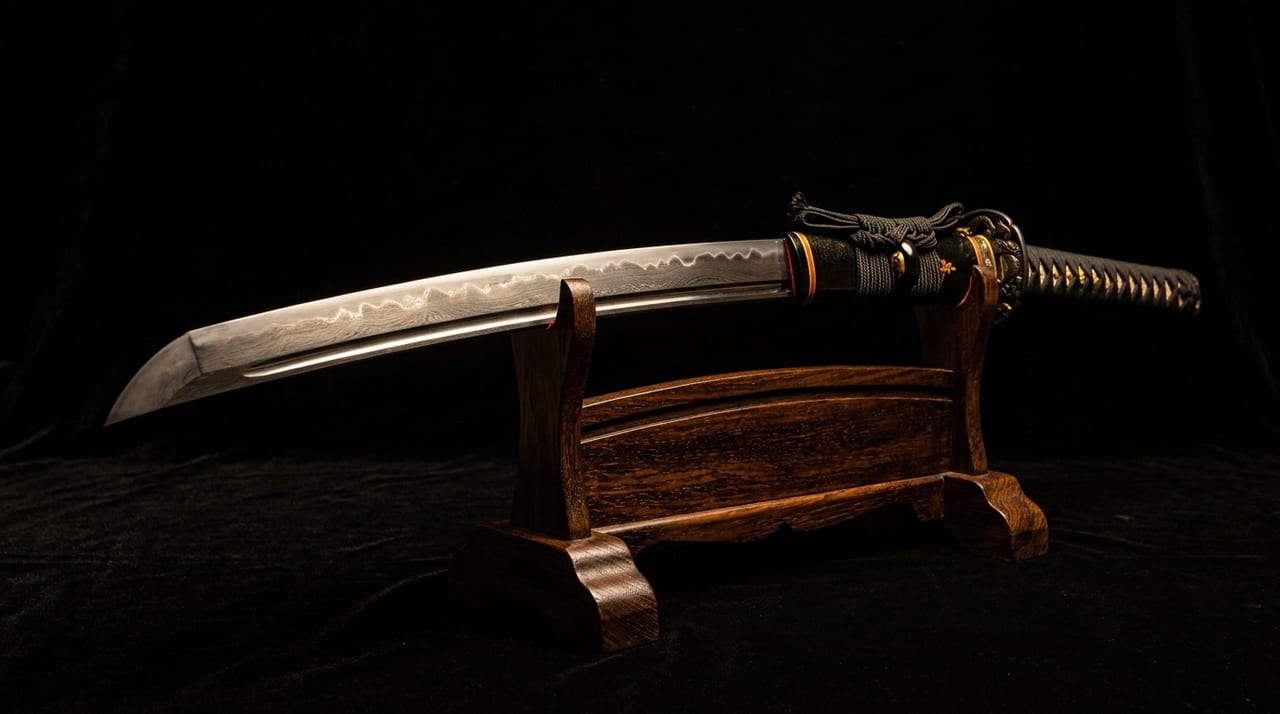
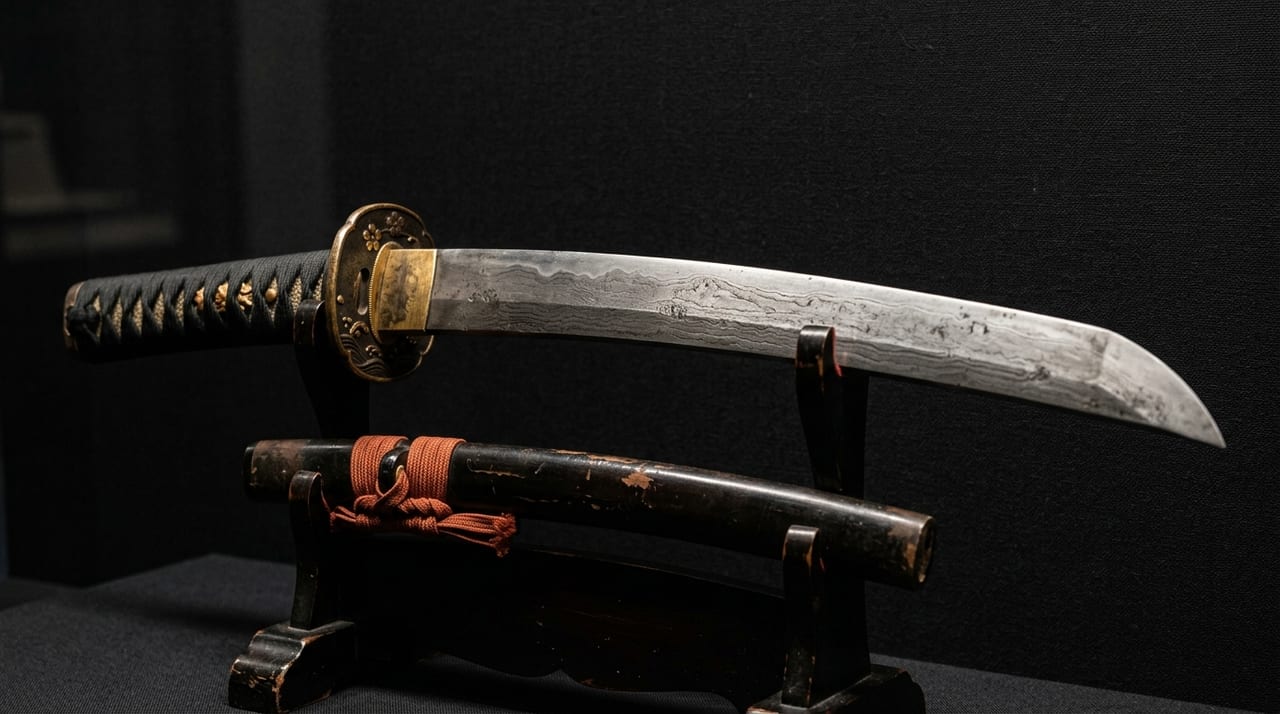
Jigane: The jigane of the Rai School embodies the orthodoxy of Yamashiro-den: a fine itame that is tightly packed with a precise grain. Kunimitsu's jigane is regarded as the apex of the Rai School in particular for its suppleness and clarity. Fine nie appear uniformly across the ji (ji-nie), forming a transparent beauty described as "a cloudless mirror." Utsuri is said to be difficult to find in Rai School work, but in some of Kunimitsu's pieces a faint utsuri has been confirmed.
Hamon: Rai Kunimitsu's hamon is based fundamentally on suguha, to which small irregular variations (ko-midare) and small chōji (ko-chōji) are interspersed, creating a style of refined variation. The nioiguchi is narrow and tight yet bright and clear, representing the ultimate expression of the Rai School's aesthetic of a "crystalline hamon." Some works also display varied hamon incorporating notare and gunome, demonstrating versatility adapted to the period or the patron.
Shape (sugata): Kunimitsu's tachi show both the large-bodied style with a wide motohaba and a pronounced difference from the sakihaba — reflecting the late Kamakura through early Nanbokuchō era — and the classical style of the mid-Kamakura period featuring a smaller body with deep koshi-zori. He also produced excellent tantō and wakizashi, and while his specialization in tantō was not as pronounced as that of Yoshimitsu, his tantō work is also highly regarded. The processes by which tachi of this period were made are summarized in Tachi Production Processes of the Kotō Period.
Kokuhō and Jūyō Bunkazai — Representative Works of Rai Kunimitsu
Rai Kunimitsu's works are currently designated as multiple kokuhō and jūyō bunkazai, occupying the summit of nihontō as art.
Kokuhō-designated works: A tachi by Rai Kunimitsu is designated as a kokuhō, receiving the highest cultural evaluation possible for a nihontō. The criteria for kokuhō designation are that a work "represents Japan in all of historical value, artistic value, and scholarly value," and that Kunimitsu attains this standard is proof of the artistic excellence of the Rai School.
Jūyō bunkazai-designated works: Multiple tachi, tantō, and wakizashi are designated as jūyō bunkazai and are held or on deposit at the Tokyo National Museum, the Kyoto National Museum, and shrines and temples across Japan.
Comparison with Rai Kunitoshi — Distinguishing the Two Supreme Masters of the Rai School
Comparing Rai Kunimitsu and Rai Kunitoshi is the central theme of Rai School research and connoisseurship.
Characteristics of Kunimitsu:
- The suppleness and clarity of the jigane are unsurpassed, with fine and uniform ji-nie
- The hamon centers on suguha, with a notably bright and clear nioiguchi
- The work as a whole embodies an aesthetic of "tranquil dignity"
Characteristics of Kunitoshi:
- The jigane shares a suppleness with Kunimitsu's but gives a somewhat brighter impression
- Greater variety in the hamon, including chōji-midare and ko-midare
- Possesses a distinctive aesthetic of "dynamic delicacy"
The difference between the two is often summarized as "Kunimitsu of stillness, Kunitoshi of movement." In authentication, it is essential to examine the hamon, the jigane, and the calligraphic style of the mei together as a whole; a considerable number of falsely attributed and mumei pieces by both smiths also circulate.
The Techniques of the Rai School and the Significance of Rai Kunimitsu within Yamashiro-den
The aesthetics of Yamashiro-den as embodied by the Rai School — clarity of suguha, refined jigane, dignified sugata — were formed through the competition among the Awataguchi School, the Rai School, and the Ayakōji School, all within the same Yamashiro-den tradition.
In the aesthetics of Yamashiro-den, Rai Kunimitsu achieved in the tachi and uchigatana what Awataguchi Yoshimitsu achieved in the tantō. The verdict that "the beauty of Yamashiro reaches its summit in the tachi of Rai Kunimitsu" is a received conclusion that later connoisseurs have repeated again and again, and he continues to shine in the history of nihontō as the ultimate expression of an "elegance of refinement" — the counterpart to Masamune's "beauty of power."
Rai Kunimitsu Today
Rai Kunimitsu's authentic works are treated as the finest cultural treasures held by leading institutions at home and abroad, and research and exhibitions continue.
For nihontō collectors, an authentic work by Rai Kunimitsu is the most coveted of all, and when one appears on the market it commands the highest prices. Research on the Rai School is ongoing, and discoveries of new authentic works and re-attributions are reported regularly. To understand Rai Kunimitsu is to understand the "elegant core" of Yamashiro-den as a nihontō aesthetic, a realm that enthusiasts around the world pursue as one of the supreme pleasures of appreciating nihontō.