The Tachi Manufacturing Process of the Kotō Period — A Complete Guide from Forging to Finishing
 * Image is for illustrative purposes only.
Table of Contents
The Kotō Period — The Golden Age of Heian, Kamakura, and Nanbokuchō
Kotō refers to nihontō manufactured before Keichō (before 1596). In particular, tachi from the late Heian through the Kamakura and Nanbokuchō periods are still highly regarded today as the supreme technical achievement in the history of nihontō.
The five great traditions — Yamashiro-den, Yamato-den, Bizen-den, Sōshū-den, and Mino-den — that the tōkō of this era created each established their own distinctive forging methods and yakiba techniques, and have exerted enormous influence on later tōkō. The great masters of the Rai School who perfected Yamashiro-den are also introduced in Rai Kunimitsu — The Treasure of the Yamashiro Rai School. This article explains the representative tachi manufacturing process of the kotō period step by step.
Tamahagane Selection and Material Preparation
The first step of tachi manufacture begins with the selection of tamahagane, steel smelted from iron sand. Tamahagane obtained through tatara smelting varies greatly in its properties depending on carbon content. Relying on experience and intuition, the tōkō distinguishes high-carbon steel (for kawagane) from low-carbon steel (for shingane) and selects material suited to each purpose. How tamahagane is made is described in detail in Tamahagane and Tatara Ironmaking.
After the selected tamahagane is broken into small pieces, it is piled on a flat iron plate (bōshin), then covered with washi and straw ash. Heating in this state to consolidate the steel, the "tsumiwakashi" process, is the first tanren stage.
Orikaeshi Tanren — Homogenizing the Steel and Removing Impurities
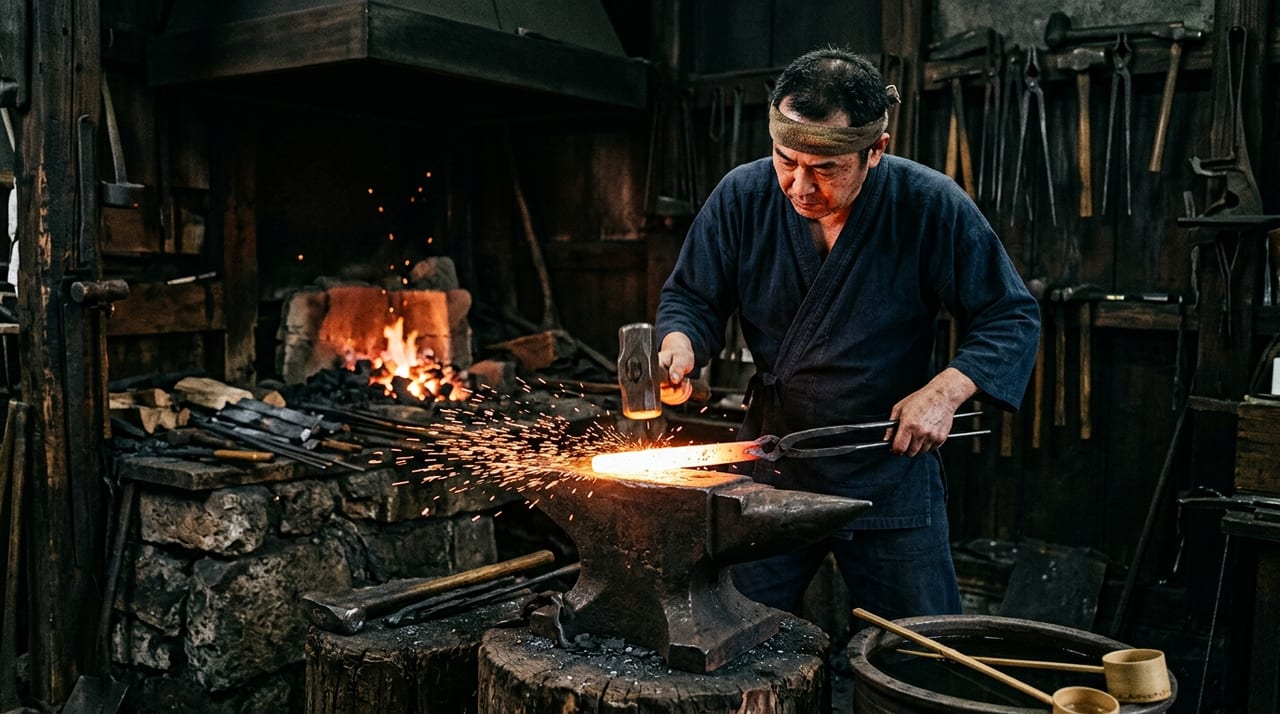
The steel billet obtained from tsumiwakashi is refined through orikaeshi tanren, in which it is heated to high temperature and repeatedly folded while being hammered out flat. This process expels impurities (slag) from the steel, homogenizes the carbon content, and densifies the steel's microstructure.
The representative forging styles of the kotō period include the following.
- Itame kitae: a wood-grain-like pattern produced by repeated folding. Common in Yamato-den and Yamashiro-den
- Masame kitae: a straight-grain pattern produced by folding in a single direction. Distinctive to kotō of Yamato-den
- Mokume kitae: a complex pattern where itame and masame intermingle. Common in Bizen-den and Sōshū-den
The number of folding cycles is generally around 10 to 15, but since too many cycles drain excess carbon and weaken the blade, the right balance is critical.
Tsukurikomi — Combining Kawagane and Shingane
One of the most important technical features of kotō-period tachi is tsukurikomi. By combining hard high-carbon steel (kawagane) with soft low-carbon steel (shingane), a structure that achieves both "hardness and toughness" in the blade is realized.
Representative types of tsukurikomi:
- Kōbuse: the most basic structure, in which shingane is wrapped in kawagane. Used in Yamato-den and Yamashiro-den
- Hon-sanmai: a three-layer structure in which a separate piece of steel is applied to the mune side of the blade
- Shihōzume: the most elaborate structure, in which all four faces are wrapped in kawagane. Common in the finest works of Sōshū-den
This is the stage of the manufacturing process that demands the most skill and judgment from the tōkō, because the combination of materials has an enormous effect on the performance of the finished blade.
Sunobe and Blade Shaping
Once tsukurikomi is complete, the process moves to sunobe, in which the steel is heated and hammered out to shape. The overall shape of the blade — length, sori, width, and thickness — is determined at this stage.
Kotō-period tachi are generally characterized by a silhouette called koshi-zori, a pronounced curve from the base to the middle of the blade, though the arc of the sori varies subtly depending on the period and school. Watching the color of the flame and the condition of the steel, the tōkō shapes the blade with each individual hammer blow.
At this stage, the shinogi, mune, jihada, and hamachi are also formed, and the basic shape of the blade is finalized.
Tsuchioki and Yaki-ire — The Process that Creates the Hamon
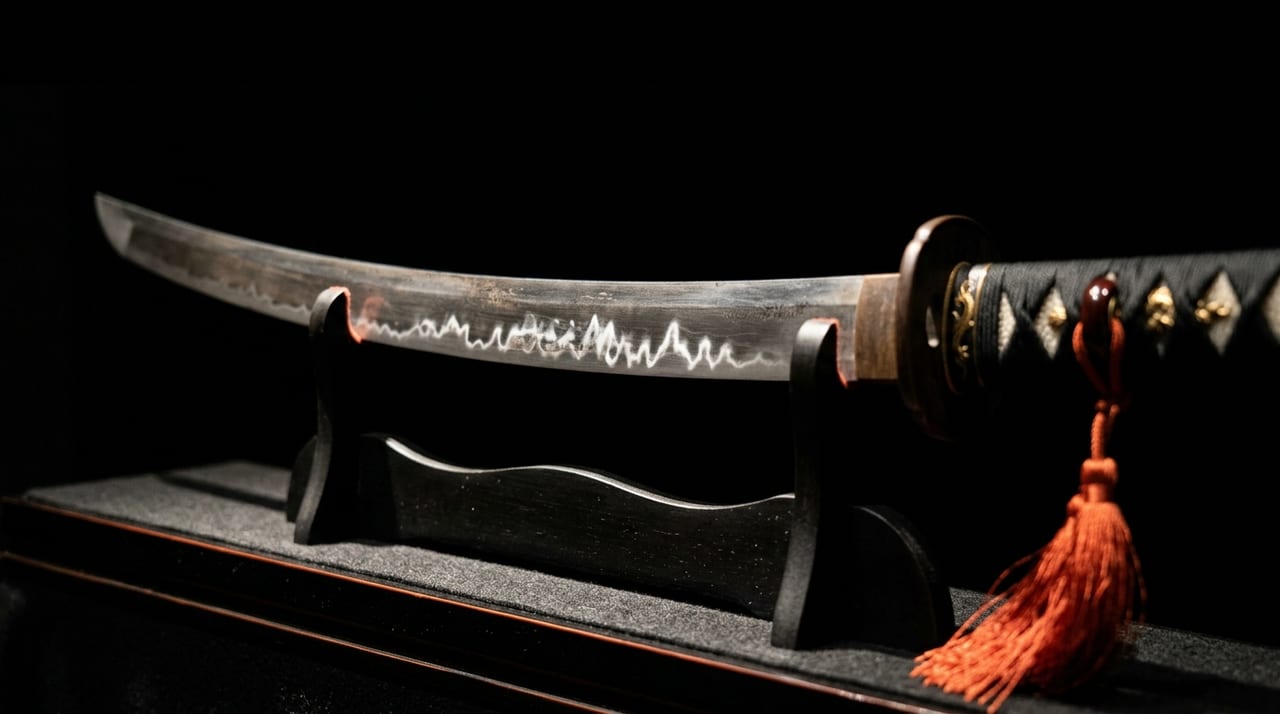
Among the manufacturing steps of the kotō period, yaki-ire is the stage that attracts the most attention from modern appraisers and enthusiasts. The hamon formed on the blade's surface by this process is the element that most vividly expresses the individual character of each school.
Before yaki-ire, the tōkō performs tsuchioki, applying a refractory clay (yakiba-tsuchi) to the entire blade. By applying the clay thinly on the edge and building it up thickly on the body, a deliberate temperature differential is created during yaki-ire.
Characteristics of the hamon by school:
- Yamashiro-den: hososuguha and kogunome, among others. A fine, dignified hamon
- Yamato-den: suguha is the foundation. The nie is fine, and the hamon is often accompanied by muneyaki, a deep quench extending toward the mune
- Bizen-den: chōji-midare. Its greatest feature is a hamon with rich, varied movement
- Sōshū-den: ōmidare and notare. Rich in activities such as sunagashi and kinsuji
After tsuchioki, the blade is heated to approximately 800–900°C and quickly plunged into water. This rapid quenching hardens only the edge, while the body retains its toughness as the yaki-ire takes hold. If this momentary process fails, the blade breaks and cannot be redone. The heat-treatment theory behind yaki-ire is covered in greater detail in The Science of Yaki-ire (Water Quenching and Oil Quenching).
Togi and Edge Finishing — Polishing with Whetstones
Once yaki-ire is complete, the blade is sent to the togishi for the togi process. Even during the kotō period, it was common for the tōkō and the togishi to work in separate specializations.
Togi employs multiple grades of whetstone from "shitaji-togi" (rough polishing) through "shiage-togi" (finish polishing), ultimately bringing the blade to a brilliance that can be called a mirror finish. The polishing techniques of the kotō period are still highly regarded today, and the nakanagura-to and uchigumori-to whetstones used by togishi of that era remain prized as the finest polishing stones available.
Koshirae and Mei Cutting — The Tachi Completed
After polishing is complete, the mei is cut into the blade. Kotō-period mei were cut while confirming the blade's orientation with a magnet, which is why modern experts place great weight on the position and calligraphic style of the mei when authenticating a blade.
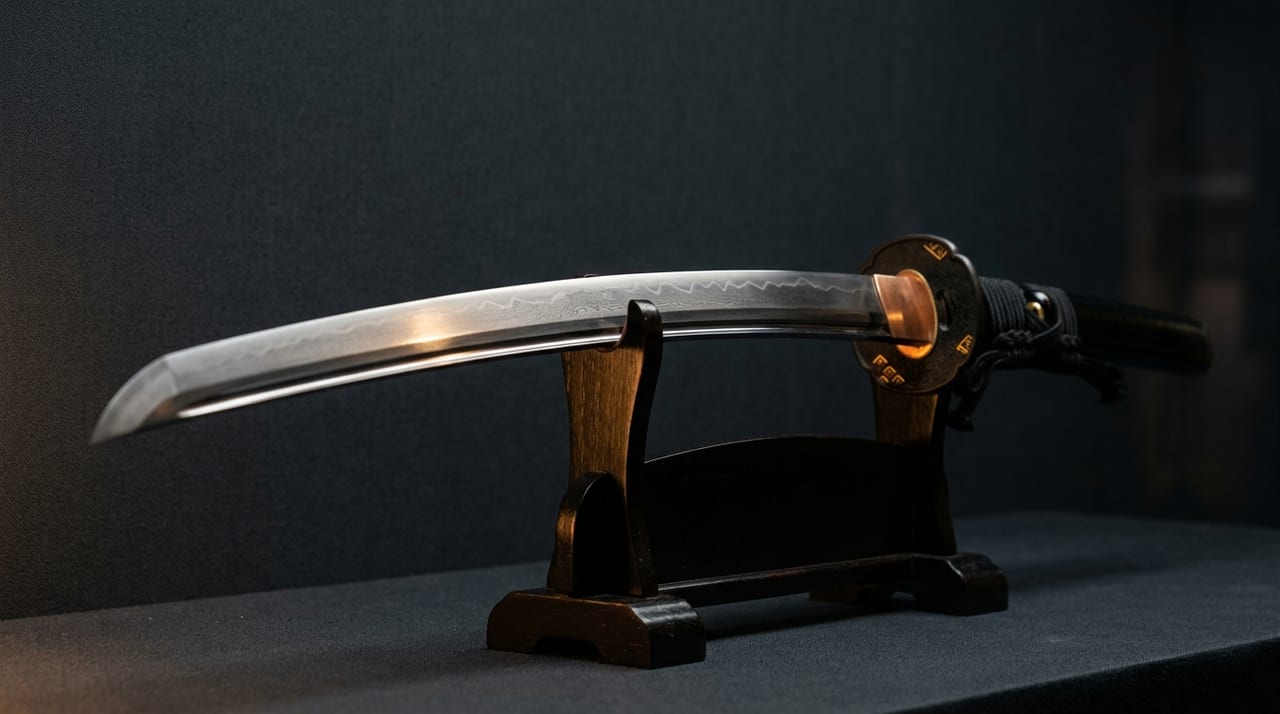
Finally, the koshirae — tsuka, tsuba, seppa, menuki, and other metal fittings, together with the saya — are made, and the tachi is complete. Kotō-period tachi fittings are called tachi-goshirae and were used in the haitō style of suspending the tachi from the waist with the edge facing downward.
Even today, the spirit and techniques of kotō-period tachi manufacture are passed down to modern tōshō, and the tachi of that era are cherished by enthusiasts around the world as the product of an age in which the essential beauty and functional elegance of nihontō are concentrated.