New Arrivals — Browse our catalog for the latest authentic Japanese sword arrivals. Browse →
Articles on reading hamon, jihada, and nakago, and on appraisal bodies and authenticity.
Evaluating the value of nihontō from multiple angles requires comprehensive judgment across four criteria: jigane (quality and grain of the steel), hamon (shape and activity of the yakiba), sugata (overall form of the blade), and mei (the tōkō's signature). This article explains the meaning of each criterion and their interrelationships, and presents a practical framework that can be applied in real appraisal situations.
The kanteisho is indispensable in the buying, selling, and appreciation of Japanese swords. This article systematically explains the types of kanteisho issued by multiple organizations — including NBTHK (the Society for the Preservation of Japanese Art Swords) and NTHK (Nihontō Hozonkai) — along with their examination standards and degree of reliability in transactions.
Yamato-den is an ancient school of Japanese swordmaking that developed centered on the temples and shrines of Nara, and stands alongside Bizen-den, Sōshū-den, Mino-den, and Yamashiro-den as one of the Gokaden. Blades of the Yamato-den, with their distinctive formal characteristics of powerful suguha, bō-hi, masame jihada, and shallow sori, embody an aesthetic of rugged beauty unlike that of other schools. By understanding the key points of appreciation, one becomes able to identify a Yamato-den blade at a glance.
The presence or absence of a mei is one of the important factors in determining the value of a Japanese sword. This article explains how signed swords (bearing the tōkō's signature) and mumei swords (without a mei) are treated in appraisal and market pricing, drawing on examples of famous unsigned blades.
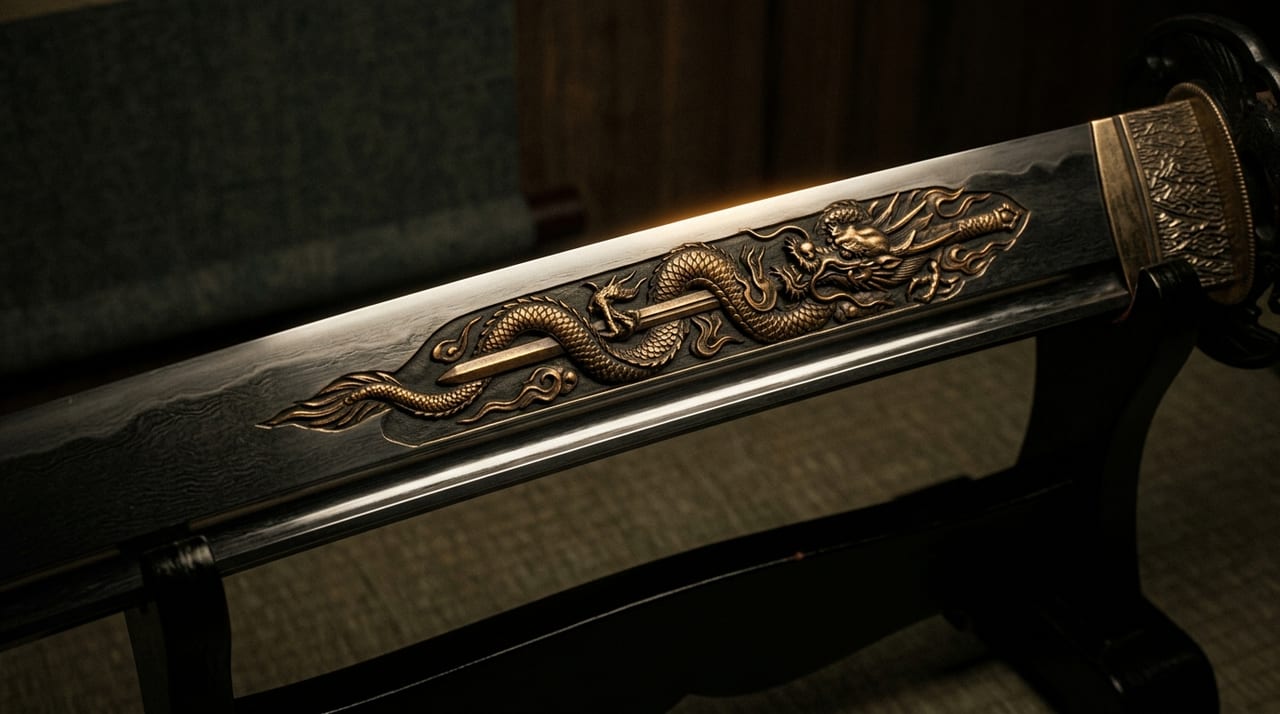
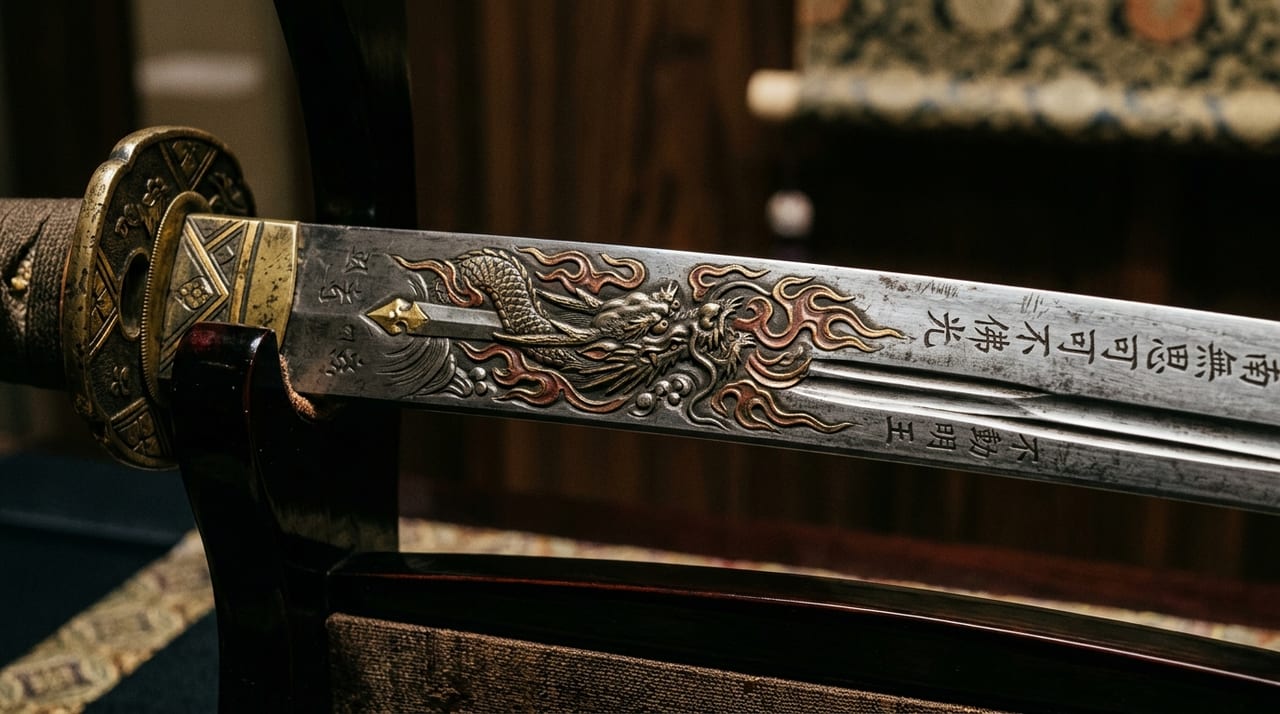
The hi (grooves) and horimono (carvings) applied to the blade of a nihontō are the quintessence of sword decoration, combining functionality with religious belief. This article explains the key points and perspectives for appreciating them, from types such as bōhi and futasuji-hi to Kurikara, Fudō Myōō, and Sanskrit character carvings.
A tōken haikenkai is a gathering in which sword enthusiasts meet privately, each bringing their own swords to share and appreciate together. This practical guide covers everything a newcomer wants to know, from the etiquette of participation to the preparations required of a host.
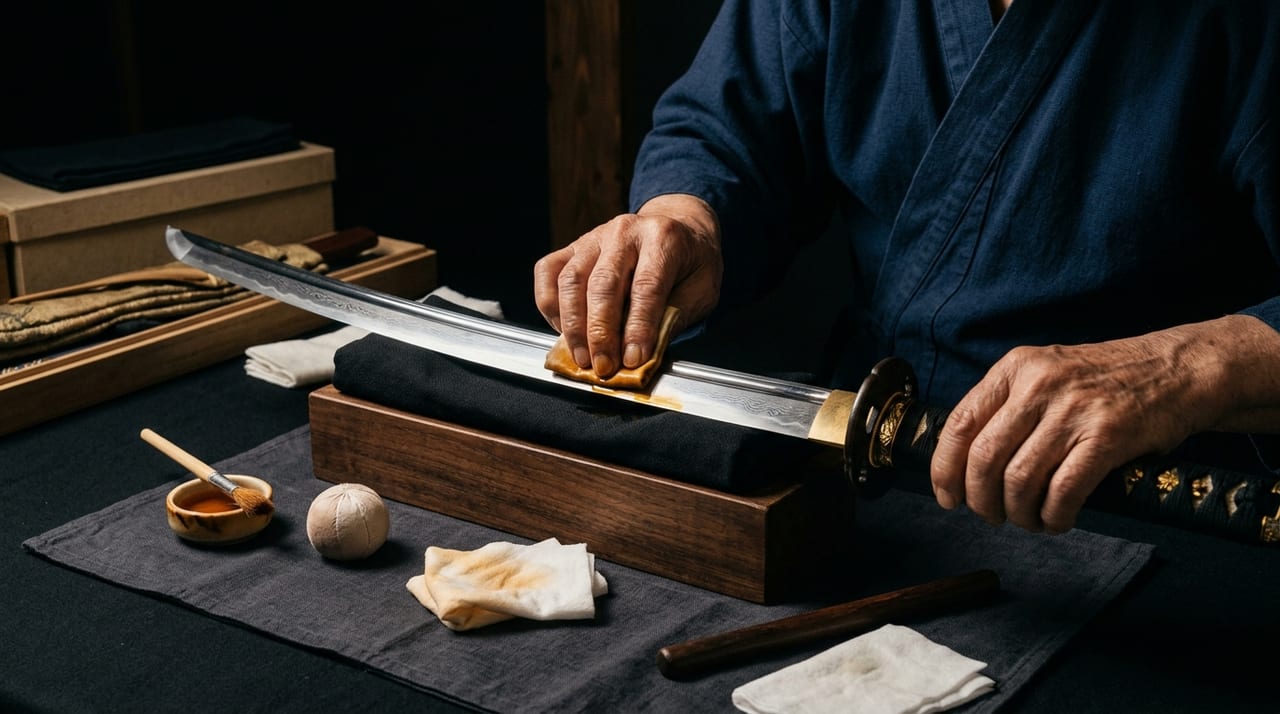
A systematic guide for beginners to the tools needed for Japanese sword maintenance — covering the function and use of uchiko, nuguigami, chōji oil, and the mekugi nuki. Essential knowledge to read before incorrect use damages your sword.
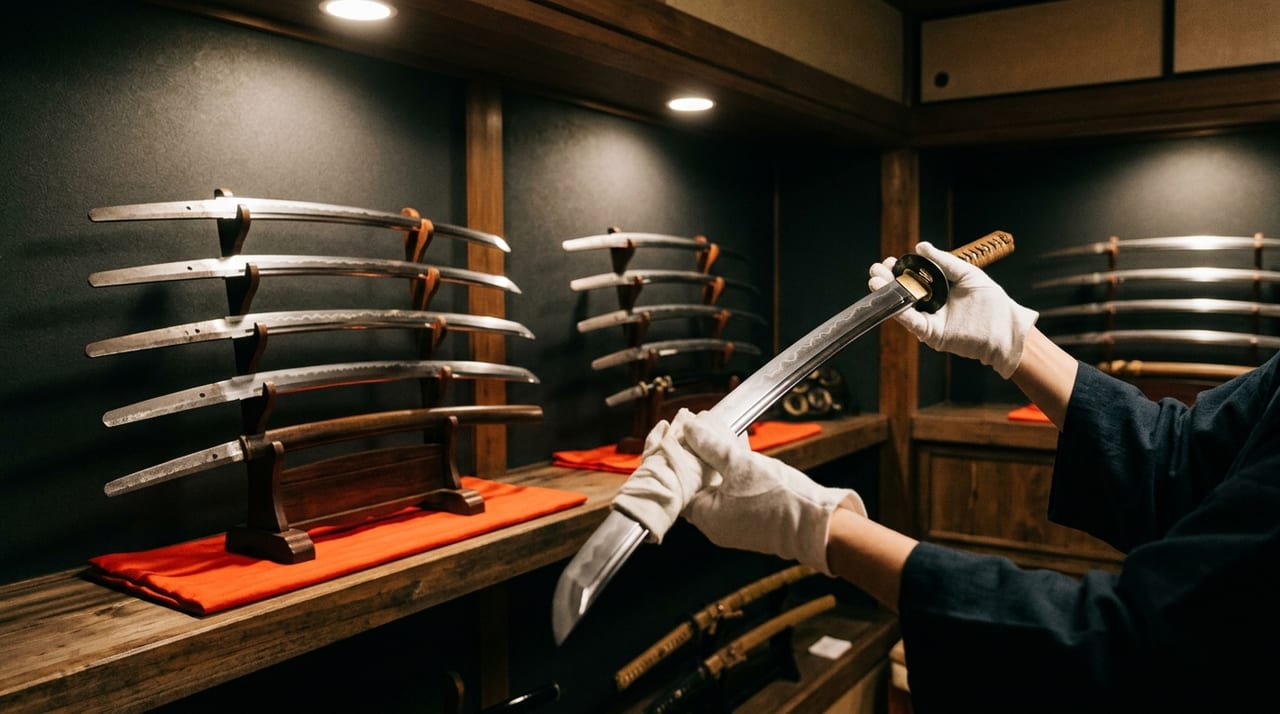
Sword appraisal and appreciation events offer an excellent opportunity to handle actual swords and sharpen both knowledge and eye. This article covers practical information for first-time attendees: registration procedures, how to hold a sword, how to fill out an appraisal slip, and the types of events available.
A guide to shrine and temple sword treasuries across Japan, covering Isonokami Shrine (Nanatsusaya no Tachi), Kashima Shrine, Oyamazumi Shrine, Shitennoji Temple, and more.
Modern science is advancing in its ability to elucidate the internal structure and manufacturing methods of nihontō. This article explains the forging secrets invisible to the naked eye that have been uncovered by X-ray radiography, CT scanning, and X-ray fluorescence elemental analysis, as well as their application to authentication.
The tōsu, described as one of the prototypes of the Japanese sword, is a small blade deeply connected to the court culture of the Nara period. This article provides a detailed account of its history, uses, and craft value, from the tōsu preserved in the Shōsōin to pieces circulating in today's antique markets.
A practical guide systematically explaining how to participate in domestic and international Japanese sword auctions, tips for price negotiation with overseas buyers, and shipping and customs procedures after winning a bid.
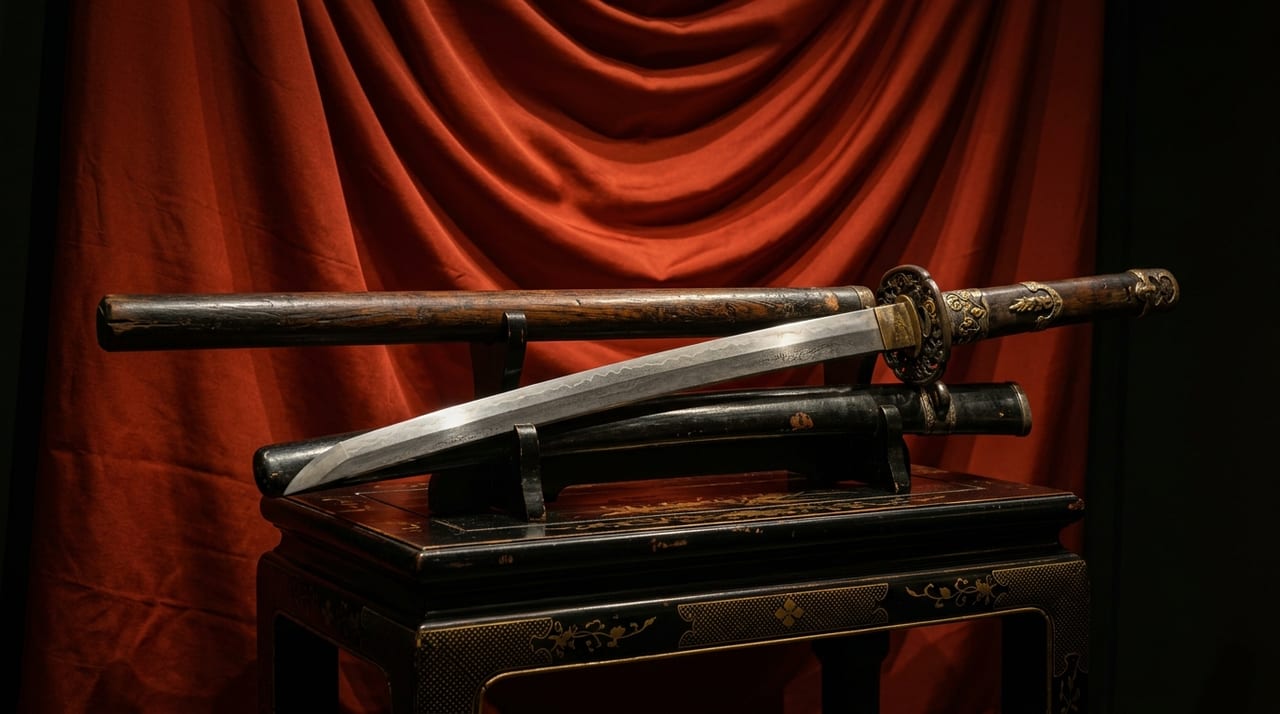
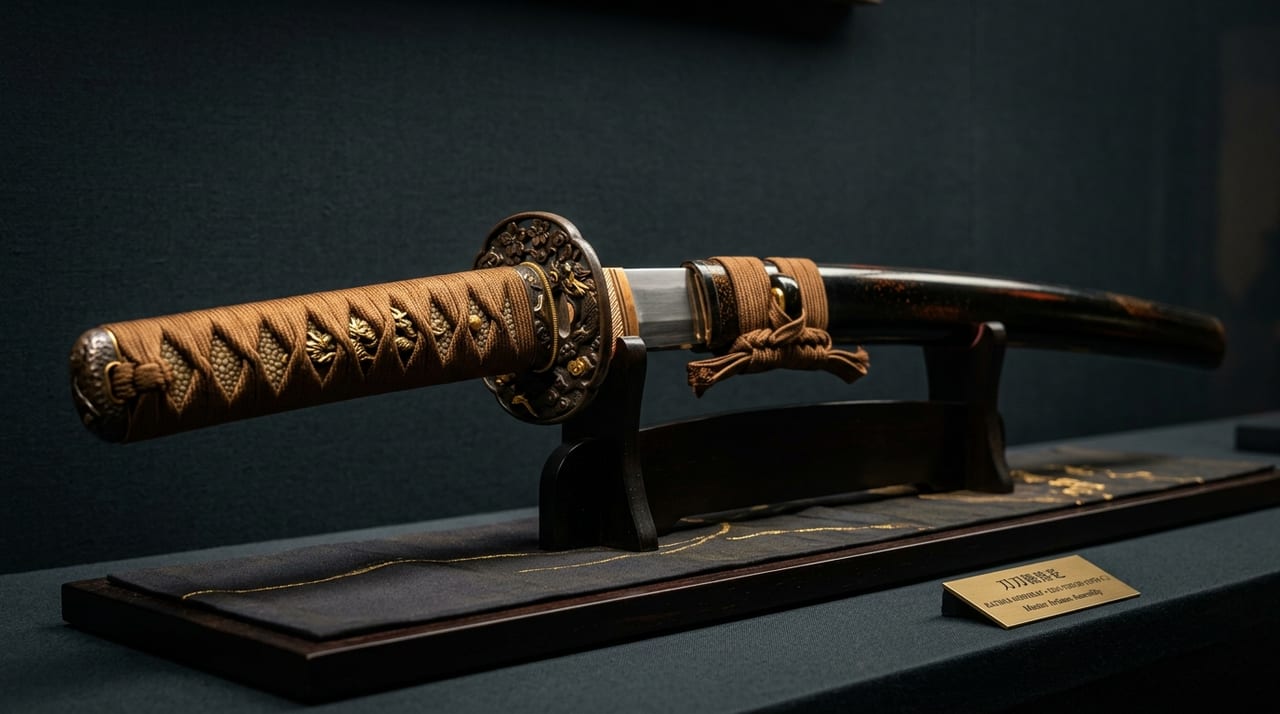
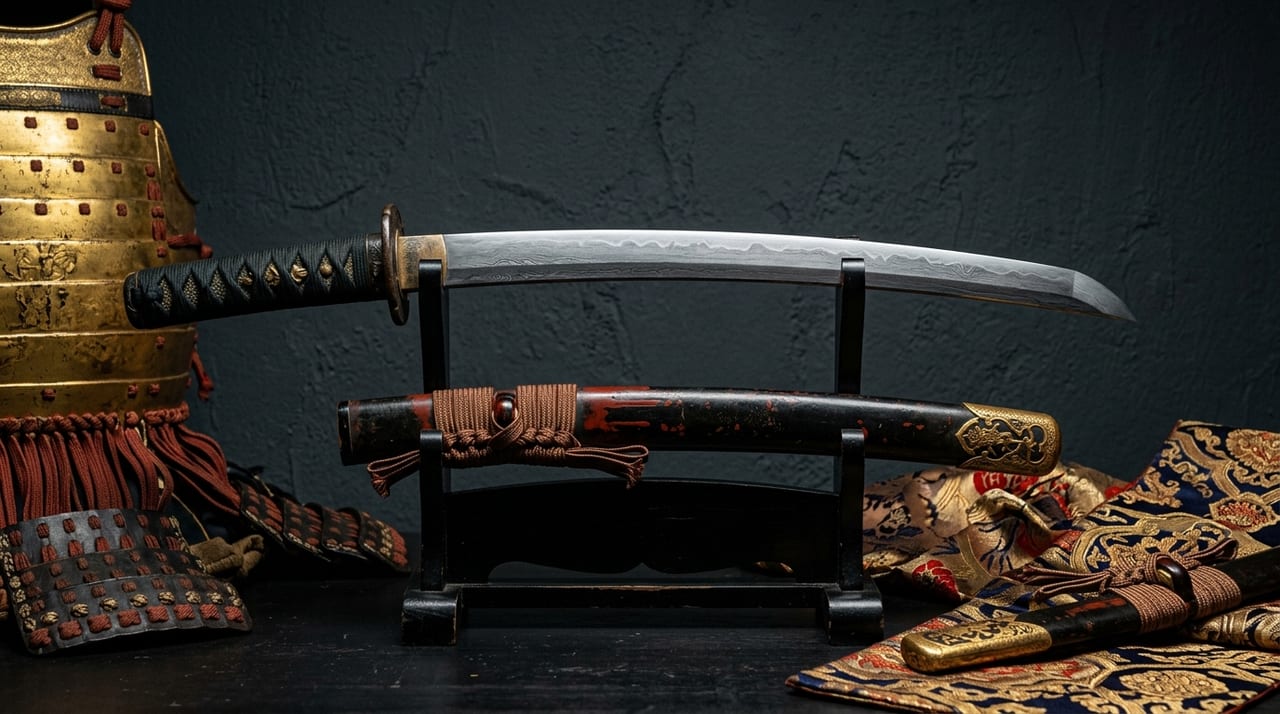
A practical explanation from the perspective of a tōsōgu craftsman on what structural, material, and fabrication differences the koshirae of the uchigatana, wakizashi, and yari each possess. Details the reasons and judgment points for why saya shape, tsuka length ratio, and tsuba selection criteria differ by sword type.
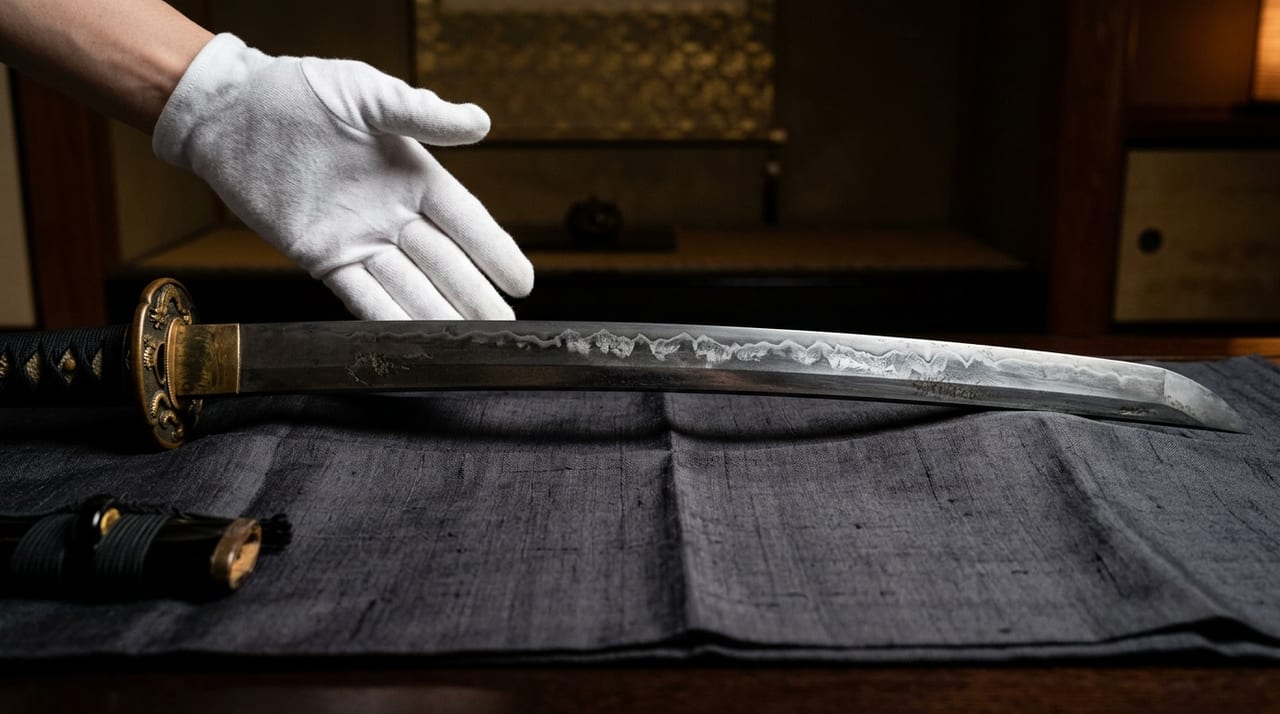
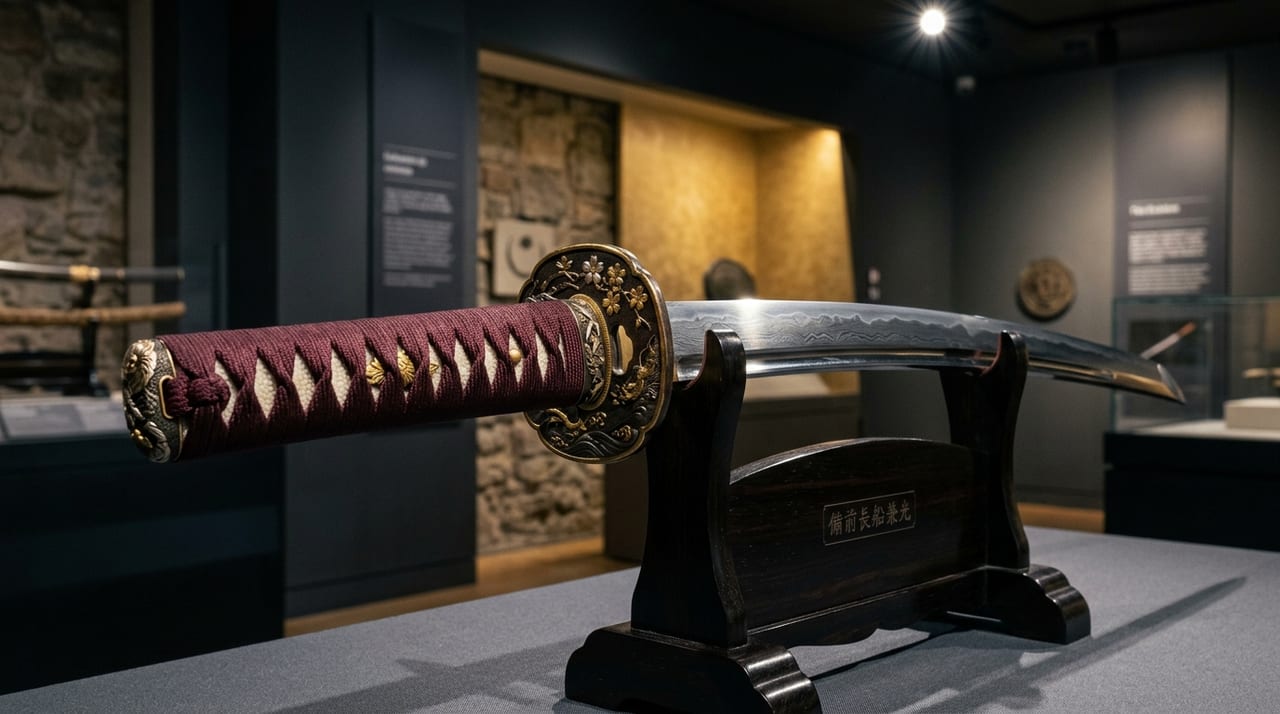
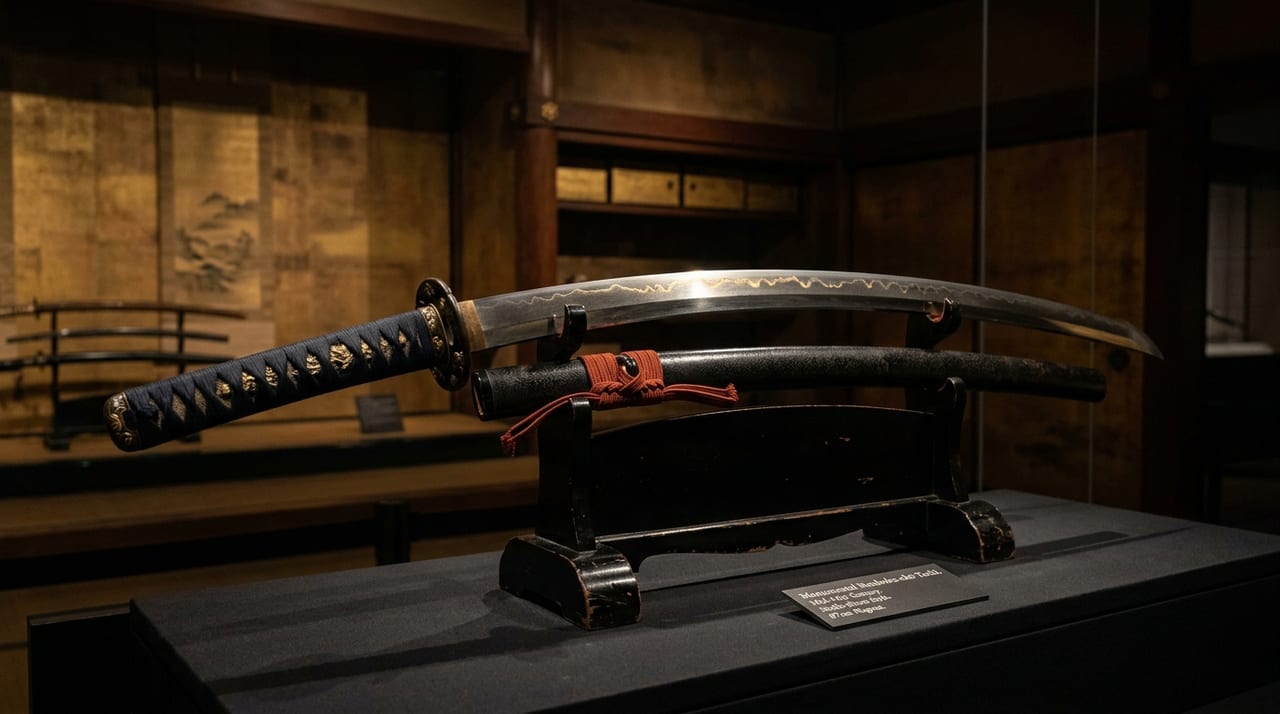
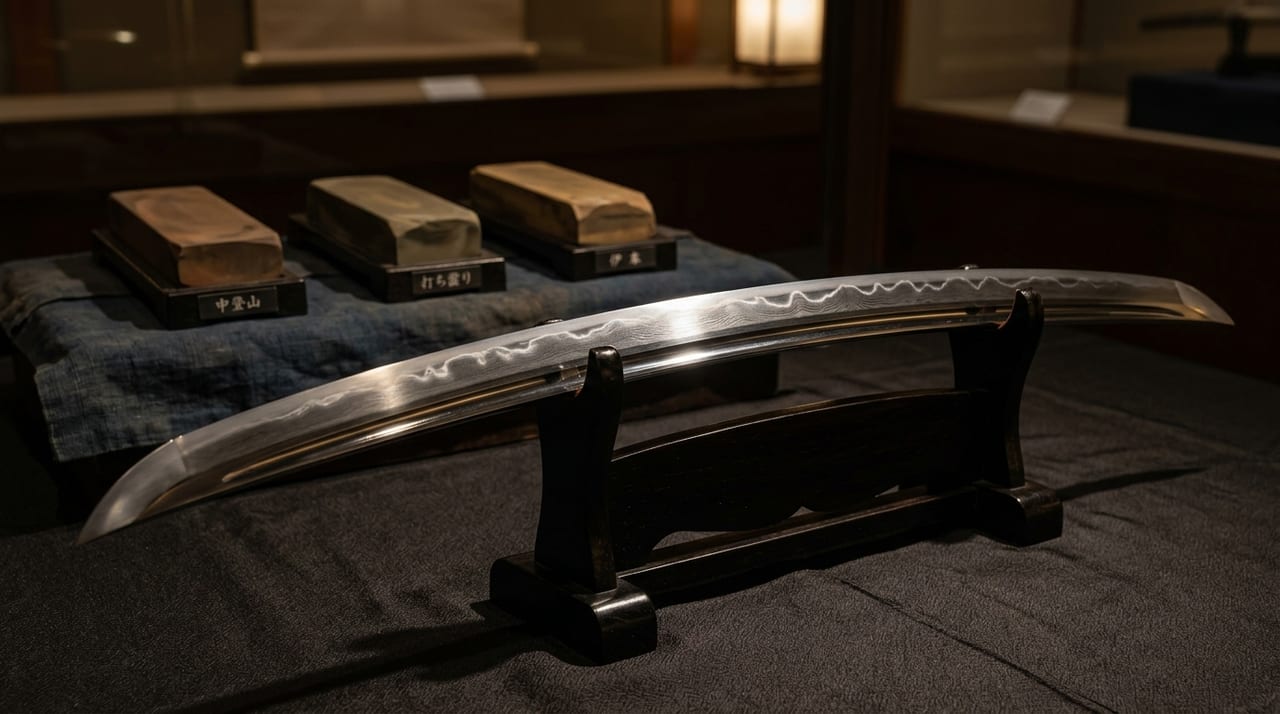
When standing before an authentic Japanese sword in a museum, what should you look for to identify authenticity, origin, and period? This article explains expert observational techniques in an accessible way for beginners, covering light reflection properties, steel grain quality, and hamon particle patterns.
A detailed comparison of kanteisho (appraisal certificates) for Japanese swords — including Hozon Tōken, Jūyō Tōken, and Tokubetsu Jūyō Tōken — covering the reliability of issuing institutions, examination processes, and their actual effect on prices. Explains the differences between NBTHK, NTHK, and regional appraisal bodies.
Thorough care of nihontō as practiced by tōshō and togishi — a practical guide covering the precise procedure and frequency for wiping (nugui), uchiko, and oil application; the meaning and timing of abura-nuki (oil removal before polishing); and the proper etiquette for appreciating a blade.
From tens-of-thousands-yen wakizashi to national treasure tachi, this article systematically explains the three axes that determine Japanese sword value: smith rank and prestige, steel quality and forging method, and historical era classification.
A regional map of museums and galleries displaying Japanese swords, organized by location. Includes facility features, collections, and access information, plus sightseeing-combined viewing plans. A practical guide for visitors who want to combine sword appreciation with travel.
Centered on shinogi-zukuri, the foundational form of the Japanese sword, this article explains the characteristics and functional significance of various blade constructions including hira-zukuri and kiriba-zukuri, and details the names and roles of each part from the cutting edge to the mune.
The "machi" of a nihontō refers to the stepped notches (hamachi and munemachi) at the boundary between the blade and the nakago (tang); from their shape, depth, and position one can read off the period of manufacture, togi (polishing) history, and use history. "Machi-okuri" is the phenomenon in which the machi shifts toward the blade side as a result of togi, and is an important indicator of the extent of past polishing. This article explains the classification of hamachi and munemachi shapes, period-specific characteristics, methods of measuring machi-okuri, and its appraisal significance.
Monouchi is the effective striking zone located approximately one-third of the blade length from the kissaki side, where the blade's sharpness, structure, and balance of the center of gravity all converge. This article explains the definition of the position and width of the monouchi, its relationship to the blade widths (motohaba and sakihaba) and kasane (blade thickness) of each part of the blade, changes in monouchi position across different periods, its connection to theory in iai and kenjutsu, and the key observation points for monouchi in appraisal.
The nihontō has two faces: the haki-omote and the haki-ura. These are important concepts that bear on how the sword is worn, the position of the mei, and differences in the jigane. This article explains the definitions of omote and ura for both tachi and uchigatana, the significance of mei being carved on the omote, differences in jigane texture between the two faces, methods of identification by observation, and the appraisal risks that arise when omote and ura are misidentified.
Sōshū-den (Kamakura) and Bizen-den (Okayama/Osafune) are the two foremost schools of the Japanese sword, each embodying contrasting aesthetics in jigane, hamon, and sugata. This article offers a thorough comparison of the characteristics, representative tōkō, attribution points, and collecting value of both traditions, reaching to the very heart of Japanese sword connoisseurship.
The types of ritual swords in Shinto and Buddhist contexts: the Three Sacred Treasures (Kusanagi-no-Tsurugi), the Kurikara-ken of Fudo Myoo iconography, the history and significance of shrine and temple votive swords, and how to appreciate divine swords in shrines and museums.
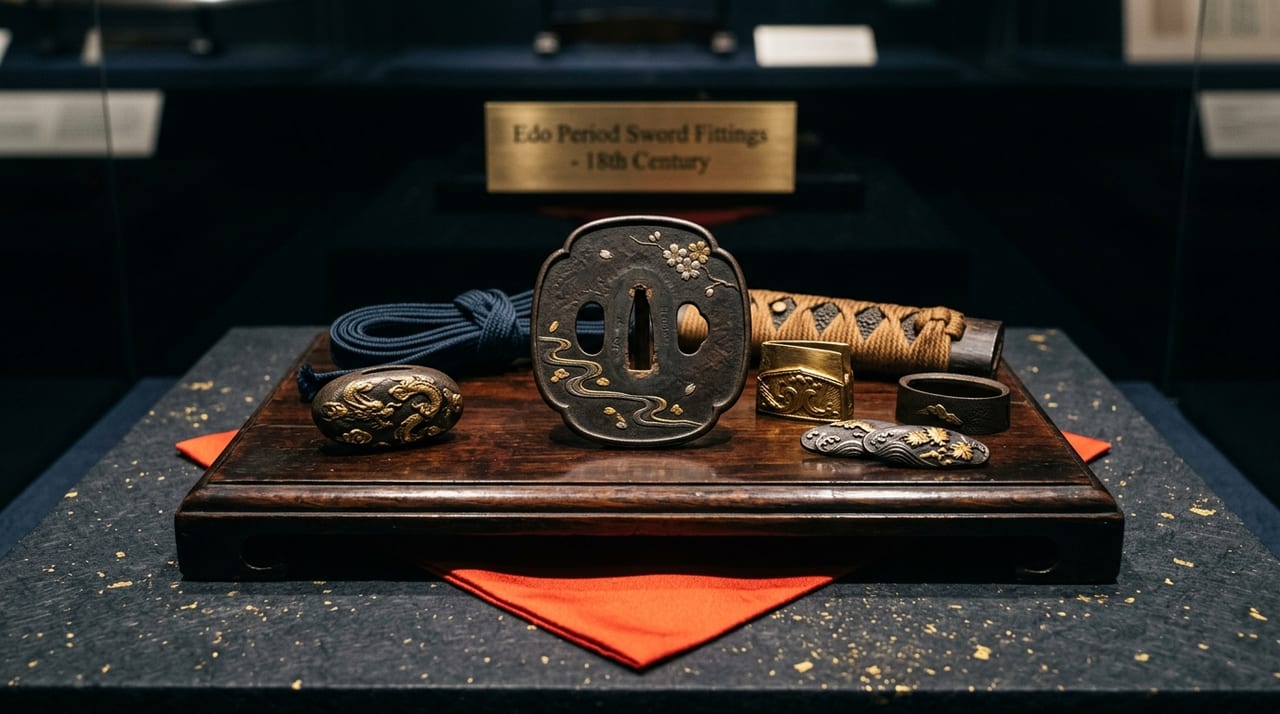
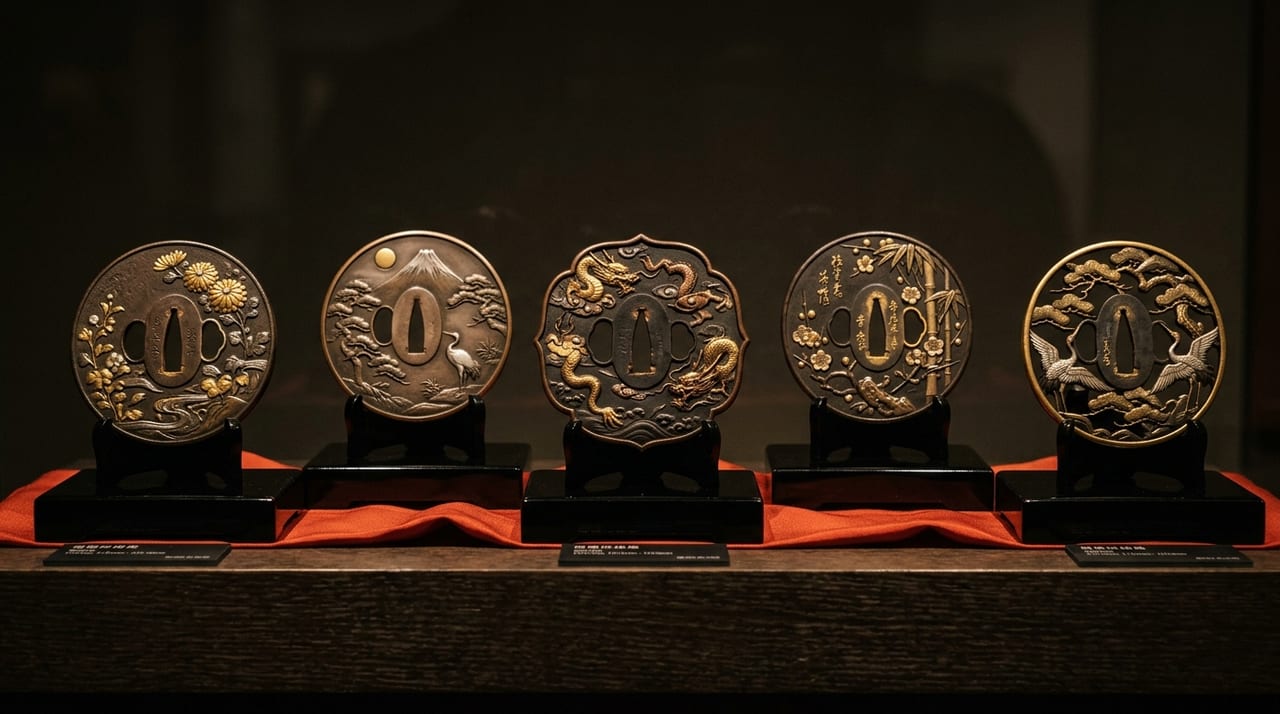
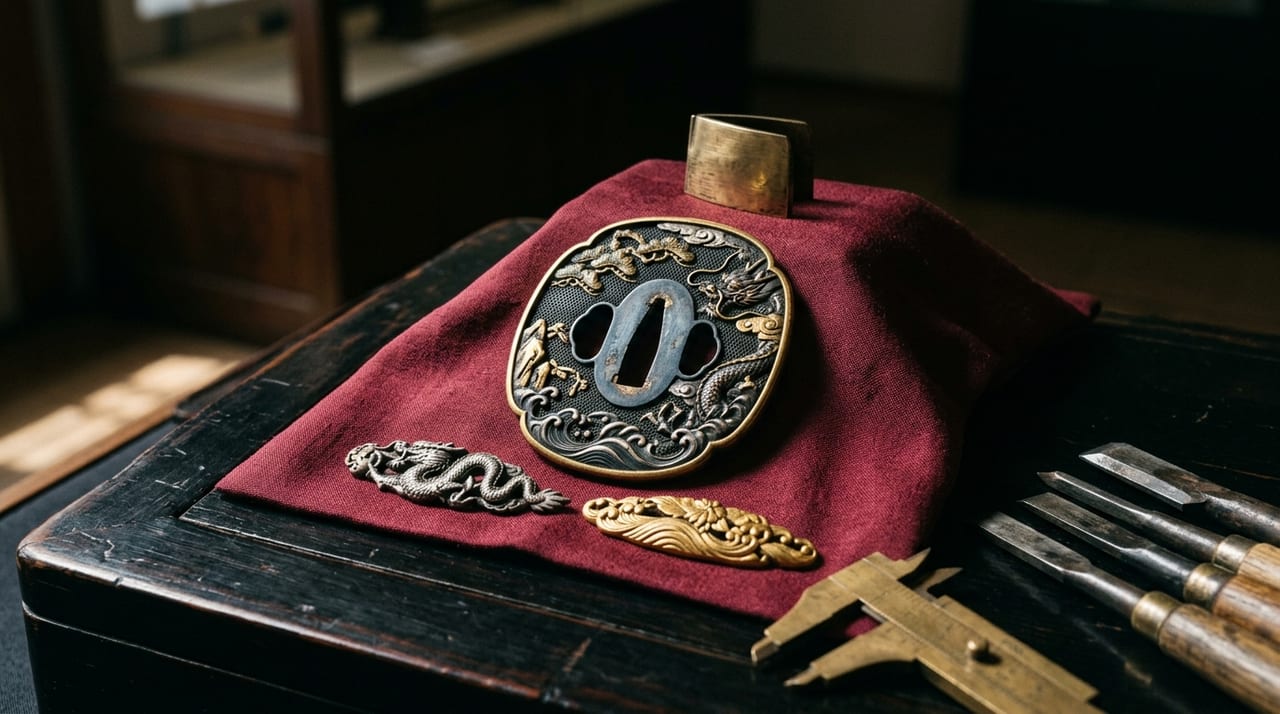
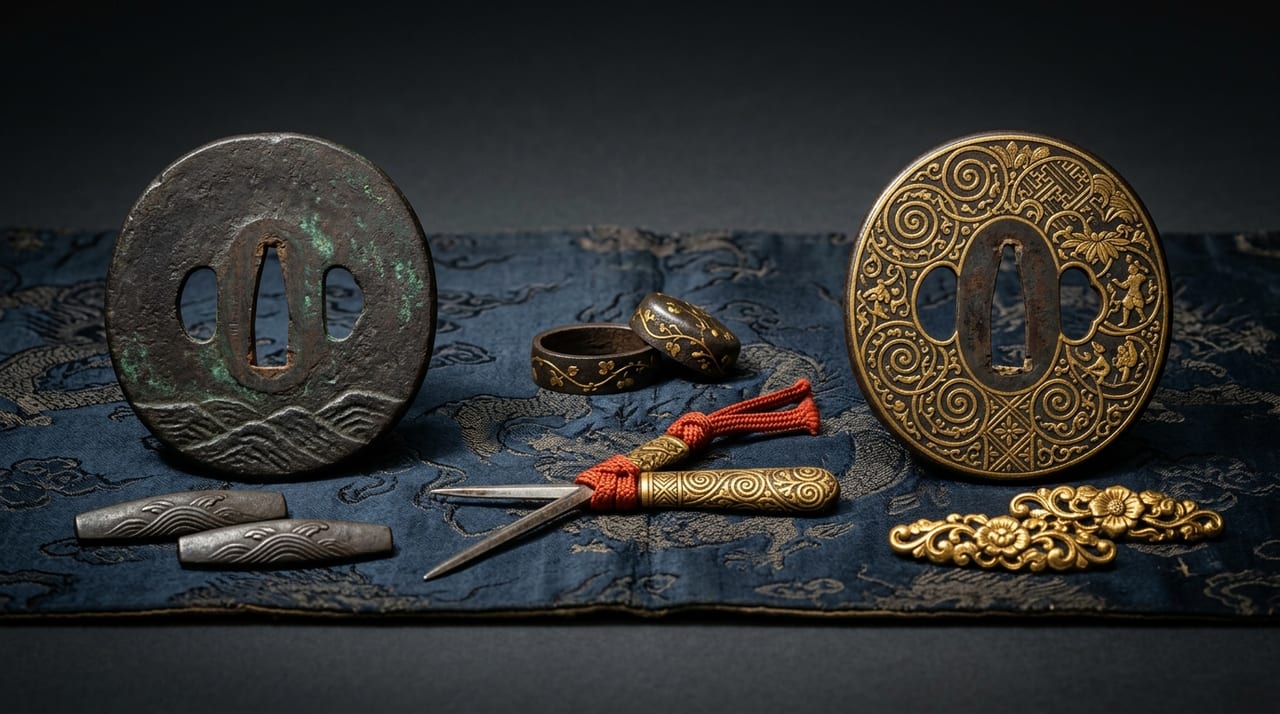
This article explains the functions, designs, creators, and market value of the three auxiliary components—small blades, sword hilt ornaments, and hair pins—incorporated into Japanese sword mountings (koshirae). These small pieces serve as the artistic foundation for unified sword decoration, and as independent crafted works, they hold significant market value as subjects of appreciation and collection.
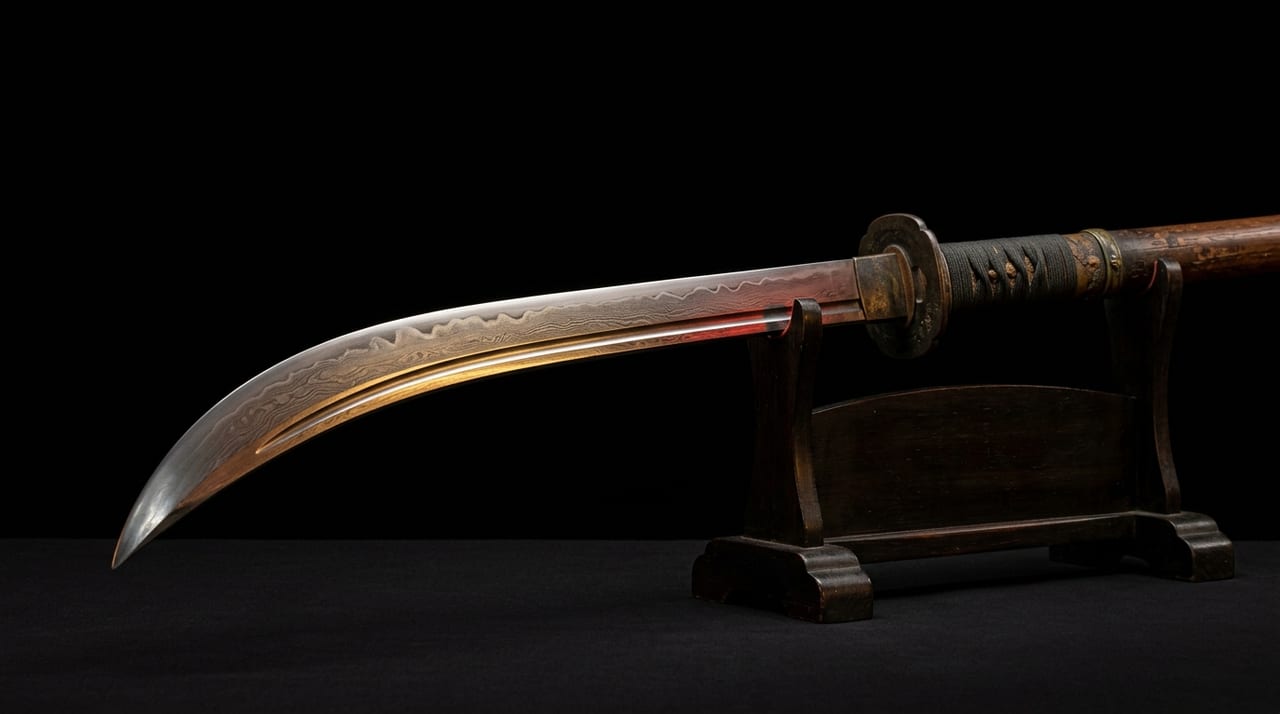
This article systematically classifies and explains the types of naginata by form, period, and purpose: the ko-naginata of the Heian through Muromachi periods, conversion to swords through suriage, the rise of the onna-naginata in the Edo period, and the significance of the specialized sword type known as naginata-naoshi.
This article explains the realities of apprenticeship for young people in modern Japan who aspire to become tōshō. Drawing on conditions in the field, it covers how to find a master and what to keep in mind, daily life as a live-in or day apprentice, the reality of pay and working conditions, a timeline for the 5–7 year training period, the training required for sword-making authorization, and the management challenges that follow independence.
A practical guide to buying nihonto at auction: research methods before bidding, what to check at preview, factors that drive hammer prices (provenance, accessories, NBTHK ranking), and the specifics of online bidding.
This article explains the principles behind the formation of sori, the distinctive curve of the nihontō, and its functional significance. It covers in detail the mechanism by which sori arises from thermal stress during yaki-ire (quenching), the part names and dimensional system — including nagasa (blade length), motohaba, sakihaba, motokasane, and sakikasane — and the three types of sori (koshi-zori, naka-zori, saki-zori) along with the optimal shape for each application.
This article explains the fundamentals you need to know when starting a Japanese sword collection. It systematically covers the appropriate budget range and sword types for beginners, how to verify the registration certificate, how to choose reliable sources (sword dealers, auctions, and sword markets), and the criteria for deciding what to select as your first sword.
This article explains the legal procedures required when taking a nihontō abroad. It comprehensively covers the practical aspects: the export prohibition provisions for jūyō bunkazai (Important Cultural Property) and jūyō bijutsuhin (Important Art Object) under the Act on Protection of Cultural Properties, the export procedures for ordinary kotō and shintō, the relationship with the Act for Controlling Explosives, and the declaration requirements at customs.
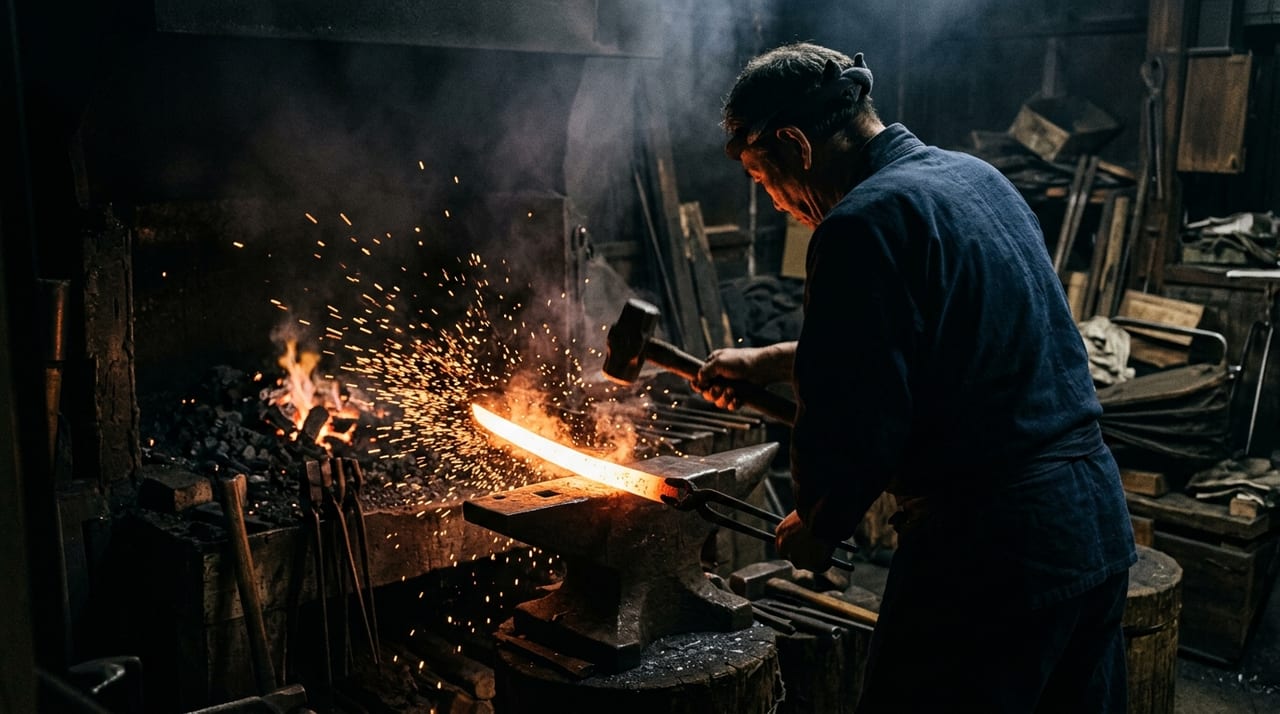
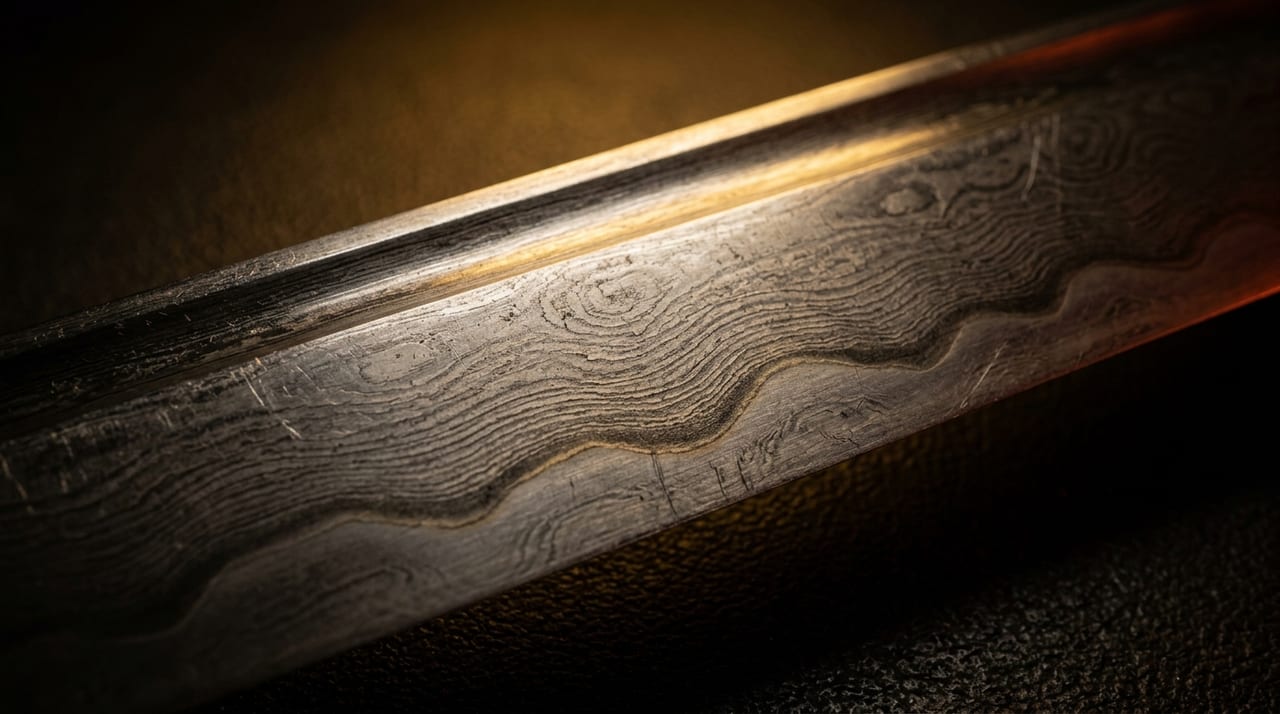
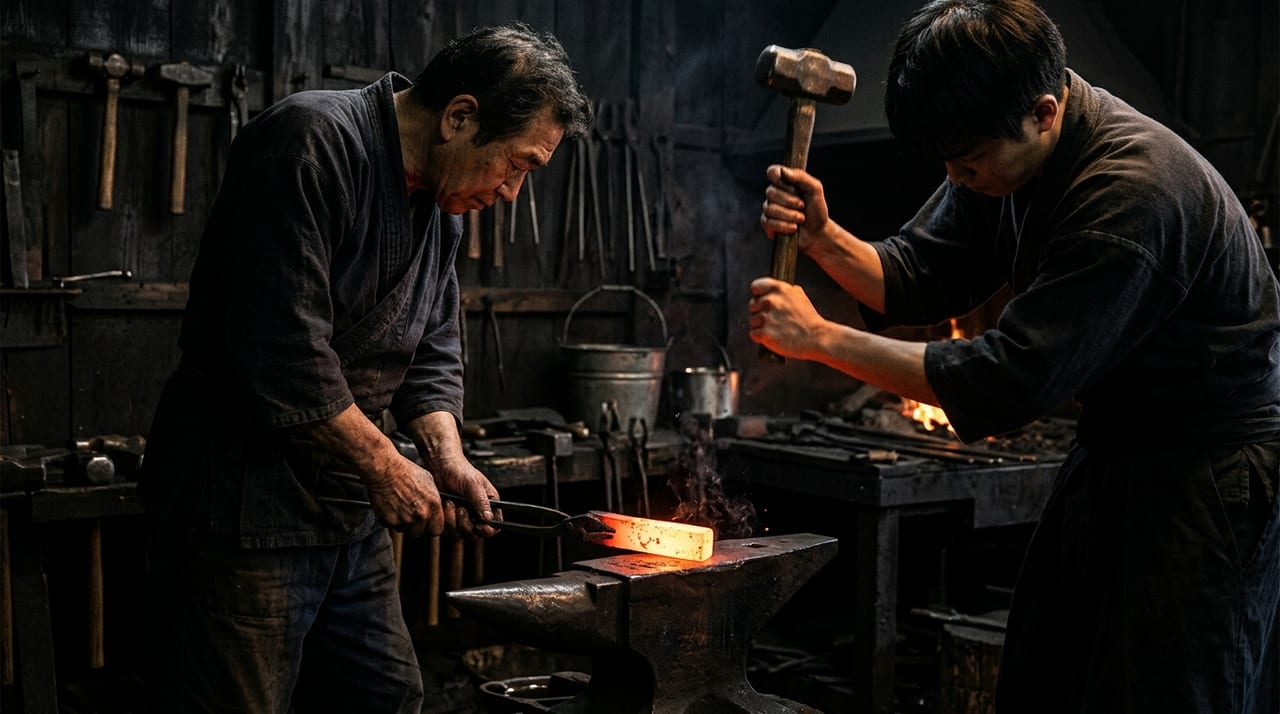
This article explains the process and scientific significance of orikaeshi tanren, the core technique in nihontō manufacture. It covers in detail the mechanisms by which tamahagane is purified of impurities, its carbon content homogenized, and its fibrous microstructure formed; the relationship between the number of folds and the resulting microstructure; the composite structure of kawagane and shingane (awasewaza); and the principles behind the formation of the jihada patterns (itame, mokume, masame, ayasugi) produced by folding.
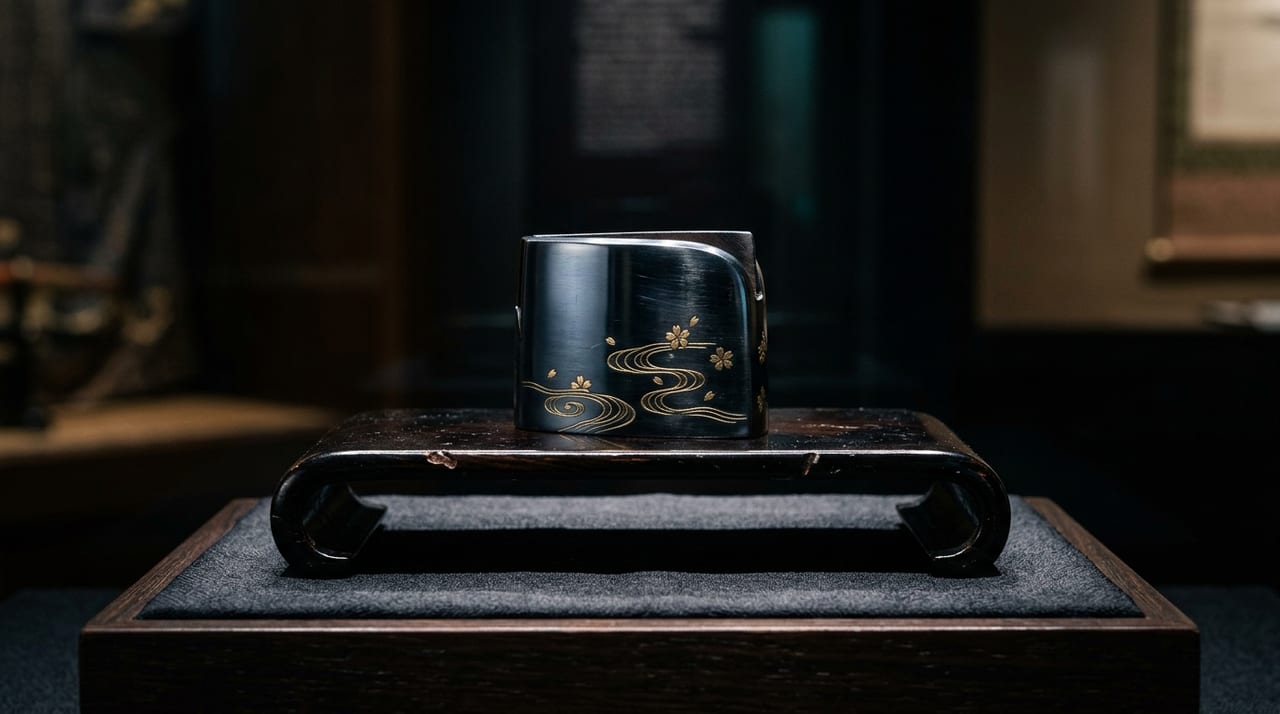
This article explains the world of craftsmen who specialize in making the metal fittings that constitute the exterior furnishings (koshirae) of Japanese swords. It covers the technical systems and production processes of kanagushi who work on pieces including the habaki (blade collar) that connects the blade and tsuka (hilt), the koiguchi at the mouth of the saya (scabbard), the tsuba (hand guard), menuki, and kozuka, as well as the current supply-and-demand conditions and challenges in training craftsmen.
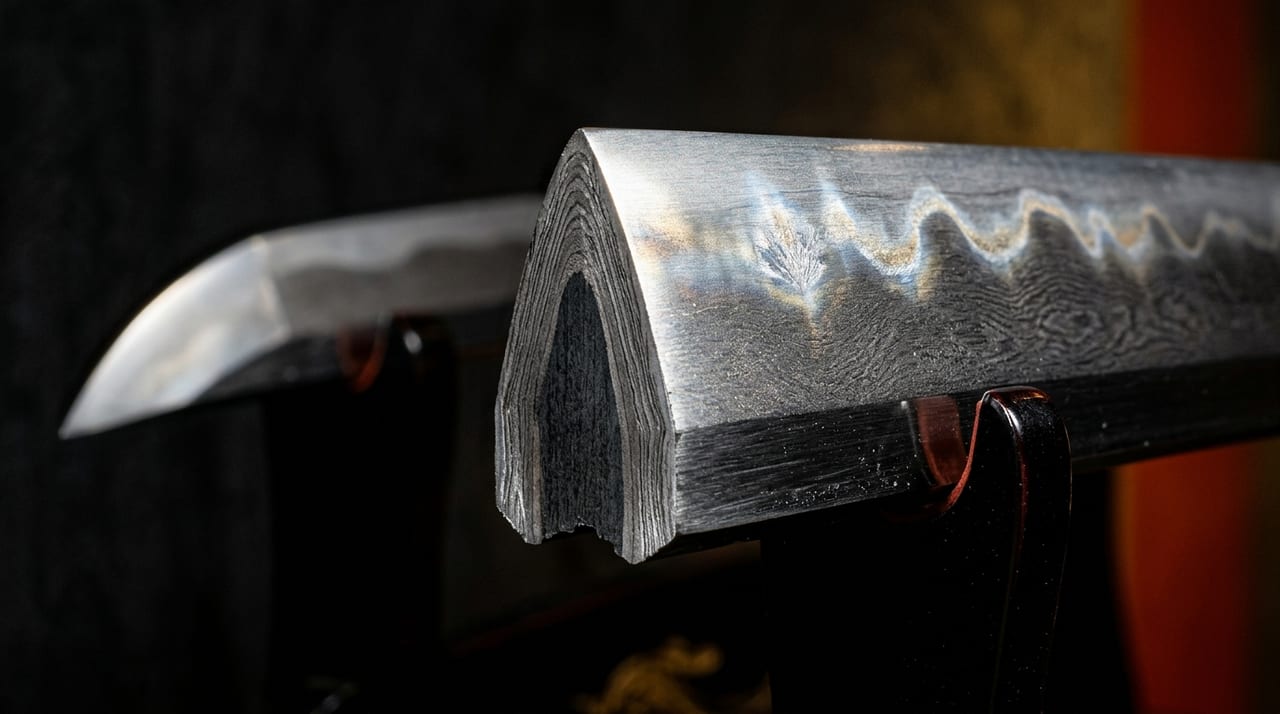
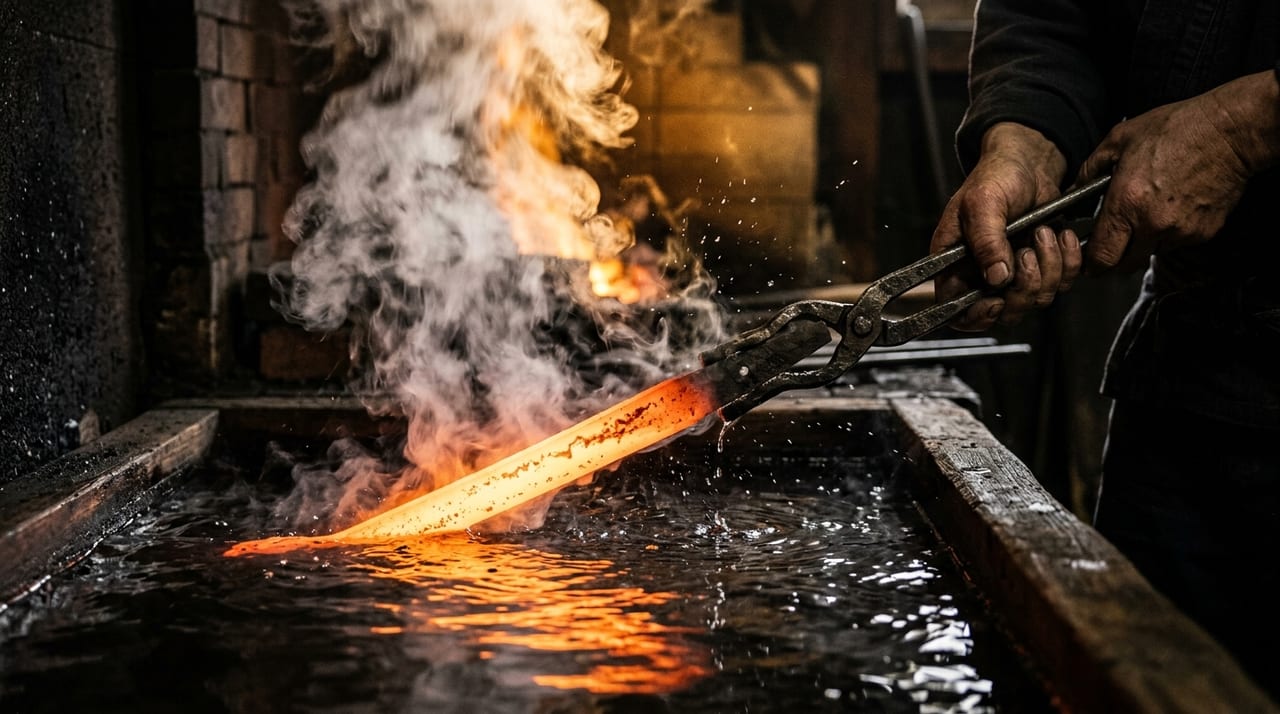
Explains the yaki-ire (quenching) process and science that produces the hamon (temper line), the defining characteristic of the nihontō. Covers the procedure from tsuchioki (applying the clay coating) to water quenching, the principles of martensitic transformation, the types of hamon (suguha, gunome, chōji, notare, etc.) and the distinctive character of each school, the risks of yaki-ire failure, and the role of "yakiba-tsuchi" (quenching clay).
Explains the practical aspects of insurance and appraisal values that nihontō collectors should know. Covers the structure of movable property insurance and fine art insurance, how to set insured amounts, the role of official kanteisho, and key points about coverage for fire, theft, and earthquake.
An explanation of the shape classifications of kissaki and bōshi on Japanese swords. Systematically covers the comparison of ko-kissaki, chū-kissaki, ō-kissaki, and inokubi-kissaki; the types of bōshi (komaru, ōmaru, asai kaeri/fukai kaeri, midarebōshi, hakikake, etc.) and their historical transitions; methods for period identification readable from kissaki shapes; and the design philosophy of kissaki by contemporary tōshō.
A systematic guide to the togishi (sword polisher), whose work ultimately determines the value of a nihonto. Covers the 7+ stage polishing process from rough shaping to final finish, the types and properties of polishing stones, the lineage of polishing traditions rooted in the Hon'ami family, and the modern certification system.
This article explains environment management for preserving Japanese swords in good condition over the long term. It systematically covers the appropriate temperature and humidity range, how to choose sword cases and sword bags, the frequency and method of applying chōji oil and using uchiko, the mechanisms behind mold and rust formation and how to prevent them, and the option of entrusting swords to professional storage services.
A systematic explanation of the morphological and functional differences between tachi and uchigatana. It covers edge orientation (tachi edge-down, uchigatana edge-up), differences in wearing method (tachi suspended / uchigatana thrust through the belt), the relationship between sori position (koshi-zori, middle sori, saki-zori) and combat styles, and the historical transition between the two.
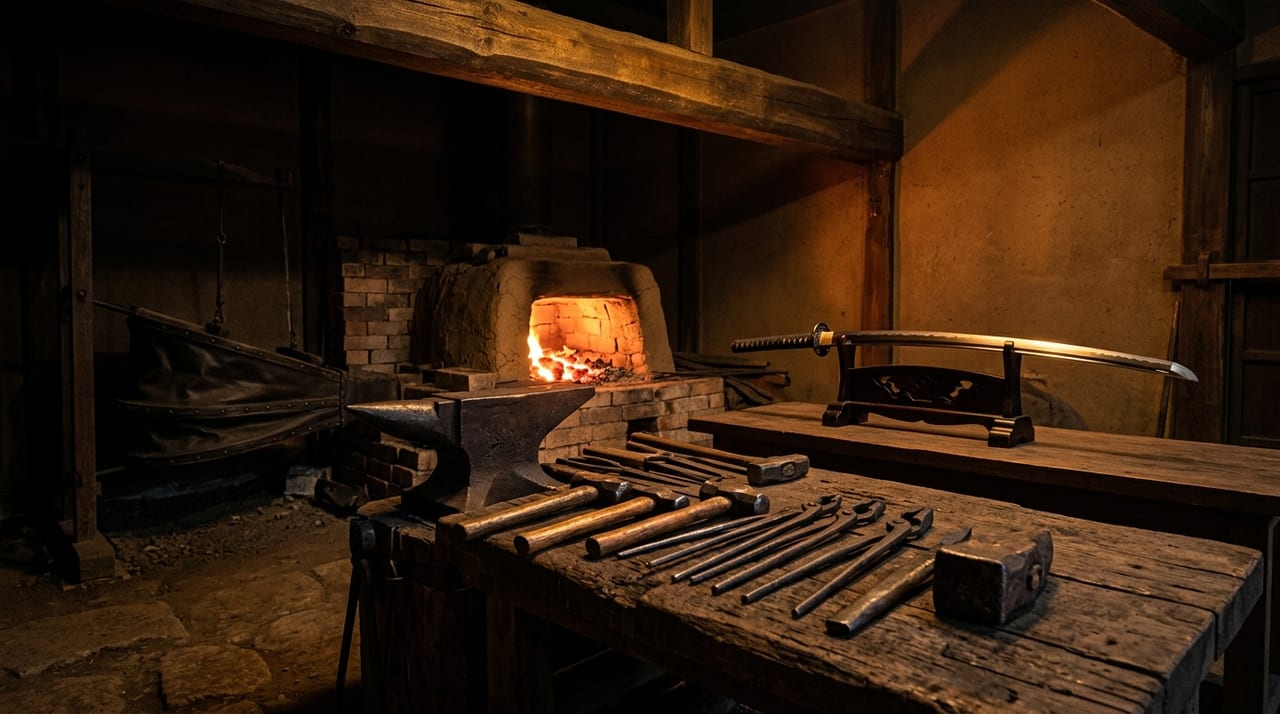
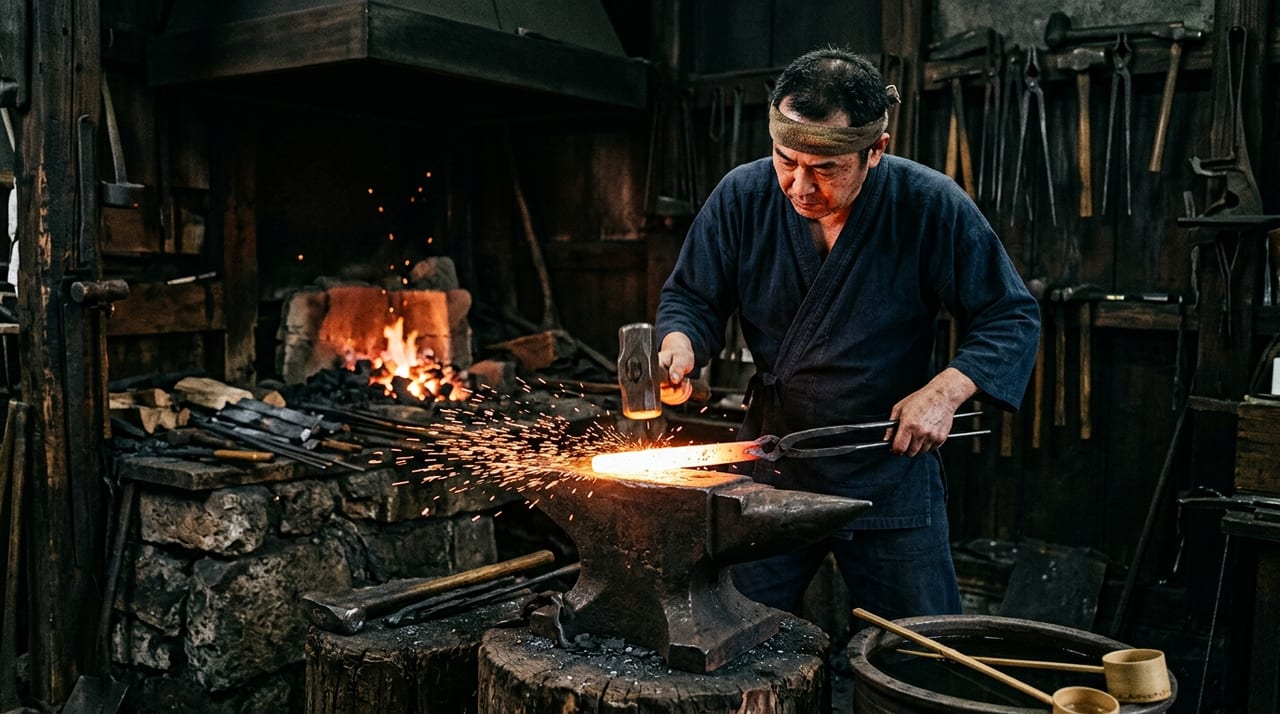
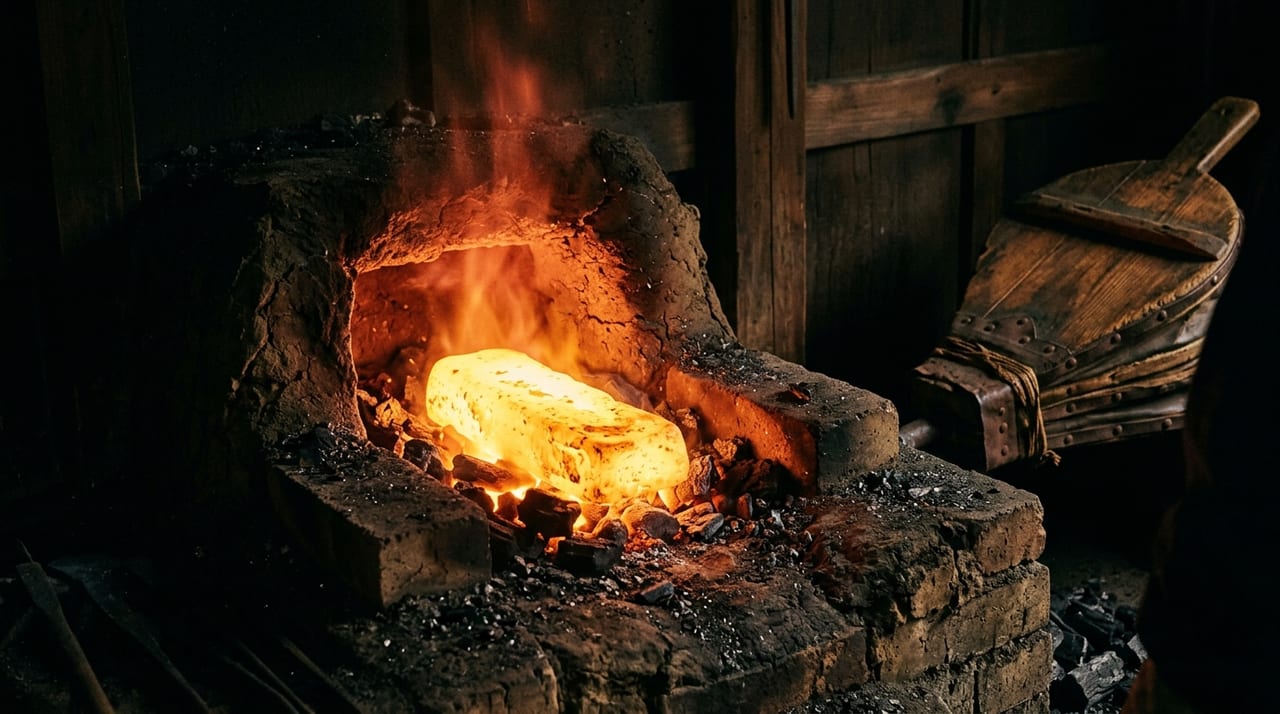
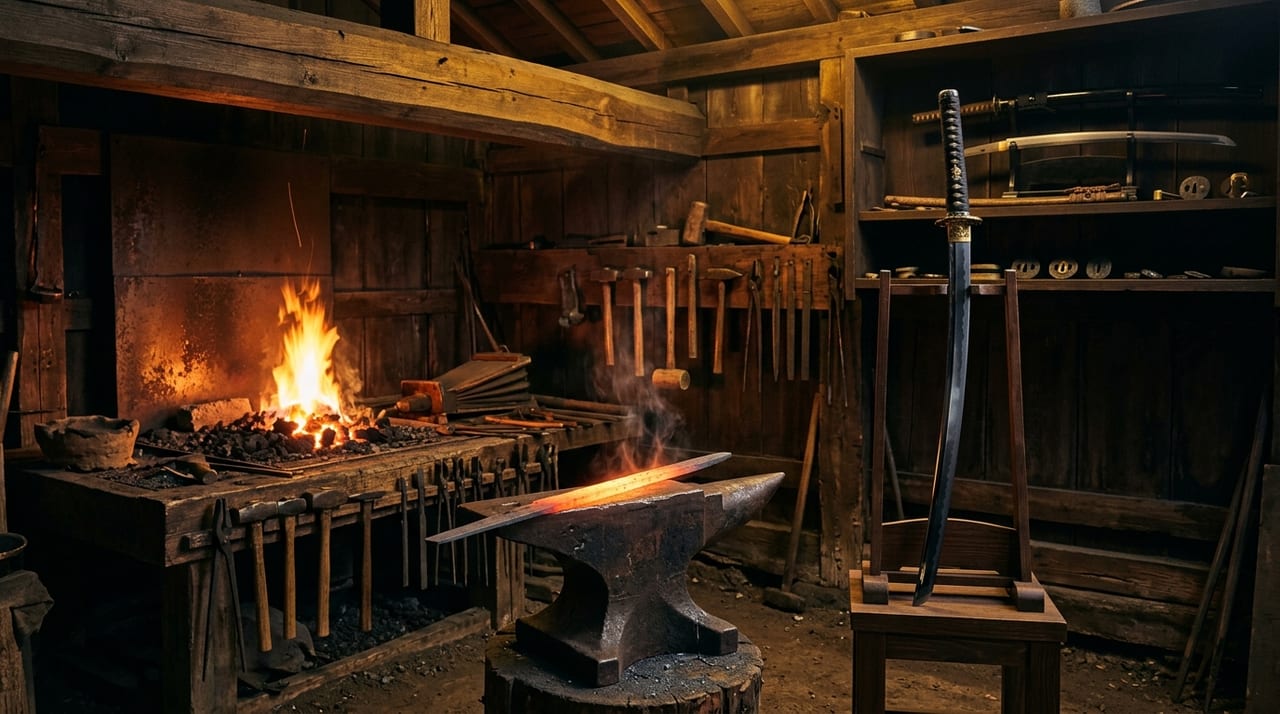
This article explains the production process of tamahagane, the raw material for Japanese swords, and the technological system of "tatara smelting" that produces it. It covers in detail the workings of the tatara that produces tamahagane from iron sand, the continuous operation lasting three days and three nights, the structure of the kera-ba (furnace), the management of tamahagane sorting and carbon content, and Nittoho Tatara, the sole modern production site.
Systematic classification of tanto by blade construction: hira-zukuri, shinogi-zukuri, double-edged (ryoha-zukuri), and saki-zori profiles, the definition of sunnobi tanto, the yoroi-doshi (armor-piercer) and its form, and representative examples by period.
Japanese swords are broadly divided into three eras: "koto" (old swords), "shinto" (new swords), and "shinshinato" (newest swords). This article systematically explains the chronological divisions, forging techniques, steel surface patterns, and blade temper characteristics of each era, along with representative sword smiths and schools. This is essential foundational knowledge for authentication and collecting.
Sori on a Japanese sword is a key indicator reflecting the era, intended use, and school. This article explains the types of sori — koshi-zori, naka-zori, and saki-zori — the correct method of measuring sori, the sori tendencies of tachi, uchigatana, wakizashi, and tantō, and the changes in sori from Heian-period swords through the shinshintō era.
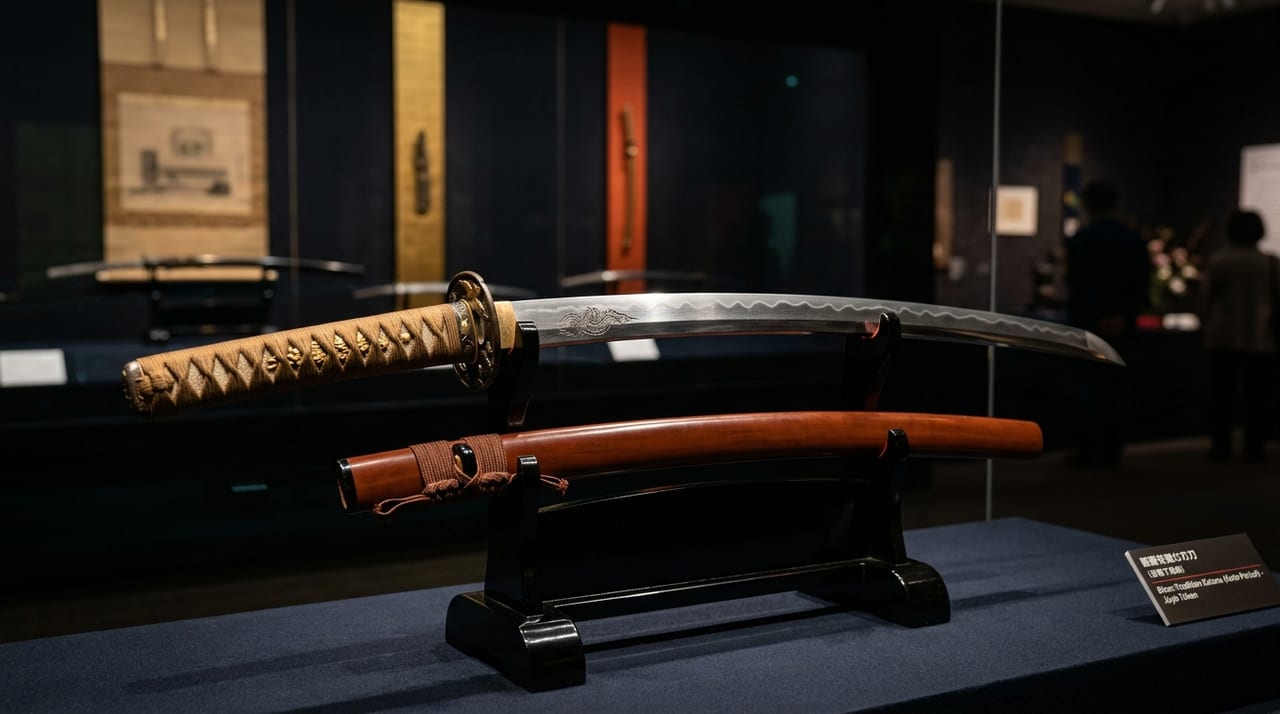
Tachi and uchigatana (katana) are the two primary Japanese sword classifications, but their differences go far beyond length. This article examines the fundamental distinctions — blade orientation, wearing method, curvature type, and historical context — that define each category.
Tanto (blades under 30cm) encompass a rich variety of forms — hira-zukuri, moroha-zukuri, kikuchi-yari style — differentiated by function (personal defense, ritual, ceremonial), geometry (straight, uchi-zori, double-edged), and school (Soshu, Awataguchi, Rai). This article provides a systematic classification.
The uchigatana (katana) emerged in the mid-Muromachi period and evolved through Sengoku combat demands into the Edo period's peacetime dress sword. This article traces how blade length, curvature, and cross-sectional thickness changed across periods and explains the social forces driving each shift.
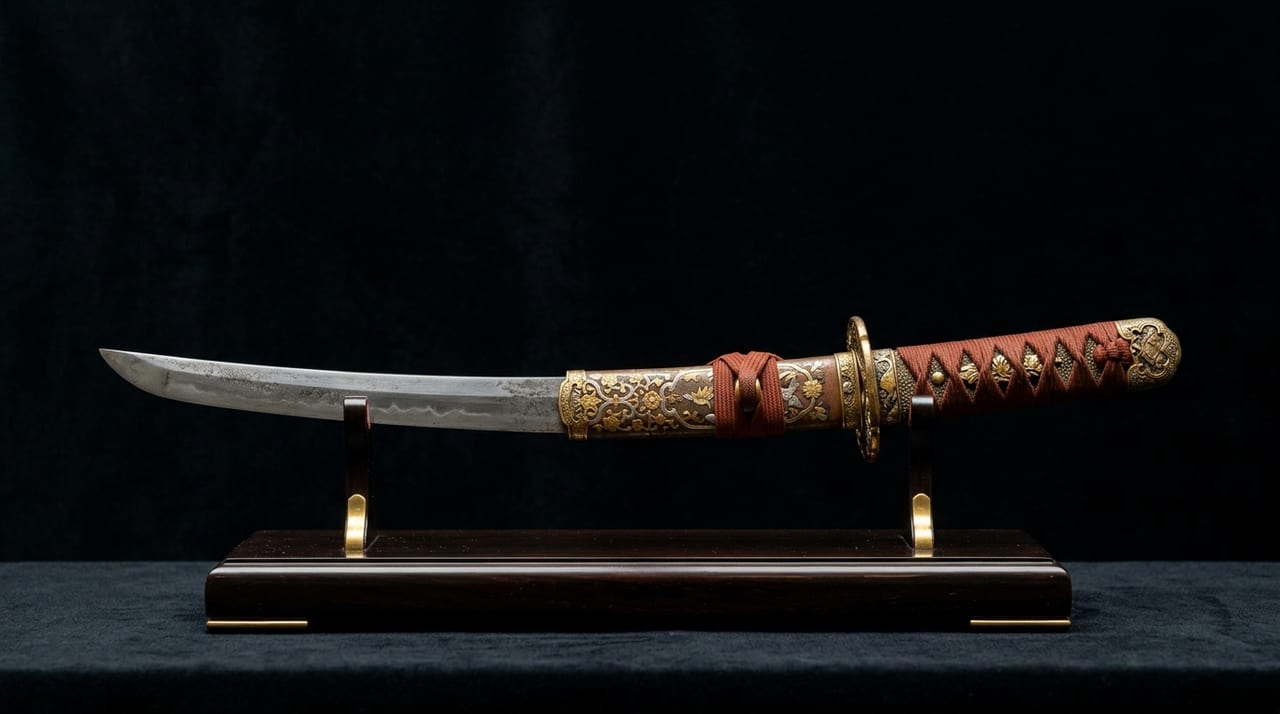
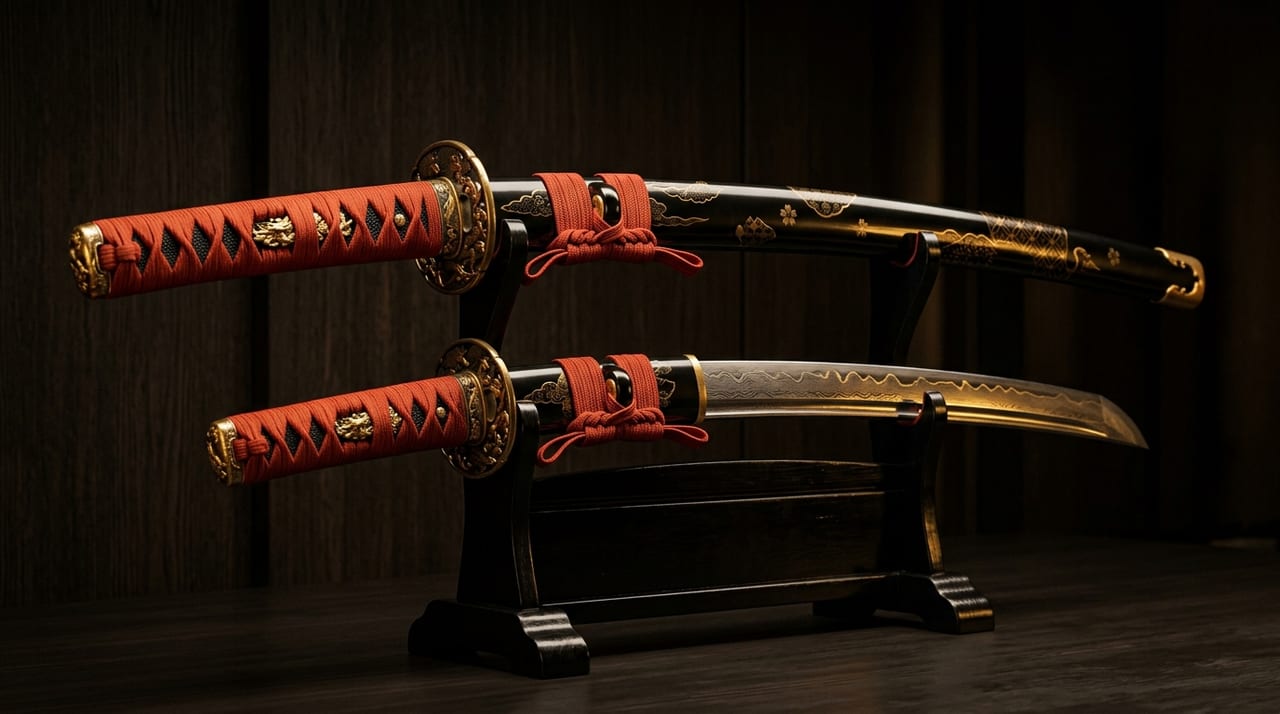
The wakizashi is a nihontō with a nagasa of 30 to under 60 cm, and together with the uchigatana it forms the "daishō" — the formal paired swords of the samurai. This article explains the types, uses, and historical significance of the wakizashi, which carried unique roles distinct from the main sword, serving as a self-defense weapon, an indoor blade, and a tool for seppuku.
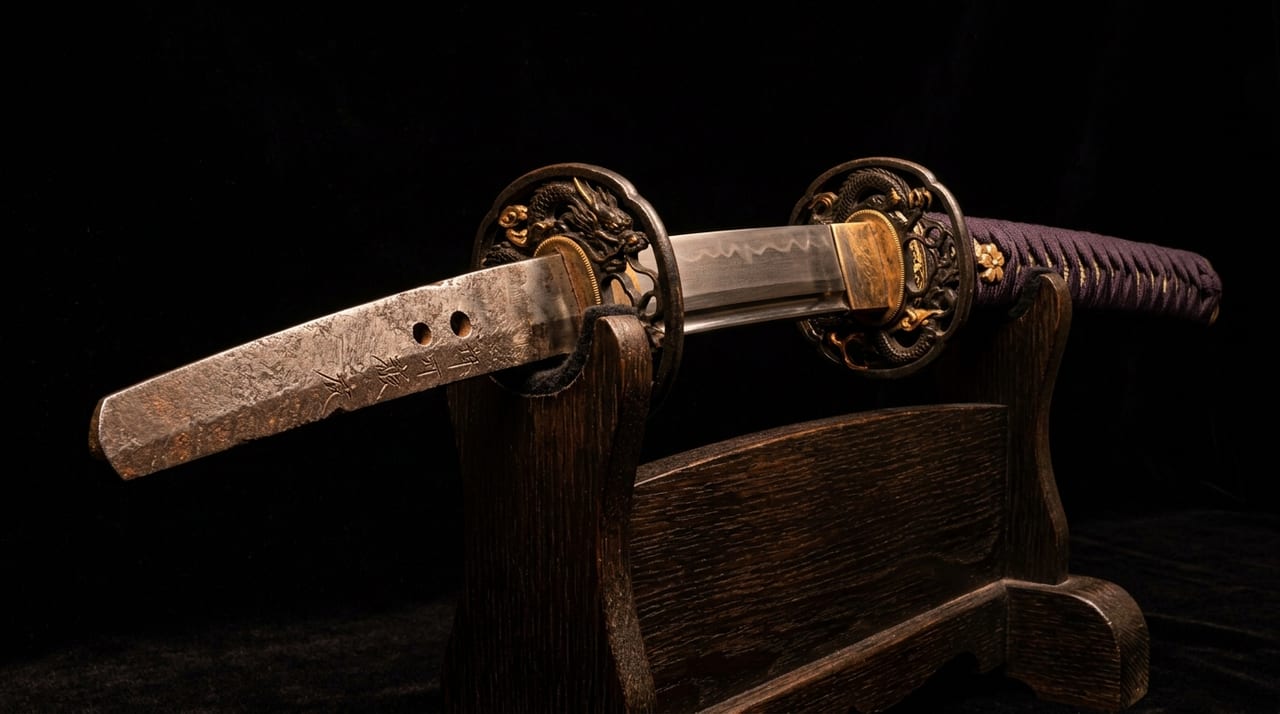
The nakago of a nihontō (the tang, the part that fits inside the tsuka) is the sword's "curriculum vitae." By reading the type of yasurime, the number of mekugi holes, the content of the mei, and the color of the rust, one can determine the sword's period of manufacture, place of origin, and even its history of later alteration. This article explains how to read the nakago for advanced enthusiasts.
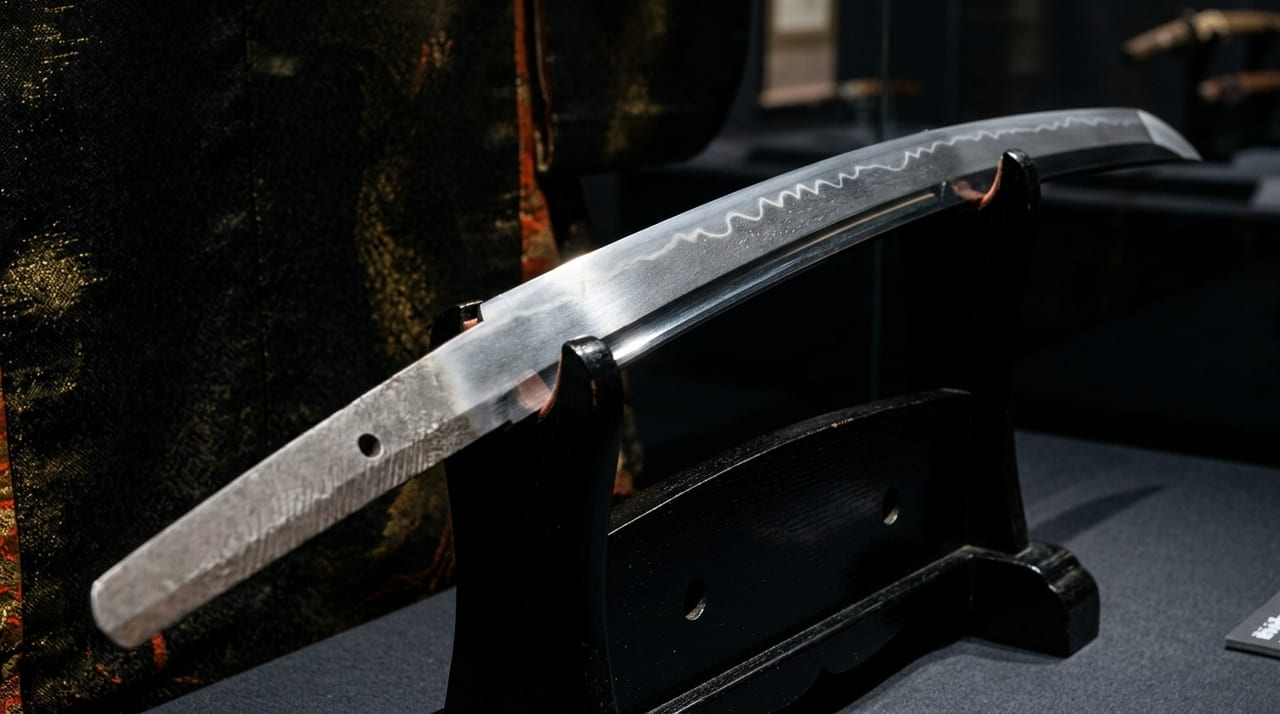
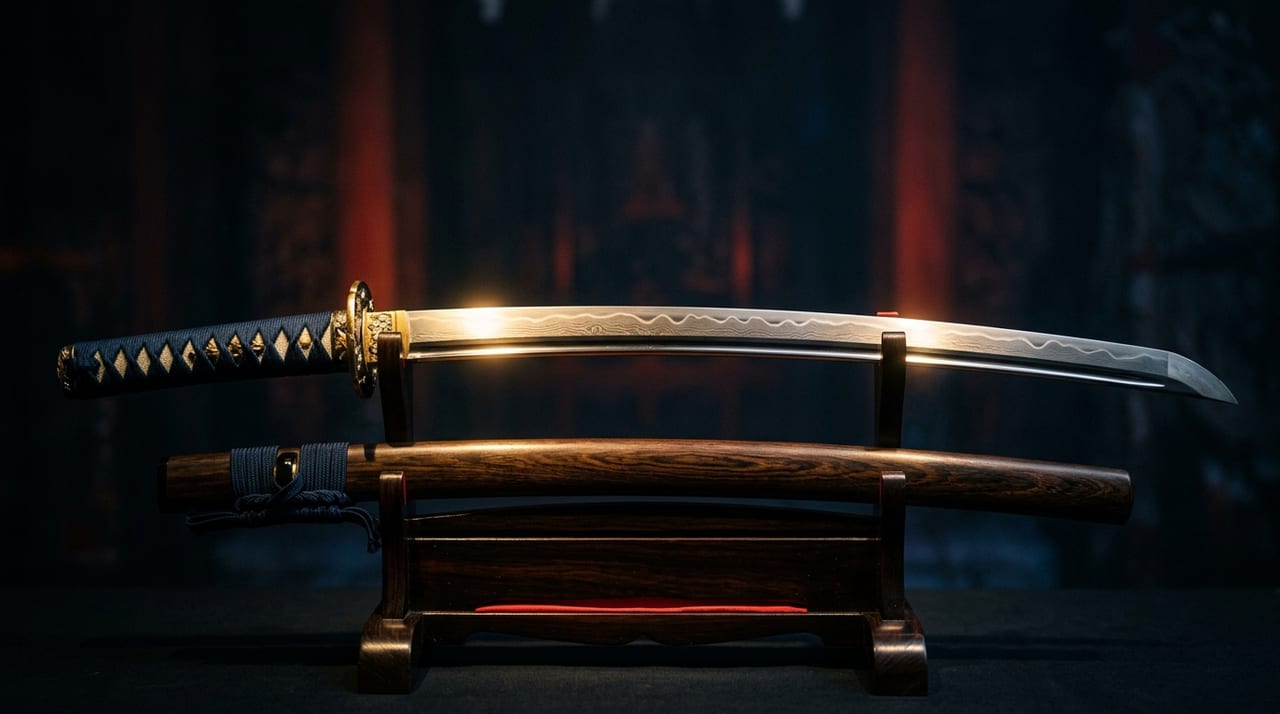
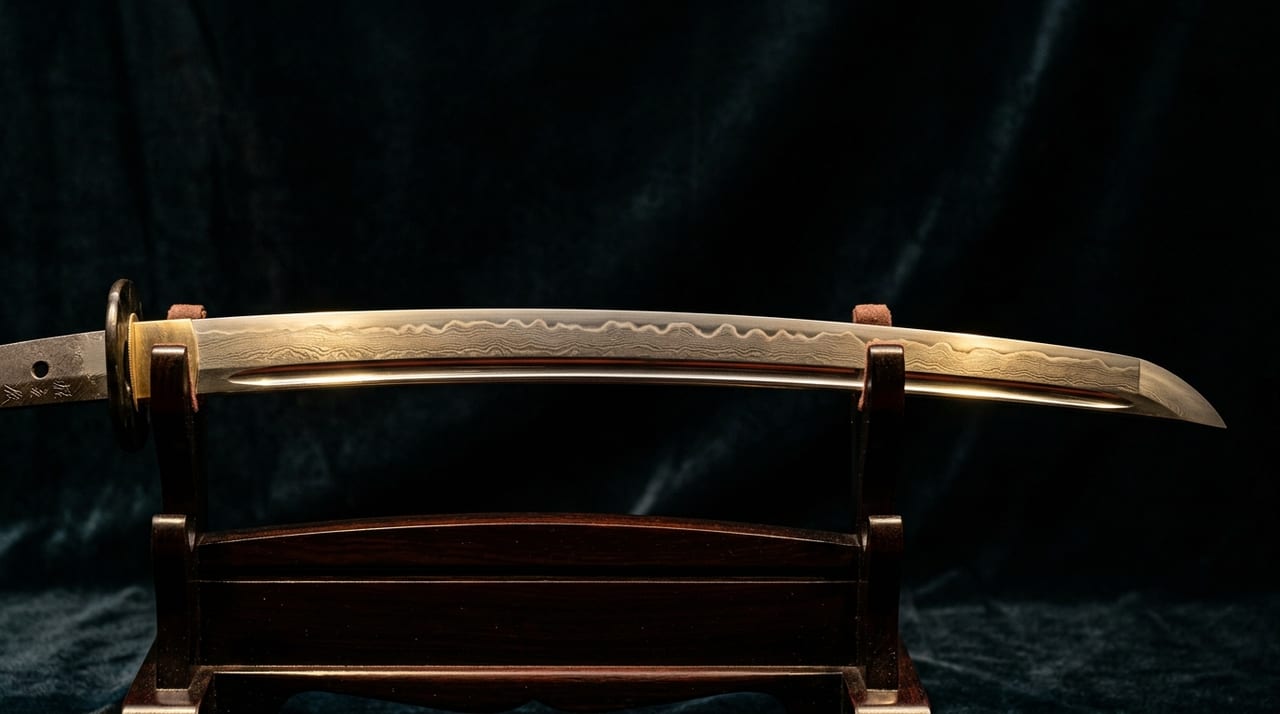
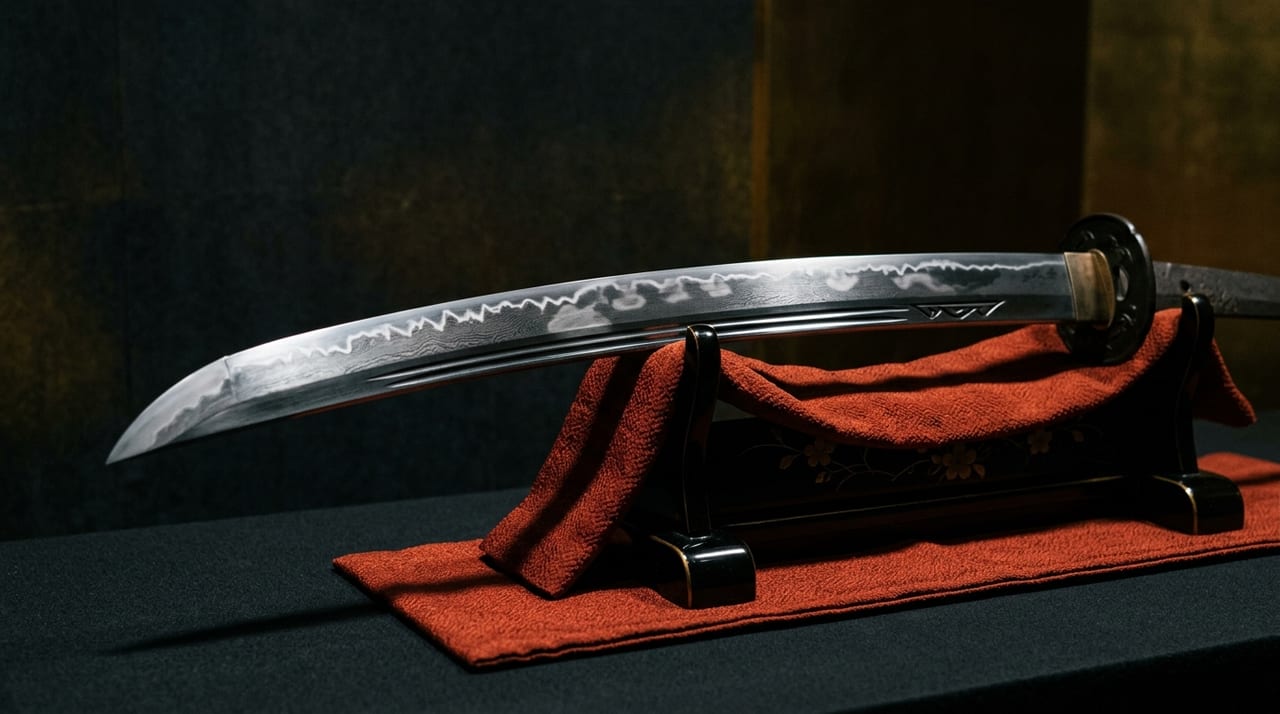
The hamon of the Japanese sword is the pattern at the edge boundary created by yaki-ire, and it determines both the aesthetic value and the functionality of the sword. This article provides a detailed explanation of the major types of hamon — including suguha, notare, chōji, and gunome — as well as how to appreciate them and the characteristic features by school.
A kanteisho is a critical document that determines the value of a sword. This article compares in detail the roles, reliability, and costs of the major appraisal organizations: the NBTHK's four-tier ranking system of Hozon Tōken, Tokubetsu Hozon Tōken, Jūyō Tōken, and Tokubetsu Jūyō Tōken; the traditional appraisals of the Hon'ami family; and the activities of Nittoho.
The mass circulation of Shōwa-era guntō on the market confronted postwar Japanese sword authentication with a new challenge: distinguishing traditional swords from industrially produced ones. This article explains the development of the NBTHK authentication system, the introduction of scientific appraisal techniques, and the evolution toward modern authentication standards.
The tsuba market contains later replicas, altered signatures, and condition misrepresentation. This article explains the methods used by professional appraisers to authenticate tsuba, covering iron patina, signature analysis, and carving characteristics.
"Yasukuni-tō," swords produced within the precincts of Yasukuni Shrine, are highly regarded as traditionally forged Shōwa-period swords, but forgeries and misidentifications are common. This article explains in detail the distinctive stamps and mei formats of Yasukuni-tō, the characteristics of their jihada and hamon, and the steps to follow when commissioning an appraisal.
Hagire (blade cracks) are one of the most fatal defects in nihontō. Missing them during appreciation or purchase can significantly diminish a sword's value. This article offers a practical explanation of the causes, identification methods, and responses to hagire.
Later-added mei, nakago (tang) forgery, hamon (temper line) deception, and the conflation of gendaitō with kotō. This article explains the forgery methods actually encountered in authentication practice and the observation points for detecting them.
An explanation of the appraisal system of the Society for the Preservation of Japanese Art Swords (NBTHK), including the meaning and value of the Hozon, Tokubetsu Hozon, Jūyō and Tokubetsu Jūyō grades.
Suguha, midareba, chōji, gunome. The types of hamon and key points for appreciation, explained in a way beginners can easily understand.
Itame, mokume, masame, ayasugi-hada. An introductory guide to the types of jihada and how to appreciate them.
Gimei, atomei, and awasemei. Key points for authenticating nihontō and the importance of NBTHK appraisal.
The nakago is the sword's résumé. An explanation of how to identify the tōkō and period from the mei, yasurime, and rust color.