An Introduction to Japanese Sword Auctions: Price Negotiation with Overseas Collectors and Post-Winning-Bid Shipping Procedures
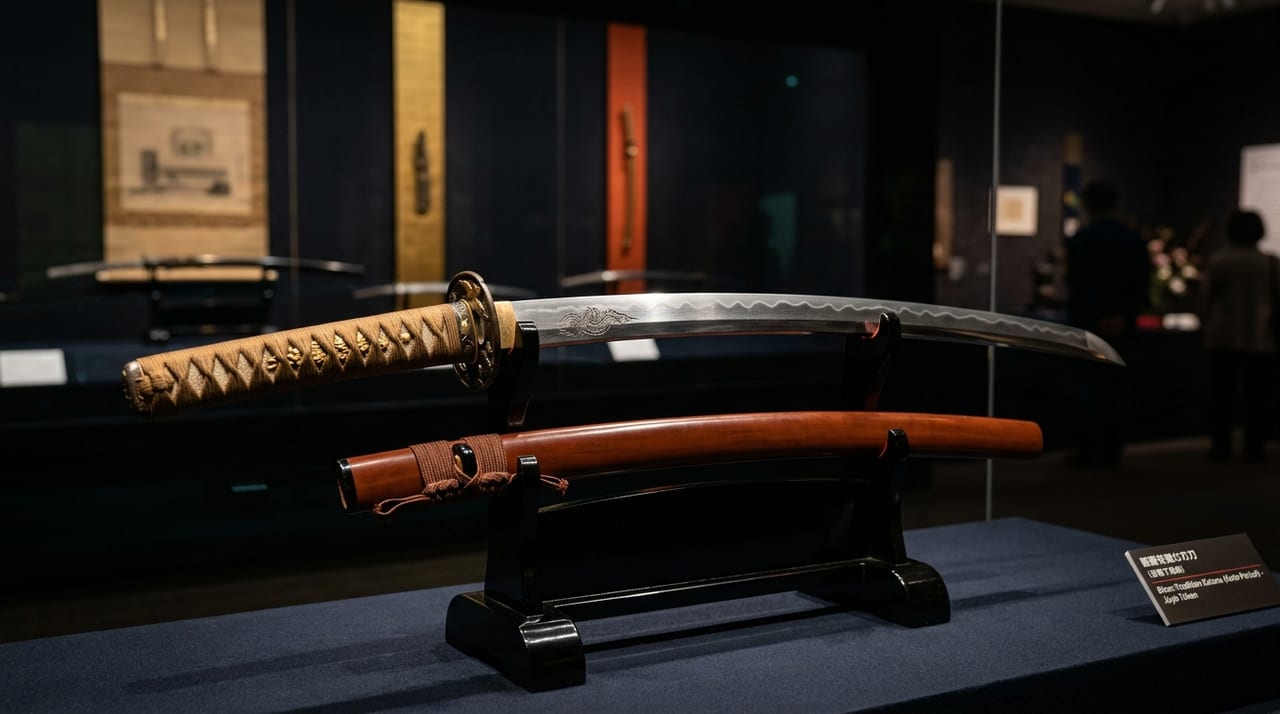 * Image is for illustrative purposes only.
Table of Contents
The Current State of the Japanese Sword Auction Market
The auction market for Japanese swords has been expanding rapidly in recent years, both domestically and internationally. International auction houses such as Bonhams, Christie's, and Heritage Auctions regularly hold Japanese sword sales, while domestically, sales organized by the Japanese Sword Museum and specialist auction sites are also thriving.
Particularly noteworthy is the growing presence of overseas collectors. Wealthy collectors from the United States, Europe, and Southeast Asia are bidding aggressively, and there are increasing cases of winning bids far exceeding domestic market prices. This is seen as the combined result of growing recognition of Japanese swords as investment assets and the sense of relative affordability brought about by the weak yen.
Basic Procedures for Participating in Auctions
To participate in domestic auctions, one must first register as a member with the auction house. At sales co-organized with appraisal sessions hosted by NBTHK (Society for the Preservation of Japanese Art Swords) and at private specialist sword auctions, submission of identity verification documents and confirmation of firearms and swords registration certificates are required. Before bidding, be sure to attend the in-person preview (viewing session) and check the following points.
- Condition of the blade (presence of rust, edge chips, or flaws)
- Condition of the koshirae (mounting) and saya (scabbard)
- Consistency with the registration certificate
- Presence and grade of kanteisho (appraisal certificate) from NBTHK, NTHK, etc.
When participating in overseas auctions, it is often necessary to arrange a Power of Attorney or designate an agent. It is safest to ask a trusted sword dealer within Japan to bid on your behalf, or to go through a domestic agent authorized by the auction house.
Price Negotiation Techniques with Overseas Collectors
Direct negotiation with overseas collectors arises not only in post-auction adjustments but also in private sales. Let us organize the key points for successful negotiation.
Present clear grounds for the price
Overseas buyers tend to place strong emphasis on prices being grounded in data rather than "gut feeling." Presenting data in English — such as the grade of the NBTHK kanteisho (appraisal certificate) (tokujū, jūyō, tokubetsu jūyō), past auction results (hammer prices), and the tōkō's (swordsmith's) ranking (bukan) — will help negotiations proceed smoothly.
The value of explaining cultural background
A sword's value rises in the eyes of overseas collectors when it is discussed not merely as a work of art but in its historical and cultural context. Stories such as "this tōkō (swordsmith) was an official purveyor to the Tokugawa shogunal house" or "this work is said to have been worn by a patriot of the Bakumatsu era" should be prepared in advance so that they can be explained carefully in English.
Managing exchange-rate risk and setting price ranges
When quoting prices in yen, it is necessary to factor in the risk of exchange-rate fluctuation. Agreeing on a price in US dollars — or in euros for European parties — or clearly specifying the timing of settlement will help prevent disputes.
Shipping and Customs Procedures After Winning a Bid
When shipping Japanese swords domestically or internationally, compliance with legal regulations is the top priority. For export, the following steps are required.
The Agency for Cultural Affairs' antique export inspection certificate and return of the registration certificate
When exporting a registered sword, one must obtain the Agency for Cultural Affairs' "antique export inspection certificate." Swords designated as kokuhō (National Treasure), jūyō bunkazai (Important Cultural Property), jūyō bijutsuhin (Important Art Object), or the like are in principle not exportable, and this certificate is issued by the Agency for Cultural Affairs after it confirms that the sword does not fall into any of those categories (Agency for Cultural Affairs "Antique Export Inspection Certificate"). The Agency for Cultural Affairs advises that applications have been increasing and that issuance may take time, so it is important to begin the process immediately after winning a bid. The registration certificate becomes invalid at the moment the sword is taken outside Japan, and must be returned to the Board of Education of the prefecture in which it was registered (Tokyo Metropolitan Board of Education "When Exporting Firearms and Swords").
Packaging and selection of shipping company
It is strongly recommended to entrust the packaging of Japanese swords to a specialist. The blade should be placed in a shirasaya (plain storage scabbard) or sword bag, secured with cushioning material, and handled as dedicated air cargo with a clear declaration that the items are firearms and edged weapons. For international shipments, it is reassuring to choose a specialist fine-art shipper with a proven track record within Japan.
Confirming regulations in the destination country
Importing into the United States is relatively straightforward, but regulations differ by country within the EU. Germany has restrictions on blade length, and in some states swords may be subject to carrying prohibitions. Canada, Australia, and New Zealand require detailed documentation at the time of import declaration. Always confirm the regulations of the destination country before bidding, and if there are problems it may be necessary to decide against bidding.
How to Choose a Trustworthy Auction House or Platform
When participating in sword auctions, it is important to carefully assess the credibility of the organizer. Check whether NBTHK kanteisho (appraisal certificates) or certificates from societies such as the Meitōkai are included, and whether swords listed without kanteisho (appraisal certificates) are accompanied by sufficient provenance descriptions.
Leading domestic platforms include sales organized by NBTHK (Society for the Preservation of Japanese Art Swords), specialist auction houses in Tokyo and Osaka, and in recent years live swords have also appeared on internet auction sites. However, internet auctions carry a high risk of counterfeits and inferior items being mixed in, and participation in sales supervised by specialists is strongly recommended for beginners.
Conclusion
While sword auctions may feel like a high barrier for beginners, with the right knowledge and preparation they are an arena in which one can hold one's own against overseas collectors. Mastering the data that grounds prices, understanding legal regulations, and building a network of trusted specialists are the keys to success. Begin by attending domestic appraisal sessions and preview viewings to accumulate experience in seeing actual pieces.