The Work of the Shiroganeshi — Techniques and History of the Metal Craftsman Who Makes Habaki, Seppa, and Habaki
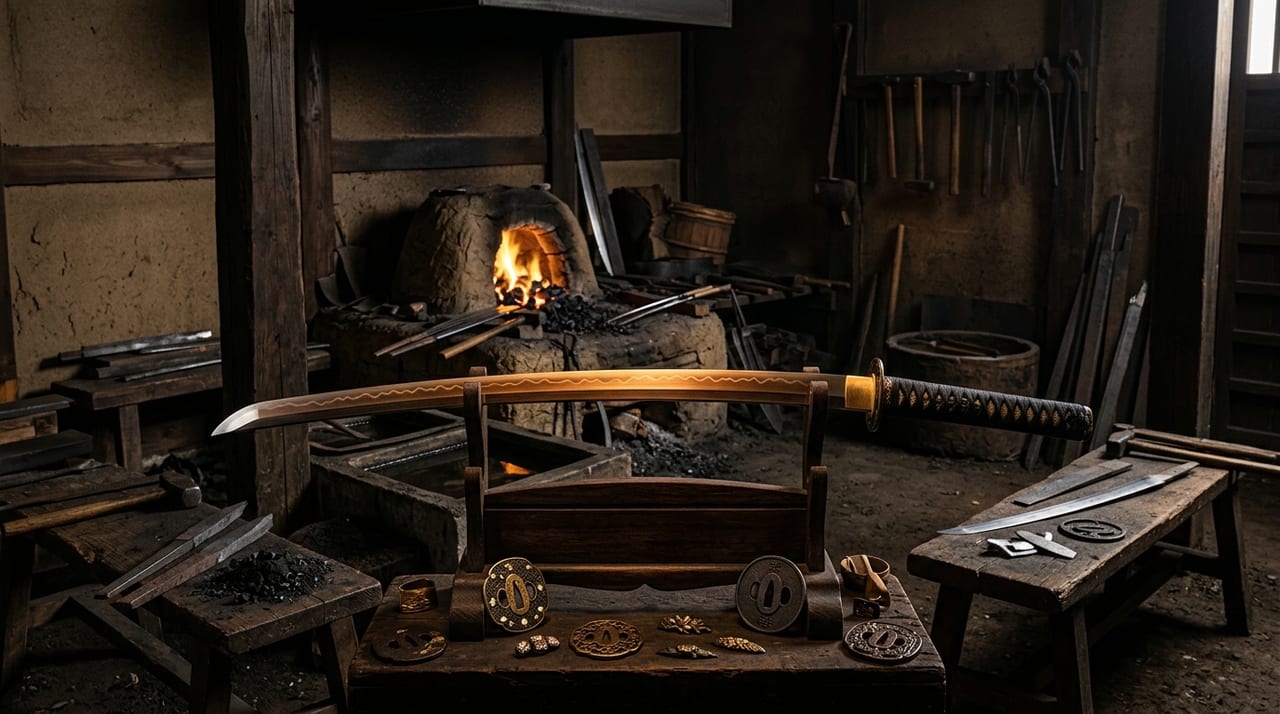
 * Image is for illustrative purposes only.
Table of Contents
What Kind of Craftsman Is a Shiroganeshi?
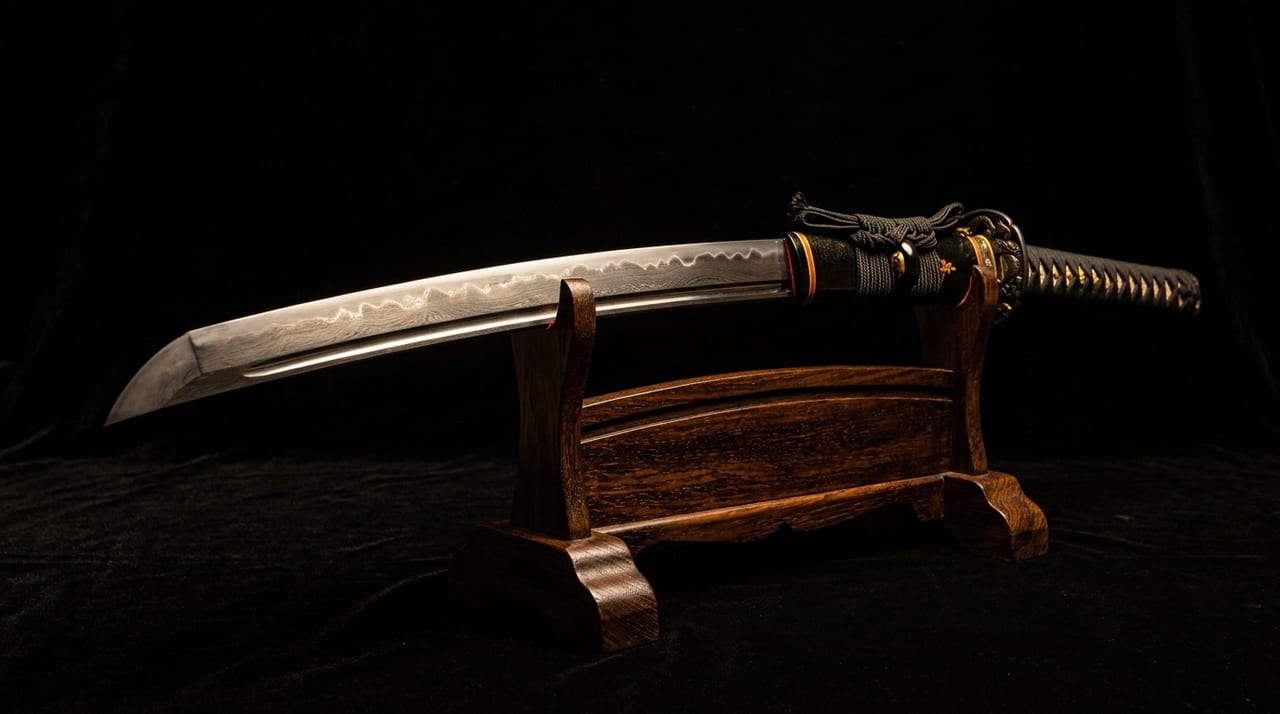
A Japanese sword does not stand complete with the blade alone. To sheathe the blade in the saya and carry it safely, numerous metal parts — collectively called kodōgu or kanagu — are required. The craftsman who specializes in producing the important fittings directly involved in the connection between the blade and the saya is known as the shiroganeshi.
The main fittings that the shiroganeshi handles are as follows.
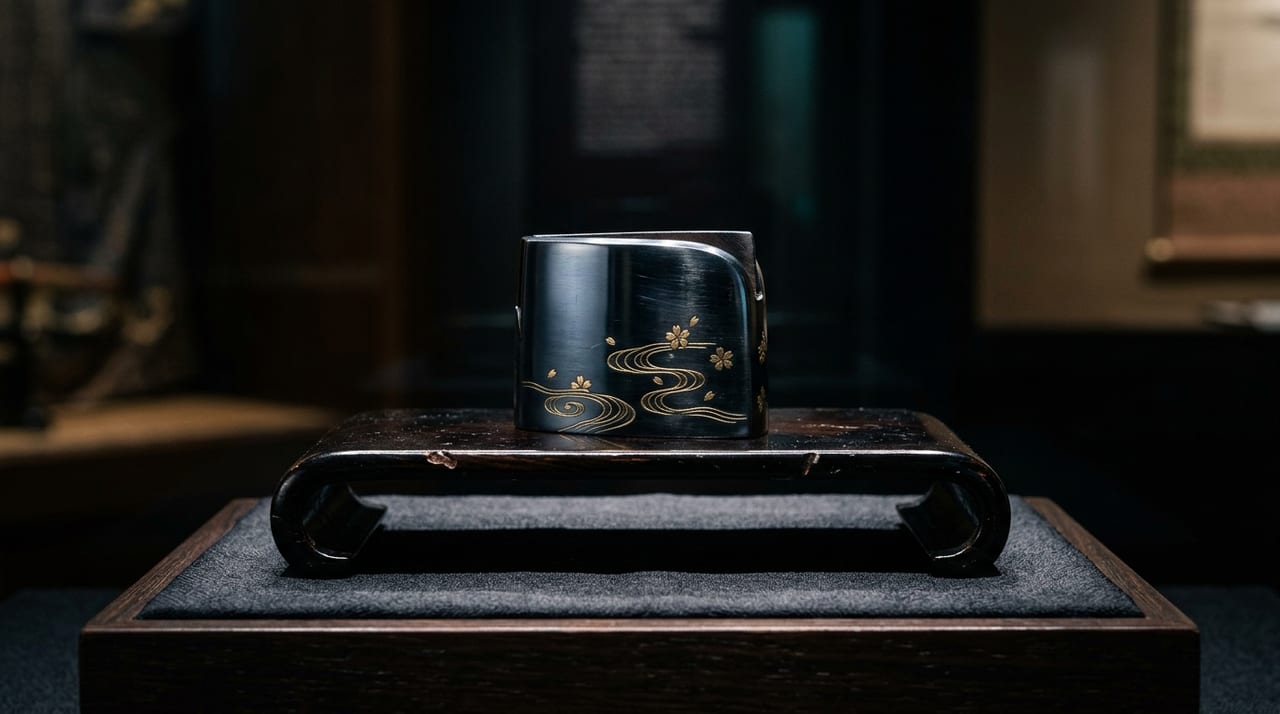
- habaki: A fitting inserted at the hamachi and munemachi of the blade. It serves to secure the blade in the saya and is one of the most structurally important fittings of a Japanese sword. Made from copper, silver, gold, shakudō, shibuichi, and other materials.
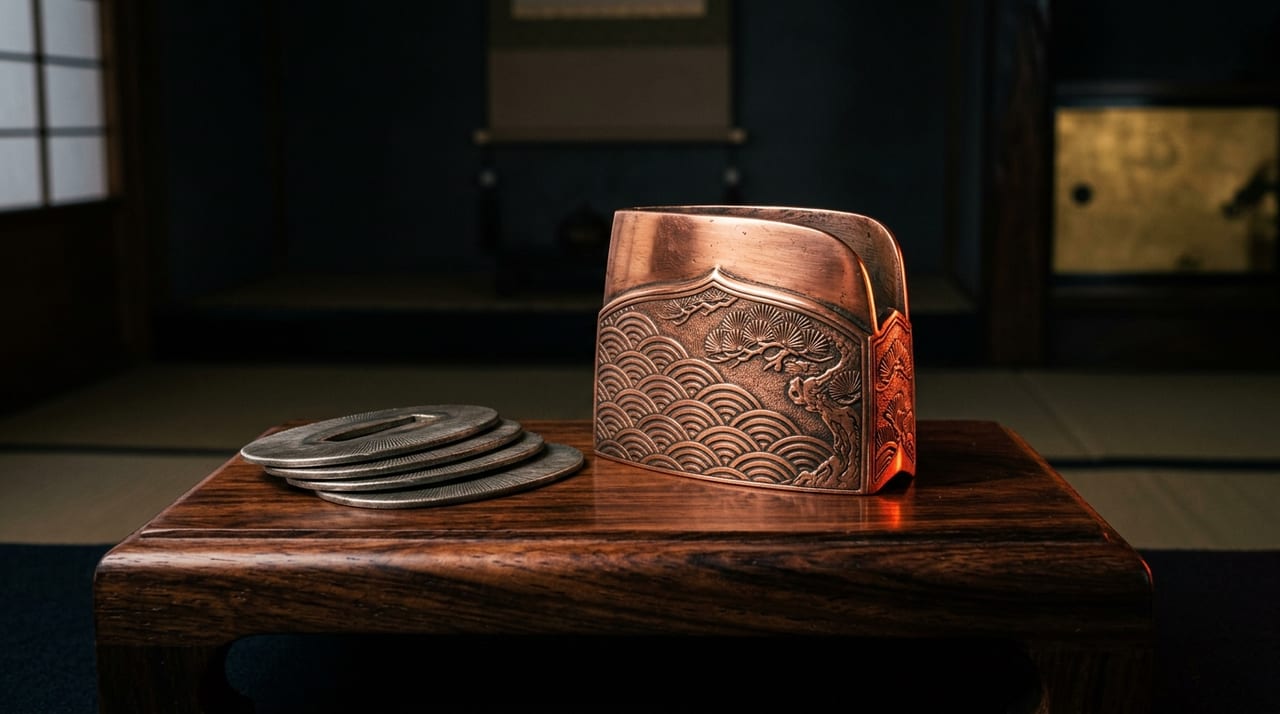
- seppa: Thin metal plates placed between the habaki and the tsuba. They prevent the tsuba from rattling and are used to adjust the koshirae. Multiple plates are often stacked together.
- fuchi and kashira: Metal parts attached to the ends of the tsuka. The fuchi is positioned on the blade side, and the kashira at the tip of the tsuka.
These fittings involve clearly distinct roles from other craftsmen such as the togishi, the sayashi, and the tsukamakishi, and among them the shiroganeshi is a specialist requiring particularly precise metalworking skills. The tōkō who forges the blade itself, the togishi who handles the togi, the sayashi who makes the saya — each holds an independent area of specialization, and a single Japanese sword is completed through the hands of multiple craftsmen. Among them, the shiroganeshi can be said to be the one who handles the "joint" connecting the blade and the koshirae.
Materials Used and Their Characteristics
The metallic materials used by the shiroganeshi are deeply intertwined with the traditional metalworking of Japanese swords.
- Copper: The most widely used base material. Easy to work with and capable of producing diverse color tones through surface treatment. Most habaki and seppa use copper as their base.
- Shakudō: An alloy of copper mixed with a few percent of gold, characterized by a distinctive deep color close to lacquer black. Favored by metalworkers of the Edo period and well suited to intricate carving.
- Shibuichi: An alloy of copper and silver, available in a range of hues from gin-nezumi-iro to a bluish gray depending on the proportion of silver. Its subdued tones were preferred and widely used in the koshirae of warrior families.
- Gold and silver: Gold or silver is used in the highest-quality koshirae. Particularly for swords presented as gifts or made for the shogunal household, the habaki was finished in solid gold or gold overlay.
The coloring of alloys such as shakudō and shibuichi is drawn out not by the natural color of the metal itself but by a process called niiro-shiage, in which the surface is treated with chemicals. Even with the same alloy, the coloring can differ subtly depending on the mixing ratio and treatment method, and it is precisely this skill in producing color that is considered the hallmark of a shiroganeshi or metalworker. The choice of material is an important judgment that concerns not only the visual color tone but also the compatibility with the blade and the overall formality of the koshirae.
The Process of Making a Habaki
The core of the shiroganeshi's work lies in making the habaki. The process is one of exceptional precision.
First, the hamachi, munemachi, motohaba, and motokasane of the blade are measured precisely, and a template matching the cross-sectional shape of the blade is made. Next, the process of tanzo — hammering the metal plate to shape it — is carried out, finishing the inner wall that fits flush against the blade's cross-section. The formation of the hamachi and munemachi themselves and adjustments after yaki-ire (quenching) are explained in detail in Finishing Techniques for Hamachi and Munemachi.
Extremely high precision is required for finishing the inner wall. If it does not fit flush without gaps, the blade will rattle; conversely, if it cannot be fitted at all, the effort is entirely wasted. Repeating adjustments in increments of just 0.1 mm, a habaki perfectly fitted to the blade is crafted.
Decorative work on the outer wall (surface) is where the shiroganeshi's skill is truly displayed. Techniques applied include adding jimon by hammering, carving arabesque, shōchikubai, and wave motifs with a chisel, and inlaying with gold or silver zōgan. There are multiple techniques for zōgan, including nunome-zōgan, in which a fine cloth-weave pattern of scratches is cut into the base metal before thin sheets of gold or silver are hammered in; these are used depending on the design and budget. A bespoke, elaborately decorated habaki can take several weeks to complete.
The production of a habaki generally proceeds in the following sequence.
- Measurement — measuring the hamachi, munemachi, motohaba, and motokasane
- Tanzo — hammering the metal plate to shape it
- Inner wall adjustment — refining precision so that it fits flush against the blade's cross-section
- Outer wall decoration — applying jimon, carving, zōgan, and so on
- Final polishing
Only by carefully building upon each step in sequence does a habaki uniquely fitted to that blade come to completion.
The State of Shiroganeshi Today
It is said that there are only a few dozen shiroganeshi in the country today, and the shortage of successors has become a serious problem. During the Edo period, each domain had its own shiroganeshi, and many craftsmen worked to meet the demand for swords; however, following the Sword Abolishment Edict (Haitōrei) of 1876, demand plummeted and the number of craftsmen fell sharply.
The shiroganeshi currently active are a small number working mainly in urban centers such as Gifu, Tokyo, and Kyoto, and their work centers primarily on custom-order commissions from sword craftsmen and sword dealers rather than ready-made habaki. Prices vary greatly depending on the material and degree of decoration: a simple habaki in plain copper runs several tens of thousands of yen, while a habaki in shakudō with elaborate decoration can exceed several hundred thousand yen.
The usual process for commissioning a new habaki is to consult a shiroganeshi through a sword dealer or tōkō, discuss the measurements of the blade and the desired materials and design, and then proceed with production. In cases where an existing habaki is damaged, or when the entire koshirae is being remade, the same procedure applies. Many craftsmen also handle repair and restoration commissions, and correcting the looseness of an old habaki or filling in missing sections is one of the shiroganeshi's important roles.
Collaboration Between the Shiroganeshi and the Tōkō
The work of the shiroganeshi is made possible through close collaboration with the tōkō. After the tōkō completes the blade, the shiroganeshi takes the blade directly in hand, measures it, and produces the habaki. The completed habaki is fitted onto the blade by the tōkō or the togishi, after which the process proceeds to the togi stage.
This coordination among craftsmen determines the quality of the finished Japanese sword. If the shiroganeshi's technique is inadequate, it can lead to blade rattling or rust caused by moisture penetration during togi. As an "unsung pillar," the shiroganeshi is a presence that supports the quality of Japanese swords from behind the scenes.
What to Know When Looking at a Habaki
When holding a Japanese sword, the habaki tends to attract less attention than the blade itself, but it actually contains a great deal of information.
- Difference in production era: The habaki is not necessarily made at the same time as the blade. It is not uncommon for only the habaki to have been newly made or replaced at a later date over the years, so the era of the blade and the era of the habaki may differ.
- Checking the fit: A good habaki fits flush against the hamachi and munemachi of the blade without gaps and does not rattle. Conversely, if there is looseness, it may indicate deformation of the habaki itself or a poor fit with the blade.
- The relationship between decoration and material: The degree of decoration varies widely, from a plain unadorned copper habaki to one of shakudō or shibuichi bearing carving and zōgan. The materials and designs chosen tend to reflect the overall formality of the koshirae and the historical context in which it was made.
Examining the condition and characteristics of the habaki provides one clue to understanding how the sword has been stored and handled.
Conclusion
The shiroganeshi has long been a trade that rarely receives the spotlight within Japanese sword culture, but the high level of skill involved and the rarity of these craftsmen have drawn renewed attention in recent years. The exquisite craftsmanship embedded in the inconspicuous fittings of habaki and seppa speaks to the profound depth of Japanese sword making as a craft.