The Finishing Techniques of Hamachi and Munemachi — Precision Work of Togi and Hammer in Refining the Boundary Line after Yaki-ire
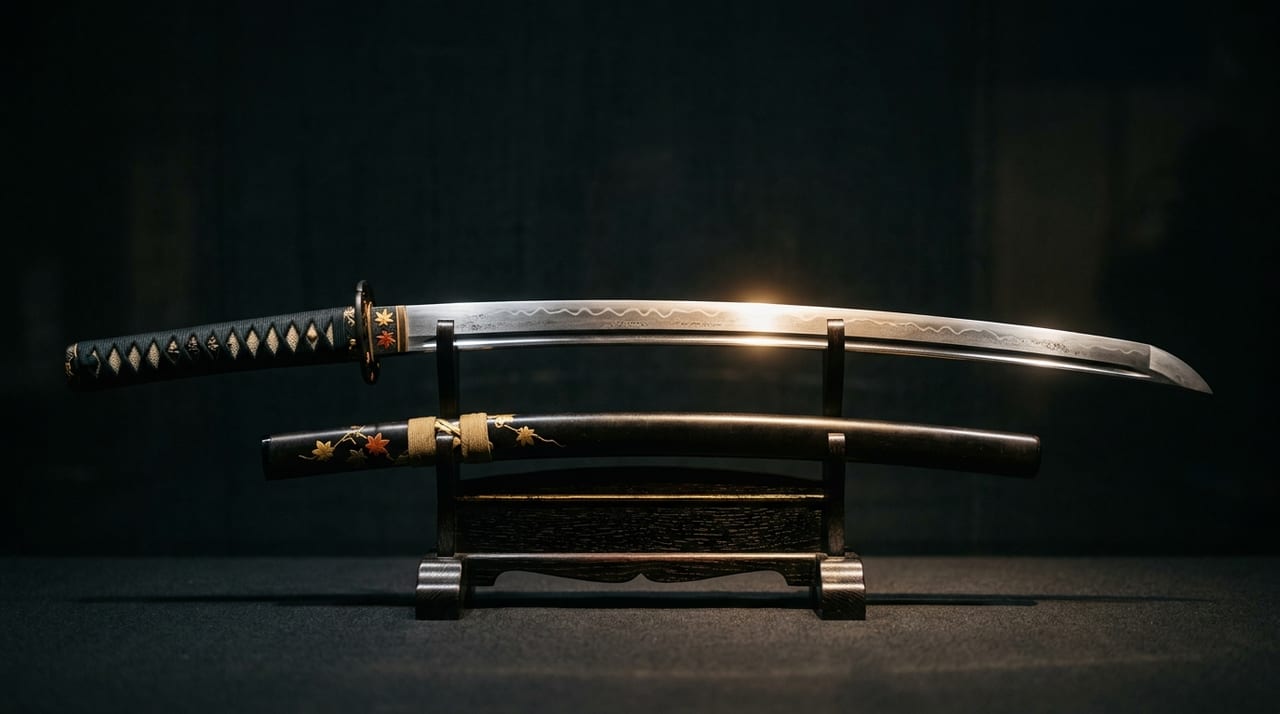 * Image is for illustrative purposes only.
Table of Contents
What Are Hamachi and Munemachi?
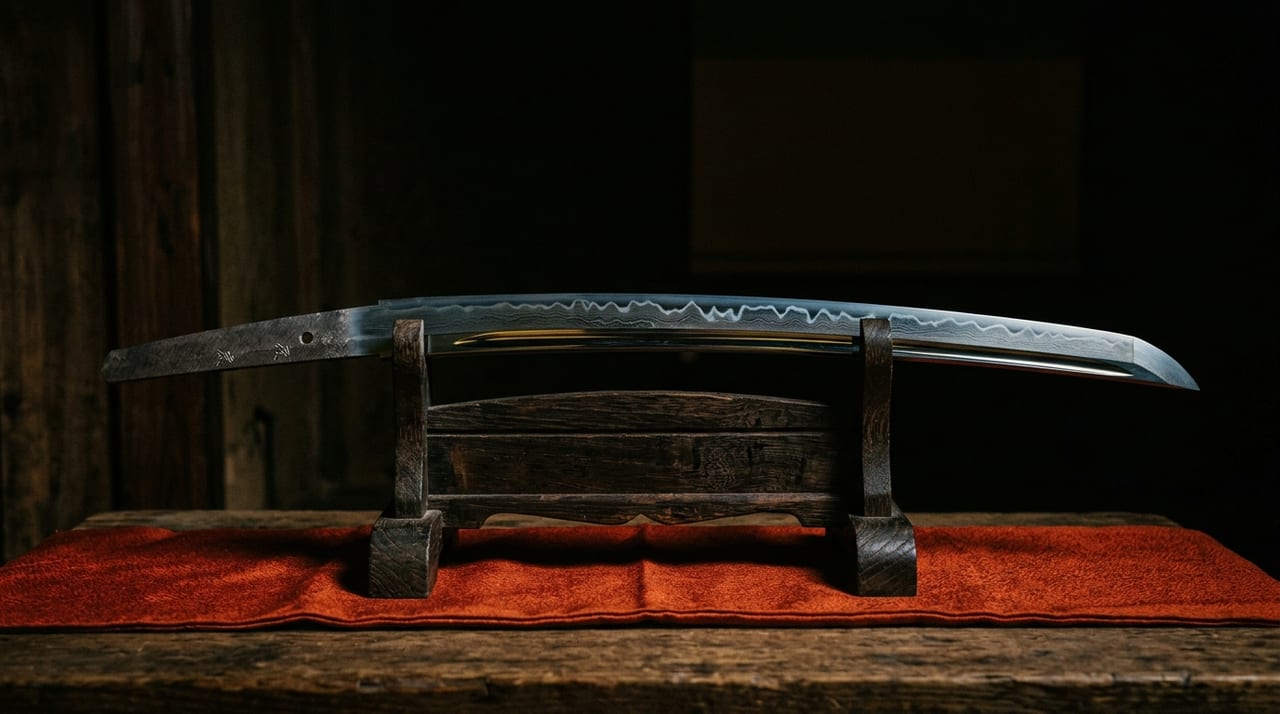
At the boundary between the blade and the nakago of a nihontō there is a notch called a machi. The notch on the edge side is called the hamachi, and the notch on the mune side is called the munemachi. The machi is an extremely important element both functionally and aesthetically, serving as the reference point for the precise seating of the habaki. The techniques involved in crafting the habaki itself are introduced in detail in The Work of the Shiroganeshi.
The shape of the machi varies subtly depending on the tōkō's school and the period, and it serves as one aid in period attribution and maker identification during appraisal. A shallow and sharp machi, a rounded machi, the degree of machi-okuri — the craftsman's individuality appears in these details.
The machi is also used as the reference point for measuring the dimensions of each part of the blade. If the position of the machi is off, the very measurement of the length from that point to the kissaki becomes unreliable, so the precision of the machi is an indispensable element from the perspective of dimensional management.
Problems That Arise after Yaki-ire
In the making of a nihontō, yaki-ire is the most tension-demanding step. By quenching the steel in water (mizu-yaki) or oil (abura-yaki), the hamon is formed and hardness is imparted to the blade. However, during this quenching process, various deformations occur in the blade.
- Changes in sori: The sori of the blade changes before and after yaki-ire. Tsuchioki is carried out with the anticipated degree of sori change factored in, but it cannot be predicted perfectly, and fine adjustments are often necessary after yaki-ire.
- Twisting (nejire): The blade may twist slightly. If the twist is minor, it is corrected by tameshi while still hot.
- Deformation around the machi: The area around the machi, which is the boundary between the blade and the nakago, is prone to minute deformation due to the sharp temperature differential during yaki-ire.
When the machi deforms, it affects the fit of the habaki. If the habaki does not seat properly, the blade will rattle inside the saya, and can even cause damage to the blade.
The Finishing Process of the Machi
The finishing of the machi after yaki-ire may be carried out directly by the tōkō or handled by the polisher. Let me describe the general process.
Rough correction (ara-shūsei): Immediately after yaki-ire, while the blade still retains heat, rough deformations are corrected with light hammer blows. This step must be performed in a very short time and demands the tōkō's judgment and experience.
Shaping the machi: Using a bō-toishi (rod whetstone) or a dedicated small whetstone, the notch shapes of the hamachi and munemachi are refined. The depth, width, and angle of the machi are precisely managed to match the dimensions of the habaki. Excess metal is removed with a chisel-like tool and finished with a whetstone.
Fitting adjustment with the habaki: The habaki made by the shiroganeshi is temporarily fitted to check the match with the shape of the machi. If gaps appear, the machi is pared down; if the fit is too tight, fine adjustments are repeated. The mutual adjustment between the machi and the habaki continues until they are in complete contact.
Final finishing polish: The area around the machi is finish-polished with fine whetstones. In the "sashikomi-togi" carried out by the polisher, the rise of the edge from the machi toward the tip is refined, and the surface is polished so that the hamon appears sharply right up to the vicinity of the machi.
The Periodicity Indicated by the Shape of the Machi
The shape of the hamachi and munemachi follows characteristic tendencies for each period. It is one of the important clues in appraisal.
- Kamakura period: The notch of the machi is clear and sharp-angled. The boundary line with the blade is beautifully ordered.
- Muromachi period: The shape of the machi diversifies, and tends to be simplified in particular on kazuuchi-tō.
- Edo period (shintō and shinshintō eras): There is a tendency to treat the machi consciously as a design element, and the angle and depth of the machi reflect the characteristics of each school.
Furthermore, "machi-okuri" — the condition in which the position of the machi has shifted from its original position when suriage was performed to shorten the length of the blade — is important evidence of post-production alteration. Swords on which machi-okuri was performed may show irregularities in the number and arrangement of mekugi holes remaining in the nakago, and appraisers look at such traces comprehensively to infer the original form at the time of manufacture.
Perspectives for Examining the Condition of the Machi
When taking a sword in hand to appreciate it, the machi is a part that tends to be overlooked, but observing it from several perspectives can provide clues to reading the condition and provenance of the sword.
- Bilateral symmetry: Check whether the angle and depth of the hamachi and munemachi are aligned. If there is extreme distortion, it may be the result of wear from years of togi or past repairs.
- Fit with the habaki: With the habaki removed, examine the machi and check for wear or gaps. If the fit is loose, the habaki may have been replaced with a later-period one that differs from the original at the time of manufacture.
- Luster around the machi: The area just above the machi is where the finishing of the togi is applied most finely, and the sharpness of the hamon there serves as a basis for judging the overall polishing condition of the sword.
Such observations are not a substitute for appraisal by an expert, but they are useful perspectives for developing the habit of examining a sword carefully.
Points to Note in Care after Ownership
The area around the machi requires careful handling in the same way as the edge of the blade.
- Do not touch with bare hands: For the same reason that one does not touch the edge directly, skin oil around the machi area is a cause of rust. Use uchiko and a soft cloth when performing maintenance.
- Check the method of sheathing: Forcing the sword into the saya while the fit of the habaki and machi is misaligned can damage the interior of the saya or the machi itself. If you feel resistance, do not force it; check the position of the habaki again.
- Regular inspection: Making a habit of looking at the area around the machi at each maintenance session to check for signs of rust or discoloration makes it easier to notice problems early.
The Finishing of the Machi as Described by Contemporary Tōkō
Even for contemporary tōshō, the finishing of the machi is one of the steps that demands the utmost care. Material is removed to units of 0.1 mm using whetstones and precision files, and precise fitting with the habaki made by the shiroganeshi is repeated.
This process is handwork that cannot be replicated by computer-controlled machining and depends on the craftsman's sense and experience. Among tōkō, some perform the finishing of the machi themselves through to the end, while others share the work with a polisher; the approaches vary, but it is a shared understanding that the quality of the machi's finish has a great influence on the overall completeness of the sword.
Summary
The finishing techniques of the hamachi and munemachi occupy an unassuming yet extremely important position in the process of making a nihontō. By understanding this process — in which the tōkō's skill and experience are concentrated, from correcting post-yaki-ire deformations to precise fitting with the habaki — one can appreciate the depth of nihontō as a craft more fully. The machi not only conveys the craftsman's skill at the time of production but is also a clue for reading provenance and condition, making it a part worth keeping in mind for both appreciation and care.