Koto vs. Shinto Swords: How Forging Techniques Shifted from Individual Craft to Standardized Production
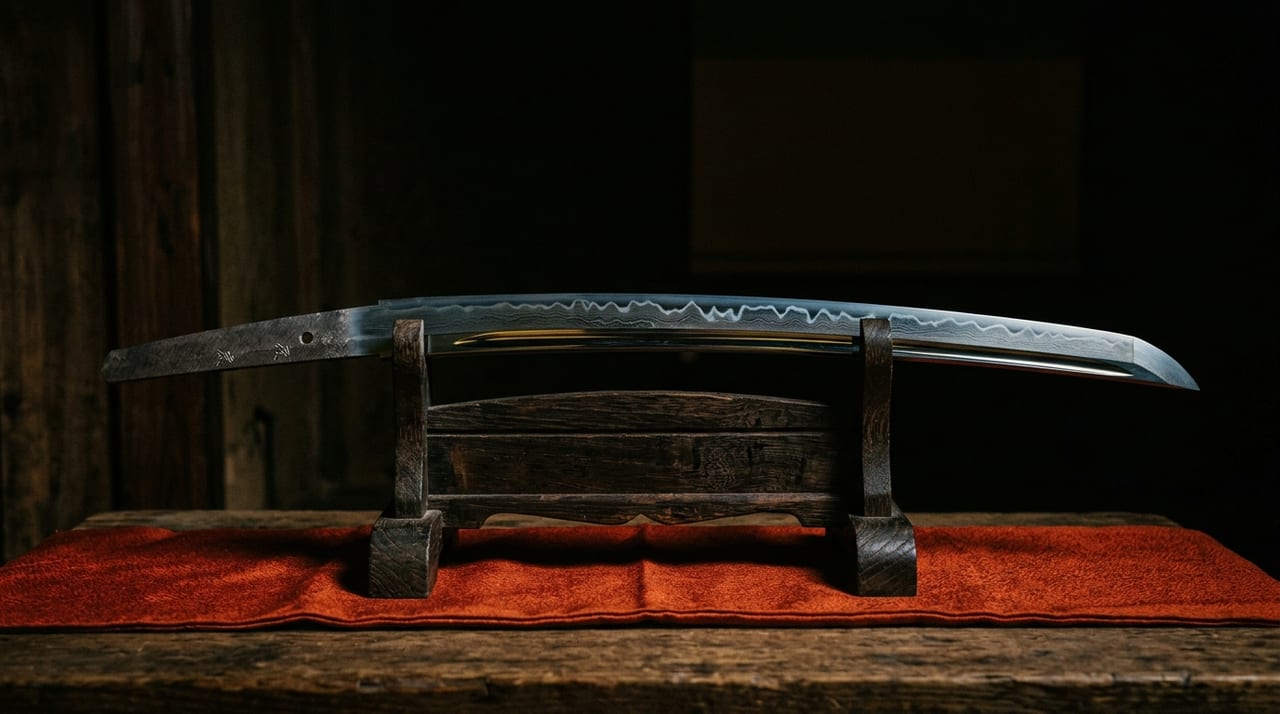 * Image is for illustrative purposes only.
Table of Contents
The Age of Koto — The Individuality Born from Techniques That Differed by Swordsmith
When discussing the history of Japanese swords, a distinction is made between "koto" and "shinto" with the Keicho era (around 1596) as the dividing point. During the koto period, swordmaking developed within a system where five great schools — Yamashiro, Yamato, Bizen, Soshu, and Mino — served as pillars, and regional groups of bladesmiths each inherited their own unique methods of folding and forge-welding, combinations of core steel and surface steel, soil-tempering formulations, and heat-quenching temperature intuitions through either direct master-to-disciple transmission or oral traditions within their schools. Even though both are "Japanese swords," the choji-midare of Bizen and the nie-deki of Soshu differ entirely in both the texture of the ground steel and the expression of the hamon. This was not because the techniques were underdeveloped, but rather because each school optimized their methods to match the local material conditions — the sand iron, charcoal, and water quality — of their region.
During the koto period, swordsmiths fundamentally worked to commission, creating one sword at a time according to the requests of their patrons — the nobility, temples, and samurai households. Technical exchange between workshops was limited, and apprentices lived in their master's workshop, spending many years acquiring sensory skills such as discerning the color of the flame and adjusting the thickness of soil application. There were no standardized textbooks or manuals; techniques were inherited as closed family or school traditions.
Social Changes That Gave Birth to Shinto — National Unification and the Reorganization of Iron Distribution
After the Keicho era, circumstances changed dramatically. Toyotomi Hideyoshi's unification of the realm and the sword hunt, followed by the Tokugawa shogunate's establishment of national control, fundamentally transformed the economic structure surrounding swords. First, as feudal lords who had been entrenched in various regions during the Sengoku period gathered their retainers in castle towns, swordsmiths also became concentrated in these castle towns as "house smiths" in the employ of the daimyo. Swordsmiths concentrated in specific cities such as Kyoto, Osaka, Edo, and Hizen, and the techniques that had previously remained closed to each region began to flow and interact through these urban centers.
Simultaneously, distribution routes for tamahagane and pig iron produced through tatara steelmaking were also improved. With the development of maritime shipping networks through coastal routes, iron produced in the Chugoku region became reliably available to swordsmiths throughout the country, and the material uniformity that differed from the koto period — when regional sand iron circumstances had constrained craftspeople — progressed. This freed swordsmiths from a challenge unique to the koto period: how to absorb the individual differences in materials through forge-welding.
Standardization and Reproducibility — Why Did Shinto-Period Forging Techniques Become Uniform?
The most significant characteristic of shinto-period forging techniques was the standardization of processes with emphasis on reproducibility. With the continuation of peaceful times and reduced consumption from actual combat, the demand for swords from samurai seeking to express their status and for gifts and offerings increased, making the ability to consistently supply a certain standard of quality an important criterion for evaluating a swordsmith. The following factors are thought to have promoted the standardization of techniques:
- Concentration of swordsmiths in castle towns made it easier for process and tool information to be shared across schools
- Broad distribution of materials such as tamahagane and charcoal relieved regional material constraints
- Stability in samurai society shifted the character of orders from "one-of-a-kind blades for actual combat" to "mass production of stable quality befitting one's status"
- Division of labor emerged within swordsmith communities in urban areas such as Osaka and Edo, with processes such as forge-welding, polishing, and engraving becoming specialized
Under these conditions, shinto-period swordsmiths oriented themselves toward process management that could consistently reproduce the same quality of hamon and jihada, rather than toward the regional quirks of folding and forge-welding unique to the koto period. The development of the utsushi (copy) technique — intentionally imitating the styles of koto masters such as all-tempering and ornate choji blades — reflects the fact that during this period technical information came to be shared across schools and studied as objects for reproduction.
Economic Background — The Shift from Made-to-Order Production to Supply-Based Systems
During the koto period, swordmaking was fundamentally commissioned work, with specifications determined for each blade according to the rank and intended use of the patron. In contrast, the shinto period saw the existence of a broad range of samurai traveling through sankin-kotai attendance, as well as those who required swords for gifts and ceremonies, which gradually shifted the system toward producing and maintaining inventory in anticipation of future orders. Urban swordsmiths operated as workshops employing multiple apprentices and craftsmen, organizing the work from material procurement through finishing in regular processes so that they could quickly respond when orders arrived.
This economic transition also influenced forging techniques. By dividing labor and standardizing processes, the portion dependent on the intuition of individual swordsmiths could be reduced, allowing multiple craftsmen to maintain a certain standard of quality. Conversely, the "intuition passed through unbroken family lines" that koto-period swordsmiths had refined over generations was not easily incorporated into the shinto-period production system as it was. The attitude of shinto-period swordsmiths toward studying and seeking out koto techniques as "lost techniques" would later lead to the shinshinto revival movement of the late Edo period.
How to Regard Both Koto and Shinto — Each in Its Own Value
The difference between koto and shinto is not merely a matter of historical periods, but rather reflects the different economic environments and methods of technical inheritance in which swordsmiths found themselves. Koto pursued the individuality born from techniques unique to regions and schools, while shinto pursued the reproducibility and quality stability made possible by urbanization and the broad distribution of materials — each in response to the conditions of their time. Rather than a simple comparison of which is superior, approaching appreciation with an understanding of the historical and economic background of why each technique was chosen changes how the same Japanese swords appear.
When selecting a sword, whether one seeks the individuality of a one-of-a-kind koto blade or the beauty underpinned by the stable techniques of the shinto period will determine which aspects of the jihada and hamon deserve attention. Comparing actual swords on offer in online catalogs while reflecting on the historical background of each era is itself one worthwhile perspective on enjoying Japanese swords.