Kogarasu-maru-zukuri Explained: Form, Structure, Appraisal Criteria, and a Complete Guide to Surviving Rare Swords
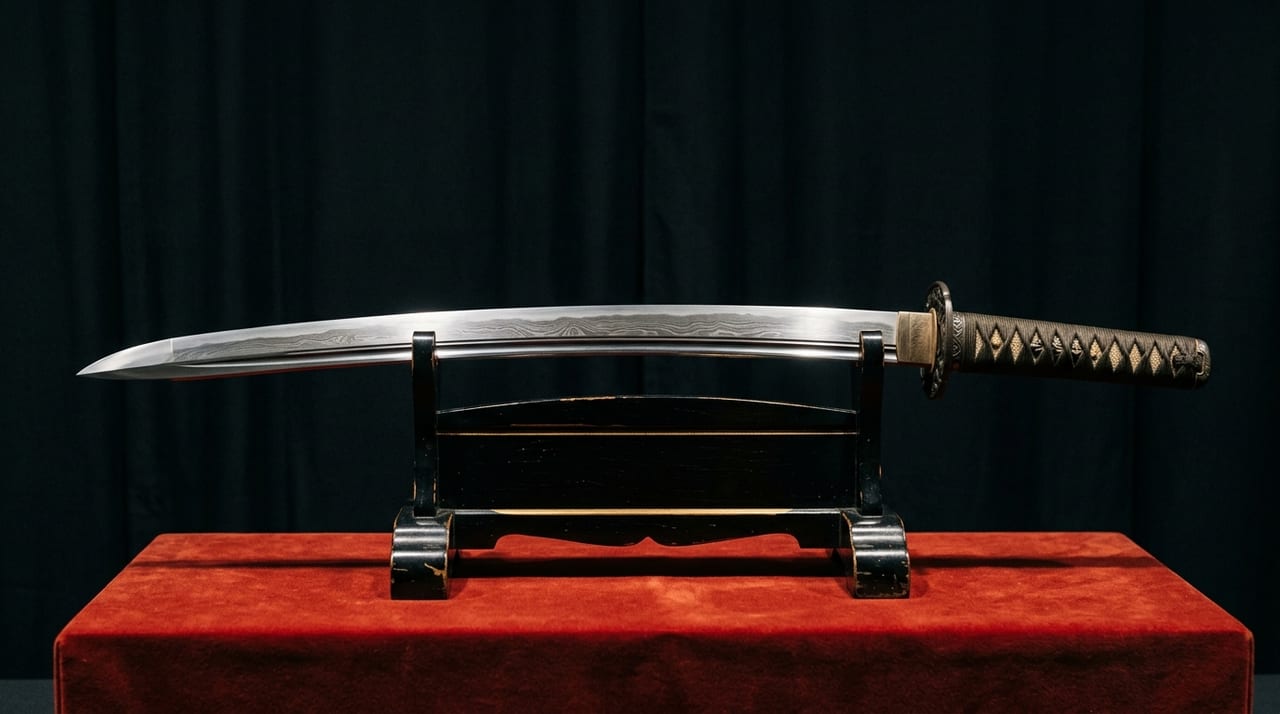 * Image is for illustrative purposes only.
Table of Contents
What Is Kogarasu-maru-zukuri?
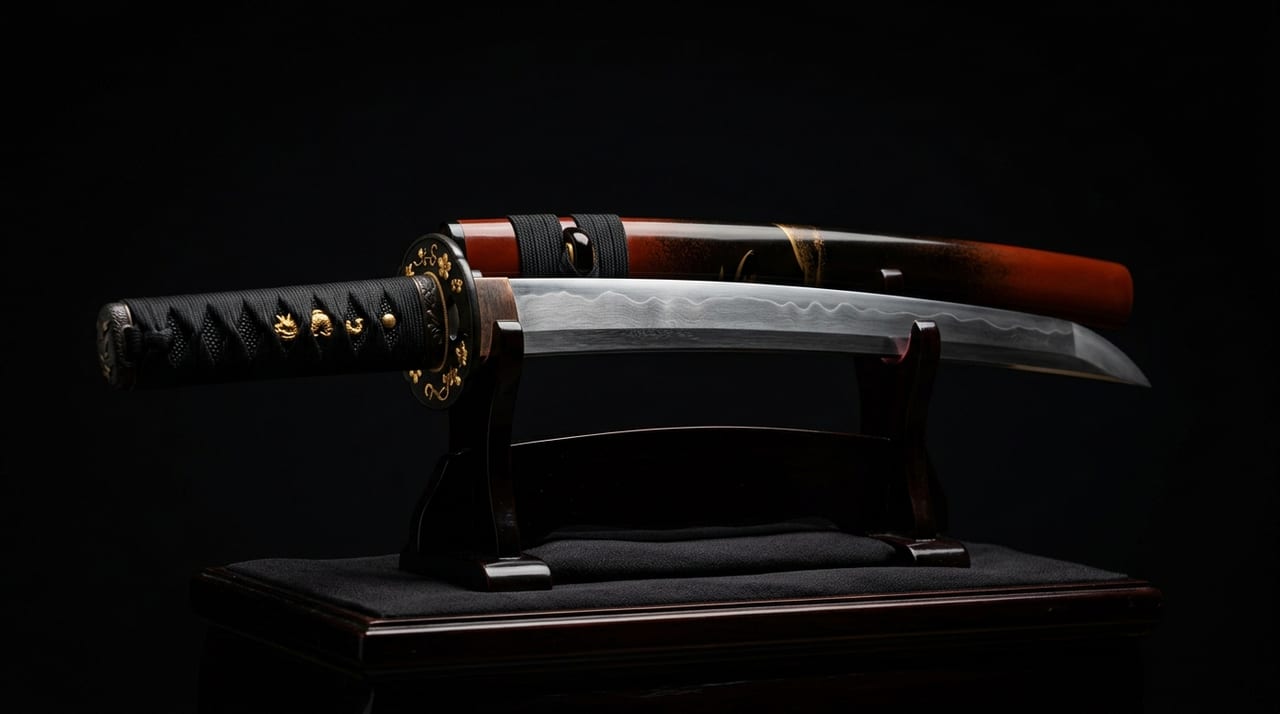
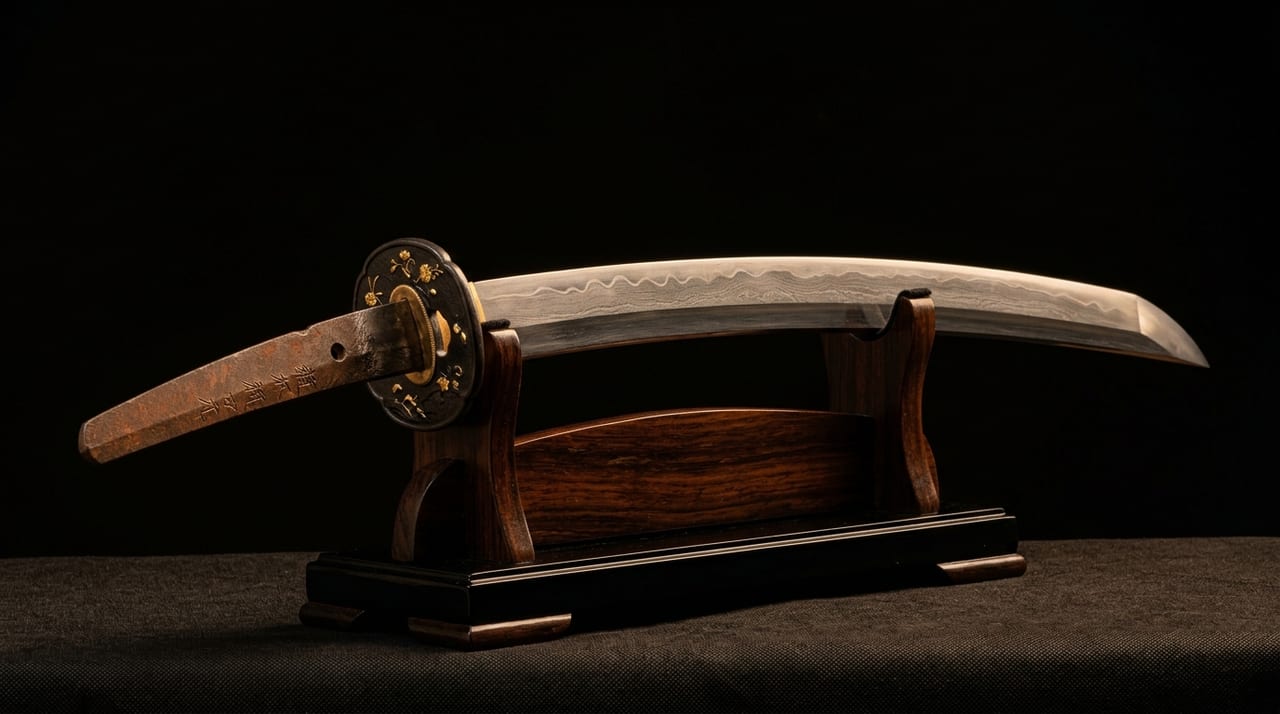
Kogarasu-maru-zukuri is one form of Japanese sword construction (tsukurikomi), and its name derives from the famous Heian-period sword Kogarasu-maru. The defining characteristic of this form is that the front half of the blade, from the kissaki down to the monouchi (striking zone), is double-edged (moroha), while the rear half near the nakago is single-edged — that is, the construction of an ordinary Japanese sword.
As an intermediate form between the double-edged structure of ancient straight swords (chokuto) and the single-edged curved sword established from the Heian period onward, it is regarded as an exceptionally rare construction that embodies a "transitional sword form." The number of surviving kogarasu-maru-zukuri swords in all of Japan is said to be fewer than several dozen, making them especially prized among sword collectors and researchers.
The Origin of the Name: The Legendary Sword Kogarasu-maru
The sword Kogarasu-maru, the origin of the kogarasu-maru-zukuri name, is a kotō said to have been made in the Heian period and is currently held as gyobutsu (imperial collection) of the Imperial Household Agency (entrusted for storage to the National Institutes for Cultural Heritage). According to tradition, Taira no Sadamori received and used it from the court during the subjugation of Taira no Masakado, and the name "Kogarasu" (Little Crow) is said to derive from Yatagarasu, the messenger of Amaterasu. A separate origin legend also holds that a messenger of the Ise Shrine bestowed it upon Emperor Kanmu, but this tradition indicates a mythological provenance and is a distinct account from the matter of its enshrinement.
The Kogarasu-maru held by the Imperial Household Agency is a tachi with a nagasa of 62.8 cm and a sori of 1.2 cm, and is double-edged for approximately the first one-third of the blade from the kissaki. The form of this actual sword became the origin of the name and definition of the sword construction called kogarasu-maru-zukuri.
Structural Details
Examining the blade structure of kogarasu-maru-zukuri in detail, the following characteristics stand out.
| Item | Details |
|---|---|
| Form of the kissaki | Unlike the kissaki of an ordinary Japanese sword (inokubi-kissaki, o-kissaki, chu-kissaki), the kissaki has edges on both sides, known as "moroha" (double-edged). This is also interpreted as a vestige of the ancient double-edged straight sword (ken). |
| Position of the hamachi | The hamachi — the boundary between the edge and the nakago — exists as in an ordinary Japanese sword, but ahead of the monouchi the opposite side (the mune side) also has an edge applied. |
| Shape of the sori | Most surviving kogarasu-maru-zukuri swords have koshi-zori as seen in Heian-period tachi, considered a vestige of the transitional period from straight to curved swords. |
| Jihada and hamon | Many are Heian-Kamakura works, and the jihada frequently has the kotō-like grain of flowing o-itame or masame. The hamon is primarily ko-midare (small irregular pattern) or suguha, with a character different from the bold hamon of later periods. |
Historical Context
The background to the emergence of kogarasu-maru-zukuri lies in the technical experimentation that accompanied the formation of the Japanese sword. The prevailing theory is that kogarasu-maru-zukuri, which combines the features of both, was produced temporarily during the process by which the double-edged straight sword (ken) introduced from the continent transformed, throughout the Heian period, into a single-edged curved sword suited to mounted combat.
Records show that moroha-zukuri (double-edged construction) swords were used as official weapons from the late Nara period through the early Heian period, and kogarasu-maru-zukuri can be seen as a sword form in that lineage. From the mid-Heian period onward, the single-edged curved sword became completely dominant, and kogarasu-maru-zukuri virtually disappeared.
Surviving Kogarasu-maru-zukuri Swords
The number of kogarasu-maru-zukuri swords confirmed to exist today is extremely limited, including some designated as kokuhō (National Treasure) or jūyō bunkazai (Important Cultural Property). They are occasionally displayed in special exhibitions at the Tokyo National Museum and at sword museums around the country, and opportunities to see the originals are rare.
They are virtually never bought or sold privately, and given their rarity and historical value, if one were to come to market it would attract significant attention both in Japan and abroad.
Appraisal Points
When appraising kogarasu-maru-zukuri, the extent and finish of the double-edged section at the kissaki is of paramount importance. Since there is a possibility that "altered pieces" exist on which double-edging was intentionally added in later times, a comprehensive judgment is required, taking into account the condition of the nakago, the color of the rust, and the consistency of the mei with the period. In the NBTHK kanteisho (appraisal certificate) as well, the official recognition of its rarity is established by the explicit notation of "kogarasu-maru-zukuri" in the tsukurikomi entry.
Conclusion
Kogarasu-maru-zukuri is a witness to the age when the Japanese sword was still oscillating between "ken" (sword) and "to" (blade). In the modern era, its rarity gives it a special place as an object of study and appreciation, and it is a sword form that is indispensable in any account of the history of the Japanese sword's formation.
The original Kogarasu-maru, as gyobutsu (imperial collection) of the Imperial Household Agency, is ordinarily not open to the public, but its existence is widely cited by specialists as a reference point for the study of Japanese swords. This sword form, which condenses into a single blade the transformation of sword technology as it transitioned from ancient to medieval times, continues to be an inexhaustible subject of inquiry not only for collectors but also for historians and art historians. This is the reason why it is said that to hold a single kogarasu-maru-zukuri sword is tantamount to touching the very moment of the birth of the Japanese sword. Because of its rarity, the discovery of a previously unknown surviving example becomes major news that captures the attention of the entire sword world.