The Meiji Restoration and the Haitō Edict (廃刀令)—The Devastating Blow Modernization Inflicted on the Japanese Sword Industry and Its Revival
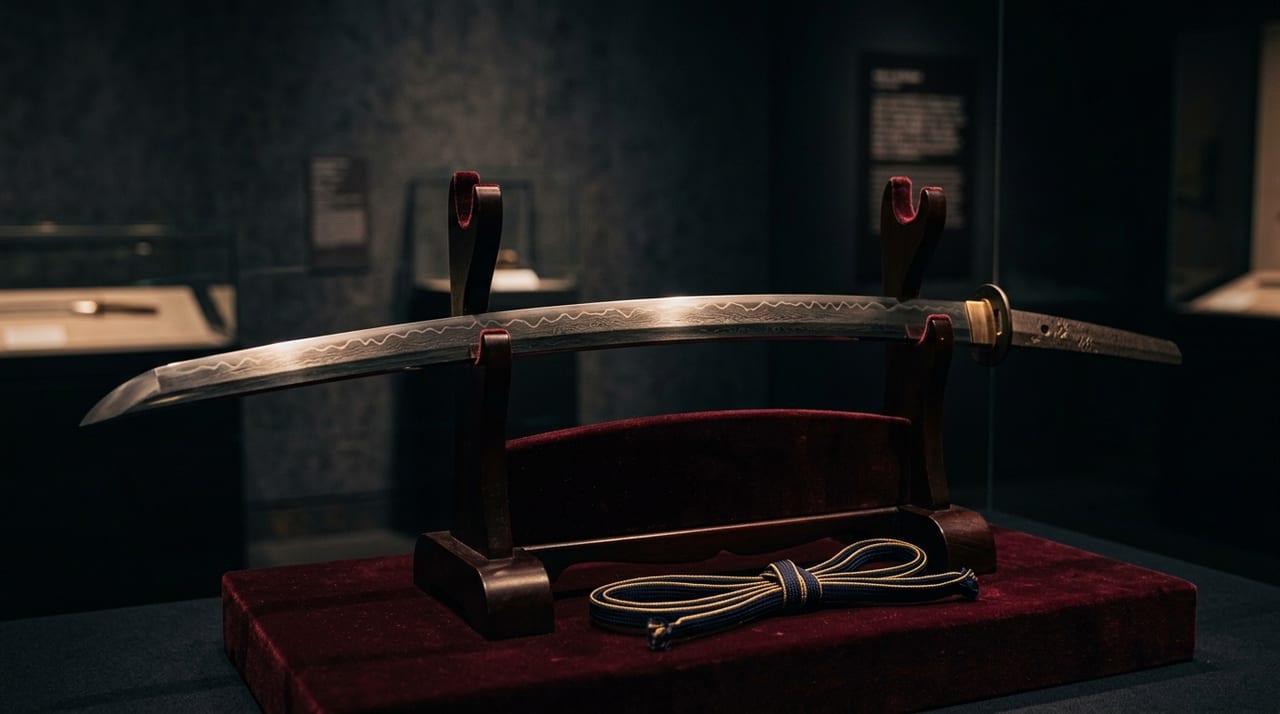 * Image is for illustrative purposes only.
Table of Contents
The Eve of the Edict on the Abolition of Swords—The Meiji Restoration and the Dissolution of the Samurai Class
The Meiji Restoration of 1868 (Meiji 1) was a political revolution that transformed the structure of Japanese society from its foundations. As the Tokugawa shogunate collapsed and a new government centered on the Emperor was established, institutional reforms that questioned the very existence of the samurai class were implemented one after another. With the Abolition of the Han System (1871), samurai in each domain were redefined as "shizoku" (members of the former samurai class), and the right to wear swords—which had been the symbol of the samurai—began to be undermined.
For the new government, the abolition of sword-wearing was not merely a symbolic act, but an essential condition for establishing a modern conscript military. To abolish the privileged right to bear arms exclusive to samurai and to organize a new military under the principle of universal military service, it was necessary to exclude the existence of sword-wearing shizoku from public spaces.
For the samurai, the sword was not merely a weapon, but a spiritual foundation that embodied loyalty, honor, and family status. Being unable to display the sword worn at the waist in public was equivalent to having one's status as a samurai socially denied, and strong resistance and a sense of loss spread among the shizoku. On the other hand, the new government believed that in order to build a modern nation capable of dealing with foreign powers as equals, a transition from weaponry based on social status to military power centrally managed by the state was essential. Giving up swords was also an event symbolizing the end of the samurai status system itself.
The Promulgation of the Edict on the Abolition of Swords (1876) and Its Devastating Impact
On March 28, 1876 (Meiji 9), the "Edict on the Abolition of Swords" was promulgated as Dajōkan Proclamation No. 38. This law was essentially a complete prohibition on wearing swords in public, regardless of whether one was a commoner or shizoku, and it dealt a devastating blow to the sword industry. The samurai and shizoku classes, who had constituted the majority of demand, were suddenly removed from the list of major customers, and the new demand for swords essentially vanished.
Many sword smiths were forced into bankruptcy, and the hundreds of forges that had existed throughout the country during the Edo period were rapidly closed. The livelihoods of related craftspeople, such as sword-fittings makers, polishers, and scabbard makers, also became untenable, and the entire Japanese sword industry faced an existential crisis.
The "Shinpuren Incident in Kumamoto" (October of the same year) and the "Satsuma Rebellion" of 1877, which occurred as resistance to the Edict on the Abolition of Swords, were the last armed resistance against the extinction of samurai values, but both were suppressed by the modern conscript military. With the defeat and death of Saigō Takamori in the Satsuma Rebellion, samurai culture centered on the sword came to a practical end.
However, the Edict on the Abolition of Swords included an exception clause that permitted sword-wearing only in cases where formal court dress was worn or when military personnel and police officers wore uniforms while performing official duties. This changed the social meaning of sword-wearing from a private custom that anyone could perform according to their status to a practice permitted only in specific official positions, as part of uniforms and formal dress. For ordinary shizoku, who had been the bearers of sword demand, the very fact that they could no longer display the sword that had naturally hung at their waist in public was a confrontation with the practical extinction of the samurai status. Inventory and works-in-progress that had been stored at forges also lost their outlets, making it even more difficult to continue business operations.
The Suffering of Sword Smiths and Career Changes—The Reality of Industrial Collapse
The situation of sword smiths after the Edict on the Abolition of Swords became extremely serious. In major sword-producing regions such as Bizen (Okayama), Mino (Gifu), Settsu (Osaka), and Musashi (Tokyo), the majority of sword smiths were forced into bankruptcy or career changes.
| Former Province Name (Production Area) | Current Prefecture |
|---|---|
| Bizen | Okayama |
| Mino | Gifu |
| Settsu | Osaka |
| Musashi | Tokyo |
Some sword smiths switched to making everyday items such as agricultural tools, sickles, and kitchen knives, but these did not allow them to make use of their skills as makers of art swords. Even sword smiths who tried to maintain their techniques found that apprentices did not gather, and they faced a crisis of rapidly losing traditional sword-forging techniques. The demand for military swords (military ceremonial swords) maintained by the Meiji government was for items mass-produced on modern Western-style manufacturing lines, and this was a different path from traditional art sword-making techniques.
There were many who, born into sword smith families, abandoned the idea of continuing the family trade and turned to entirely different occupations. The sword-forging process, which had been transmitted from master to apprentice through oral tradition and technique over many years, was difficult to recreate once it was interrupted, and in some regions, the lineage of techniques themselves was lost. Nevertheless, the fact that sword smiths continued to be scattered throughout various regions, trying in some form to maintain the technique of forging swords, became the foundation that made the later revival of sword-smithing as art swords possible.
Late Meiji Period Recognition of Cultural Assets and the Re-evaluation of Art Swords
Beginning in the 1880s (Meiji 20s), roughly twenty years after the Edict on the Abolition of Swords, social recognition of Japanese swords began to shift from "weapons" to "art objects and cultural assets." The Law for the Preservation of Ancient Shrines and Temples (1897, Meiji 30) and cultural heritage protection movements coordinated with the establishment of the Imperial Museum (now the Tokyo National Museum) led this change.
Around the beginning of the Taisho era (1911–1912), the "Japanese Sword Preservation Society" was established, and systematic efforts to protect and authenticate swords with high artistic value began. Note that 1906 (Meiji 39) was the year that Gassan Sadakazu (first generation) was appointed as an Imperial Craftsman, which differs from the founding year of the Japanese Sword Preservation Society. During this period, some sword smiths—particularly those with connections to the imperial court and influential figures—resumed activities as "art sword smiths" and worked to pass on traditional techniques. Gassan Sadakazu (first generation, Imperial Craftsman) is known as a representative revivalist of this period. Miyairi Yukihira (1913–1977) was a sword smith and holder of important intangible cultural property of the Showa period, not a figure from the late Meiji period.
Re-evaluation as art objects and cultural assets did not merely mean that the ownership and appreciation of swords became permissible; it meant that value criteria that were not necessarily foregrounded when swords were functional weapons—such as the working of the jigane, the beauty of the hamon, and the symmetry of the form—came to be emphasized. Rather than cutting edge or strength, the aesthetic sensibility expressed in sword-forging technique itself came to be placed at the center of evaluation, and this shift in values is what opened a new path for sword smiths who had lost demand due to the Edict on the Abolition of Swords to continue their activities as art sword smiths.
Revival in the Taisho and Early Showa Periods and Post-war Restart
From the late Meiji period through the Taisho era, Japanese swords were re-evaluated in a nationalist context as "symbols of the bushido spirit." However, the increased demand accompanying the rising militarism of the early Showa period was centered on military sword production, which differed from the direction of traditional art swords.
After World War II, a devastating situation occurred again due to the weapons confiscation order by the GHQ (1945–1946), but because recognition as cultural assets had become established, some art swords were protected. Following cultural asset protection measures in 1948, a protection framework was established by the Society for the Preservation of Japanese Art Swords (NBTHK, established in 1948), and the sword industry has maintained its existence to the present day.
The demand for military swords and traditional sword-forging techniques pursuing value as art objects were distinct in purpose and evaluation standards, and this was also a period in which these two streams coexisted without being confused. In the post-war weapons confiscation, the fact that swords recognized as art objects and cultural assets could become objects of protection shows that the accumulated recognition from after the Edict on the Abolition of Swords that "swords are not weapons but art objects" supported the very survival of Japanese sword culture.
The revival of the Japanese sword industry, which survived a historical rupture with the Edict on the Abolition of Swords, became possible against the background of a civilizational transformation—the "artistic transformation of weapons." Without this transformation, the survival of Japanese sword culture in modern times would not have been possible.
Meaning for Contemporary Enthusiasts and Collectors
The shift in recognition from "weapons to art objects" that has continued from the Edict on the Abolition of Swords to the present day defines the very character of Japanese swords currently in circulation. Most Japanese swords handled in the market are positioned not as weapons intended for actual combat, but as art objects for appreciating artistic value such as sword-forging technique, jigane, and hamon.
The mechanism that objectively substantiates such value as art objects is authentication by the Society for the Preservation of Japanese Art Swords (NBTHK), already mentioned. A sword with an NBTHK certificate of authenticity indicates that it has undergone examination by a specialized institution and that its authenticity and artistic value have been confirmed, making it an important factor in selecting swords of unknown provenance.
Japanese swords that have been inherited to this day, having overcome the existential crisis of the industry posed by the Edict on the Abolition of Swords, are not merely old tools, but cultural assets that have been preserved through the efforts of countless sword smiths, craftspeople, and preservation specialists.