Sword Abolishment Edict (Haitōrei) (1876) — The Truth Behind the Ban on Wearing Swords and Why the Japanese Sword Survived
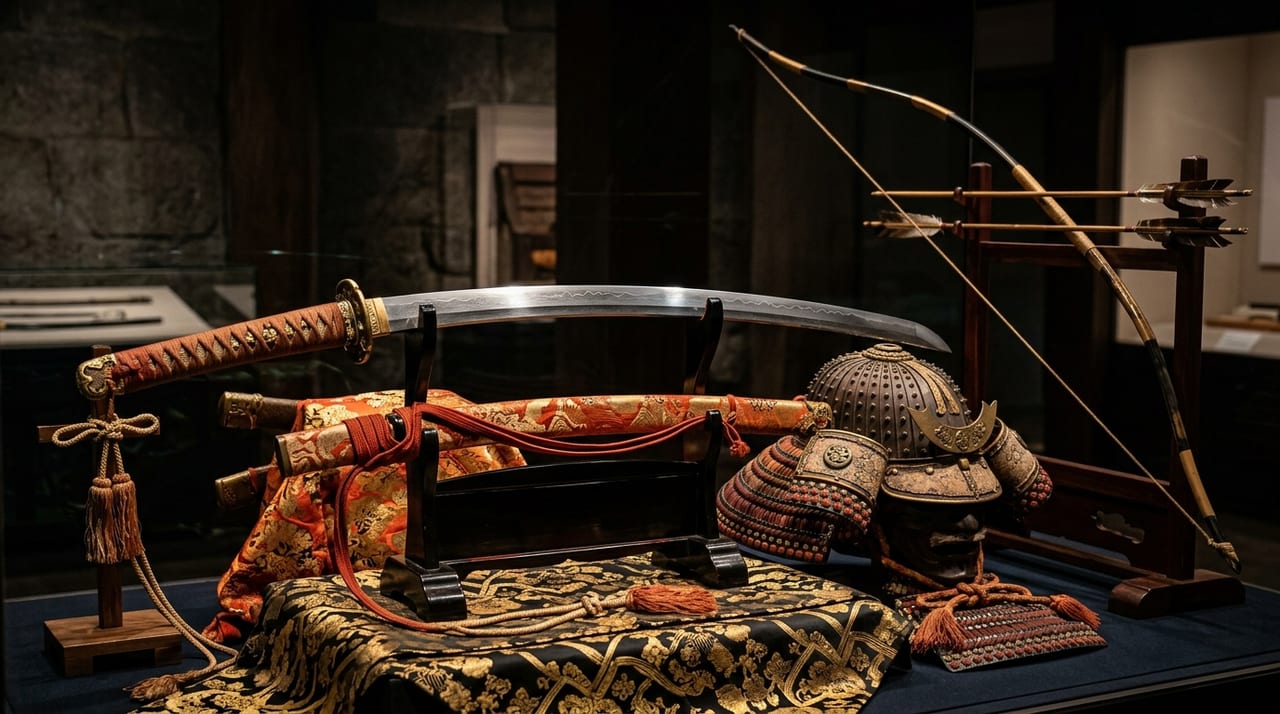
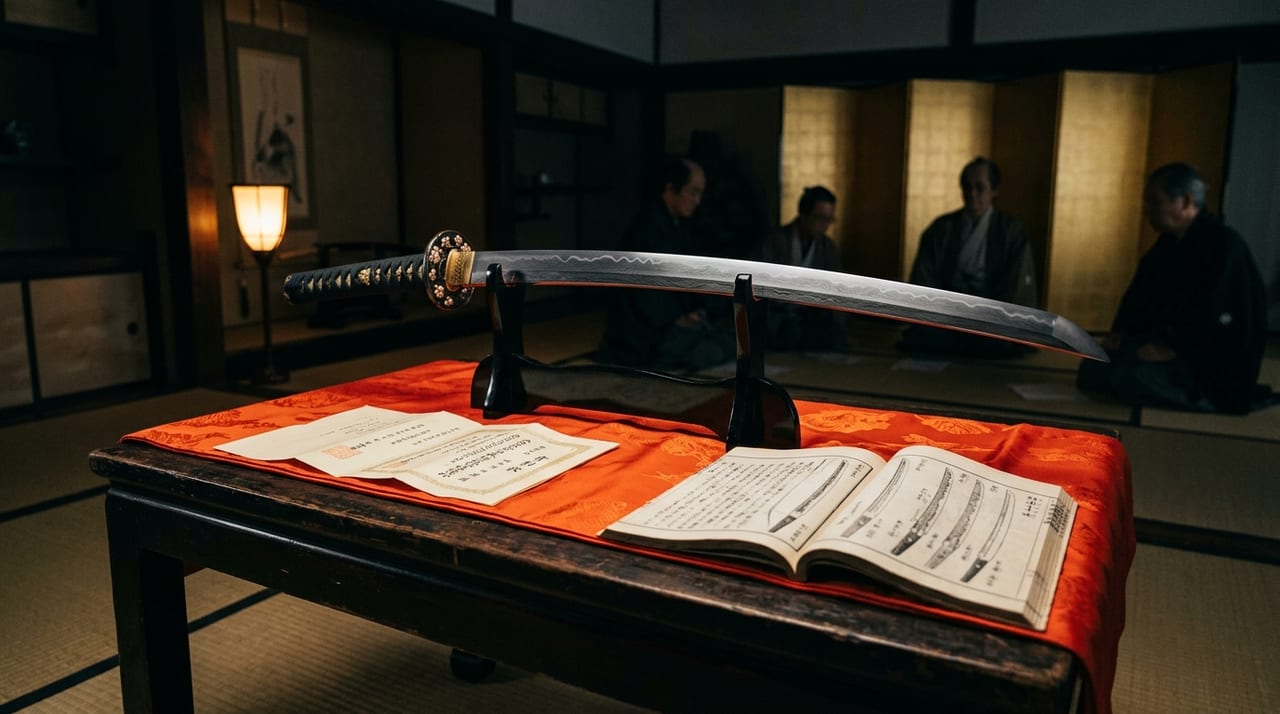
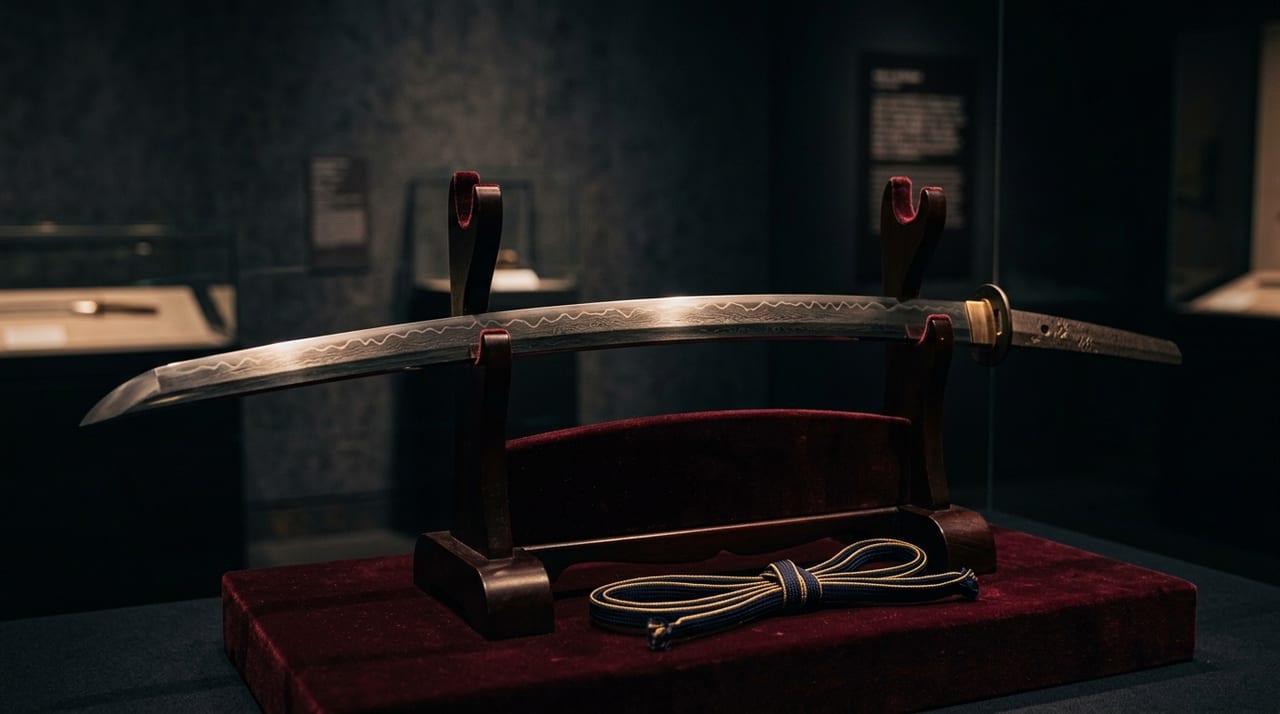
 * Image is for illustrative purposes only.
Table of Contents
The Shock of the Sword Ban — 1876, the Day the Samurai's Soul Was Taken
On March 28, 1876 (Meiji 9), the Meiji government issued the Haitōrei (Sword Abolition Edict). Its formal title is "Taireifuku narabini Gunjin Keisatsu Kanri tō Seifuku Chakuyō no Hoka Taitō Kinshi no Ken" (Dajōkan Proclamation No. 38 of Meiji 9). Put simply, it was a law that "forbids Japanese people from going out with a sword at the waist, with exceptions such as soldiers and police officers."
The law came only eight years after the Meiji Restoration (1868). In a Japan where the samurai had made the wearing of swords part of their identity and called the sword "the soul of the samurai," the law was not merely a weapons regulation but meant a fundamental transformation of the social order itself.
The following year, in 1877 (Meiji 10), Saigō Takamori and samurai of Kagoshima rose in rebellion, and the Seinan War broke out.
The Background of the Haitōrei — The Road to a Modern State
Why did the Meiji government enact the Haitōrei? Behind it lay the logic of the "civilization and enlightenment" (bunmei kaika) and "rich country, strong army" (fukoku kyōhei) policies pursued after the Meiji Restoration.
Equality of the Four Classes and the Dismantling of Samurai Privilege
Society in Edo-period Japan was stratified by the status system of "samurai, farmers, artisans and merchants" (shi-nō-kō-shō). The samurai, as the highest class, held the privilege of wearing swords. Wearing swords was a right reserved for the samurai, and commoners who carried swords were punished.
The Meiji government carried out the "return of the domain registers" (hanseki hōkan) in 1869 (Meiji 2) and the "abolition of the domains and establishment of prefectures" (haihan chiken) in 1871 (Meiji 4), dismantling the domains and centralizing power. In parallel, it proclaimed the principle of the "equality of the four classes" and dismantled the status system. In this context, the samurai's privilege of wearing swords came to be seen as an "old privilege" to be abolished.
The Creation of a Modern Army and the Contradiction of Wearing Swords
In 1873 (Meiji 6), the Meiji government enacted the Conscription Ordinance (chōheirei), introducing a modern conscription system that applied to the whole nation, commoners included. A modern army relies not on swords but on modern weapons such as rifles and artillery. In this context, samurai walking the streets with swords at their waists appeared as a "pre-modern" practice incompatible with the modern military system.
Public order in the early Meiji years, when violent incidents by disaffected samurai followed one after another, also pushed the government toward the Haitōrei. The Saga Rebellion of 1874 (Meiji 7) and unrest among disaffected samurai in various regions posed an armed threat to the government, and the ban on wearing swords also had the character of a public-order measure.
Presenting Itself as a Modern State
The Haitōrei belonged to a series of policies that removed the wearing of swords as a symbol of status and shaped Japan's institutions as those of a modern state.
The Content and Scope of the Haitōrei
The Haitōrei (Dajōkan Proclamation No. 38 of Meiji 9) banned the wearing of swords except in the following cases:
- When wearing full ceremonial dress (taireifuku)
- When soldiers, police officers, officials and the like are wearing their uniforms
In other words, outside these cases everyone, including the former samurai class, was forbidden to walk in public with a sword at the waist.
The Haitōrei prohibited the wearing of swords; it did not prohibit owning, buying, selling or collecting swords as such.
The Blow the Haitōrei Dealt to the Sword Trade
The economic blow of the Haitōrei was severe.
Many Edo-period tōkō (swordsmiths) worked as domain-appointed swordsmiths (goyō tōkō), receiving patronage and stipends and forging swords for samurai demand. The Haitōrei swept that demand away at a stroke.
With the ban on wearing swords, new demand for practical swords all but disappeared, and the domain-appointed swordsmith system had already been dismantled by the abolition of the domains. Many tōkō were forced to change their trade.
In addition, in the social climate after the Haitōrei, swords were increasingly discarded and disposed of as "relics of the old era." Swords handed down as family treasures of samurai houses were sold for cash or thrown away in case after case.
The "Rediscovery" of the Japanese Sword — A Survival Strategy as Art
Yet the Japanese sword did not disappear. After the Haitōrei, efforts by people seeking to protect sword culture began.
Redefinition as Art and Craft
Japan took part in the Philadelphia Centennial Exhibition of 1876 (Meiji 9), where it had its own pavilion, and exhibited actively in the field of fine arts and crafts at the Paris Exposition of 1900 (Meiji 33). For the Paris Exposition, 23 artists, chiefly Imperial Household Artists, created works at the request of the Imperial Household Ministry.
Imperial Household Artists (Teishitsu Gigei-in) were artists and craftsmen appointed from 1890 (Meiji 23) to 1944 (Shōwa 19) to encourage and support the arts. Among swordsmiths, Gassan Sadakazu I and Miyamoto Kanenori were appointed in 1906 (Meiji 39).
Sword Research and Preservation Organizations
From May 1898 (Meiji 31) to April 1903 (Meiji 36), Betsueki Nariyoshi and Imamura Chōga lectured on swords at the Yūshūkan, and the records were compiled as Tōken Kōwa (Lectures on Swords). After the Second World War, in 1948 (Shōwa 23), the NBTHK (Society for the Preservation of Japanese Art Swords) was founded to preserve, appreciate, study and pass on the tradition of the Japanese sword as a work of art and craft.
Designation as National Treasures and Important Cultural Properties
Through the Ancient Shrines and Temples Preservation Law (Koshaji Hozon-hō) of 1897 (Meiji 30) and the National Treasures Preservation Law of 1929 (Shōwa 4), outstanding swords were designated National Treasures (kokuhō) and came under state protection.
Postwar Swordsmithing and Living National Treasures
After the Second World War, Japanese swords were regarded as weapons and became targets of confiscation by the occupation forces. Today, anyone who wishes to make swords of value as works of art must, under Article 18-2 of the Firearms and Swords Control Act, obtain approval from the prefectural board of education for each sword.
Some postwar swordsmiths have been recognized as holders of the Important Intangible Cultural Property "Japanese sword" (Living National Treasures), among them Miyairi Yukihira, Sumitani Masamine (recognized in 1981, Shōwa 56) and Amata Akitsugu (recognized in 1997, Heisei 9).
What the Haitōrei Left Behind — The Modern Framework of Sword Regulation
Even today, 150 years after the Haitōrei, strict legal rules govern the possession, carrying, sale, export and import of Japanese swords.
Under the Firearms and Swords Control Act (Jūhō Tōkenrui Shoji tō Torishimari-hō, or Jūtōhō), possession of swords is prohibited in principle; swords of value as works of art may be owned once registered with the prefectural board of education.
Why Did the Meiji Government Issue the Haitōrei?
In August of the same year, 1876 (Meiji 9), the Kinroku Kōsai Shōsho Hakkō Jōrei ended the payment of hereditary stipends to the samurai class, issuing government bonds in their place (chitsuroku shobun). What the Haitōrei banned was the wearing of swords; it did not forbid keeping swords at home or appreciating them indoors.
Who Were the Exceptions to the Haitōrei?
The Haitōrei permitted the wearing of swords only with full ceremonial dress and when soldiers, police officers, officials and the like wore their uniforms. Owning swords privately and appreciating them indoors were not prohibited.
How Many Swords Were Lost?
There are no precise statistics. After the Second World War, Japanese swords were regarded as weapons and became targets of confiscation by the occupation forces, which was another cause of losses.
Impact on Modern Collectors
To export a registered sword from Japan, the owner applies to the Agency for Cultural Affairs for an Export Inspection Certificate for Antique Art Objects (kobijutsuhin yushutsu kansa shōmei), which customs may require, and after export returns the registration certificate to the prefectural board of education that issued it. Be cautious of sellers who cannot explain these documents.
Conclusion — What the Haitōrei Paradoxically Preserved
The Haitōrei dealt a severe blow to Japanese sword culture, yet ironically it also became the occasion for redefining swords from "weapons" to "works of art." Precisely because swords lost their military and practical value, their aesthetic, historical and cultural value came to the fore.
The ban on wearing swords led many tōkō to change their trade. Yet at the same time, the tōkō, swords and scholars who survived established the recognition that "the Japanese sword is a work of art" and laid the foundation of today's sword culture.
The Haitōrei, while ordering the death of the Japanese sword, prepared its eternal life — so one might say.