The Toi Invasion of 1019 and Japanese Swords: How Kyushu Warriors Repelled the Jurchen Raiders
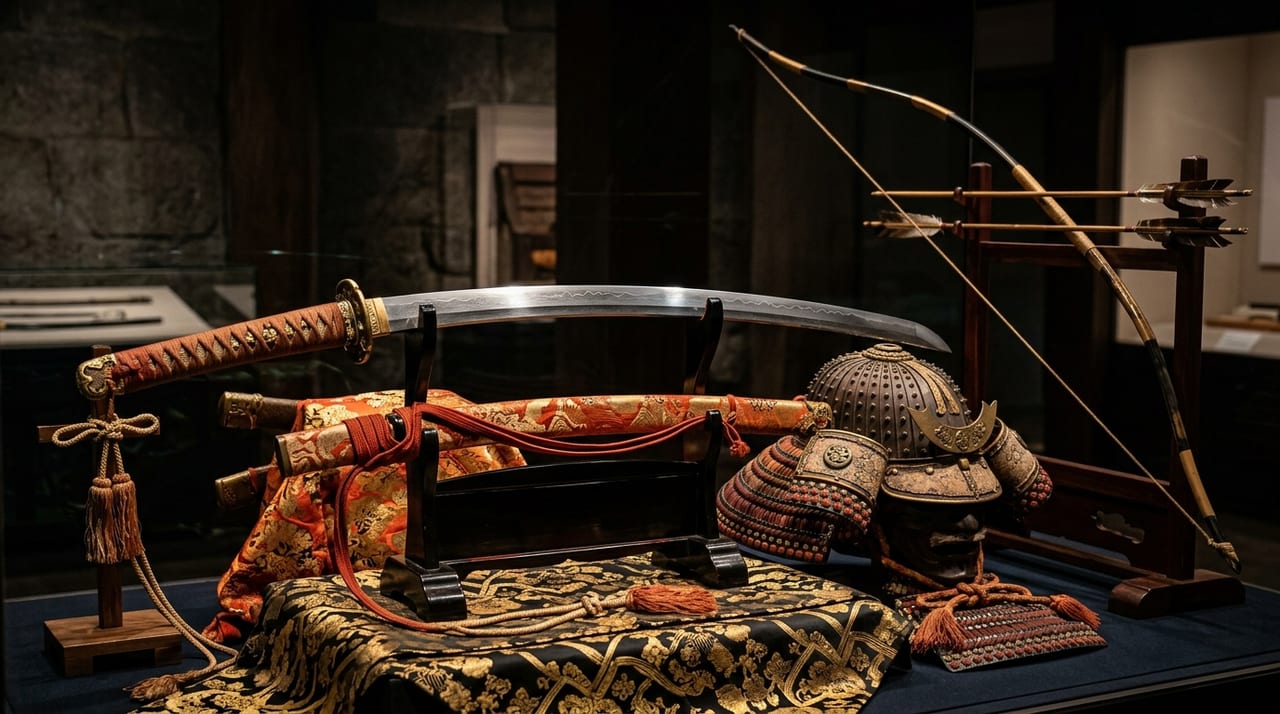 * Image is for illustrative purposes only.
Table of Contents
What is the Toi? — The Northern Kyushu Invasion of Kanjin 3 (1019)
From March to April of Kanjin 3 (1019), an armed group that Japanese historical records refer to as the "Toi" made incursions along the coasts of Tsushima, Iki, and Hakata Bay in Chikuzen. The Toi are believed to have been a Jurchen-related group, specifically a faction of the forces that were ravaging the eastern coast of the Korean Peninsula at that time, which organized a fleet of several dozen vessels and advanced to the Japanese coast. Records from contemporaneous nobles, including Fujiwara Sanesuke's diary the Shouyuki, document that many islanders in Tsushima and Iki were killed or abducted, and houses and fields were burned. For the aristocratic society of Heian-kyo, although this incident occurred in the distant Kyushu, the shock of an armed group directly landing from across the sea reached the capital. While there is debate among scholars about which specific group the Toi refers to, the widely shared view is that they were a faction of maritime powers active along the coasts of northeastern Asia at that time.
Progression of the Incident
The progression from the Toi's arrival to their repulsion is said to have proceeded roughly in the following sequence.
- Attacks on Tsushima and Iki and the resulting casualties
- Attempted landings along the Hakata Bay coast (Chikuzen Province)
- Emergency mobilization of local samurai by the Dazaifu authorities
- Engagement along the Hakata Bay shore and repulsion of the Toi fleet
- Pursuit of the retreating fleet and its mopping-up by Goryeo naval forces
Because the situation unfolded rapidly, a major characteristic of this incident is that the matter was settled by local forces before regular punitive forces from the capital could arrive. It is said that by the time urgent reports reached Heian-kyo, the fighting along Hakata Bay had already concluded, and the central government is believed to have fully grasped the situation only after the incident was largely resolved.
Fujiwara Takauji and the Dazaifu Defense System
At that time, Fujiwara Takauji oversaw the practical operations of the Dazaifu. Although a member of the regent family (Sekkan), Takauji was stationed there as the vice governor of the Dazaifu, and upon receiving urgent reports of the Toi invasion, he mobilized samurai and district officials within the Dazaifu to defend the Hakata Bay coast. Another distinctive feature of this battle is that local samurai groups and nobles organized their private military forces to meet the attack, rather than relying on regular troops dispatched from the center. The Dazaifu forces engaged the Toi landing troops along the Hakata Bay shore and ultimately succeeded in repelling them.
Records show that after the battle, discussions arose at court regarding rewards for the warriors who had participated in the defense. Since combat was conducted with local forces mobilized at Takauji's discretion before formal imperial mandate (court orders for deployment) were issued, a procedural question arose in aristocratic circles about whether the usual framework for merit-based rewards could be applied. It is said that promotions in rank and conferral of honors were ultimately bestowed on those who had participated in the defense, and this series of exchanges constitutes an interesting case study demonstrating how the relationship between provincial military action and central control was understood at the height of the Heian period.
Tachi and Bows Supporting the Samurai Groups
The main force in this battle consisted of private soldiers led by district officials and nobles within the Dazaifu, in other words, armed groups that represented the prototype of later samurai. Descriptions of weapons in historical records suggest both long-range combat using bows and arrows and close-range use of tachi. This period of the Heian era was still a stage when the transition from straight swords to curved tachi was in progress, and it is believed that the swords used in actual combat were ancient-style tachi with slight curvature, differing in form from the Japanese swords imagined today. The Toi invasion is positioned as an early case study of local samurai fighting systematically with self-provided weapons and achieving results.
Positioning in Sword History and the Limits of Historical Sources
Although the Toi invasion itself was concluded in a short period, the historical significance of this incident is not insignificant. The fact that homeland defense was accomplished through the prowess of local samurai rather than central regular forces aligns with the trend of the warrior class gaining political influence from the middle Heian period onward. The aristocratic society, including Fujiwara Takauji, is said to have reaffirmed the utility of provincial military power through this incident. From the perspective of sword history, the tachi of this period possessed both the character of ritual and prestige goods and that of actual combat weapons, and records of actual combat such as the Toi invasion serve as one piece of evidence supporting the fact that Heian-period tachi were more than mere ornamental items.
On the other hand, records concerning the Toi invasion center on aristocratic diaries and official documents such as the Shouyuki and Nihon Kiryaku, and no historical sources remain that can specifically identify the detailed course of battle or the signatures and makers of tachi actually used. There are various theories about the full extent of damage to Tsushima and Iki at that time and the exact troop strength of the Dazaifu forces, making it difficult to state definitive numbers. When discussing the Toi invasion in the context of sword history, rather than tracing the provenance of individual swords, it is appropriate to understand it as part of a broader historical picture of how samurai groups of the middle Heian period engaged in actual combat. While often compared to the Mongol invasions some one and a half centuries later, the Toi invasion differs significantly in character in that it was not a regular defense mobilization by the state but was led primarily by provincial local forces, and it holds a unique position in understanding the true nature of samurai in the Heian period. It should not be overlooked that Kyushu's geographical location made it particularly susceptible to direct influence from continental and peninsular affairs, serving as a backdrop for this incident occurring in northern Kyushu. One aspect of why the Dazaifu continued to play a unique role in both diplomacy and defense throughout the Heian period can be attributed to the accumulated practical experience in coastal defense.