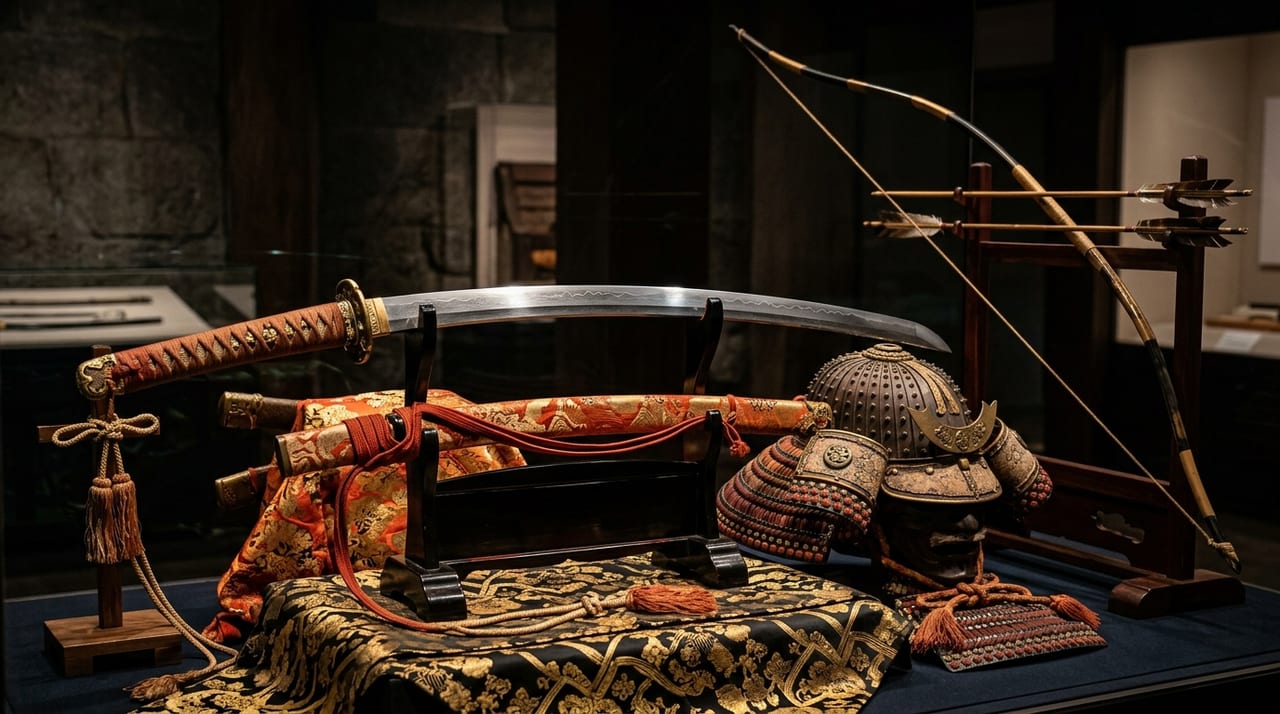
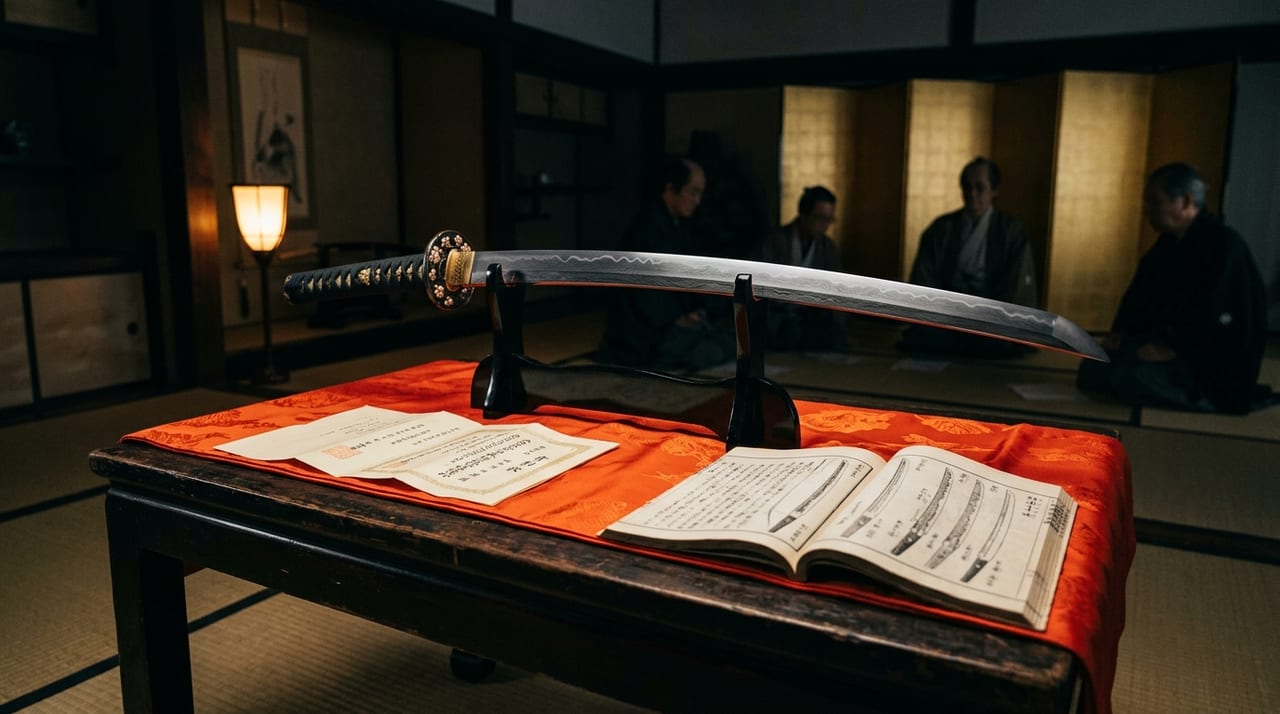
The Johei-Tengyo Rebellion (939-941) and Japanese Swords: How the Uprisings of Masakado and Sumitomo Shaped Sword Culture
 * Image is for illustrative purposes only.
Table of Contents
The Shōhei-Tengyō Rebellion——A Turning Point in the Rise of the Samurai Class Across East and West
The Shōhei-Tengyō Rebellion (Jōhei-Tengyō no Ran) is a collective term for two rebellions that occurred simultaneously across eastern and western Japan between 939–941 in the mid-Heian period.
- Rebellion of Taira no Masakado in the East (939–940): An incident in which Taira no Masakado, a samurai who dominated the Bandō region (Kantō), escalated his dispute with provincial governors (kokushi) into a rebellion, proclaiming himself "Shinnō" (new emperor) and declaring an independent kingdom. He was suppressed by Fujiwara no Hidesato and Taira no Sadamori.
- Rebellion of Fujiwara no Sumitomo in the West (939–941): A rebellion in which Fujiwara no Sumitomo, a former government official who commanded pirates of the Seto Inland Sea, attacked provincial government centers in western Japan. It was suppressed by Ono no Yoshifuru and Minamoto no Tsunemoto.
These two rebellions occupy a turning point in the "era of samurai ascendancy"——that is, the process by which Japanese swords transitioned from ornamental items of the nobility to central position as practical weapons for samurai——which is extremely important in the history of Japanese swords.
The Form of Swords at That Time——From Late Jōkotō to Early Kotō
Around 939, when the Shōhei-Tengyō Rebellion broke out, marks a transitional period in Japanese sword chronology from jōkotō (ancient swords) to kotō (old swords).
Form of Jōkotō (Nara to Early Heian Period)
Jōkotō are swords from before the Nara period through the early Heian period, with the following characteristics.
- Chokutō (straight sword): A linear form with little to no curvature in the blade. It was strongly influenced by continental (Korean peninsula and China) sword culture.
- Double-edged or single-edged: Early straight swords existed in both double-edged (ken) and single-edged (katana) forms.
- Diversity of form: Diverse forms coexisted before the later tachi, including warabite-tō, kenuki-gata tachi, and jōkotō.
Swords in the Mid-Heian Period (Era of the Shōhei-Tengyō Rebellion)
The era of the rebellion (first half of the 10th century) was a transitional period when gentle curvature began to emerge in blades. Swords of this period had the following characteristics.
- The emergence of waist curvature: Gentle curvature was beginning to appear in the waist area (near the hilt) of the blade. This was a precursor to the typical "waist curvature" of later tachi.
- Slender profile: Early to mid-Heian swords were generally slender, differing from the grander forms of the later Kamakura period.
- The beginning of practical change: A period when the transition from ceremonial to combat swords accelerated. Large-scale armed conflicts like the rebellions of Masakado and Sumitomo gave strong motivation for swords to require practical durability and cutting performance.
The Rebellion of Taira no Masakado and Sword Culture of the East
The "Warrior Culture" of the Bandō Samurai
Taira no Masakado was the leader of samurai based in the Bandō region (present-day Kantō). In Masakado's era, samurai of the east were already establishing themselves as a warrior culture that wielded "horse, bow, and sword."
Bow primary, sword secondary: The principal weapon of eastern samurai at the time was the bow and arrow. Shooting bows from horseback was the main form of battle, and the sword (tachi) was positioned as an auxiliary weapon used in close combat and melee.
However, this "bow + sword" combination connects directly to later Kamakura samurai culture. Masakado's rebellion played a historical role in forming and strengthening samurai groups in the east, laying the foundation for a unique sword culture in the eastern region (which would later connect to the lineage of Sōshū-den and Edo-era sword smiths).
Swords Used by Masakado
Detailed records of the swords Taira no Masakado actually used do not survive, but as an eastern samurai of the early 10th century, it is estimated that the tachi he wore were of late jōkotō to early kotō form.
Swords spoken of as legendary blades related to Masakado (for example, those said to have been donated to shrines throughout the land as "Masakado's tachi") are often identified by experts as works from the Edo period onward, and no blades confirmed to have actually been used by Masakado are known to survive.
Masakado's Head Mound and Sword Worship
After his defeat, Masakado's head was exposed. His head mound still remains in present-day Ōtemachi, Tokyo (Masakado Mound). Masakado came to be feared in later ages as an onryō (vengeful spirit), and spiritual connections with swords were spoken of. Periodic soul-pacification rituals have been performed at Masakado Mound, and the traditional offering of swords has been carried out.
The Rebellion of Fujiwara no Sumitomo and Sword Culture of the West and at Sea
Seto Inland Sea Pirates and Swords
Fujiwara no Sumitomo was originally a court official (provincial governor's deputy) but became a leader commanding a pirate group in the Seto Inland Sea.
Weapons of pirates appearing in records of the time include bows, swords, and spears. In naval battles of the Seto Inland Sea in particular, swords played an important role in grappling (ship-to-ship contact) combat.
Sword-smith centers of the west: Western regions that were the stage for Sumitomo's rebellion (Ehime, Kōchi, Fukuoka, etc.) were areas where many sword-smith centers would later develop. Bizen (present-day Okayama) already had sword smiths active during this period, and it is estimated that sword demand increased during the period of turmoil around Sumitomo's rebellion.
The Indirect Impact of Sumitomo's Rebellion on the Sword Industry
After Sumitomo's rebellion was suppressed, samurai groups of the west accumulated combat experience, and their demands for swords became more practically sophisticated. This demand is considered to be one of the factors behind the flourishing of Bizen sword smiths in the late Heian to Kamakura periods.
Long-term Impact of the Shōhei-Tengyō Rebellion on the History of Japanese Swords
Samurai Transitioning from "Military Force of the Nobility" to "Independent Warriors"
Before the Shōhei-Tengyō Rebellion, samurai were merely "hired military forces of the imperial court." However, when powerful samurai like Masakado and Sumitomo actually rebelled against the court, awareness spread that "samurai could become dangerous independent entities if not controlled."
Ironically, this led to an "elevation of samurai's value and status," becoming a catalyst for samurai sword culture to be socially valued.
Strengthening of Eastern Samurai Groups and the "Bandō Sword"
After Masakado's rebellion was suppressed, self-aware samurai groups formed in the east (Bandō). This eastern samurai group later became the foundation for Minamoto no Yoritomo and led to the establishment of the Kamakura shogunate.
The sword culture of the east made a significant contribution to the technical development of Japanese swords from the late Heian through the Kamakura period. That Sōshū-den (the major style of swords in the Kamakura period) flourished in the east (Kamakura) is not unrelated to the historical fact that the Shōhei-Tengyō Rebellion strengthened eastern samurai groups.
Acceleration of Geographic Dispersal of Sword Smiths
The turmoil of the Shōhei-Tengyō Rebellion may have accelerated the dispersal of sword smiths from the center (Kyoto and Nara) to the provinces. Samurai groups of the east and west began to protect and support sword smiths in their respective regions, leading to the emergence of provincial sword culture.
Conclusion——How Masakado and Sumitomo's Rebellions Defined the "Samurai's Sword"
The Shōhei-Tengyō Rebellion did not bring direct technological innovation to Japanese swords. However, this rebellion was a historical event that fundamentally changed the "social meaning of samurai bearing swords."
The fact that Masakado proclaimed himself the new emperor and sought to establish an independent government in the east, the fact that Sumitomo raised the flag of rebellion against court rule——these facts planted the recognition in Japanese society that "a samurai's sword is also a symbol of power."
This recognition was deepened through the formation of samurai society over approximately 250 years until the establishment of the Kamakura shogunate (1185), and became one of the distant causes for Japanese swords to come to be culturally and spiritually revered as the "soul of the samurai."