The Unified Aesthetic of the Gotō Family — The Supreme Masters of Tōsōgu, Seventeen Generations from Muromachi to Bakumatsu
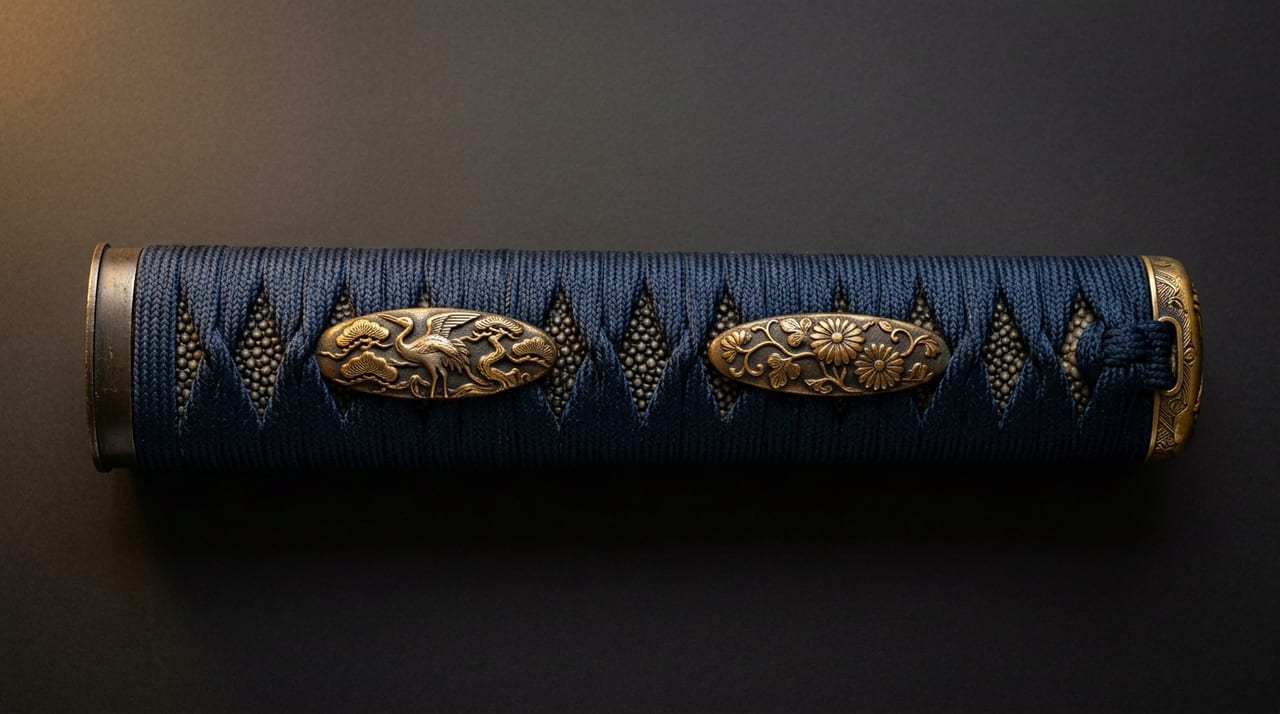 * Image is for illustrative purposes only.
Table of Contents
The Founding of the Gotō Family — Ties to the Muromachi Shogunate
The founder of the Gotō family, Gotō Yūjō (1440–1512), was a metalsmith who served the Ashikaga shogunal family of the Muromachi shogunate. By serving as official craftsmen to the shogunal family, the Gotō family gained nationwide renown and established the form of "Gotō-yagu."
Yūjō is one of the earliest Japanese metalsmiths whose dates of birth and death are clearly documented and whose works survive in relatively large numbers. The late Muromachi period in which he lived was an era when shogunal authority was shaken by the aftermath of the Ōnin War (1467–1477), yet the court-noble and warrior culture of Kyoto deepened its own refinement. The role Yūjō played as the shogunal family's official metalsmith was not merely the production of ornaments but the work of giving tangible form to symbols of authority. When a sword presented by the shogun was adorned with Gotō-yagu, it served as proof for the recipient of attaining political and cultural eminence.
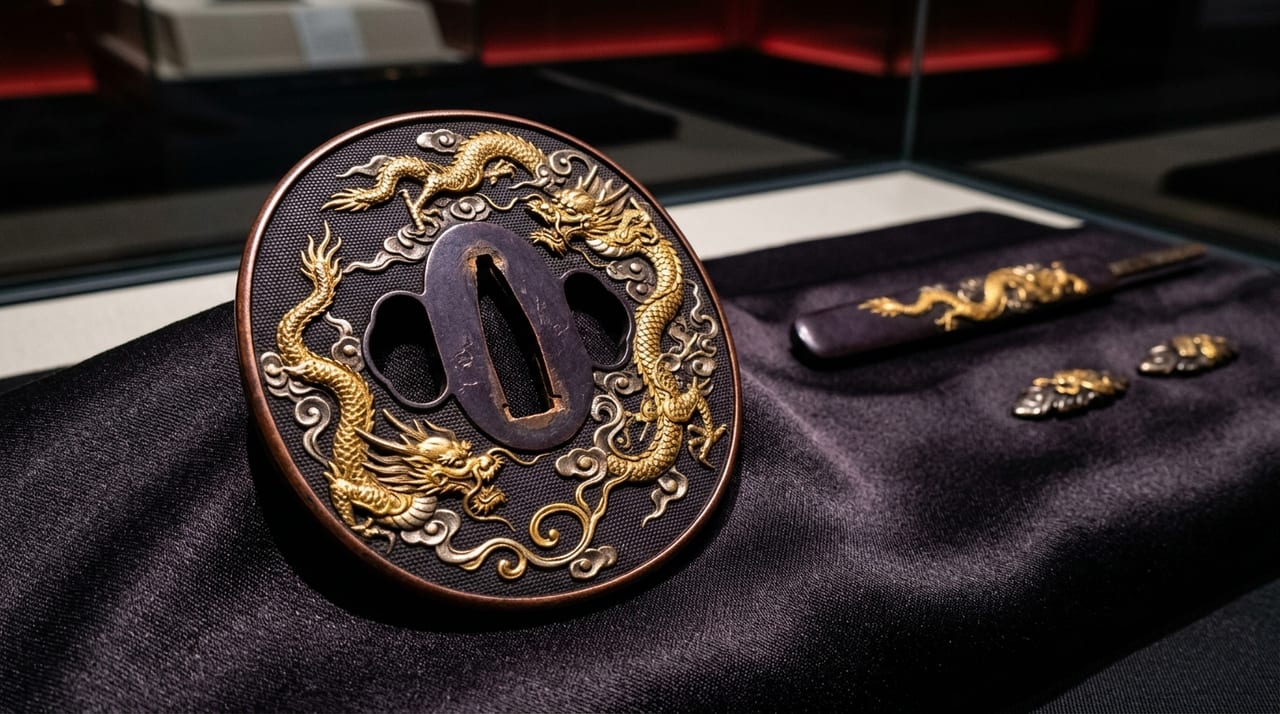
The style Yūjō established — intricate ornamentation of gold carving on a shakudō ground — was inherited by all subsequent generations of the Gotō family and became established as the proper noun "Gotō-bori." Shakudō is an alloy of copper mixed with a few percent of gold; when subjected to a chemical patination process called niiro, it develops a jet-black color. The contrast of pure gold carving standing out against this jet-black ground is the very foundation of the Gotō aesthetic.
The main technical characteristics of the Gotō family:
- Shakudō and gold combination: the visual contrast of brilliant gold carving on a jet-black shakudō ground
- Takabori (relief carving) technique: three-dimensional carving in which motifs stand out strongly in relief. Unlike flat carving (hirabori), it requires the advanced technique of leaving metal in place to raise the motif
- Stylistic unity of "Gotō-bori": drawing on classical literature, Noh theater, and Chinese historical tales as subject matter, each generation deepens the style while adhering to it
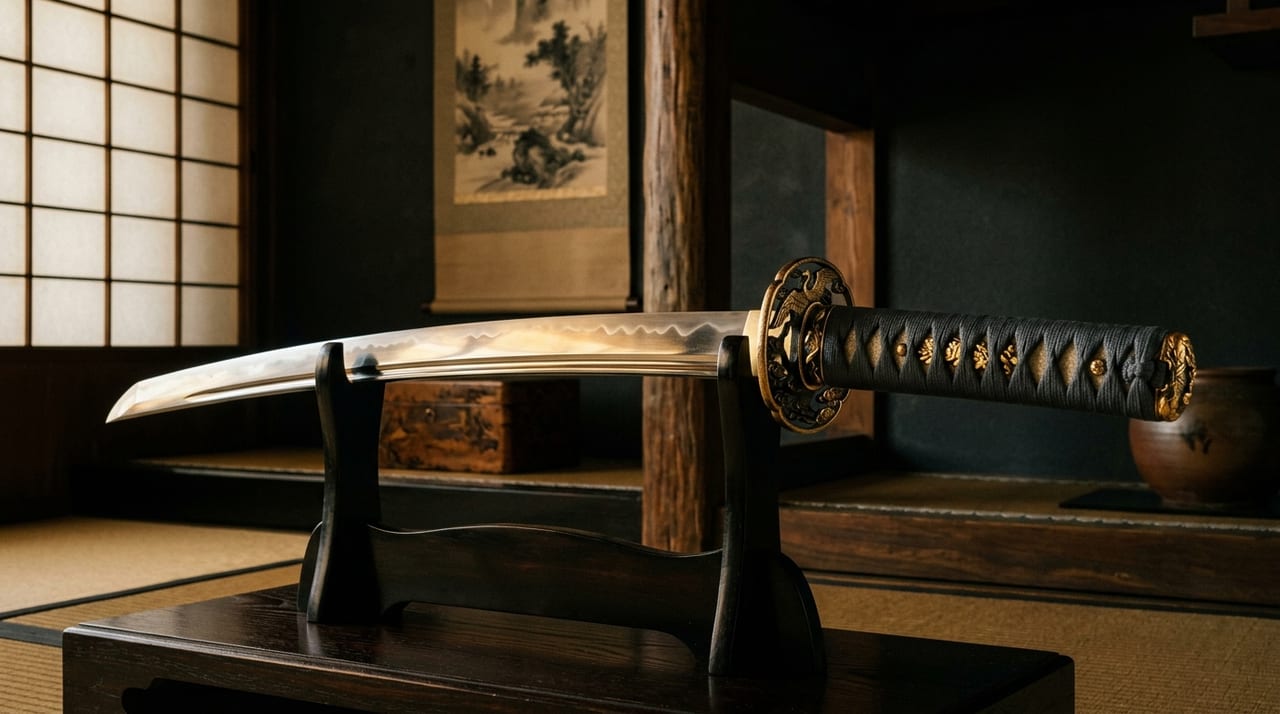
- Unified design of tōsōgu sets: the practice of the "Gotō-yagu" concept, bringing everything from the tsuba (hand guard) to the menuki together in a consistent design
Gotō-yagu — The Concept of Unified Design
The greatest contribution of the Gotō family is the establishment of the concept of "Gotō-yagu."
The idea of assembling tōsōgu (sword fittings in general — tsuba, menuki, fuchi, kashira, kozuka, kōgai) as a set by a single maker, on a single theme, in a single style is called "Gotō-yagu." For example, in a Gotō-yagu set with shōjō as its theme, a scene from the Noh play Shōjō would be carved on the face of the tsuba, the same figure placed on the menuki as well, and related motifs developed on the fuchi-kashira. The entire sword mounting tells a single story.
This concept of the set established a perspective that views tōsōgu not as "individual metal fittings" but as "a unified work of art and craft." It may rightly be called a pioneering concept of a "unified design system" in Japanese decorative art. In later eras, many metalsmiths produced tōsōgu sets in the form of "matching sets" modeled on Gotō-yagu, but the origin of that concept lies entirely with the Gotō family.
The composition of a typical Gotō-yagu set:
- Tsuba (hand guard): shakudō ground, takabori, gold coloring. The largest surface on which the theme is developed
- Menuki: shakudō-and-gold takabori on the same theme as the tsuba. Mounted as a pair at the center of the tsuka (hilt), one on each side
- Fuchi-kashira: shakudō-and-gold pieces assembled as a set. They adorn both ends of the tsuka
- Kozuka and kōgai: optional pieces on the same theme. The kozuka is the hilt of a small knife; the kōgai is a tool for arranging the topknot
The Lineage of Seventeen Generations — The Aesthetic Sensibility Each Generation Carried
The Gotō family continued for 17 generations until the Bakumatsu. A family of craftsmen that maintained both its family name and its level of technical excellence for such a long period is rare even by world standards. We trace the lineage through its most representative generations.
First generation, Yūjō (1440–1512): Late Muromachi. He established the prototype of Gotō-bori and the authority of official service to the shogunal family. A relatively large number of his works survive.
Second generation, Sōjō (1461–1529): Son of Yūjō. He further refined the technique and deepened the three-dimensionality of takabori. The codification of the style by father and son over two generations laid the foundation of the Gotō family.
Third generation, Jōshin (1512–1562): Active in the transitional period on the eve of the Momoyama era. This was a time when warrior society, in the recovery period after the Ōnin War, was beginning once again to seek sumptuous art and craft, and demand for the Gotō family also grew.
Fourth generation, Kōjō (1529–1620): Active at the height of Momoyama culture. In the era of Oda Nobunaga and Toyotomi Hideyoshi, warrior culture shifted toward lavish splendor that used "gold from the Southern Barbarians" without restraint, yet Kōjō incorporated that trend into Gotō-yagu without losing the stylistic dignity.
Fifth generation, Tokujō (1550–1631): Together with Kōjō, he represents the golden age of the Gotō family. Highly regarded as official craftsmen to the Oda-Toyotomi regime, he left behind many masterpieces.
Seventh generation, Kenjō (1586–1663): Active in the early Edo period. He established authority as official craftsmen to the Tokugawa shogunate, and as the order of warrior society was put in place, Gotō-yagu became synonymous with "distinguished sword mountings."
From the eighth generation onward, each successive generation continued to maintain quality, and until the Bakumatsu the Gotō family remained the head family of metalsmithing trusted by the gosanke and the various daimyo. The count of 17 generations surpasses the 15 shoguns of the Tokugawa shogunate. The fact that they continued to serve the shogunal family with tōsōgu speaks to the singular presence of the Gotō family.
Subject Matter of the Gotō Family — Visualization of Classical Literature and Chinese Historical Tales
The subject matter the Gotō family used repeatedly follows specific patterns that reflect the warrior-class learning of the time.
Noh plays: Well-known plays such as Oimatsu, Shōjō, Takasago, and Hagoromo were favorite subject matter for the Gotō family. Noh was perfected in the Muromachi period and was regarded as the highest cultural accomplishment of the warrior class. Carving Noh plays into tōsōgu demonstrated not only the owner's learning but also proved the cultural level of the Gotō family as its makers. When carving a supernatural being such as the shōjō, the three-dimensionality produced by the takabori technique superbly expresses the vitality of the spiritual creature reveling in wine and dance.
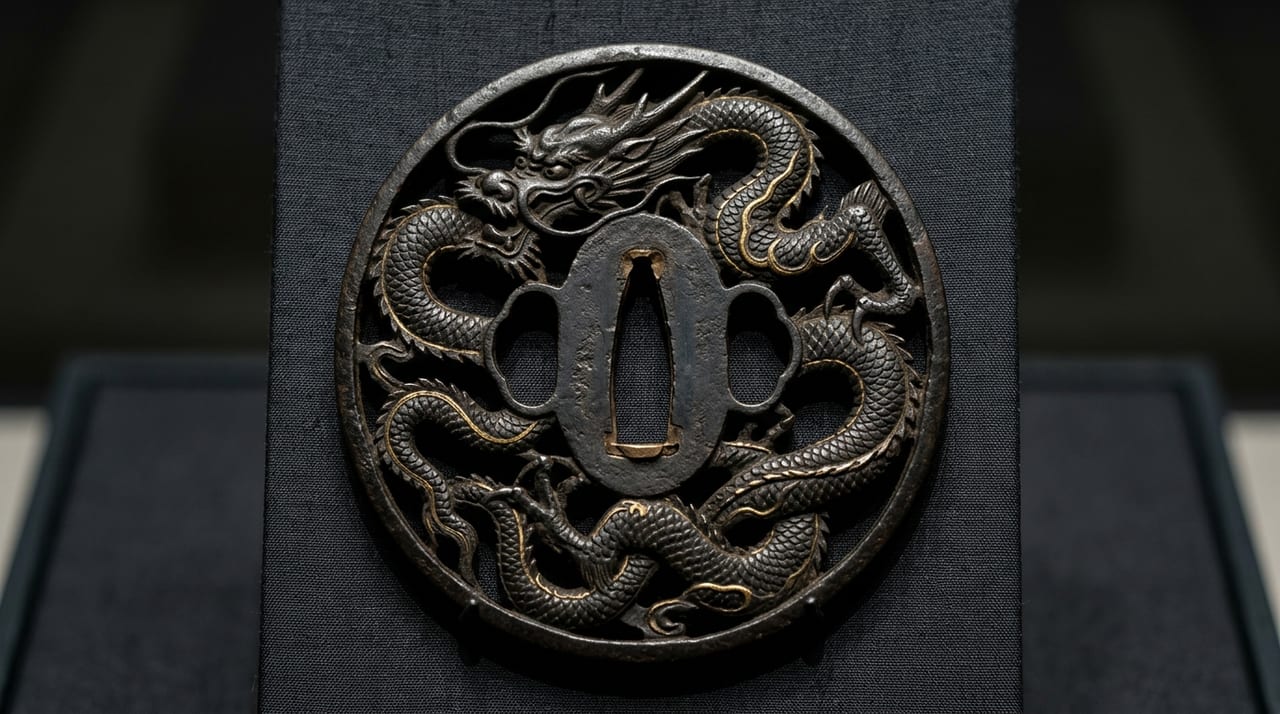
Chinese historical tales and auspicious animals: Dragons, phoenixes, kirin, Chinese lions, and peonies were frequently used as symbols of authority and good fortune. Tales and figures from the Han and Tang dynasties were also favored. This reflects the historical background of the Edo period, when warriors were expected to have deep knowledge of Chinese classics.
Seasonal flowers and birds: Combinations of trees and flowers of the four seasons — pine, bamboo, plum, chrysanthemum, cherry, and autumn leaves — with birds. Subject matter rooted in the Japanese view of nature; in particular, the pairing of plum with warbler and pine with hawk was a standard that many metalsmiths including the Gotō family worked with.
These subject matters received new interpretations with each generation while never departing from the bounds of the style. This "deepening within the style" can be said to be the secret behind the Gotō family's ability to maintain quality over 17 generations. The stance of choosing inheritance over innovation is the pride of the head family.
Collecting and Appraising Gotō Family Works — How to Identify Genuine Pieces
Many works that claim the name "Gotō family" are in fact not from the main Gotō line but are works by craftsmen of the "Gotō school" (Gotō-ryū) who learned the Gotō family style, or imitations that exploited the Gotō name. It is important to note that only a portion of the tōsōgu bearing a Gotō mei (signature) circulating on the market can genuinely be recognized as belonging to the main line.
Key points for identifying genuine main-line Gotō family works:
- Mei (signature) style: each generation of the Gotō family has its own distinctive way of cutting the mei. Expert appraisal is needed to determine whether the calligraphic style, brushwork, and placement match that generation's style
- Quality of the shakudō ground: the deep jet-black characteristic of the Gotō family is produced by the proportion of gold content and the precision of the niiro treatment. Imitations do not achieve the distinctive depth
- Technical level of the takabori: particularly the three-dimensionality and the finishing of details. The takabori of the main Gotō line is meticulous even in the treatment of the reverse side, and the outlines of the motifs are sharp and clear
- NBTHK authentication papers: an NBTHK (Society for the Preservation of Japanese Art Swords) tokubetsu hozon or higher certificate — ideally a jūyō tōsōgu designation — greatly increases reliability
The craftsmen of the Gotō school also possessed high technical skills and left their own masterpieces, but they are treated separately from genuine main-line Gotō family works. Gotō family works designated as important tōsōgu or jūyō bunkazai (Important Cultural Property) are held in major museums both in Japan and abroad, and observing the actual pieces at the Tokyo National Museum and Kyoto National Museum is the best way to train one's eye. As of 2026, museum images available online are also useful for preliminary study, but nothing surpasses the actual object for understanding the essence of metalwork.
Conclusion — 600 Years as the "Head Family" of Japanese Metalsmithing
The Gotō family reigned as the supreme authority in Japanese tōsōgu production for approximately 600 years, from Muromachi to the Bakumatsu. No other metalsmithing family is comparable to one that continued to adorn the swords at the side of the most powerful rulers of each era — beginning as official craftsmen to the shogunal family, then to the Oda-Toyotomi regime, and then to the Tokugawa shogunate.
The concept of their unified design system, Gotō-yagu, and their level of technical excellence influenced all subsequent metalsmiths and became the standard of Japanese metalwork art. The style of gold takabori on a shakudō ground continued to function as the "orthodox" form of Japanese tōsōgu culture even after it left the hands of the Gotō family.
To know the works of the Gotō family is tantamount to understanding the core of Japanese tōsōgu culture. When a single sword is fitted with a complete Gotō-yagu set, what is present is a total work of art that transcends the weapon. The aesthetic sensibility sought by the Muromachi shogunal family and inherited by the daimyo of the Bakumatsu continues to be an object of undiminished longing for modern sword collectors. If you take your time comparing the carvings on tsuba and menuki in online catalogs while keeping the Gotō family lineage in mind, the stylistic differences from era to era should come into sharper focus.