The Modern Market for GHQ-Confiscated and Repatriated Swords — Postwar Plunder, Miraculous Returns, and the Challenges of Appraisal
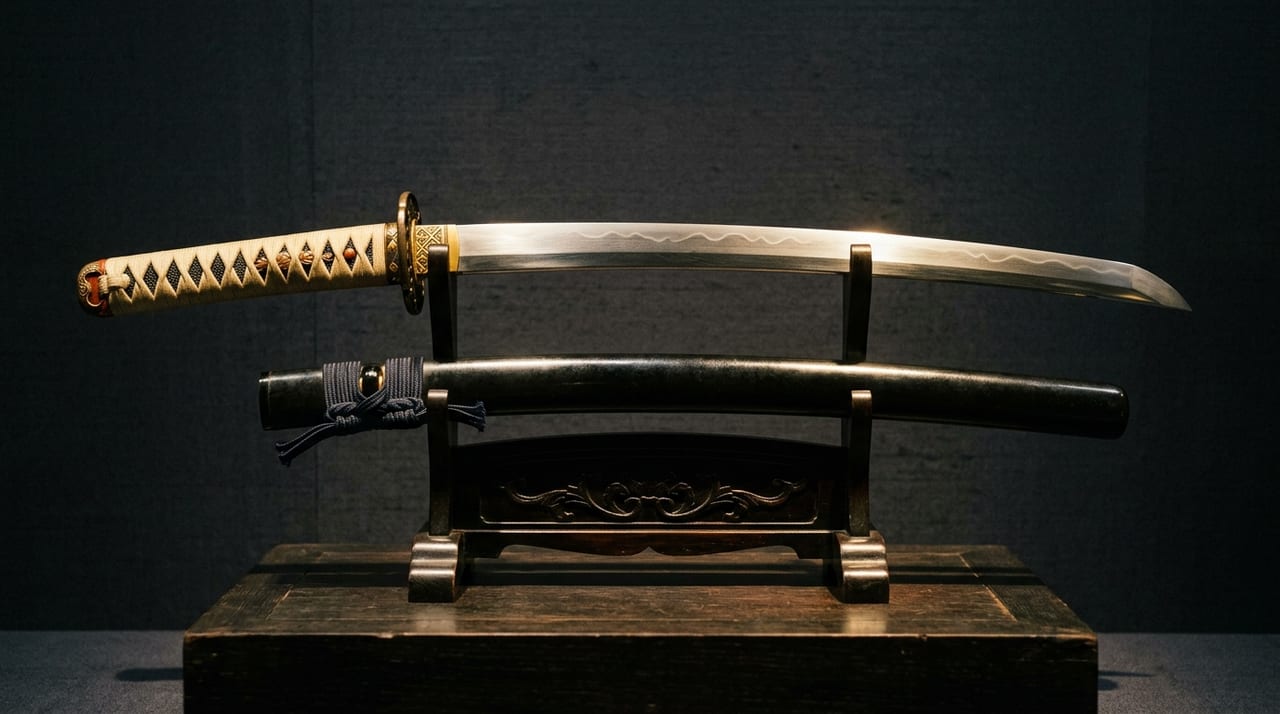 * Image is for illustrative purposes only.
Table of Contents
GHQ Sword Confiscations Immediately After the War's End — Scale and Background of the Plunder
On September 2, 1945, Japan signed the instrument of surrender, and the occupation administration under the Supreme Commander for the Allied Powers (GHQ/SCAP) began in earnest. In September of the same year, GHQ issued a directive ordering the surrender of weapons, commanding the immediate handover of all weapons and swords in civilian possession. Police stations and U.S. military facilities across the country served as collection points, and swords were confiscated one after another.
Various estimates exist for the total number of confiscated swords, but based on records from the Interior Ministry of the time and subsequent research, the figure is generally put at a minimum of more than 3 million, with higher estimates exceeding 5 million. The vast majority met a miserable end through disposal and smelting, but the decisive fork in the road was the widespread practice of treating swords as "souvenirs." Returning American soldiers were tacitly permitted to bring swords home personally, and this unofficial "removal" sent enormous numbers of swords across the Pacific. In addition, some finer pieces were sent as officially confiscated items to U.S. military facilities and museums.
Japanese sword-preservation advocates who were alarmed by this outflow of cultural assets engaged in negotiations with the occupation authorities, arguing for the protection of swords with artistic and cultural value. As the fruit of this protection movement, NBTHK (Society for the Preservation of Japanese Art Swords) was established in February 1948. Since then, NBTHK has maintained its position as the authority on sword appraisal to the present day.
The Current State of Swords That Flowed Overseas — An Estimated 500,000 to 1,000,000 Sleeping Masterworks
More than 80 years have passed since the end of the war, and nihontō continue to lie dormant scattered across the world. In the United States, Japanese swords began circulating on the market from the 1950s through the 1970s, through the estate sales of returning veterans and at antique fairs. As the number of enthusiasts grew, Japanese swords became a fixture at antique shows in Chicago and New York, and specialist dealers emerged. Some experts estimate that between 500,000 and 1,000,000 nihontō are currently in circulation or held in collections within the United States alone.
In the United Kingdom, against a backdrop of Japonisme that dates back to the 19th century, Bonhams and Christie's came to hold regular specialist sales of Japanese swords. Specialist dealers also grew in France and Germany, and the European market has formed its own ecosystem. In Australia and Canada, cases where swords brought back by soldiers who participated in the Pacific theater are still being "discovered" in the closets and attics of descendants' homes continue to this day.
Not to be overlooked is the existence of swords forgotten in storage at U.S. military base warehouses over the long term. In recent years, as inventory management has advanced at military facilities across the United States, there have been reports of officially stored confiscated items being released, and industry insiders are always keeping their antennae up.
The Appraisal Challenges of Repatriated Swords — The Triple Wall of Rust, Mei, and Provenance
Appraising swords that were taken overseas as GHQ confiscations involves unique difficulties that differ from ordinary domestic market pieces. Broadly speaking, three walls stand in the way: "physical deterioration," "the problem of mei," and "the blank in provenance."
- Physical Deterioration and the Need for Polishing — In many cases, sword oil was not replenished and the swords were not properly stored in their saya for decades after confiscation. As a result, no few swords have hamon and jihada covered in rust and corrosion, making appraisal by the naked eye impossible. Professional polishing by a specialist togishi becomes necessary, but polishing is an expensive and time-consuming process, and it is only after polishing that the sword's true character becomes clear. Accurately estimating value before polishing is itself difficult, and this is one factor that complicates buying and selling negotiations.
- Difficulty Confirming Mei — Among repatriated swords, there are those from which only the blade was removed from the tsuka when taken away, and those whose nakago mei is so rusted as to be illegible. More serious still is the deliberate alteration or removal of mei. The fraud of carving a valuable tōkō's mei onto a mumei sword after the fact — "mei forgery" — existed even before the war, and appraisers must exercise great caution given the possibility that such problems lurk in repatriated swords with unclear provenance.
- The Blank in Provenance — In many cases, no records remain to prove who stored a sword, when, or where, from the time of confiscation to the present. When provenance is unknown, not only does it become difficult to obtain a kanteisho from NBTHK and similar bodies, but it also directly affects market price. The reality is that a sword without a kanteisho will see its market valuation drop sharply, even if it is a fine piece.
NBTHK and the Practice of Overseas Appraisal — The Process of "Reviving" Repatriated Swords
For a repatriated sword to circulate legitimately on the Japanese market, obtaining an NBTHK kanteisho (such as Hozon Tōken or Tokubetsu Hozon Tōken) has become a de facto prerequisite. NBTHK holds appraisal meetings several times a year, at which appraisal committee members examine submitted swords.
When an overseas owner seeks NBTHK appraisal, the standard practice is to proceed through a domestic Japanese agent, such as a sword dealer. Temporary importation of a sword requires knowledge of cultural property law and customs procedures, and coordination with specialist transport and customs agents is essential. It is not uncommon for the entire process — polishing → appraisal → obtaining a kanteisho → re-export (or domestic distribution) — to take from several months to more than a year.
On the other hand, in recent years overseas nihontō appreciation societies, beginning with the "Token Society of America" (now the Japanese Sword Society of the United States) in the United States, have been independently holding study sessions and appraisal seminars, and the number of collectors with a high level of knowledge has been growing. There is also an increasing tendency for such enthusiasts to "unearth" high-quality repatriated swords and bring them to NBTHK appraisal.
Repatriation Routes and Market Value — High Hammer Prices Created by "Miraculous Returns"
In recent years, there are three main routes by which swords taken overseas return to Japan.
- The most common is via overseas auction. The regular Japanese art sales held by Sotheby's and Bonhams at their London and New York branches feature swords taken overseas after the war at high frequency. Cases where Japanese sword dealers and private collectors bid online to win lots and then bring them into the country through import procedures are increasing year by year. Since the 2010s, exchange rates and growing interest in Japanese culture among wealthy Westerners have combined to push realized prices into an upward trend.
- Next is the route of direct negotiation and donation. This involves cases where the families of deceased American or British soldiers search for a destination for a "grandfather's keepsake sword" discovered in a storage room or warehouse. Inquiries are sometimes brought to Japanese embassies and consulates, and there have been reports of swords being donated from individuals to museums and related institutions. When the owner has the wish to "return it to Japan," donations and sales may go through alongside appropriate assessment of cultural value.
- Government-to-government and institution-to-institution negotiations are few in number, but there are important cases with diplomatic symbolic value. For swords at the level of jūyō bunkazai (Important Cultural Property) held overseas that the Agency for Cultural Affairs is aware of, there have been past instances of repatriation negotiations conducted through the Ministry of Foreign Affairs.
The market value of repatriated swords ranges widely from tens of thousands to tens of millions of yen depending on the combination of condition, provenance, tōkō mei, and period. In particular, kotō swords from before the shintō period that are recognized as fine pieces after polishing and obtaining a kanteisho can receive evaluations equal to or greater than domestic market pieces. The industry views the "potential of repatriated swords" as still high, and the increase in inquiries from overseas is invigorating the market as a whole.
The Perspective of Transmitting Sword Culture — To Face the History of Confiscation
The GHQ sword confiscations brought about a cultural rupture that went beyond mere weapons disposal. With millions of swords destroyed and scattered abroad, there are countless examples of "family heirloom swords" and "regional masterworks" that should have been passed down being lost forever. This historical fact is deeply inscribed in the structure of the modern sword market.
At the same time, the increase in repatriated swords also points to new possibilities. When a sword that has slept overseas for a long time is "revived" through polishing and appraisal and passed on to those who carry on nihontō culture, there is a quiet recovery that transcends the history of plunder. One might also say that the skills of sword appraisers and togishi enable the revival of cultural assets across the ages.
Buyers, sellers, and appraisers involved with repatriated swords are called upon to possess not only an appraiser's eye and specialist knowledge, but also a deep understanding of this historical context. That is what connects this work — beyond mere "antique trading" — to the true transmission of nihontō culture.