The Kuroda Family's Famous Swords: How Blades Reached Chikuzen Fukuoka from Nobunaga, the Hojo and the Shogunate
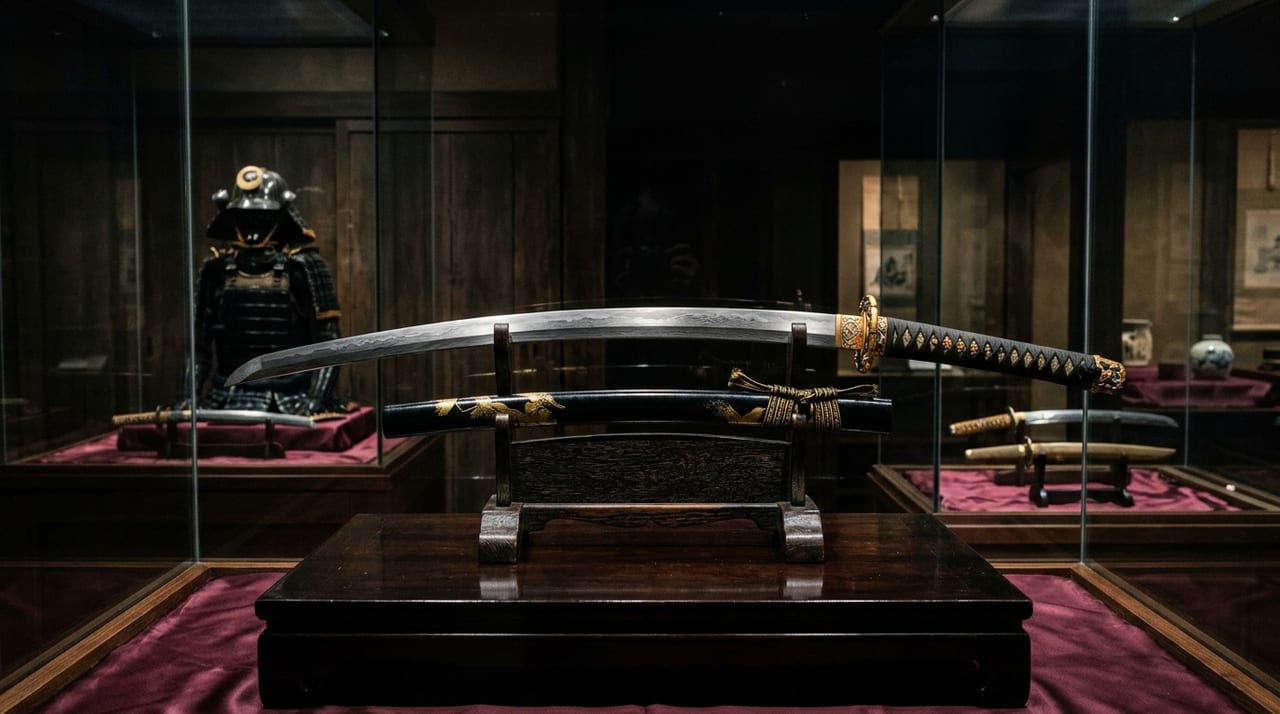 * Image is for illustrative purposes only.
Table of Contents
The Fukuoka City Museum houses both national treasure swords and the Nihongō, a famous spear. These were not gathered by chance, but represent the continuation of the line of transmission that the Kuroda family, which ruled Chikuzen with 520,000 koku, inherited from the Sengoku through the Edo period. The Kuroda family's swords passed through the hands of the era's leading figures—Nobunaga, Hideyoshi, the Hōjō family, and the Tokugawa family—and gathered in Chikuzen. This article examines how the famous swords of the Kuroda family came to be transmitted, through the connections between people.
The Faces of Famous Swords That Gathered in Chikuzen
The four swords that first come to mind as swords transmitted to the Kuroda family are as follows.
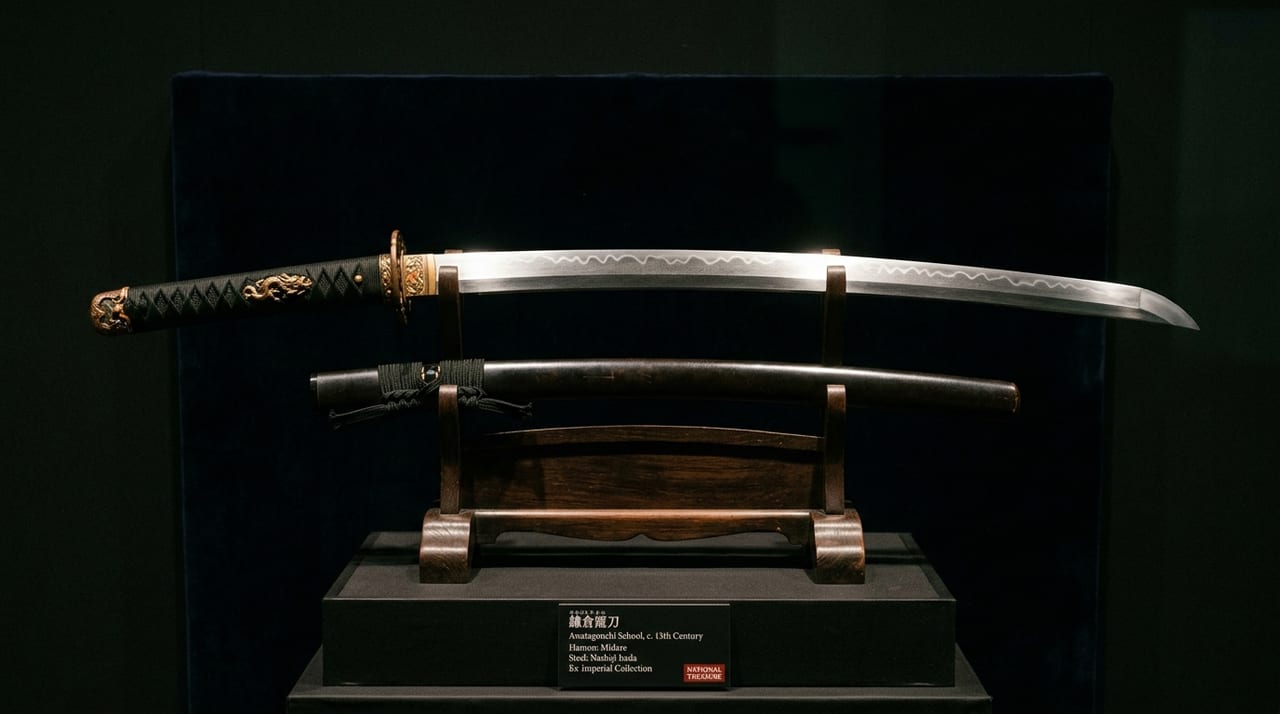
- Heshikiri Hasebe——a work by Hasebe Kunishige, a renowned smith of Yamashiro in the Nanbokuchō period. It is said to have been passed from Oda Nobunaga to the Kuroda family, and is now housed in the Fukuoka City Museum and designated as a national treasure
- Nikkō Ichimonji——a national treasure tachi of the Fukuoka Ichimonji School. It is said to have been given from the treasures of the Odawara Hōjō family to Kuroda Jōsui
- Nihongō——one of the three most famous spears in the realm. It is said to have passed from the Imperial Household through Ashikaga Yoshiaki, Nobunaga, Hideyoshi, and Fukushima Masanori to a retainer of the Kuroda family
- Hakata Tōshirō——a short sword by Awataguchi Yoshimitsu. It is said to have been given from the Kuroda family to the Ogasawara family, lords of Kokura
The fact that each came to the Kuroda family from different people well reflects the position of this family.
- Heshikiri Hasebe (Famous Sword)
- Nikkō Ichimonji (Famous Sword)
- Nihongō (Famous Spear)
- Fukuoka City Museum
Nobunaga to Kanbei——Heshikiri Hasebe
Heshikiri Hasebe is known for a harsh anecdote about Oda Nobunaga. It is said that the name derives from a story in which Nobunaga, pressing the sword against a shelf, cut through the shelf and a tea servant who had hidden beneath it. This sword is said to have been given later to Kuroda Kanbei, and has been cited as an example showing that Nobunaga held Kanbei in high regard.
Nobunaga's favorite swords are discussed in the following article as well. Understanding how the famous swords of the Oda family went to different families makes the meaning of the transmission to the Kuroda family easier to discern.
From Odawara to Chikuzen——Nikkō Ichimonji
Nikkō Ichimonji is considered the masterpiece of the Fukuoka Ichimonji School. Originally transmitted to the Hōjō family of Odawara, it is said that at the time of the Odawara Campaign of Tenshō 18, it was given by Hōjō Ujinao as a token of gratitude to Kuroda Jōsui, who worked hard to bring about a reconciliation. Thereafter, it was transmitted as a family treasure of the Kuroda family of Chikuzen.
This provenance is a fine example of how the way a war ends and the movement of swords coincide. The flow of the treasures of the defeated side passing to the hands of those who worked to mediate shows that swords were both symbols of authority and gifts expressing gratitude.
A Wager at a Drinking Party Left Its Name——Nihongō
Nihongō is widely known through the Kuroda Bushi anecdote as a spear that Mori Taibei, a retainer of the Kuroda family, won through a wager at a drinking party. Having both the prestige that derives from the Imperial Household and a story beloved by common people, it is a unique presence among the three most famous spears in the realm. Though it is a spear rather than a sword, it is essential to any discussion of the martial culture of the Kuroda family.
Swords Given and Granted——Hakata Tōshirō, Inaba Shizu, and Samidare Gō
The Kuroda family was not only on the receiving end; they also gave swords to others. Hakata Tōshirō is a short sword by Awataguchi Yoshimitsu, and it is said to have been given from the Kuroda family, lords of Fukuoka, to the Ogasawara family, lords of Kokura. It is noted in scholarship as an example of a confirmed signed work by Yoshimitsu being transmitted to Kyushu.
Conversely, there were also swords granted by the shogunal family to the Kuroda family. Inaba Shizu, attributed to the work of Shizu Kaneuji, is said to have passed from the Inaba family through Tokugawa Ieyasu and Asano Yoshinaga, and was granted by the shogunal family to the Kuroda family, lords of Fukuoka in Chikuzen, through which it was transmitted throughout the Edo period. On the other hand, Samidare Gō, said to be a work by Gō Yoshihiro, was presented to Tokugawa Hidetada by Kuroda Nagamasa, and later came into the possession of the Owari Tokugawa family.
When we organize the movement of swords, we can see that there were three flows into and out of the Kuroda family.
- Treasures of rulers of the realm and enemy factions entering as rewards for merit or as tokens of gratitude for mediation
- Swords granted by the shogunal family
- Swords leaving to other families as tributes or gifts
All of these flows tell us that swords were a medium through which human relationships in samurai society were formed.
Chikuzen and Samonji
When discussing the swords of the Kuroda family, we should also mention the swordsmiths of Chikuzen. In Chikuzen during the Nanbokuchō period, Samonji, a line following the Sōshū tradition, was active. Just as the Sōza Samonji was transmitted through Nobunaga, Hideyoshi, and Ieyasu, the works of the master smiths of Chikuzen were valued even by the rulers of the realm.
Reading Swords Through Their Provenance
The value of a famous sword resides not only in its form and temper line, but also in its provenance——who passed it to whom. The example of the Kuroda family teaches us that how one family received swords at each turning point in history and carefully transmitted them is itself a microcosm of Japanese history.
TOUKENZA is a site where you can view and purchase swords in an online catalog. You can contact us with questions through the contact form.