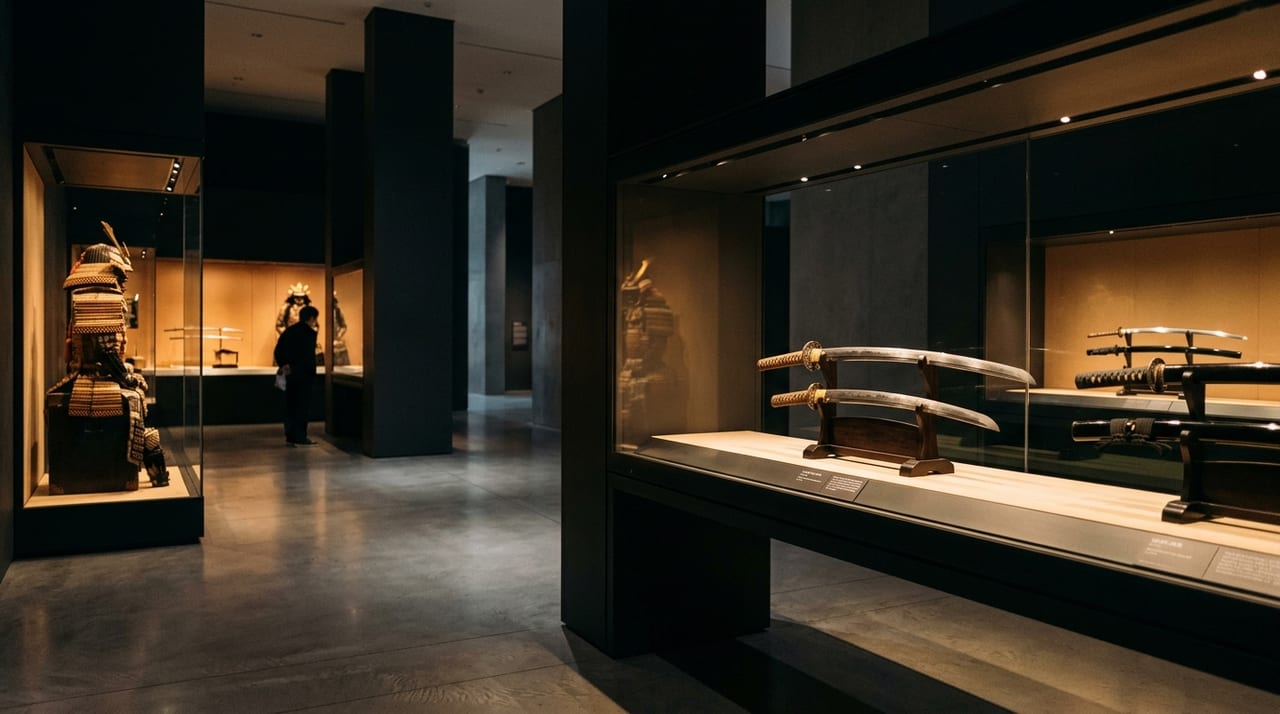
 * Image is for illustrative purposes only.
Fukuoka City Museum
福岡市博物館
Overview
Overview of the Museum
Fukuoka City Museum is a large-scale museum that opened in 1990 (Heisei 2) in the Seaside Momochi district, comprehensively introducing the history and culture of Hakata and Chikuzen. Fukuoka proudly houses two national treasures—"Heshikiri Hasebe" and "Nikko Ichimonji"—and is truly a sacred place for Japanese sword enthusiasts. Seeking the original artifact of the popular Touken Ranbu character "Heshikiri Hasebe," young visitors from across Japan have come to visit, and the museum's visitor numbers have repeatedly reached record highs. Fukuoka has been a gateway for exchange with the continent since ancient times, and while actively absorbing foreign cultures, has cultivated its own distinctive Kyushu culture. This historical background brings unique depth and breadth to the museum's exhibits.
National Treasure "Heshikiri Hasebe"
Heshikiri Hasebe is a work by Hasebe Kunishige, a renowned master of Yamashiro Province during the Nanboku-chō period, and is a large-sized ōmagari (unpolished) unsigned sword (katana). With a blade length of 64.8 cm and a width at the hilt of 2.9 cm, it is relatively slender, but the hamon, called hitatsu'ra, features a magnificent full-width hardening across the entire blade that overwhelms those who behold it. The name "Heshikiri" derives from a legend in which Oda Nobunaga used this sword to slash through a kitchen shelf and a tea servant hidden beneath it. Later, Kuroda Kanbe (Jōsui) received the blade from Nobunaga, and it became a treasured heirloom of the Kuroda clan, passed down through generations. After passing through the Battle of Sekigahara and the Siege of Osaka, the Hasebe continued to be transmitted into the Edo period, where it took root in Fukuoka as an emblematic sword of the Kuroda domain. Today it is housed in Fukuoka City Museum as a national treasure. Its appearance in Touken Ranbu has catapulted it to nationwide fame, and the sight of young fans visiting the museum has become a seasonal phenomenon.
National Treasure "Nikko Ichimonji"
Nikko Ichimonji is traditionally attributed to the Ichimonji school of Bizen Province during the Kamakura period, a tachi renowned for its elegant choji-midare hamon. The name "Nikko" is said to derive from its transmission to the Tokugawa clan, and it is counted among the finest masterworks of the Ichimonji school. The Ichimonji school served as the official sword smiths of the Kamakura shogunate, earning unwavering support from Kyoto and Kamakura cultural figures and samurai of the era. The school's choji-midare hamon is highly regarded as the pinnacle of Bizen tradition aesthetics. Note that this piece is not on permanent display; it is shown only during specific periods. Visitors are strongly encouraged to check the museum's website for the exhibition schedule before visiting.
Kuroda Clan Collection of Swords and Armor
In addition to Heshikiri Hasebe and Nikko Ichimonji, Fukuoka City Museum houses numerous swords, armor, and military equipment associated with the Kuroda clan. The Kuroda family, led by the father-and-son duo Kuroda Kanbe (Jōsui) and Kuroda Nagamasa, survived the great battles of the Sengoku period and were rewarded for their contribution to the Eastern forces at the Battle of Sekigahara with the domain of Chikuzen (present-day northwestern Fukuoka Prefecture), a holding of 520,000 koku. Kanbe served as a military strategist supporting Toyotomi Hideyoshi, and his stratagems were so renowned among Sengoku daimyo that he became known as "the Kuroda of Harima." The swords, armor, battle surcoats (jinbaori), and other martial equipment passed down by the Kuroda clan embody the finest aspects of samurai culture from the Sengoku through Edo periods, forming the core collection of Fukuoka City Museum.
History and Culture of Hakata
Like Sendai, which operates the Touken Gumi, Fukuoka developed as a castle town with deep historical roots. Fukuoka Castle was built by Kuroda Nagamasa in 1607 and was the largest hilltop castle in Kyushu. Today it is maintained as Maizuru Park, though the stone walls and yagura turrets evoke its former grandeur. The museum's permanent exhibits thoughtfully present Fukuoka's layered history: the historical role of Hakata Port, domain administration during the Edo period, and the city's modern industrial development. Exhibits on traditional events such as the Hakata Gion Yamakasa festival are also extensive, offering enjoyment for visitors beyond sword enthusiasts.
Access and Highlights
Located in the Seaside Momochi district, the museum sits near Fukuoka Tower and Yahoo! Japan Dome, with the scenic surrounding seaside park offering beautiful coastal views. Because national treasure displays are time-limited, always confirm the current exhibition schedule before your visit. The museum shop carries locally-themed merchandise and an excellent selection of exhibition catalogs.
Highlights
- National Treasure "Heshikiri Hasebe"—A blade by Hasebe Kunishige from the Nanboku-chō period. An ōmagari, unsigned sword with a magnificent hitatsu'ra hamon. Granted by Oda Nobunaga to Kuroda Kanbe, this is among the finest Sengoku-period masterworks. Its popularity in Touken Ranbu has made it nationally famous and a pilgrimage destination for countless fans.
- National Treasure "Nikko Ichimonji"—A masterwork tachi by the Ichimonji school of Bizen during the Kamakura period. Renowned for its elegant choji-midare hamon. With a distinguished provenance in the Tokugawa clan, it exemplifies the pinnacle of Bizen tradition aesthetics.
- Kuroda Clan Collection of Swords and Armor—Housing numerous armor pieces, battle surcoats (jinbaori), and sword fittings passed down by the Kuroda clan, which ruled Chikuzen with a holding of 520,000 koku. Rich samurai documents honor the strategic brilliance of military commander Kuroda Kanbe (Jōsui).
- Hakata History Exhibition—A multidimensional presentation of Hakata Port's role as a gateway to continental exchange from antiquity, medieval Sino-Japanese trade, and the establishment and development of Fukuoka as a castle town in the early modern period.
- Seaside Momochi District Location—Situated near Fukuoka Tower and the seaside park with beautiful ocean views stretching before the museum. Perfect for a full day of exploration and nearby walks.
* Opening hours and exhibitions are subject to change. Please check the official website before visiting.