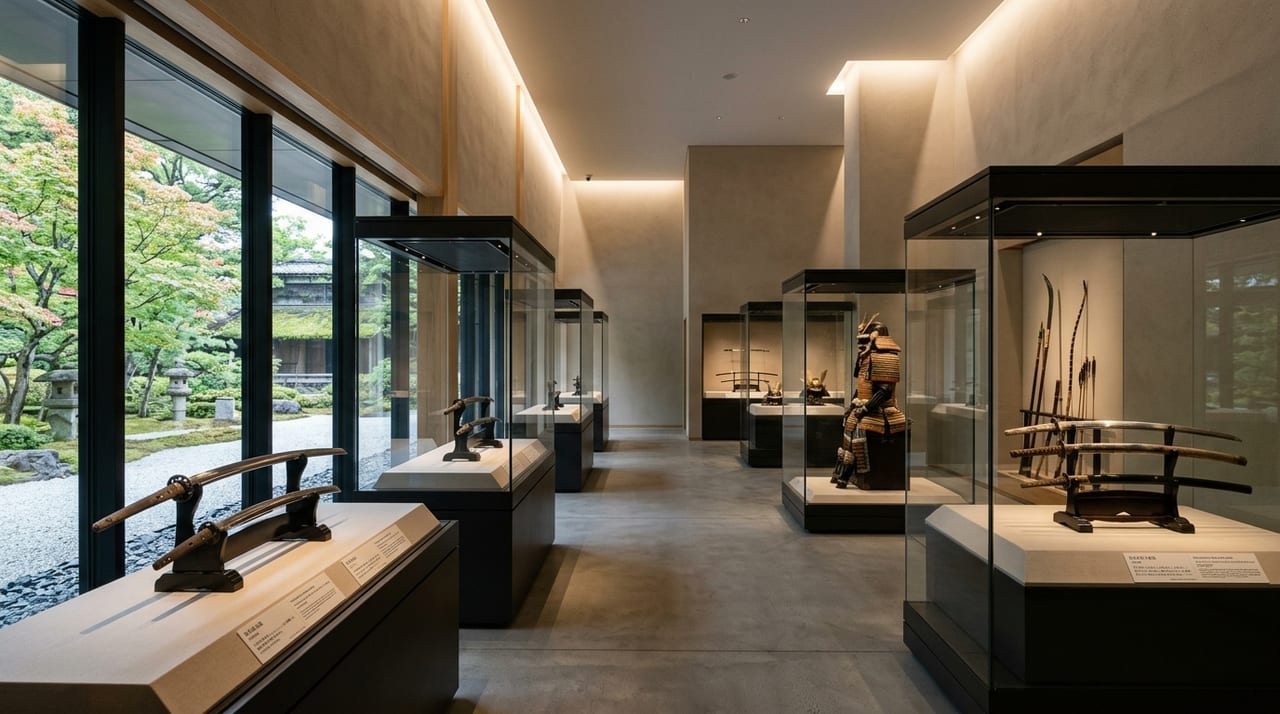
 * Image is for illustrative purposes only.
Shimada Art Museum
島田美術館
- Location
- Kumamoto City, Kumamoto Prefecture
- Access
- From the Sakuramachi Bus Terminal, take the city bus on the Ōe–Jōsai Line and get off at the final stop, Jōsaikō-kita, then walk about 2 minutes. Or take the Shimasaki–Hotakubo Line and get off at Jikei Byōin (Jikei Hospital), then walk about 3 minutes. About 8 minutes by car from JR Kumamoto Station, and about 40 minutes by car from the Kumamoto IC or Mashiki IC on the Kyushu Expressway. Free parking available (10 cars).
- Opening Hours
- 10:00–16:30 (last admission 16:00). Closed Tuesdays and Wednesdays (open on national holidays). Closed New Year holidays
- Admission
- Adults 700 yen, university and high-school students 400 yen, elementary and junior-high students 200 yen (elementary students accompanied by a guardian free)
Overview
Shimada Art Museum is a private museum located in Shimasaki, Nishi Ward, Kumamoto City, Kumamoto Prefecture. It holds historical materials and antique art objects related to the warrior culture that remains in Kumamoto. It is known in particular as a facility with numerous materials connected to the sword saint Miyamoto Musashi (1584–1645).
Miyamoto Musashi was received as a guest retainer by Hosokawa Tadatoshi, lord of the Kumamoto Domain, around Kan'ei 17 (1640). He spent the last five years of his life in Kumamoto, where he wrote the Gorin no Sho and other works. The Musashi-related materials held by the museum include works from Musashi's own hand, “Koboku Meigeki-zu,” “Rogan-zu,” and “Oboegaki”; the “Miyamoto Musashi Shōzō” (Portrait of Miyamoto Musashi), designated an Important Cultural Property by Kumamoto Prefecture; the sword guard (tsuba) attributed to Musashi, “Sayū Namako-sukashi Tsuba”; and swords said to have been used by Musashi, an unsigned blade by Kaneshige and a blade signed “Yamato no Kuni jū Kunimune.” Together, these materials show that Musashi was not only a master of the sword path but also an accomplished painter.
Most of the collection was gathered over a lifetime by Shimada Matomi, an antiques researcher who served as president of the Musashi-kai and as managing director of the Kumamoto-jō Kenshōkai. Following the wishes of Shimada, who died in Shōwa 52 (1977) at the age of 92, the museum opened in November of that same year on the site of Shimada's former residence.
With Kumamoto Castle (Honmaru Goten) and the Kumamoto Prefectural Museum of Art (Hosokawa Collection, Eisei Bunko exhibition room), it is easy to incorporate the museum into a sightseeing route that traces Kumamoto's warrior culture.
Highlights
- Materials related to Miyamoto Musashi — “Koboku Meigeki-zu,” “Rogan-zu,” and “Oboegaki” by Musashi, and the “Miyamoto Musashi Shōzō,” designated an Important Cultural Property by Kumamoto Prefecture
- Swords said to have been used by Musashi — unsigned Kaneshige (Nanboku-chō period) and “Yamato no Kuni jū Kunimune” (Muromachi period), along with the “Sayū Namako-sukashi Tsuba” attributed to Musashi
- Collection of Shimada Matomi — materials on Kumamoto's warrior culture gathered by Shimada Matomi, an antiques researcher who served as president of the Musashi-kai and managing director of the Kumamoto-jō Kenshōkai
- Manuscript copies of Musashi's military treatise and biographical works — “Gorin no Sho, Kaze no Maki” (Keian 4), “Dokkōdō,” “Nitenki,” and others
- Cultural touring with Kumamoto Castle and the Kumamoto Prefectural Museum of Art (Hosokawa Collection) — easy to incorporate into a route that traces Kumamoto's warrior culture
* Opening hours and exhibitions are subject to change. Please check the official website before visiting.