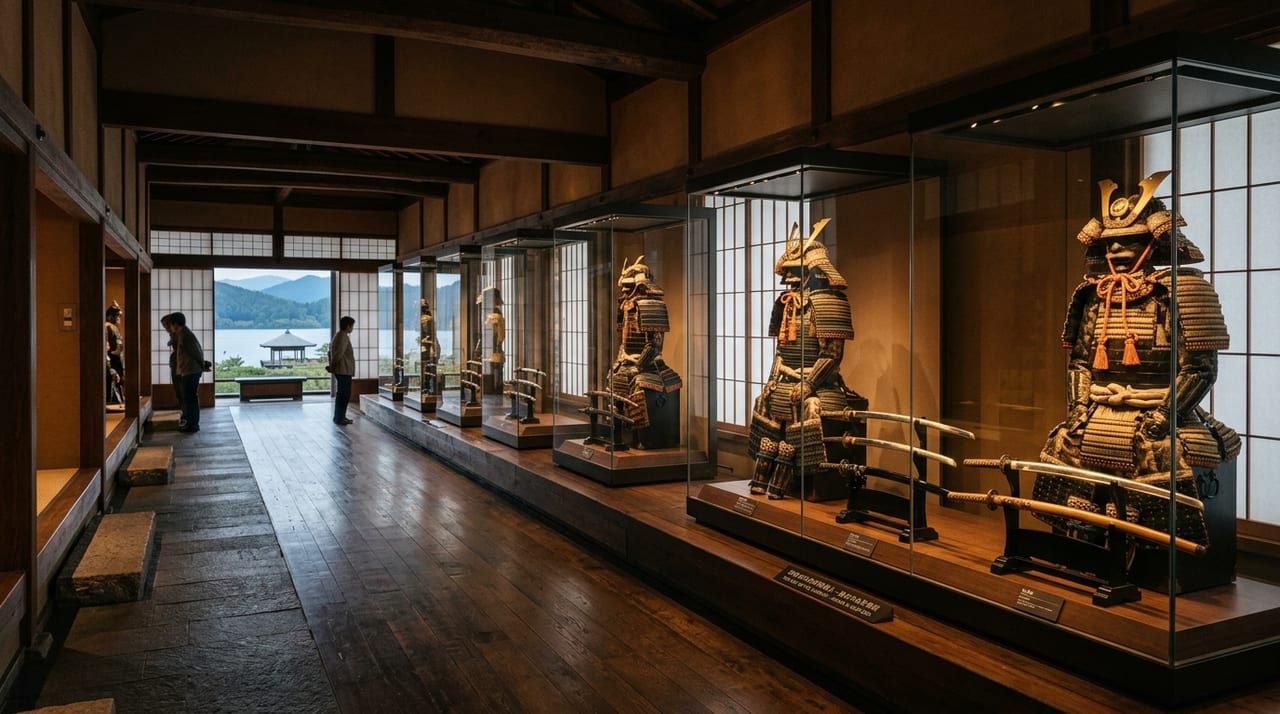
 * Image is for illustrative purposes only.
Nagasaki Museum of History and Culture
長崎歴史文化博物館
Overview
Nagasaki Museum of History and Culture opened in November 2005 (Heisei 17). It was established jointly by Nagasaki Prefecture and Nagasaki City. The museum was built on the site of the Tateyama Office of the Nagasaki Magistrate and reconstructs part of it. Its main theme is the history of overseas exchange in early-modern Nagasaki, and it holds many historical materials, art and craft objects, and old documents on this subject. It presents from multiple angles the history of Nagasaki, which functioned during the Edo period as the window for the shogunate's directly controlled foreign trade, and the distinctive culture that developed there.
Nagasaki Magistrate-Related Materials
The museum also holds a rich collection of administrative documents, diplomatic records, and pictorial maps of the Nagasaki Magistrate's Office. Visitors can learn about the Edo shogunate's foreign policy and the realities of Nagasaki trade from primary sources. The collection also includes materials on the Dutch trading post and the Chinese residential compound, maps of Dejima, and records of the Dutch interpreters. These allow a three-dimensional understanding of Nagasaki as a place where Japan connected with the world before modernization.
Special Exhibitions and Permanent Exhibition
The permanent exhibitions, in the History and Culture Exhibition Zone and the Nagasaki Magistrate's Office Zone, introduce the history and culture of overseas exchange in early-modern Nagasaki. The museum also holds special exhibitions on a variety of themes.
Highlights
- Reconstruction of the Tateyama Office of the Nagasaki Magistrate ── Part of the magistrate's office that stood on the site has been reconstructed, recreating the shoin reception room and the oshirasu (white-gravel courtroom). A short dramatized skit is performed in the oshirasu every Sunday
- Materials related to the Nagasaki Magistrate's Office ── Built on the site of the Tateyama Office of the Nagasaki Magistrate. Administrative documents, diplomatic records, and maps of Dejima from the magistrate's office allow visitors to learn about the Edo shogunate's foreign policy through primary sources
- Historical materials on early-modern foreign exchange ── A comprehensive display of the international exchange history of Nagasaki, which was connected with the world under the sakoku seclusion system, including records of the Dutch trading post, the Chinese residential compound, and the Dutch interpreters
* Opening hours and exhibitions are subject to change. Please check the official website before visiting.