 * Image is for illustrative purposes only.
Shōkoshūseikan (Shimazu Museum)
尚古集成館
Overview
Shōkoshūseikan and the History of the Shimazu Family
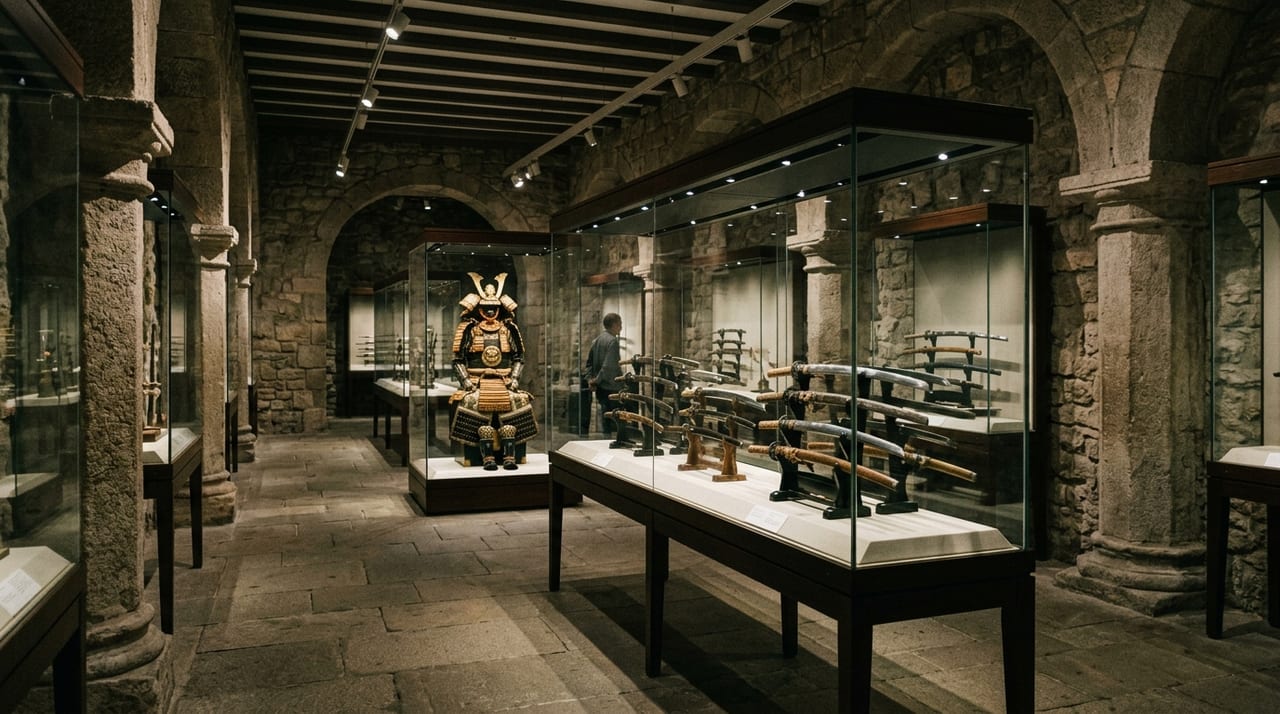
Shōkoshūseikan is Japan's oldest museum dedicated to the Shimazu family, located in a corner of Sengan-en (also called Isoniwa Garden) in Kagoshima City. The museum was established in 1851 (Kaei 4) by Shimazu Nariakira, the eleventh daimyo of Satsuma Province, as a mechanical factory called "Shūseikan," and its stone building has been converted for museum use. This sturdy stone architecture stands as a valuable industrial heritage representing the modernization on the eve of the Meiji Restoration. The Shimazu family is a rare daimyo house that ruled Satsuma for over 770 years, and over the course of its long history, it accumulated an invaluable collection of art and crafts, weapons, and swords—transmitting the glory of the Shimazu family and Satsuma's samurai culture to the present day. In 2015, Sengan-en and its surrounding area were registered as a UNESCO World Heritage Site as part of the "Industrial Heritage of Meiji Japan," drawing international attention.
Satsuma Sword Culture and Satsuma Sword Craftsmen
Satsuma Province (present-day Kagoshima Prefecture) is known as one of Japan's important centers for sword production, a land where a unique sword culture developed. The founder of Satsuma sword craftsmen is said to be Nami-hira Yukiyasu, who was active from the late Heian period through the Kamakura period. Thereafter, the Nami-hira line became established in Satsuma, and generations of sword craftsmen bearing the Nami-hira name continued the tradition through the Edo period. Satsuma swords are also collectively known as "Satsuma-tō," characterized by a practical and robust style. The practical combat quality needed to withstand the fierce slashing attacks of Satsuma Jigen-ryū was particularly valued. Successive Shimazu daimyo also held swords in high regard, employing clan swordsmiths and polishers to dedicate effort to the production and care of swords. Shōkoshūseikan systematically displays both swords handed down through the Shimazu family and "Satsuma-tō" created by Satsuma sword craftsmen, allowing visitors to touch the very heart of Satsuma's samurai culture.
The Shimazu Family's Heirloom Collection of Weapons and Armor
The weapon collection at Shōkoshūseikan ranks among the finest in quality and quantity throughout Japan, allowing visitors to experience the grandeur of weapons accumulated by a daimyo house with over seven hundred years of history. Particularly regarding armor, the collection includes diverse forms ranging from the Shimazu family's own "haramaki" and "dōmaru" styles to the "tōsei-gusoku" (modern armor) of the Sengoku period, making it a precious collection offering an overview of the development of Japanese armor. The collection also includes armor worn by Shimazu family retainers who participated in historical battles such as the Battle of Sekigahara and the Shimabara Rebellion; the implements of war that survived actual combat carry the marks of the battlefield and the resolve of the samurai. Regarding sword fittings, the museum houses distinctive works employing Satsuma's unique technique "Satsuma sukashi" (openwork), providing insight into the distinctive nature of Satsuma metalwork.
Sengan-en and the Shimazu Family Culture
Sengan-en (also called Isoniwa Garden), adjacent to Shōkoshūseikan, is a grand daimyo garden built in 1658 (Manj 1) by Shimazu Mitsuhisa, renowned for its magnificent landscape with Sakurajima as its borrowed scenery. Within the garden stand historical structures such as the palace, teahouse, and Suzu Gate, transmitting the refined samurai culture of the Shimazu family to the present day. By visiting both the museum and the garden, one can experience Satsuma Province's culture of both martial prowess and refinement in an integrated way. Since the World Heritage registration, the number of foreign tourists has increased, and multilingual explanations have become more comprehensive. The site is also easily accessible from central Kagoshima City, reachable by bus from Kagoshima Central Station.
The Modernization of Satsuma Province and the Role of Swords
The Shūseikan enterprises promoted by Shimazu Nariakira were central to the enrichment-and-strengthening strategy through the adoption of Western technology. While Nariakira engaged in the manufacture of cannons and steamships, he simultaneously held Satsuma sword culture—the very soul of the Satsuma samurai—in deep respect. During the tumultuous late Edo period, Satsuma samurai maintained the culture of sword-wearing until the end, and their resistance to the Sword Abolition Edict (1876) became manifest in the form of the Satsuma Rebellion. Shōkoshūseikan is a unique facility possessing both the aspect of industrial heritage at the dawn of the modern era and the aspect of inheritor of Satsuma samurai culture, a place that prompts deep reflection on what the Japanese sword meant in a Japan undergoing Westernization.
Satsuma Jigen-ryū and the Practical Combat Character of Swords
The "Jigen-ryū," a swordsmanship known as Satsuma's fighting style, was founded by Tōgō Shigekata and is characterized by a single-stroke decisive technique, featuring fierce spirit and a swift, decisive cut from the upper guard to subdue the opponent. Due to the characteristics of this swordsmanship, swords favored in Satsuma were built with a robust and thick, practical combat design, prioritizing durability, cutting edge, and thickness over aesthetic refinement. Many of the Satsuma swords created by Nami-hira line swordsmiths were crafted to meet this practical requirement, possessing an unpolished, powerful appeal that set them apart from swords of other production centers. Shōkoshūseikan provides explanations regarding the relationship between Jigen-ryū and Satsuma swords, allowing visitors to understand the Japanese sword from a unique perspective exploring the formal relationship between swordsmanship schools and sword forms.
The Shimazu Family and the Culture of Sword Dedication to Shrines
The Shimazu family has for generations dedicated swords to major shrines of Satsuma and Ōsumi, including Hirakami Shrine (the primary shrine of Satsuma Province) and Kagoshima Shrine. These dedicated swords were specially crafted as offerings to the kami and embody a spirituality distinct from swords intended as ordinary weapons. The Shimazu family also possessed a unique sword culture through its relationship with the Ryukyu Kingdom, and a portion of its sword fittings collection shows the influence of metalworking techniques that flowed from China via Ryukyu. The sword culture of Satsuma, nurtured in a sphere of exchange encompassing southern Kyushu, Ryukyu, and China, possesses a distinctive character shaped by diverse influences unlike other production centers in the homeland. At Shōkoshūseikan, one can learn this rich cultural background through actual artifacts.
Highlights
- Seven Hundred Years of the Shimazu Collection── Swords passed down through the Shimazu, Japan's longest-reigning regional daimyo. Experience martial equipment that saw actual combat at Sekigahara and Shimabara, alongside beloved swords of domain lords
- Satsuma Swords and Namihira-School Swordsmiths── A lineage of Namihira-school swordsmiths originating in the late Heian period. Featured exhibition of the robust beauty of Satsuma blades, crafted to match the practical swordcraft of the Shigenryu school
- Satsuma Openwork Tsuba and Metalwork── Sword fittings employing Satsuma's distinctive openwork carving technique. A complete display of unique Satsuma metalwork styles found nowhere else
- UNESCO World Heritage Building: Shuseigun── The stone machinery factory (former Shuseigun Machinery Factory) constructed in Keio 1 (1865), now serving as the museum venue. A unique space where symbols of modernization and samurai culture coexist
- Integrated Visit with Sengan Garden (Iso Garden)── Combining a grand daimyo garden framing Sakurajima as a borrowed landscape with the museum. Kagoshima's most important cultural destination, where you can experience Satsuma domain's martial and literary culture in a single day
* Opening hours and exhibitions are subject to change. Please check the official website before visiting.