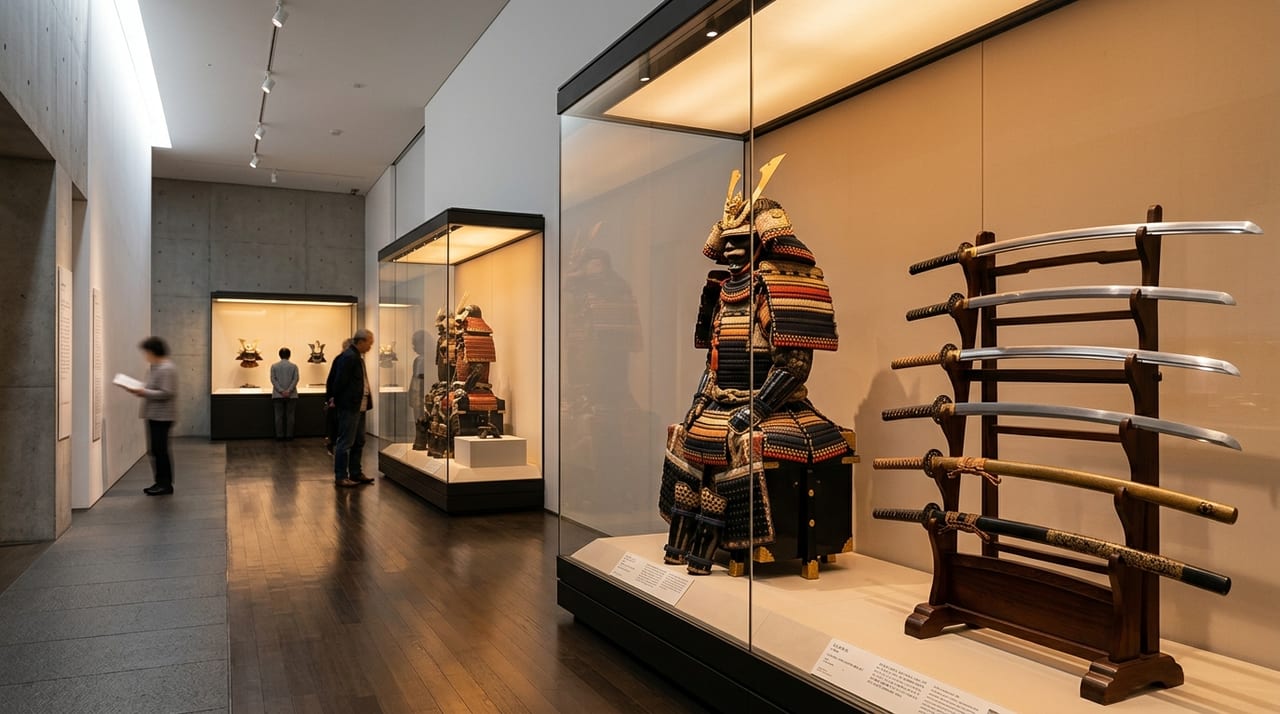
 * Image is for illustrative purposes only.
Oyamazumi Shrine Treasure Hall
大山祇神社宝物館
- Location
- Omishima Town, Imabari City, Ehime Prefecture
- Access
- About 10 minutes by car from the Ōmishima IC on the Shimanami Kaidō (Nishi-Seto Expressway). About 65 minutes by bus from the bus stop in front of JR Imabari Station (Setouchi Bus Tokkyū or Setonaikai Kōtsū Kyūkō express), getting off at Ōyamazumi Jinja-mae.
- Opening Hours
- Treasure Hall 9:00–16:30 (last admission 16:00)
- Admission
- Adults 1,000 yen (shared with Shiyōden, Kokuhōkan and Maritime Museum)
Overview
Ōyamazumi Shrine (Ōyamazumi-jinja) is enshrined on Ōmishima in Imabari City, Ehime Prefecture. It is the head shrine of the Yamazumi and Mishima shrines across Japan, and its treasure hall is one of the most important facilities for research on Japanese swords, with Japan's largest collection of armor and weapons.
The greatest feature is the high proportion of National Treasures and Important Cultural Properties. About 40% of the Japanese armor designated as National Treasures or Important Cultural Properties is concentrated at this shrine, a ratio that stands out even among Japan's museums and shrines. As cultural properties including shrine buildings and arms, it holds 8 National Treasures and 76 Important Cultural Properties.
Its sword collection is especially rich in tachi from the late Heian to the Kamakura period. The collection includes the Hyōgo-kusari tachi koshirae with a peony-and-arabesque design, said to have been dedicated by Prince Morinaga, and many famous swords said to have been dedicated by warlords of the Minamoto and Taira clans. Ōyamazumi Shrine is also called Nihon Sōchinju (Japan's head guardian shrine). Since ancient times it has drawn the veneration of warriors, and the custom of dedicating arms to pray for good fortune in battle continued for a long time. The accumulation of these offerings formed the overwhelming collection that exists today.
The treasure hall holds items said to have been dedicated by historical generals such as Minamoto no Yoshitsune, Minamoto no Yoritomo, Prince Morinaga, and the Kōno clan of Iyo, making it a truly sacred site for weapons dedicated by warriors. Amid the rich nature of Ōmishima, an island in the Seto Inland Sea, and the historic sacred grounds, visitors can encounter the origins of Japanese sword culture.
Highlights
- About 40% of the armor designated as National Treasures or Important Cultural Properties concentrated in one place — Japan's largest armory, with 8 National Treasures and 76 Important Cultural Properties
- Armor and weapons dedicated by Minamoto and Taira warlords — armor said to have been dedicated by Minamoto no Yoshitsune and Minamoto no Yoritomo, tachi koshirae said to have been dedicated by Prince Morinaga (all National Treasures), and a mother-of-pearl-inlaid tachi said to have been dedicated by Taira no Shigemori
- Tachi from the late Heian to Kamakura periods — see works by master smiths who represent the golden age of Japanese swords up close
- Armor and weapons dedicated by the Kōno clan — the navy-blue-laced armor (kon'ito-odoshi yoroi, a National Treasure) is said to have been dedicated by Kōno Michinobu, a member of the Kōno family of Iyo
- Ōyamazumi Shrine's main sanctuary and worship hall — the sacred precincts of this ancient shrine, where a great camphor tree is traditionally said to be 2,600 years old
- Shimanami Kaidō access — combining it with scenic cycling across the Kurushima Kaikyō Bridge is also popular
* Opening hours and exhibitions are subject to change. Please check the official website before visiting.