Koto-Period Swordsmiths and Temple Dedication Culture: The Tradition of Votive Swords and the Provenance of Surviving Kamakura Blades
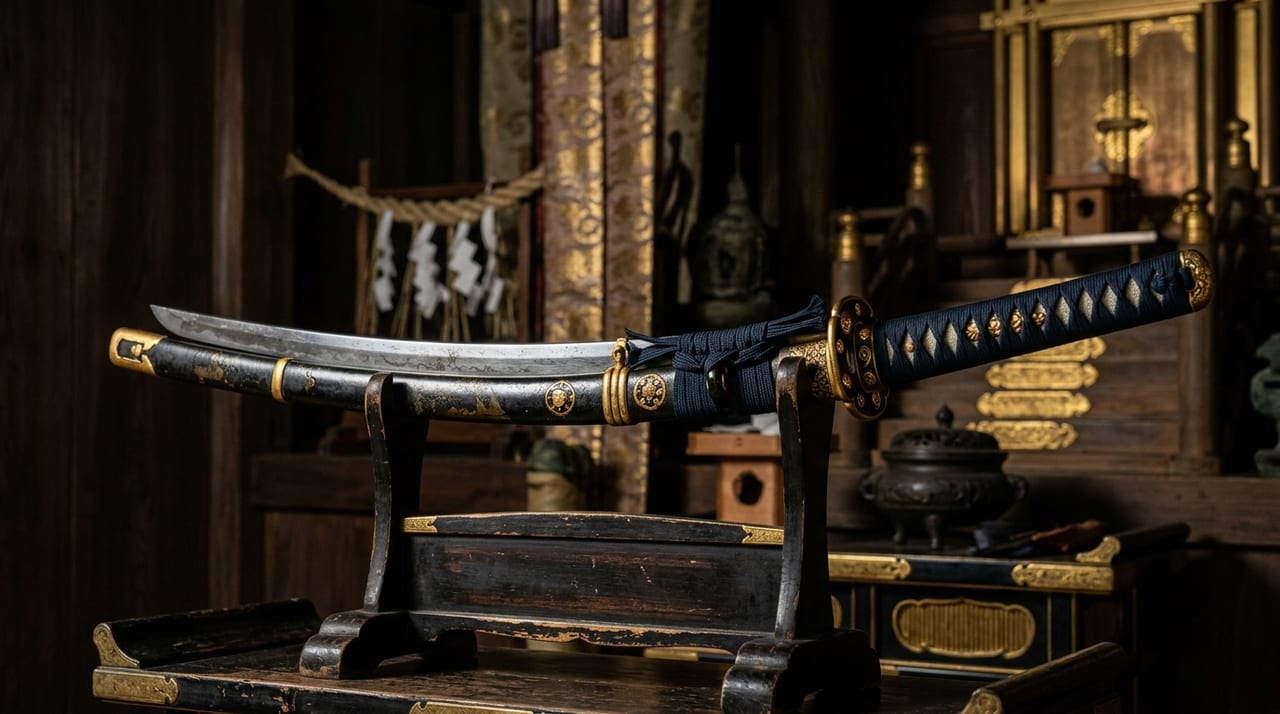 * Image is for illustrative purposes only.
Table of Contents
During the Kamakura period, swordsmiths not only forged practical battle swords in response to orders from samurai, but also created many votive swords to be presented to shrines and temples. Tachi swords enshrined in sacred ground served as a visible demonstration of the connection between samurai power and the divine, and at the same time became primary source materials with reliable provenance for modern sword research. This article explains the background behind the flourishing of sword dedications during the Kamakura period, the swordsmiths and schools that created votive swords, specific examples of surviving votive swords, and why votive swords are important for research purposes.
Background to the Rise of Sword Dedications in the Kamakura Period
The practice of dedicating swords to the divine dates back to ancient times, but with the establishment of the samurai government during the Kamakura period, dedications took on strong political significance.
- Minamoto no Yoritomo developed Tsurugaoka Hachiman-gū as the protective shrine of the samurai warrior class and made it the center of shogunate rituals. When samurai dedicated tachi swords, this act simultaneously expressed loyalty to the shogunate and prayer to the divine.
- After the Jōkyū Disturbance, as the authority of the shogunate became established, gokenin (shogunate retainers) dedicated tachi swords to shrines throughout the realm as prayers for victory in battle or in gratitude for the confirmation of their lands.
- The system of the goban kaji (Imperial Appointee Smiths), in which the retired Emperor Gotoba summoned renowned smiths to create swords each month, demonstrates that swords were also symbols of authority on the imperial court side.
In other words, votive swords were simultaneously "prayers to the divine" for samurai and "the visualization of power." For detailed discussions of shogunate sword rituals, see Kamakura Shogunate and Sword Rituals, and for the goban kaji system, see The Goban Kaji System of Emperor Gotoba.
Swordsmiths and Schools That Created Votive Swords
The Kamakura period is called the golden age of the Japanese sword, and it was the era when three of the five major schools—Yamashiro, Yamato, and Bizen—were perfected, and the Soshu school was born. Votive swords frequently display the work of these major schools.
| School | Primary Production Region | Characteristics Seen in Votive Swords |
|---|---|---|
| Yamashiro School (Rai and Awataguchi factions) | Kyoto | Refined straight blades and meticulous jihada; strong connections with the imperial court and influential temples and shrines |
| Bizen School (Ko-Bizen, Ichimonji, Osafune) | Okayama | Elegant choji-midare patterns; many orders from samurai and numerous votive swords |
| Yamato School (Senjuin, Taima, Tegai, etc.) | Nara | Close relationships with temples; responded to the needs of sohei (warrior monks); characterized by masame jihada and straight blades |
| Soshu School | Kamakura | Developed under the shogun's patronage; strong nie work style employed in dedications related to the shogunate |
Many swordsmiths of the Yamato school belonged to smithing groups affiliated with temples, making this the school with the closest relationship between shrines and swordsmiths. For an overview of Kamakura swords, see The Golden Age of Kamakura Swords, and for morphological characteristics, see Morphological Characteristics of Kamakura Period Swords.
Examples of Existing Votive Swords
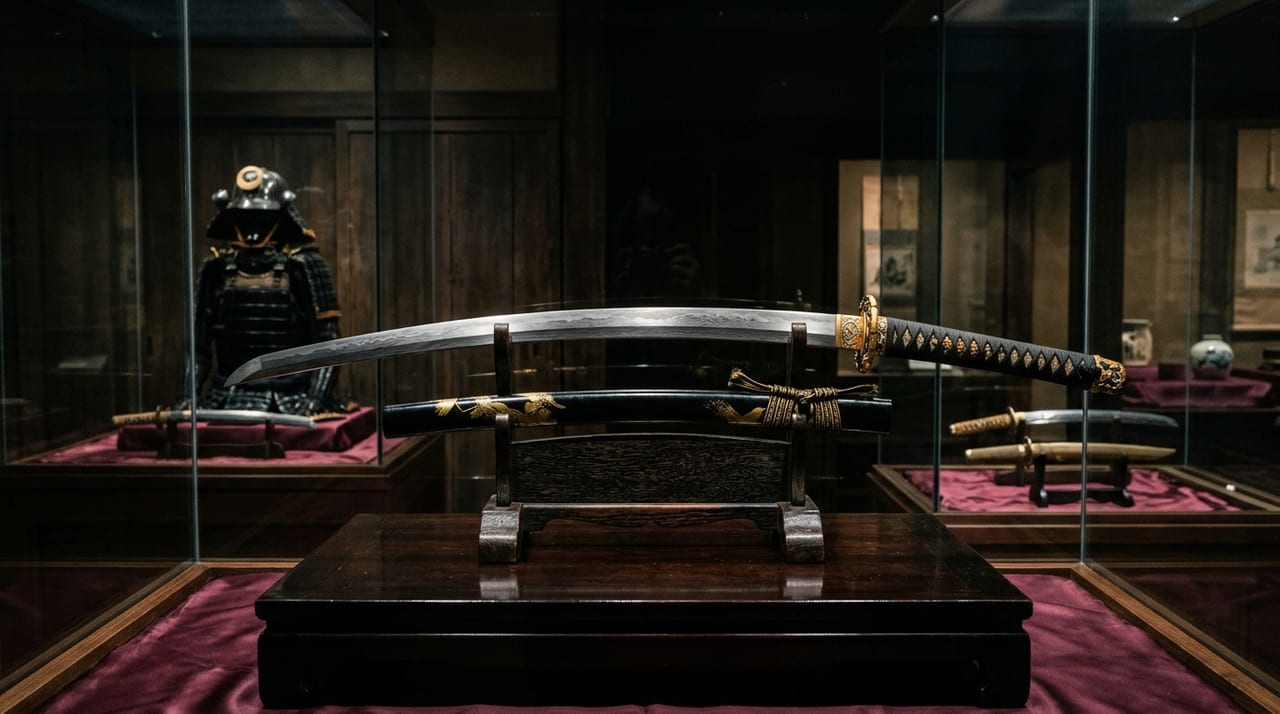
Listed below are representative examples of votive swords known to date from around the Kamakura period and housed in shrines and temples.
- Tsurugaoka Hachiman-gū (Kamakura, Kanagawa Prefecture): As the protective shrine of the samurai warrior class, many swords were dedicated here. The tachi signed Masatsune (mei Masatsune) in the collection is designated a National Treasure and is a Ko-Bizen (old Bizen) masterwork, conveying the appearance of Bizen swordsmiths from the late Heian through early Kamakura periods. The treasures are displayed at Tsurugaoka Hachiman-gū National Treasure Hall.
- Atsuta Shrine (Nagoya, Aichi Prefecture): As the shrine dedicated to the Kusanagi Sword, sword dedications have been continuous since ancient times. The treasure hall houses votive swords from various eras, including works from the Kamakura period. For more details, see Atsuta Shrine.
- Oyamazumi Shrine (Imabari, Ehime Prefecture): A shrine where samurai and feudal lords of the Seto Inland Sea naval forces dedicated armor and swords, it is a treasure house of martial equipment designated as National Treasures and Important Cultural Properties. Large tachi from the Kamakura through Nanboku-chō periods have been transmitted here. You can view them at Oyamazumi Shrine Treasure Hall.
- Kasuga Taisha (Nara, Nara Prefecture): As the tutelary shrine of the Fujiwara clan, swords have been dedicated since the Heian period, and treasures including the National Treasure gold-ground mother-of-pearl inlay sword (Kinji Raden Kenukigata Tachi) are preserved at Kasuga Taisha National Treasure Hall.
- Itsukushima Shrine (Hatsukaichi, Hiroshima Prefecture): A shrine that received the devotion of the Taira clan, where samurai dedications continued from the late Heian period onward. You can see martial equipment and swords at Itsukushima Shrine Treasure Hall.
For details on the types and forms of votive swords themselves, see Types and Forms of Votive Swords (honoto). Cultural properties in the Kamakura area can also be appreciated collectively at Kamakura Museum of National Treasures.
Why Votive Swords Are Important for Research
The reason surviving votive swords are considered the most important materials for sword research lies in the certainty of their provenance.
- Unbroken transmission: Tachi swords that were dedicated have remained enshrined in sacred spaces, preserved from sale or loss during civil strife. In many cases, records or traditions document "when, who, and where" the dedication took place, making provenance clear.
- Preservation of ubu (original, unaltered) condition: Swords used in actual combat undergo changes due to shortening (suriage) and wear from repeated polishing, but votive swords are less likely to undergo modification and often retain their original appearance and nakago (tang) signatures as made by the smith.
- Becoming benchmark works for signature authentication: Votive swords with certain provenance and ubu (original) signatures become "benchmark works" used when authenticating other works by the same smith. They serve as comparison standards for signature character styles, tang construction, and file patterns (yasurime).
- Indicating the technical level of the era: Many votive swords were forged with every technique at the smith's command, serving as keys to understanding the highest standards of their time and school.
For details on how shortening changes appearance and signatures, see The Technique and Appraisal of Shortening (suriage), and for the value of ubu swords, see The Definition and Value of Ubu (Unaltered) Swords.
Points to Notice When Appreciating Votive Swords
When viewing votive swords in a shrine's treasure hall, pay attention to the following:
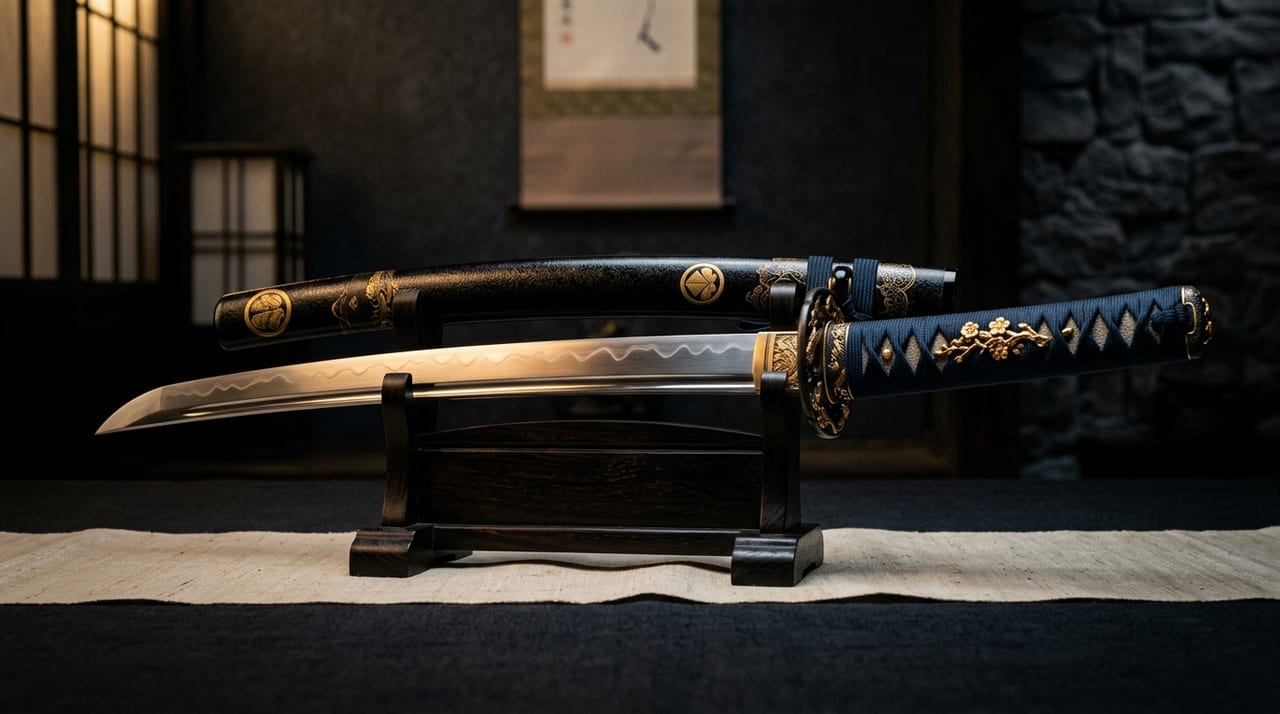
- Mountings (koshirae): Votive swords often come with ornate ceremonial mountings, and the metalwork and maki-e decoration on tachi-koshirae convey the craft techniques of the time.
- Tang and signature: Depending on the display, the tang may be positioned so it is visible. The signature and file marks on an ubu (unaltered) tang are distinctive features unique to votive swords.
- Form (sugata): Kamakura period tachi feature high waist curvature and underwent changes from kissaki (points) that were small to those that were ikubi-kissaki (boar-neck shaped). By noting the form at the time of dedication, the passage of time becomes readable.
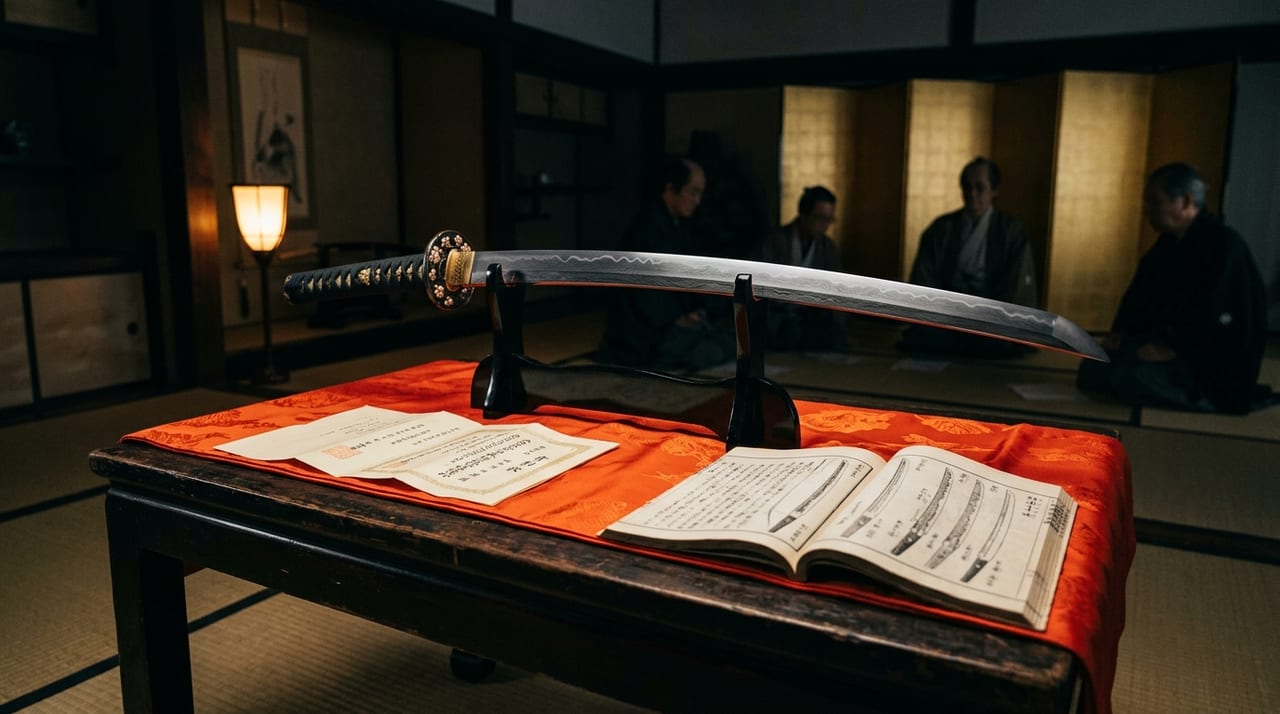
- Dedication documents: Documents recording the dedicator or circumstances of the dedication may be displayed alongside the sword. By viewing the sword and documents together, the political significance of the dedication can be understood three-dimensionally.
For information on sword display facilities throughout Japan, see Viewing Swords in Japan — Recommended Museums and Art Gallery Guide.
Summary
Sword dedication during the Kamakura period was a political act by the samurai government to make visible its connection with the divine, while simultaneously serving as a mechanism to pass down to posterity works to which swordsmiths poured their highest technical abilities. Votive swords created by master smiths of Bizen, Yamashiro, Yamato, and Soshu, with their certain provenance and preservation of their original appearance, are positioned at the center of research as benchmark works in modern signature authentication. By visiting the treasure halls of Tsurugaoka Hachiman-gū, Atsuta Shrine, Oyamazumi Shrine, and other institutions, one can see the prayers of Kamakura samurai, their power, and the skill of swordsmiths all in a single blade.