The Kamakura Shogunate and Sword Ritual — The Culture of Dedication, Bestowal, and Oath Established by the Yoritomo Government
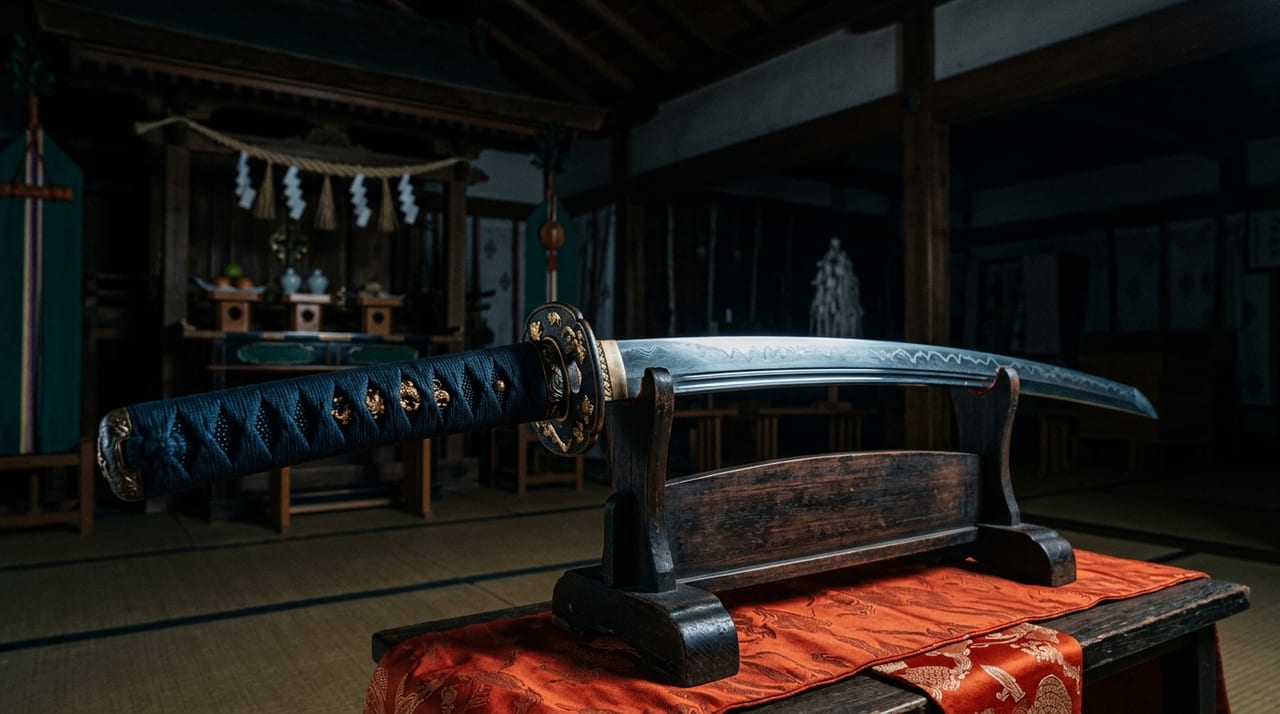 * Image is for illustrative purposes only.
Table of Contents
Minamoto no Yoritomo's appointment as shogun in 1192 and his establishment of a warrior government in Kamakura marked a major turning point in the history of the Japanese sword. Before that time, swords served in the world of the court and aristocracy as both "ceremonial prestige goods" and "practical weapons of war," but with the founding of the Kamakura Shogunate the function of "medium for warrior oaths, dedications, and bestowals" was institutionally established. This article draws on descriptions in primary sources beginning with the Azuma Kagami to explain in detail the actual practice of sword ritual in the Kamakura Shogunate.
The tachi up through the Heian period served as a marker of prestige in gift-giving and ceremony while also being a practical item used in actual battle. With Yoritomo's establishment of a warrior government, this duality gradually shifted in emphasis toward a new role as "a ritual implement for renewing bonds of lord and retainer." In what follows, we will examine the specific manifestations of this through historical sources.
Records of Sword Dedication in the Azuma Kagami
The Azuma Kagami, the official history of the Kamakura Shogunate, describes scenes throughout in which swords function as the center of ritual. Of particular importance is the record of Yoritomo's dedication of a tachi to Tsurugaoka Hachimangu (entry for Bunji 1, 1185). This entry clearly shows that the dedication of swords by warrior houses was institutionally defined not as a mere act of giving but as a religious act constituting "an oath before the gods."
What deserves attention is that both acts — "dedication (hōnō)" and "bestowal (hairyō)" — also functioned as means of confirming the lord-retainer relationship within warrior society.
| Act | Content |
|---|---|
| Dedication (hōnō) | Institutionally defined as a religious act constituting "an oath before the gods" |
| Bestowal (hairyō) | The gokenin receiving a tachi from the shogun made the lord-retainer bond visible and ritualized; recorded in historical sources together with the set phrase "receiving the tachi" |
The very movement of swords carried political and social meaning, giving material form to bonds of lord and retainer that could not be fully expressed in words.
Tsurugaoka Hachimangu is a shrine dedicated to Hachiman, the clan deity of the Minamoto, and was the object of deep devotion among warriors as the god of the bow and arrow and the god of military fortune. The record of Yoritomo's dedication of a tachi at this site can be understood as an event symbolizing not merely a personal expression of faith but the effort of the new warrior government of the Kamakura Shogunate to ground its own legitimacy in divine and Buddhist protection. Through the act of dedication, a structure was gradually created by which the position of shogun itself acquired a sacred backing.
Swords and Oaths — A Symbolic Medium in Place of "Blood Seals"
The role that swords played in the oaths of medieval warriors is often overlooked. In kishōmon (oath documents) of the Kamakura period, the standard format called on divine punishment as witness, but cases in which the exchange of swords functioned as proof of an oath are also recorded repeatedly.
The ritual chain of "dedication of a tachi before the gods → invocation of divine will" concisely illustrates the idea that swords were "a medium connecting the will of the gods with the oaths of warriors." Under the Yoritomo government, the mutual relationship of "lord's benevolence and retainer's service" that bound the gokenin is thought to have been reinforced and made visible through such sword ritual. The physical presence of a sword at the site of an oath generated a binding force and sanctity that words alone could not guarantee.
Behind the practice of placing swords at oath-taking sites lay an ancient belief that regarded swords not merely as weapons but as beings that purify defilement and embody sacred power. One might also say that having a sword — an actual bladed object — physically present at the site supplemented the tension and gravity that the words inscribed in a kishōmon alone could not fully convey. This sensibility is also considered to have been the seedling of the idea, visible in later ages, of "regarding the sword as the soul of the warrior."
The Reality of Dedicated Swords — Surviving Dedicated Items from the Kamakura Period
Many of the dedicated swords from the Kamakura period preserved in shrines today are not in perfect condition, but some have been designated as kokuhō (National Treasures) or jūyō bunkazai (Important Cultural Properties). Among the dedicated tachi transmitted in shrines such as those listed below, works attributed to the Kamakura period include pieces displaying the characteristic features of each of the three great sword-producing regions — Bizen, Yamato, and Yamashiro — attesting to the breadth and high quality of sword production at that time.
- Tsurugaoka Hachimangu
- Kasuga Taisha
- Ise Jingu
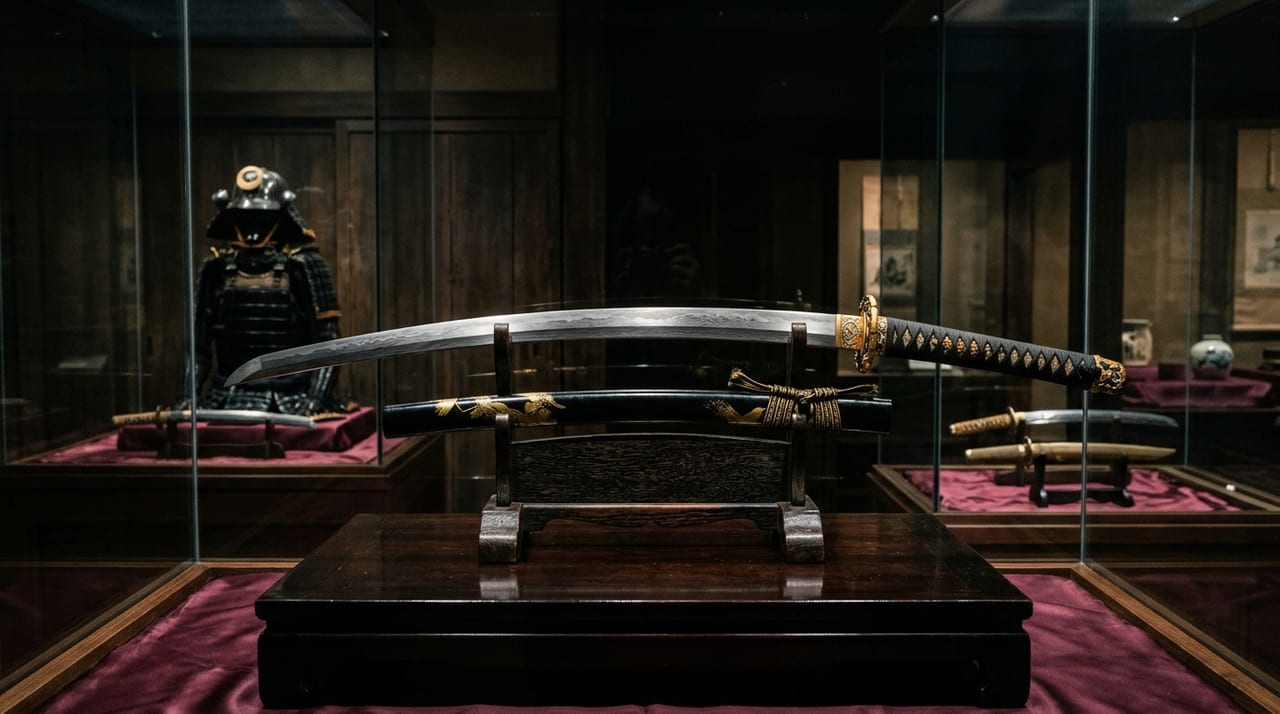
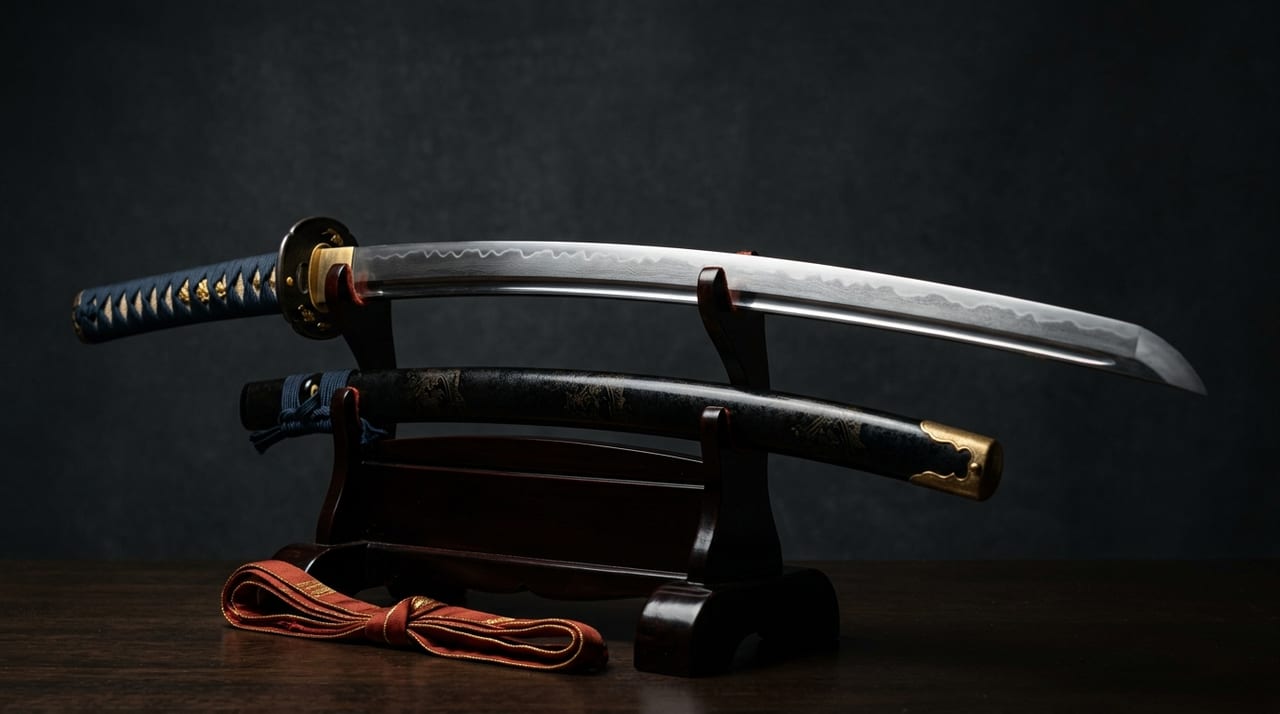
Dedicated swords were typically offered with koshirae (mounting) equipped with saya (scabbard) and tsuka (hilt), and the lavishness of the decoration served as an indicator of the dedicator's status and wealth. The design of the metal fittings and the skill of the maki-e lacquerwork applied to the saya clearly demonstrate that swords were objects possessing artistic and symbolic value beyond their function as pure weapons.
Most of these dedicated swords have been kept in strict preservation by the shrines and have been shown to the public only on festival occasions or special events. That they have been transmitted down to today over long years is itself a testament to the weight of the prayers that warriors of the time invested in swords and to the efforts of shrine custodians who have protected and passed them on. The fact that the production site and period characteristics can be read from the style and form of these swords is also one of the documentary values that such dedicated swords possess.
The Institution of Bestowal — "Grant" from the Shogun to the Retainer
Hairyō (bestowal) was not a mere exchange of goods. The act of the shogun "granting (kashi)" a tachi to a gokenin was a reaffirmation of the lord-retainer relationship, and for the gokenin it became unshakeable material proof of "the shogun's direct trust."
In the Azuma Kagami the phrase "receiving the tachi in the presence of the lord" appears repeatedly. A tachi received by bestowal was regarded not merely as a tool for use but as an important object to be passed down to descendants as a family treasure. The record of provenance — "when and from whom it was received" — became the basis for demonstrating a warrior house's standing, and swords accumulated history and authority in physical form. The provenance of the tachi itself became testimony speaking to the legitimacy and pride of the household.
The custom of carefully preserving a bestowed tachi as a family treasure and handing it down to the next generation held a meaning beyond simply leaving an object behind. By passing down the provenance of the tachi together with the object itself, the very lineage of the household was transmitted to the next generation. This stance of treating provenance with such importance shows that swords were handled not as stand-alone works of art but as objects inseparably bound to the history of the household.
The Value Shown by Provenance (Denrai) — Records of Dedication and Bestowal, and Contemporary Sword Appreciation
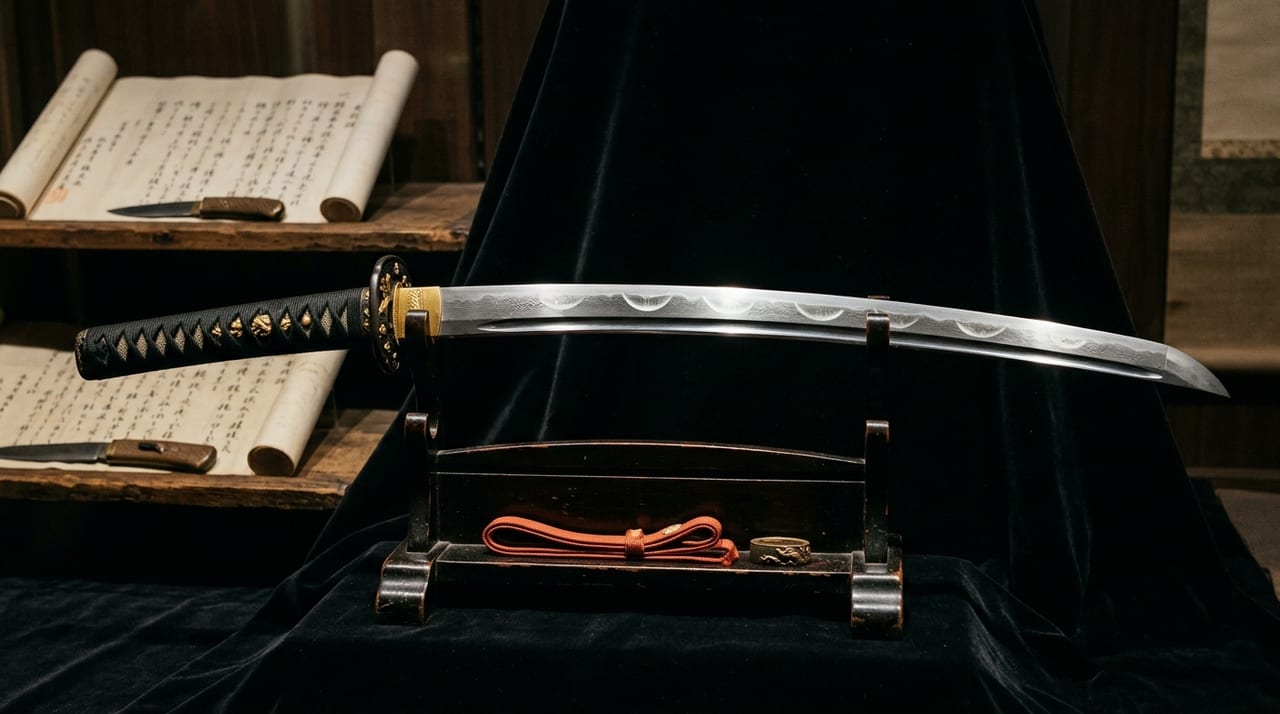
The practices of "dedication" and "bestowal" established in the Kamakura period are not mere historical events but also provide a perspective that connects with Japanese sword appreciation today. The provenance (denrai) — the circumstances by which a given sword has been transmitted — is considered one of the important keys to appreciating and understanding swords, alongside style, jigane, and hamon.
A sword whose provenance is clear might be called "another mei" that speaks to which era and under what circumstances it has been valued. When we handle a tachi for which records of dedication or bestowal survive, we are not merely appreciating a metal form but also touching the thoughts of the people who protected and transmitted it. When taking up or appreciating a Japanese sword, turning one's thoughts to such provenance should deepen one's understanding of the work.
The Legacy of the Sword Culture Established by the Kamakura Shogunate
The sword ritual institutionalized by the Kamakura Shogunate was passed down without interruption into the warrior culture of the Muromachi and Edo periods. Swords were positioned as objects carrying the following functions, and this thinking formed a long lineage connecting to the concept in the Edo period of "the sword as the soul of the warrior."
- A warrior's identity
- A medium of the lord-retainer relationship
- A symbol of the oath before the gods
This view of swords established in the Kamakura period went beyond their function as mere weapons, positioning the Japanese sword as a complex of spiritual, social, and religious meaning. It can be said that behind the high esteem in which the Japanese sword is held today as a work of art and cultural property lies this deep accumulation of sword ritual within medieval warrior society. When viewing a sword, letting one's imagination roam over the history of dedication and bestowal behind it also offers a rich perspective for engaging with the Japanese sword as a cultural property.