Koyama Muneratsu's Sword-Making Explained: The Shinshintō Period's Greatest Technician, the Man Who Sought the Strongest Blade Pattern of the Late Edo Period
 * Image is for illustrative purposes only.
Table of Contents
Koyama Munetsugu—A Solitary Craftsman of the Shinshintō Period
Koyama Munetsugu (固山宗次, born Kyōwa 3 / 1803, death year unknown) was a master bladesmith representing the shinshintō period from the late Edo through the Bakumatsu era. Born in Shirakawa, Mutsu Province (present-day Shirakawa City, Fukushima Prefecture), he trained under Chōunsai Tsunatoshi in Edo, and after establishing his own practice, produced numerous masterpieces.
The shinshintō period represented a departure from the practical blade tradition developed during the preceding shintō period (approximately 1596–1781), instead seeking a return to and revival of techniques from the kotō era. Koyama Munetsugu worked at the forefront of this movement, dedicating his life as a bladesmith to researching and recreating the classical techniques of the Kamakura and Muromachi periods.
The Ideological Influence of His Master, Chōunsai Tsunatoshi
To understand Koyama Munetsugu's artistic style, it is essential to grasp the technical lineage of his master, Chōunsai Tsunatoshi (younger brother of Katō Tsunahide). Under his guidance, Munetsugu built his foundation as a bladesmith and developed into a first-class swordsmith of Edo. Suishinshi Masahide (1750–1825), known as the founder of the shinshintō period, was not his direct teacher but rather positioned in his genealogy as a spiritual ancestor. Masahide's work "Tōken Jitsuyō Ron" was an important text discussing the aesthetics and revival of Japanese blade technique, and its ideological influence flowed through the entire era, shaping Munetsugu's approach to his craft.
Koyama Munetsugu's Technical Characteristics
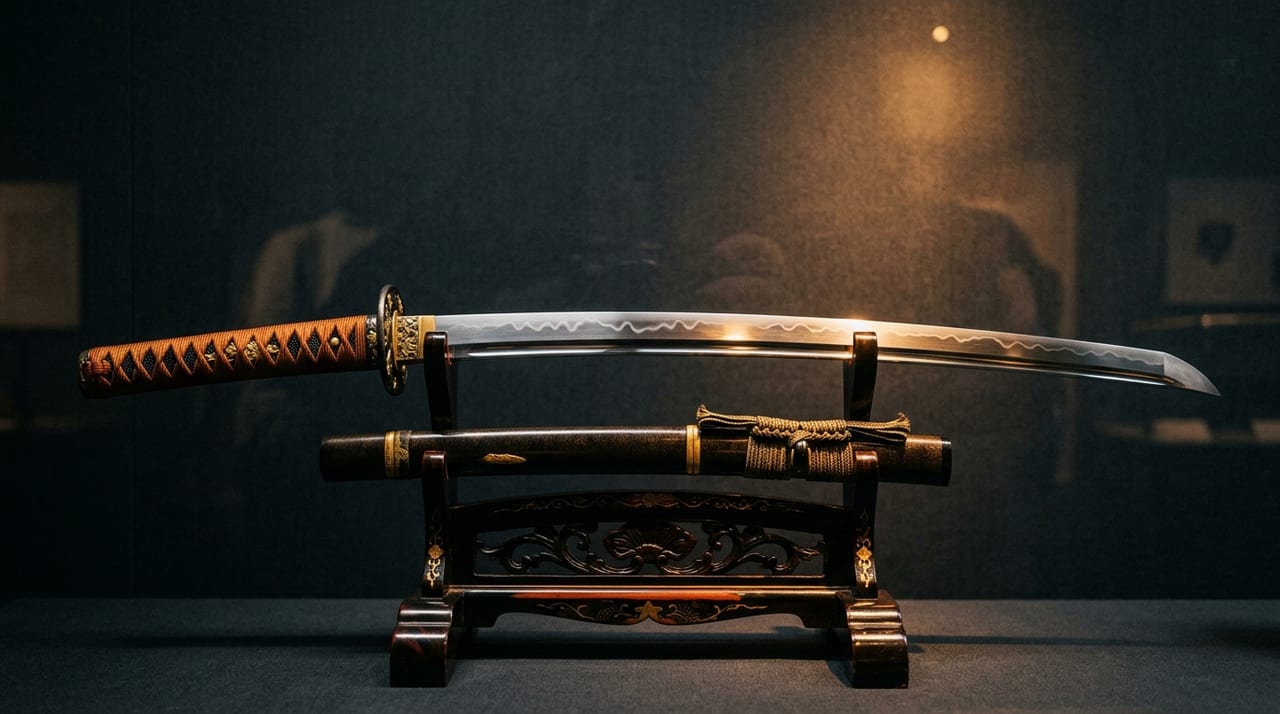
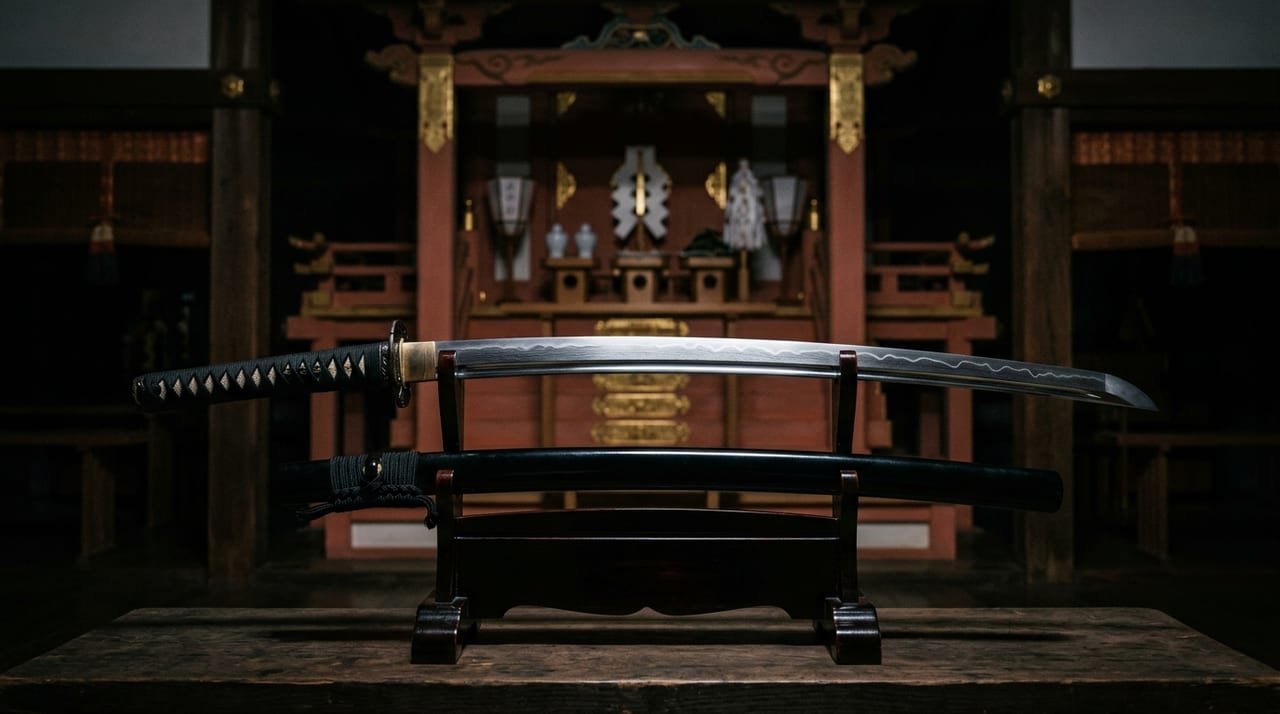
Koyama Munetsugu's blades throughout his life were fundamentally grounded in the Bizen tradition, and he excelled at the ornate chōji midare and gunome midare patterns. Reproducing the outstanding blade patterns seen in kotō Bizen pieces using shinshintō-period techniques became the defining theme of his life's work.
Characteristics of the blade steel: Koyama Munetsugu's blade steel possessed an exceptionally high quality for a shinshintō work. Small itame formed tightly into a nashiji-like grain texture, and uniform ji-nie produced an overall appearance of subdued beauty. This texture resembles the ideal blade steel quality seen in masterpieces from the kotō era—particularly from the Kamakura period—and is evaluated as representing a realm difficult for shinshintō smiths to achieve.
Characteristics of the blade pattern: The hamon centered on the chōji midare as the orthodox expression of the Bizen tradition, while also frequently employing the more imposing gunome midare style. The consistently aligned blade pattern from the base to the tip commanded overwhelming power.
His mastery of nie control was exceptional, with appropriately positioned arani producing three-dimensional quality and vitality in the hamon. This represents the essence of Koyama Munetsugu's achievement and his unique identity as a bladesmith who revived the classical beauty of the Bizen tradition in the shinshintō period.
Overall form and dimensions: Koyama Munetsugu created both tachi and katana, though his evaluation is particularly high for katana. The blade form possessed an elegant shallow curve, with appropriate differences between the base width and tip width, approximating the classical form of the Kamakura period. In modern authentication, the "beauty of form" has become an important criterion in evaluating Koyama Munetsugu's work.
Representative Works and Important Extant Pieces
Koyama Munetsugu's extant works are relatively numerous, housed in collections including the Tokyo National Museum, the Sword Museum, and various art museums and cultural institutions nationwide.
One of the most famous works is "Koyama Munetsugu's blade" (incorporated into the Touken Ranbu game system as a work by Koyama Munetsugu), and this game appearance became an opportunity to introduce Munetsugu's name to younger generations.
As for actual extant pieces, multiple blades have been transmitted with records of use by noted swordsmen of the Bakumatsu period, and their evaluation as functional swords was high. There are records that Katsu Kaishū favored a blade by Koyama Munetsugu, and for Bakumatsu patriots, a Koyama Munetsugu blade held a kind of "status symbol" significance.
Positioning and Historical Evaluation in the Shinshintō Period
The most highly regarded bladesmiths of the shinshintō period include the following four, who are often cited together as the "Four Great Masters of the Shinshintō Period":
- Suishinshi Masahide
- Taikei Naotane
- Minamoto no Kiyomaro
- Koyama Munetsugu
Among these, Koyama Munetsugu was particularly exceptional in "blade steel beauty," and his commitment to faithfully recreating kotō techniques is highly valued in modern authentication. However, some assessments note that he lacked the imposing individuality of Minamoto Kiyomaro, and he is sometimes discussed in the contrast between "Koyama Munetsugu the technician" and "Kiyomaro the artist."
In examinations by the Japanese Sword and Art Preservation Society (NBTHK), Koyama Munetsugu's works frequently receive designations of high rank, and by modern authentication standards they are positioned at the highest level of the shinshintō period.
The Historical Context of the Bakumatsu Era and the Role of the Bladesmith
The Bakumatsu period (early to mid-19th century) in which Koyama Munetsugu was active was an era when Japan faced a historic turning point. Following the arrival of the Black Ships in 1853, political turmoil increased demand for "functional combat blades" among the warrior class, and attention to skilled bladesmiths rose accordingly. Within this historical atmosphere, Koyama Munetsugu's reputation grew ever higher, and many warriors and swordsmen sought his blades.
Munetsugu's year of death remains unclear, and since blade-making records exist into the early Meiji period, he is believed to have continued his craft in his later years as a bladesmith who survived the Bakumatsu upheaval. Some of the blades Munetsugu created are said to have been actually used during the tumultuous transition from Bakumatsu to Meiji, giving him an aspect as a living witness to a turbulent age.
Points for Appreciating and Understanding Koyama Munetsugu's Work
When appreciating Koyama Munetsugu's blades, focusing on the following points will deepen understanding:
- The texture of the blade steel—how tightly formed the small itame is, the uniformity of ji-nie—should be examined
- Attention should be paid to the alignment of the hamon and the quality of the nie—the expression of chōji midare and gunome midare
- The overall beauty of the form should be confirmed, particularly the depth of the curve and the width difference between base and tip
Works in which these elements are harmonized at a high level are evaluated as Koyama Munetsugu's masterpieces, demonstrating his essence as a bladesmith who revived the techniques of the kotō Bizen tradition in the shinshintō period.