Are War Tales Sources for Sword History? Tachi in the Heike and Taiheiki Versus Surviving Blades
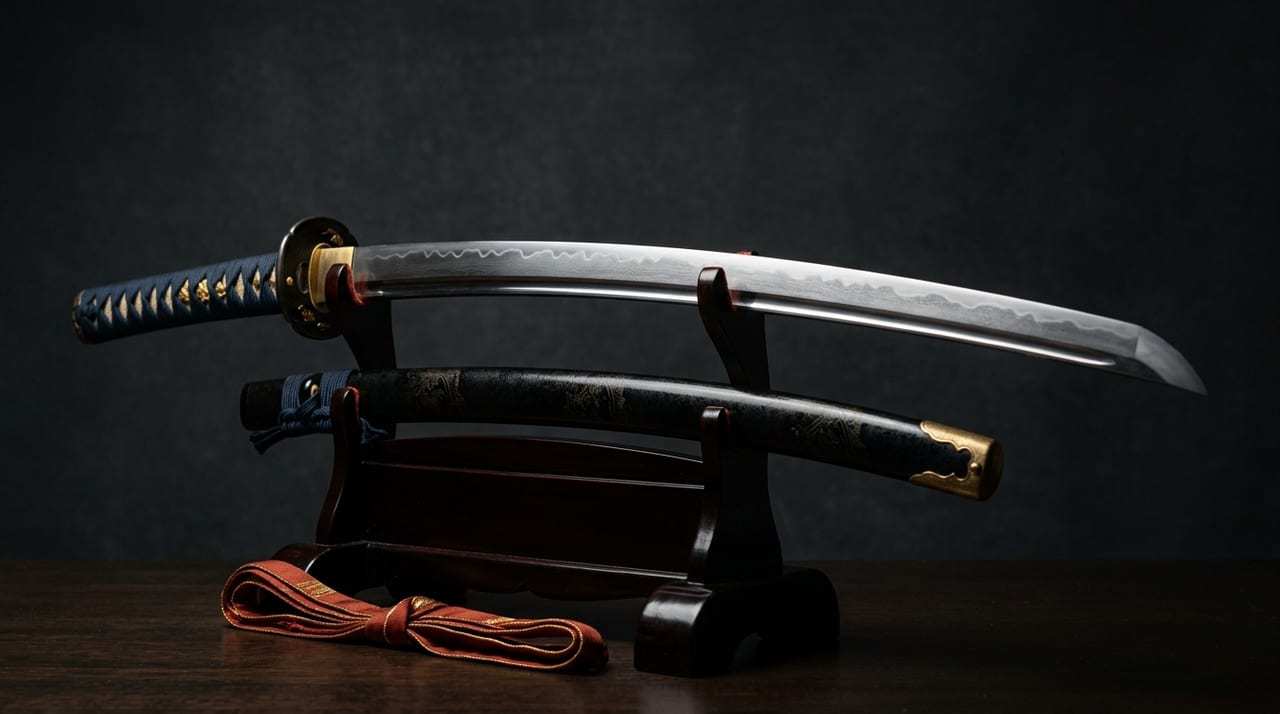 * Image is for illustrative purposes only.
Table of Contents
The Character of War Chronicles as Historical Sources
When studying the history of Japanese swords, passages from war chronicles such as the Tale of the Heike and the Chronicle of Japan's Disorder are sometimes cited as evidence. Descriptions in the narratives—concerning the origins of famous swords, the fighting methods of warriors, the size of tachi—are specific, and it is easy to be tempted to accept them as historical fact.
However, war chronicles are literary works that transmit the narrative of battles. The Tale of the Heike spread through the recitations of blind lute priests, and its contents vary by manuscript. The Chronicle of Japan's Disorder is a long narrative depicting the upheaval of the Nanbokuchō period, and it is believed that its composition occurred in stages. Both are works in which factual record and narrative embellishment are intermingled.
When reading them as sources for the history of swords, it is important not to take the descriptions at face value as fact, but to distinguish between "how the narrative depicts the sword" and "what the actual sword tells us."
Types of Tachi as They Appear in Narratives
Several patterns emerge in the depictions of tachi in war chronicles.
- Heirloom tachi passed down through families appear and affirm the pedigree of their owners
- Ornate fittings such as gold-work mountings show the rank and piety of military commanders
- Warriors wielding oversized or extraordinarily long tachi are portrayed as symbols of extraordinary strength
- Swords become associated with miraculous powers or mysterious occurrences
For example, Higekiri and Hizamaru, named as tachi transmitted in the Minamoto clan, are known as legends appearing in portions called the "Sword Scroll" that accompany variant versions of the Tale of the Heike. Stories explaining the origin of their names are appended, but these are legends in narrative form, and whether the origins of the names are historically factual is a separate matter.
Moreover, the Chronicle of Japan's Disorder relates a scene in which Nitta Yoshisada threw his tachi into the sea at Inmurigasaki during his attack on Kamakura. While this scene is widely known, it has a strong character as dramatic performance in the narrative, and what actually occurred as historical fact requires careful consideration in light of other sources.
Comparison with Actual Tachi
Let us compare the tachi of the narratives with tachi that actually survive today. Tachi from the Heian through Kamakura periods often display an elegant form with pronounced curve at the hilt, and their blade width and kissaki construction changed with the era. This development can be traced in articles on the formation of Heian-period tachi and articles organizing the types of tachi.
On the other hand, the oversized tachi depicted in the narratives overlap with actual odachi in some aspects, but also contain exaggerated elements. That long swords became fashionable during the Nanbokuchō period can be confirmed from extant works and sources, as discussed in explanations of odachi and nodachi. However, depictions in the narratives of enemies being mowed down by a single stroke should be understood as effects of the narrative itself.
Additionally, the fittings of tachi used in ceremonial contexts can sometimes be traced through both material evidence and institutional records, as in articles on the Hyogo Chain Tachi. Comparing the narrative's depiction of "ornate tachi" with actual mountings reveals the extent to which the image in the narrative corresponds to real decoration.
Procedures for Using War Chronicles in the Study of Sword History
When using narratives as clues, following the steps below can minimize errors.
- Confirm the difference between the period of composition and the era depicted in the scene
- Verify whether there are differences among variant texts or manuscripts
- Consider the narrative function (relating pedigree, showing strength, adding mystery)
- Organize findings separately from information verifiable on actual pieces (tang signatures, form, jihada, hamon)
- Cross-reference provenance and designations against other sources and family records
For instance, how the armor of warriors depicted in war chronicles dealing with the Hōgen and Heiji Rebellions corresponds to actual examples of the period only gains meaning when read together with historical context, as in articles on the Hōgen and Heiji Rebellions and sword culture.
The Influence of Narratives on the Evaluation of Swords
Tachi appearing in narratives have also influenced the evaluation of swords in later periods. Famous tachi come to have their origins explained by connecting them to scenes in narratives, and these explanations are sometimes transmitted as accounts of their provenance. Such origin stories add value to the sword, but also contain the possibility of having been added later.
For those examining swords, the more compelling the origin story, the more important it is to verify whether there are other records supporting it. Prioritizing verifiable documentation such as certificates of authenticity, provenance records, and box inscriptions, and treating narratives as supplementary aids to understanding, keeps one's judgement from wavering.
The Pleasure of Observing Both Narrative and Actual Artifact
War chronicle depictions of tachi, despite their questionable factual basis, tell us what people of that time sought in swords. Strength, pedigree, miraculous power, beauty. These desires are entrusted to the tachi in the narratives.
When actually viewing a sword, set aside the narrative image for a moment and examine the form, jihada, hamon, and tang with your own eyes. Then, recalling tradition and passages from the narratives, the depth of culture surrounding the sword comes into view. Verifying the differences that arise between narrative and actual artifact is one of the pleasures of studying sword history.