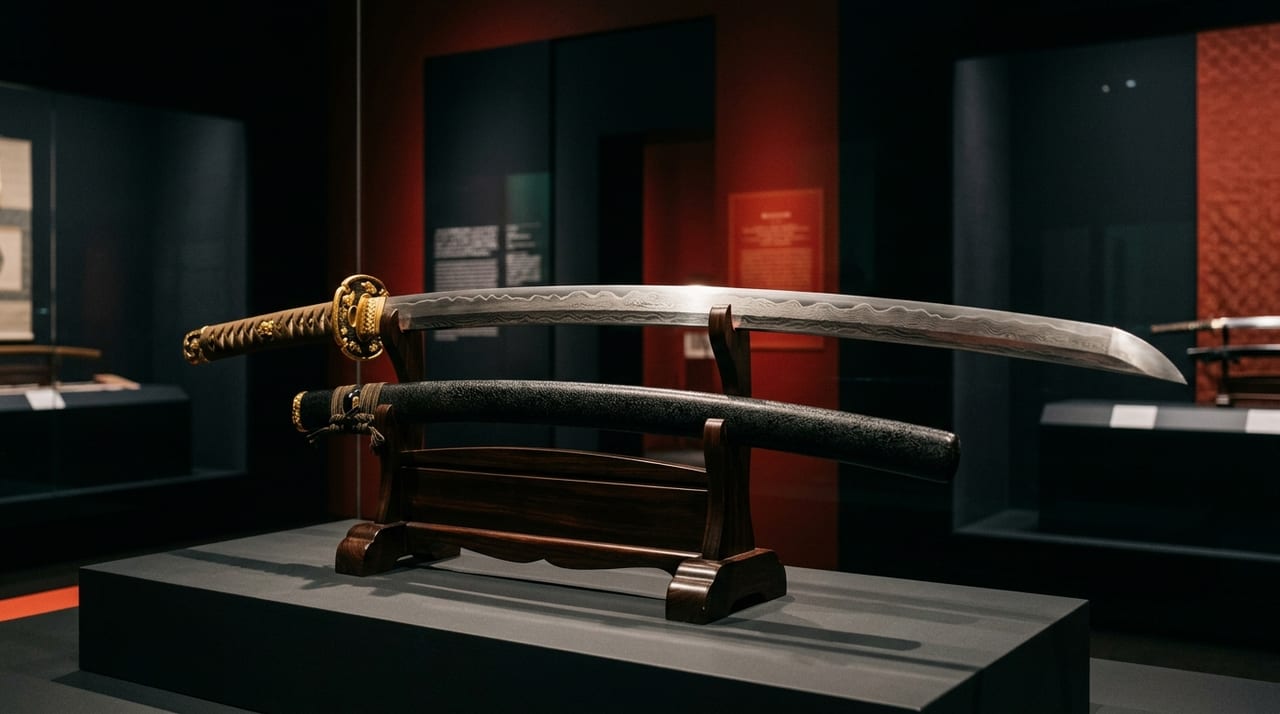
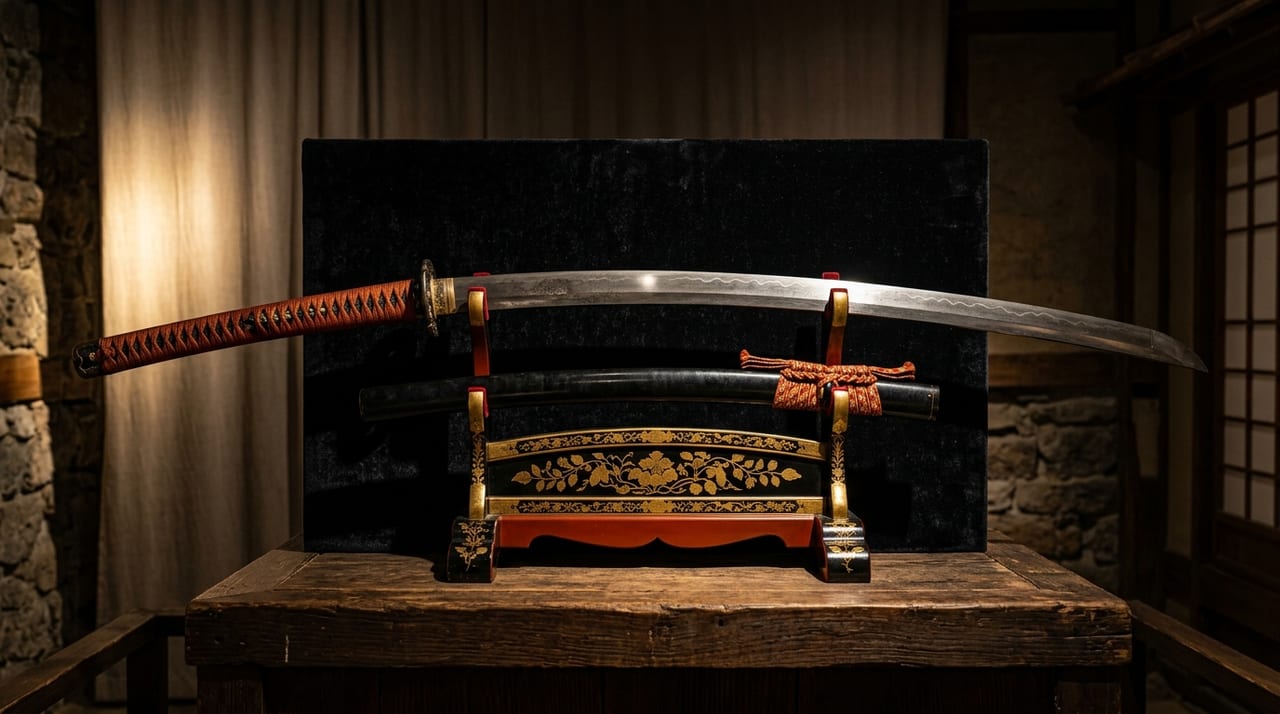
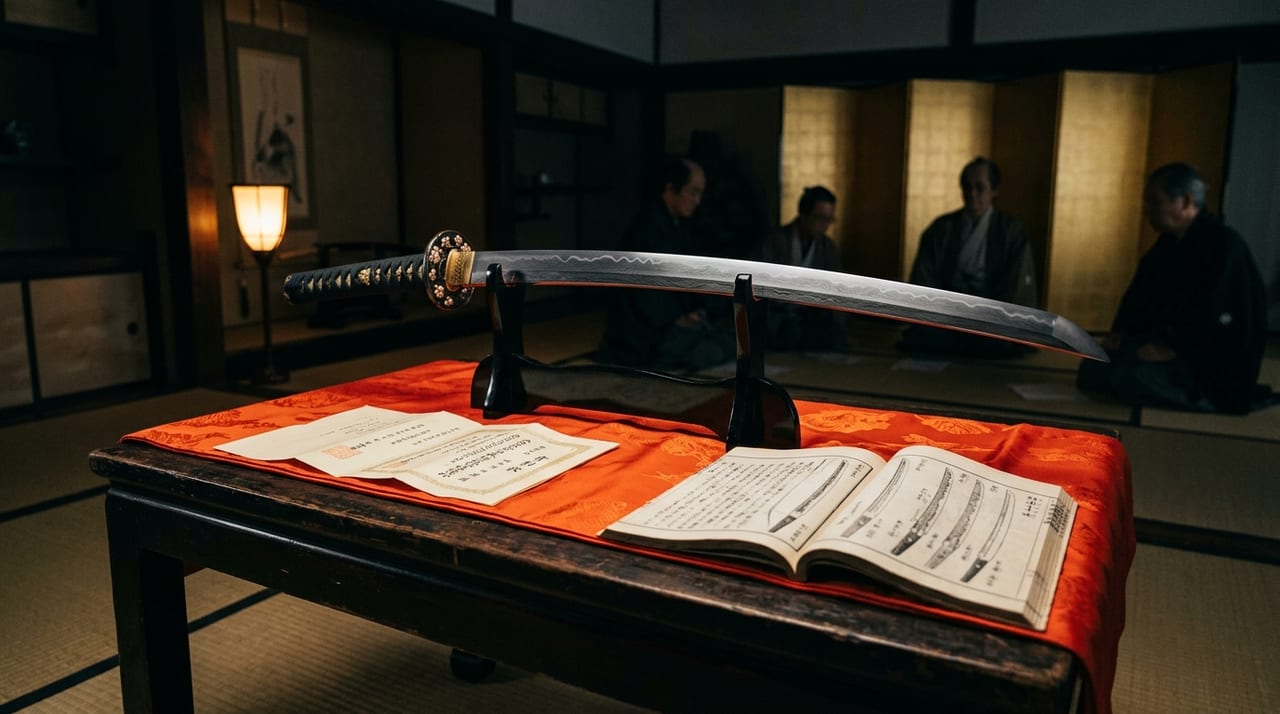
Warriors of the Nanbokuchō Period and the Collecting of Swords — The Dawn of Samurai Collections Nurtured by an Age of Upheaval
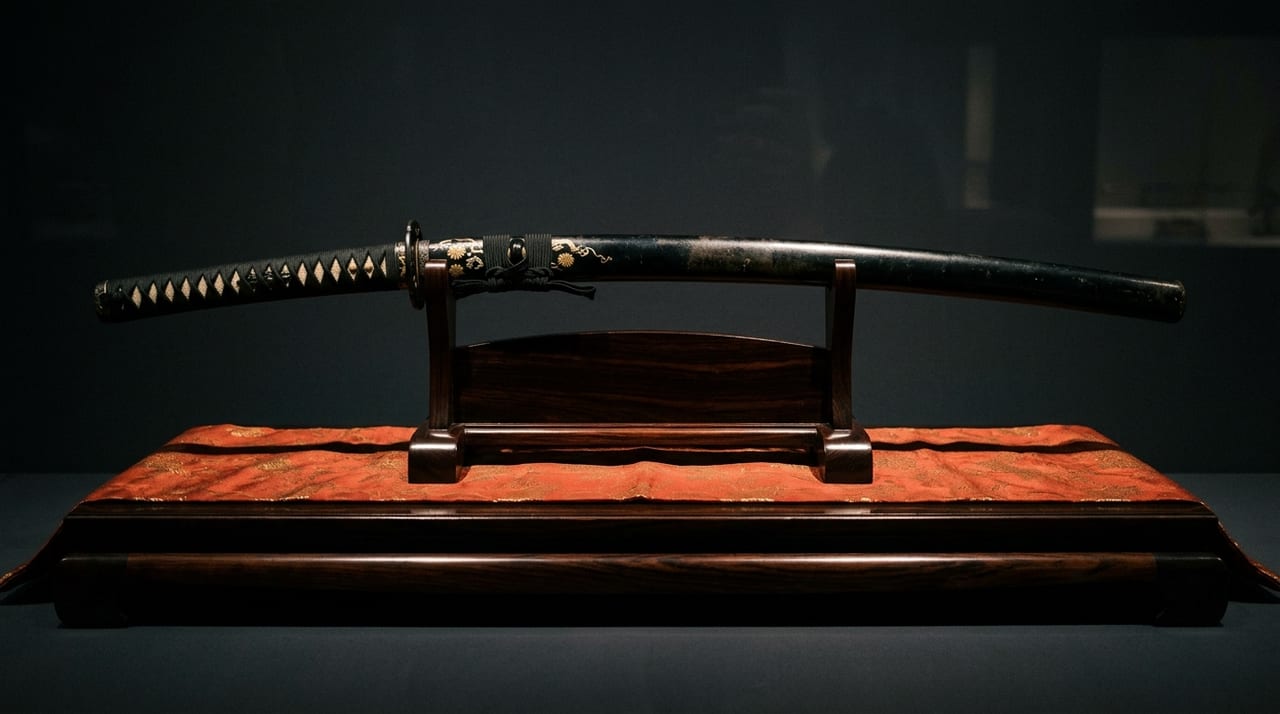 * Image is for illustrative purposes only.
Table of Contents
The Nanbokuchō Upheaval and the Rapid Increase in Sword Production — The Foundation of Collection Culture
The Nanbokuchō period (1336–1392) was an age of upheaval in which the Northern Court established by Ashikaga Takauji and the Southern Court opened by Emperor Go-Daigo upon his retreat to Yoshino fought continuously for more than half a century. This prolonged conflict sharply drove up the demand for swords, and large quantities were produced in each of the major production centers of Bizen, Sōshū, Yamato, Yamashiro, and Mino.
The rapid increase in sword demand did not arise solely from the need for weapons. The spread of the custom by which warriors bestowed swords upon their retainers as rewards, or seized and exchanged famous blades as proof of battlefield merit, was also a major factor in greatly increasing the volume in circulation. Many of the swords produced in large numbers during this era would later come to accumulate in the hands of warriors.
Noteworthy is the fact that Nanbokuchō sword production reached its peak not only in quantity but in quality as well. The large swords produced by Bizen tōkō such as Osafune Kanemitsu, Nagayoshi, and Motoshige, who were active during this period, as well as tōkō such as Hiromitsu and Akihiro, who mastered Sōshū-den, have received such high acclaim in later ages that the era is called the "golden age of the Nanbokuchō."
The Ashikaga Shogunal House and the Accumulation of Famous Blades — Sword Collecting as a Political Tool
Ashikaga Takauji and his successors, who established the Muromachi shogunate after the Nanbokuchō conflict, were active in collecting famous blades. Swords were a symbol of military might and, at the same time, important gifts and rewards in forming lord-retainer relationships. The shogunal house's ability to possess and distribute fine swords was directly connected to the maintenance of political authority.
The sword collection accumulated by the Ashikaga shogunal house reached a scale that has been handed down and spoken of through later ages, but its starting point lies in the accumulation of swords during the battles of the Nanbokuchō period. It should be noted that "Higashiyama gyobutsu" is a collective term for the cultural objects — paintings, tea utensils, flower vessels, and the like — collected and organized by Ashikaga Yoshimasa, the eighth shogun of the Muromachi period, and does not refer to a collection centered on swords. As the pattern of swords passing from defeated warriors to victors was repeated on the battlefield, fine swords gradually came to accumulate in the hands of powerful figures.
The custom of presenting swords at important occasions in samurai etiquette — the new year, coming-of-age ceremonies, marriage arrangements, and the like — also became standardized during this era. As the quality of the swords presented came to indicate the rank of the giver, warriors came to find aesthetic and social value in possessing beautiful, famous blades.
Individual Warriors' Attachment to Famous Blades — The Emergence of Aesthetic Collecting Consciousness
The feelings that Nanbokuchō-period warriors held toward swords went beyond mere interest in practical weapons. It was also a period during which a culture of treasuring the works of specific master craftsmen, taking pride in possessing historically significant famous blades, and discussing the beauty of swords began to emerge among warriors.
The formation of this aesthetic consciousness is related to the fact that it was a transitional period in which swords were shedding their identity as "symbols of military might" and becoming "works of art." The imposing blade bodies and magnificent irregular hamon created by Nanbokuchō tōkō could themselves become objects of appreciation as visual beauty. The prototype of "sword appreciation," in which warriors showed their swords to one another and discussed their relative merits, was taking shape during this era.
An aesthetic eye that can be called the precursor to the dōbōshū system — a group of cultural figures who served the shogunal house and were responsible for the appraisal and management of cultural objects — and which would become established in the later Muromachi period, was already being nurtured within samurai society during this Nanbokuchō period of upheaval.
Characteristics of Sword Circulation and Warrior Collections in the Nanbokuchō Period
The collection culture of the Nanbokuchō period had several characteristics compared to later eras.
- First, most collections were formed through looting, seizure, and gifts on the battlefield, and their character differed from collecting through "commissioned works," in which master craftsmen were deliberately retained and requested to forge swords. The conflict accelerated the circulation of swords, and there was a large element of fine swords accidentally coming to accumulate in the hands of warriors.
- Second, Nanbokuchō-period collectors had not yet paid sufficient systematic attention to the provenance (raireki) and history of swords. It was not until the rise of groups of sword appraisers such as the Hon'ami family in the mid-Muromachi period and afterward that the systematic management of provenance and recording of famous blades came to be carried out.
- Third, warrior collections of the Nanbokuchō period were mostly assembled through personal attachment and political practicality, and from the perspective of aesthetic collecting, they remained at a nascent stage.
Even so, the significance of samurai society beginning to recognize swords not as mere tools but as "valuable cultural objects" is great, and the era holds an important position as the age that laid the foundations of later sword culture.
The Legacy of Nanbokuchō Collection Culture — Influence on Later Ages
The famous-blade collections and collecting consciousness accumulated during the Nanbokuchō period were inherited and developed throughout the Muromachi and Sengoku periods. The starting point of the long lineage leading to the concept of "Higashiyama gyobutsu" perfected by Ashikaga Yoshimitsu, the protection of local master craftsmen by Sengoku daimyo, and the formation of sword collections by rulers of the Toyotomi and Tokugawa eras lies precisely in this age of Nanbokuchō upheaval.
Many of the Nanbokuchō-period swords designated as kokuhō (National Treasure) or jūyō bunkazai (Important Cultural Property) today were once passed through the hands of various warriors and have been transmitted to the present day. It was also an important change of this era that swords came to be treated not as mere consumables but as "cultural objects" to be carefully preserved and passed on. That we today can appreciate famous blades through museums and platforms such as TOUKENZA is also the result of the long accumulated history in which Nanbokuchō warriors recognized value in swords and preserved them.