Large Odachi and Nodachi of the Nanboku-chō Period: Formation and Use of Large Swords Born in a Time of Upheaval
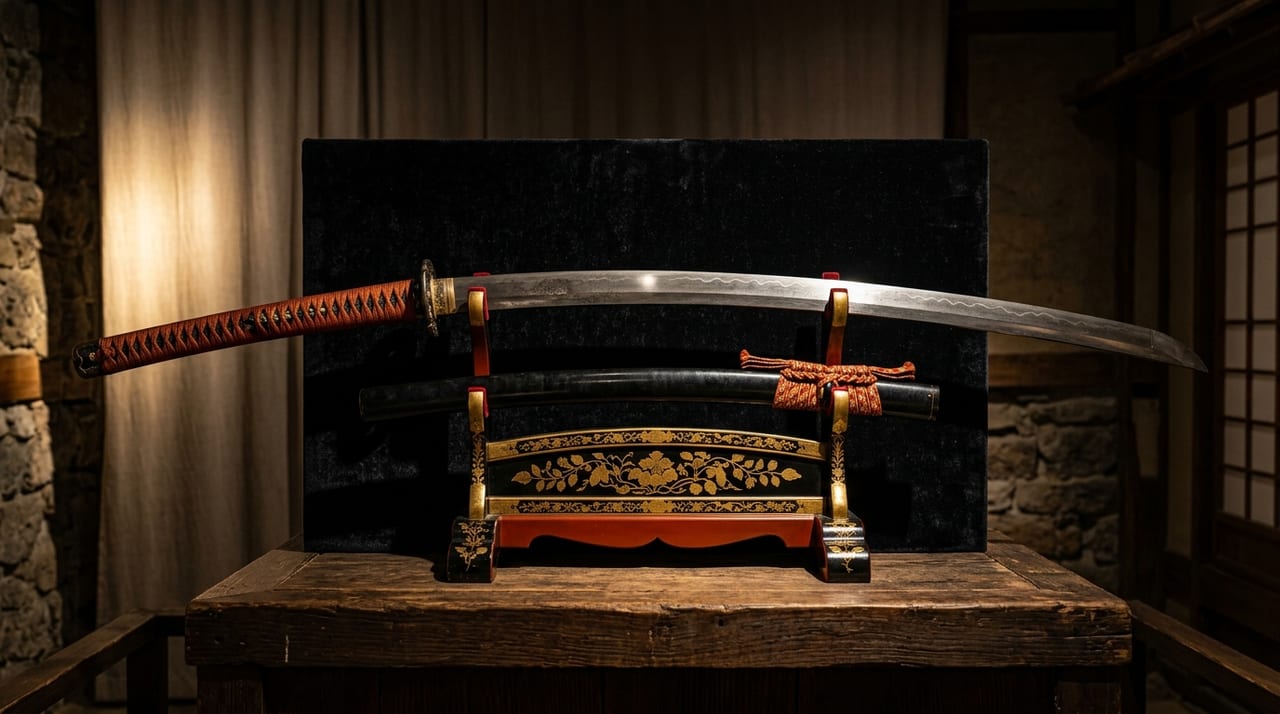 * Image is for illustrative purposes only.
Table of Contents
The Nanboku-chō Turmoil and the Rise of Large-Scale Swords
From the Kemmu Restoration (1333) to the unification of the Northern and Southern Courts (1392), over approximately 60 years, the Japanese archipelago endured an unprecedented state of civil war. The struggle over imperial succession, divided between the Southern and Northern Courts, led to the dissolution of the traditional shōen system and became an opportunity for regional samurai bands to independently establish their military forces. This historical necessity gave rise to an exceptionally distinctive group of large-scale swords in the history of Japanese blades.
While the primary swords of the late Kamakura period were tachi with blade lengths around 2 shaku 3 sun (approximately 70 cm), with the advent of the Nanboku-chō period, "ō-tachi" exceeding 3 shaku (approximately 90 cm) in blade length, and even "no-tachi" reaching 4 shaku or more, began to be mass-produced. This sudden increase in size was inseparably linked to the tactical shift from mounted combat to close-order infantry warfare.
Morphological Characteristics of Ō-tachi and No-tachi
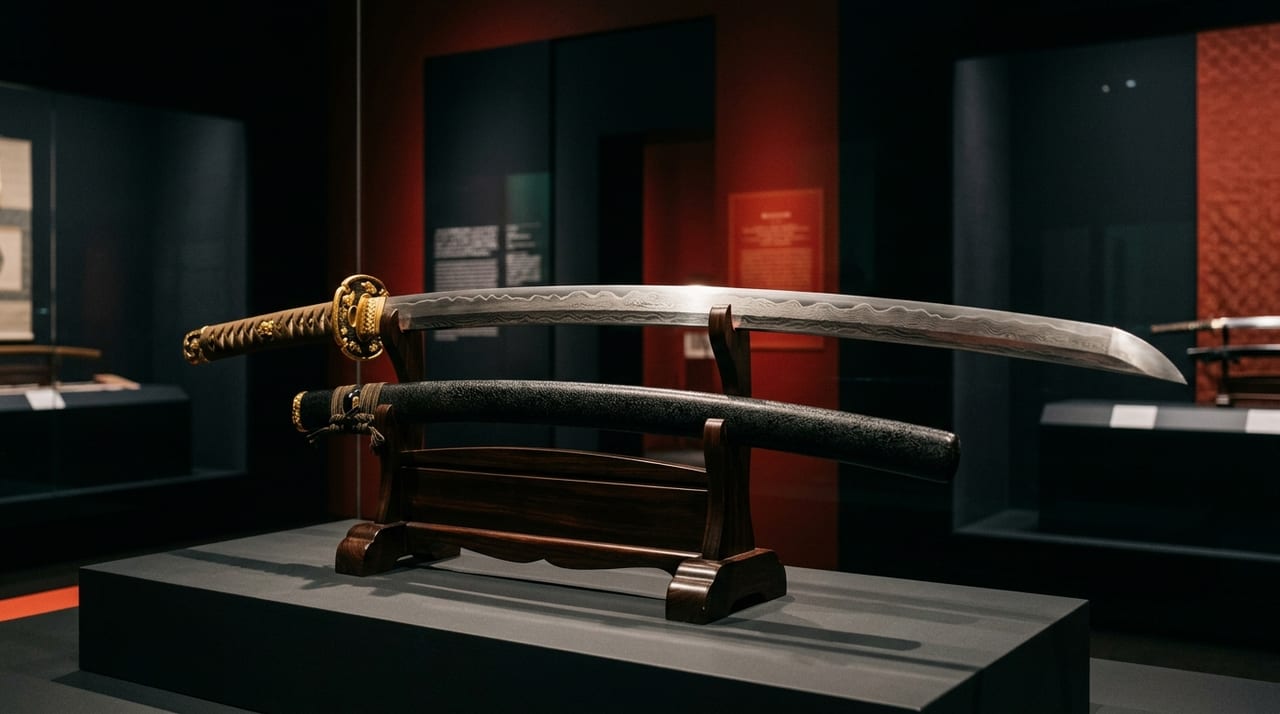
Several morphological indicators appear in Nanboku-chō period ō-tachi. First, regarding sori (curvature), the kooshi-zori developed in the late Heian period receded, while naka-zori and saki-zori extending from the shinogi to the spine side became emphasized. This was a shape that enhanced maneuverability when wielding longer blades and enabled thrusting techniques using the kissaki.
While shinogi-zukuri remained the primary construction method, sword bodies with broad blade widths and majestic flat sides became prominent. The small ratio between root width and tip width (the drop of the fukura), along with the enlargement of the kissaki called ō-kissaki, became recognized characteristics of the Nanboku-chō style.
No-tachi sometimes reached blade lengths of 4 shaku 5 sun (approximately 136 cm) or more, and possessed a character closer to a specialized striking and sweeping weapon brought to the battlefield rather than a weapon for individual use. Most extant no-tachi underwent suriage (refinishing) in later periods and were shortened, with complete examples preserving their original full length being extremely rare as cultural artifacts.
Battlefield Application and the Background of Enlargement
The main theaters of the Nanboku-chō civil war saw an increase in infantry combat such as mountain castle assaults, night raids, and pursuits, rather than frontal cavalry engagements. Infantry groups on foot adopted the practice of using ō-tachi as a substitute for polearms and naginata. Specifically, they were effective for knocking down mounted warriors to the ground with leg sweeps before striking them, and for sweeping attacks during massed assaults.
Furthermore, the Nanboku-chō period saw the flourishing of the custom of dedicating swords to shrines and temples, with ō-tachi also manufactured as offerings to Shinto shrines and Buddhist temples. Ō-tachi forged as symbols of divine power rather than practical combat swords still survive in numbers at Ōyamazumi Shrine, Kasuga Grand Shrine, and other locations, with many designated as Important Cultural Properties or National Treasures.
Enlargement was also driven by factors beyond tactics. During the Nanboku-chō period, the protective power of ō-yoroi armor was strengthened, and heavier sword bodies emphasizing striking force and shattering power were required to counter the hardening of armor. This demand technically encouraged the lengthening of blade length and the expansion of blade width.
Among bladesmiths representing the Nanboku-chō period, Sadamune of Sōshū and Gō no Yoshihiro are notable. Sadamune is said to have been a disciple of Masamune and forged majestic ō-tachi carrying on the essence of the Sōshū tradition. Authentic works by Gō no Yoshihiro are extremely rare, and examples designated as National Treasures or Important Cultural Properties are called "coveted masterpieces" in the sword world.
The Rai school of Yamashiro—Rai Kunitoshi, Rai Kunimitsu, and Rai Kunitsugu—crafted Nanboku-chō ō-tachi with the Rai school's characteristic soft ji-tetsu and serene hamon, while the Aoe school of Bingo and Bizen were distinguished by their distinctive blackish iron color (sumihada).
Representative Extant Examples and Appraisal Points
As a representative example of extant Nanboku-chō ō-tachi, the ō-tachi of Bizen Osafune Kanemitsu stands out. Kanemitsu was one of the representative bladesmiths of the Nanboku-chō period, characterized by ō-kissaki, majestic sword bodies, and the ko-chōji hamon peculiar to the Bizen tradition. Works influenced by the Sōshū tradition also remain, featuring hiro-suguha with kinsuji and inazuma running through them.
The main appraisal checkpoints are as follows.
- Ji-tetsu: During the Nanboku-chō period, examples mixing ō-itame increased due to Sōshū tradition influence. In the Bizen tradition, small itame mixed with mokume is basic, but examples with clear utsurimono are valued.
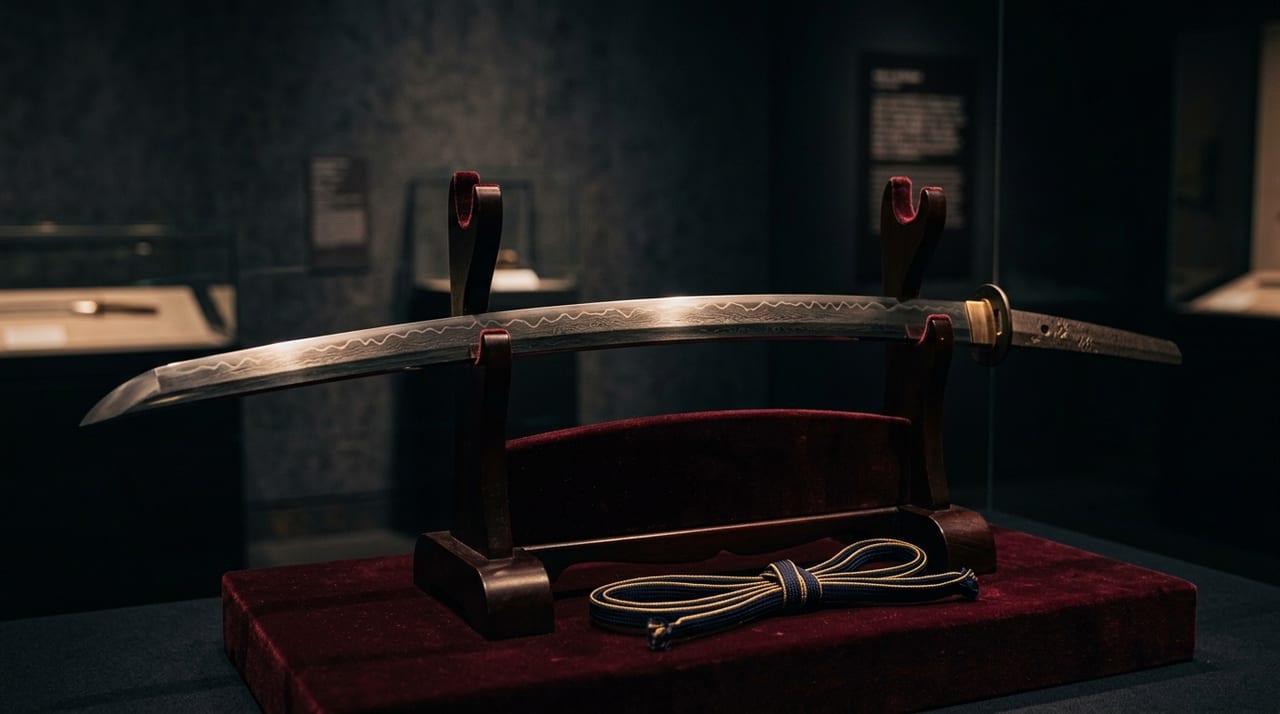
- Hamon: Wide hamon patterns such as guno-me utsuri and large chōji that produce majesty are considered characteristic of the Nanboku-chō style. Sōshū-style examples display intense hitatsura hardening.
- Nakago: Confirmation of the presence and degree of suriage is important. When the signature is worn away, age estimation is conducted from the nakago's file marks, mekugi hole position, and rust condition.
Examples from the Yamato and Yamashiro traditions also display characteristics unique to Nanboku-chō ō-tachi.
| Tradition | Ji-tetsu | Hamon & Characteristics |
|---|---|---|
| Yamato tradition (Nara school) | Dense masame is the basis | Suguha or small utsuri patterns are common; an elegant style without the intense activity of the Sōshū tradition |
| Yamashiro tradition (Rai school) | Dense iron typical of small itame with minimal surface texture | Small utsuri patterns of gentle nioi predominate, maintaining blade edge quality even in longer-bladed works |
Ō-tachi with signatures are particularly valued in appraisal. Because the Nanboku-chō period saw significant loss of signatures due to suriage, works retaining their original signatures on the nakago serve as the sole basis for confirming production location, bladesmith, and date as primary sources. Signed Nanboku-chō ō-tachi tend to receive top-tier evaluation in examinations by the Society for Preservation of Japanese Art Swords (NBTHK), and command significantly higher market valuations than unsigned refined examples.
Relationship to the Five Traditions—The Influence of the Nanboku-chō Period on Bladesmiths
The Nanboku-chō period was an era in which, among the five major traditions of Japanese swords (Yamashiro, Yamato, Bizen, Sōshū, and Mino traditions), the Sōshū tradition in particular exerted broad influence nationwide. The style of "large itame in the ji, hitatsura in the hamon, and intense activity" established by the Masamune school of Sōshū (present-day Kanagawa Prefecture) resonated with the demand of the period of turmoil for "stronger and larger swords," and bladesmiths nationwide competed to imitate this technique.
The Osafune school of Bizen also absorbed Sōshū tradition techniques while establishing its own ō-tachi style, and "Bizen-Sōshū compromise works" from this period receive high evaluation in modern appraisal.
Suriage and Cultural Property Protection
As mentioned above, most no-tachi and ō-tachi underwent suriage for practical use by the Edo period and were shortened to blade lengths around 2 shaku 3 sun. Often the signature was lost in this process, and numerous examples survive as unsigned or "heavily refined unsigned" pieces.
From the standpoint of cultural property protection, extant Nanboku-chō ō-tachi that have not undergone suriage are considered first-class materials for appreciation and research. While museum collections and swords dedicated to shrines are often impossible for individuals to own, refined examples with registration certificates that have passed into private hands can be traded in legitimate sword markets.
Ō-tachi retaining morphological characteristics of the Nanboku-chō period are highly valued among collectors, and the presence or absence of an appraisal certificate (examination document from the Society for Preservation of Japanese Art Swords) directly affects auction and purchase prices.
The challenge that the turbulent Nanboku-chō period imposed on bladesmiths—gave rise to ō-tachi and no-tachi, the largest category in the history of Japanese swords, and their remains have continued to survive to the present day as evidence of Japanese samurai culture.