Dojigiri Yasutsuna — The Oldest of the Tenka Goken and Its History
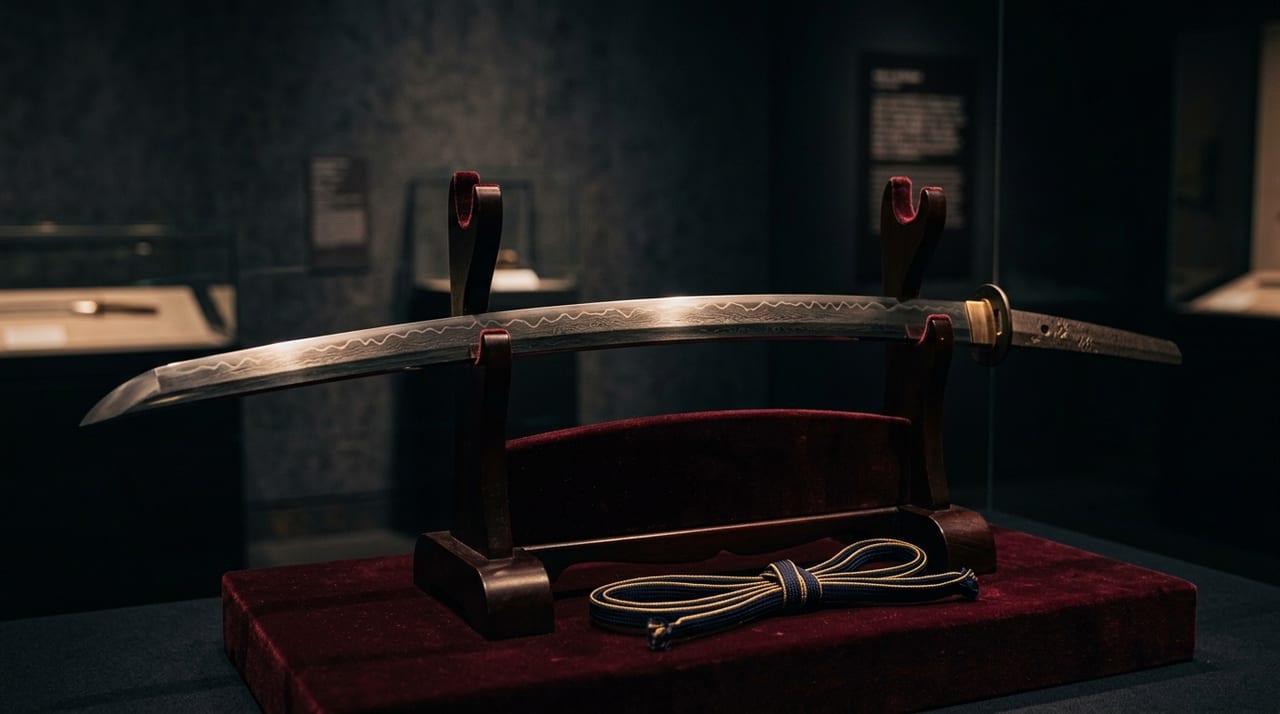 * Image is for illustrative purposes only.
Table of Contents
Dōji-giri Yasutsuna
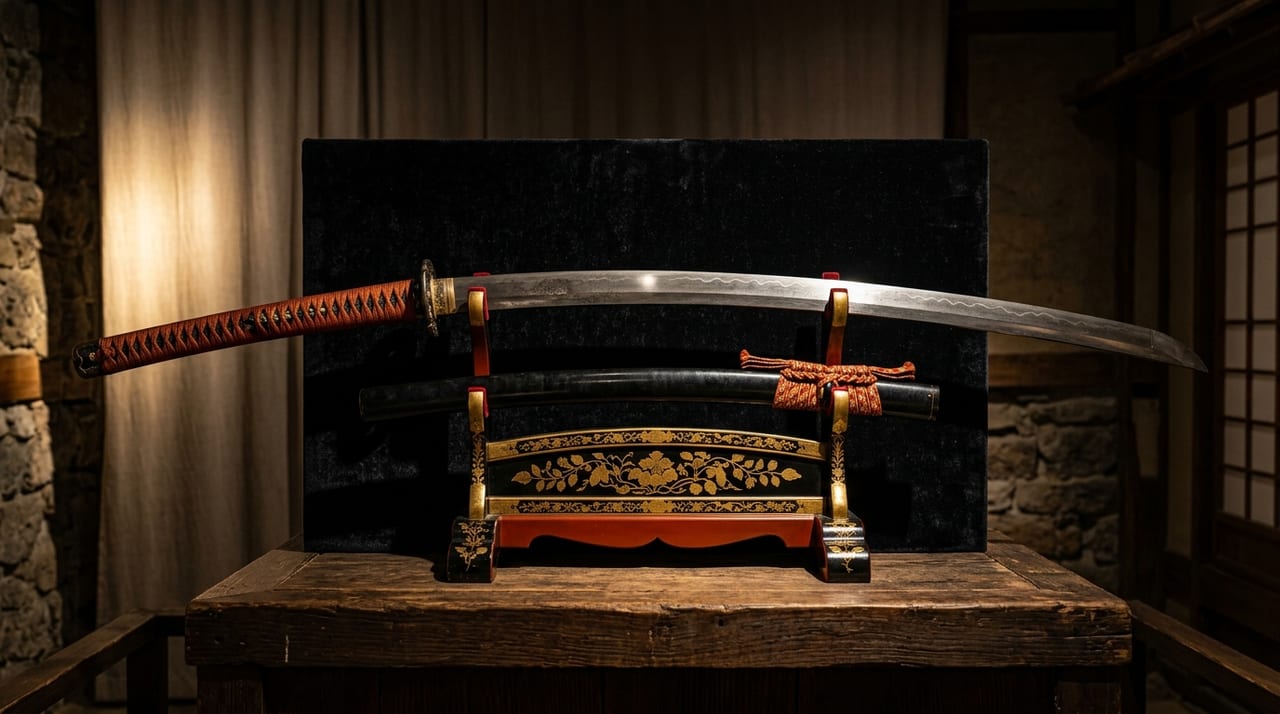
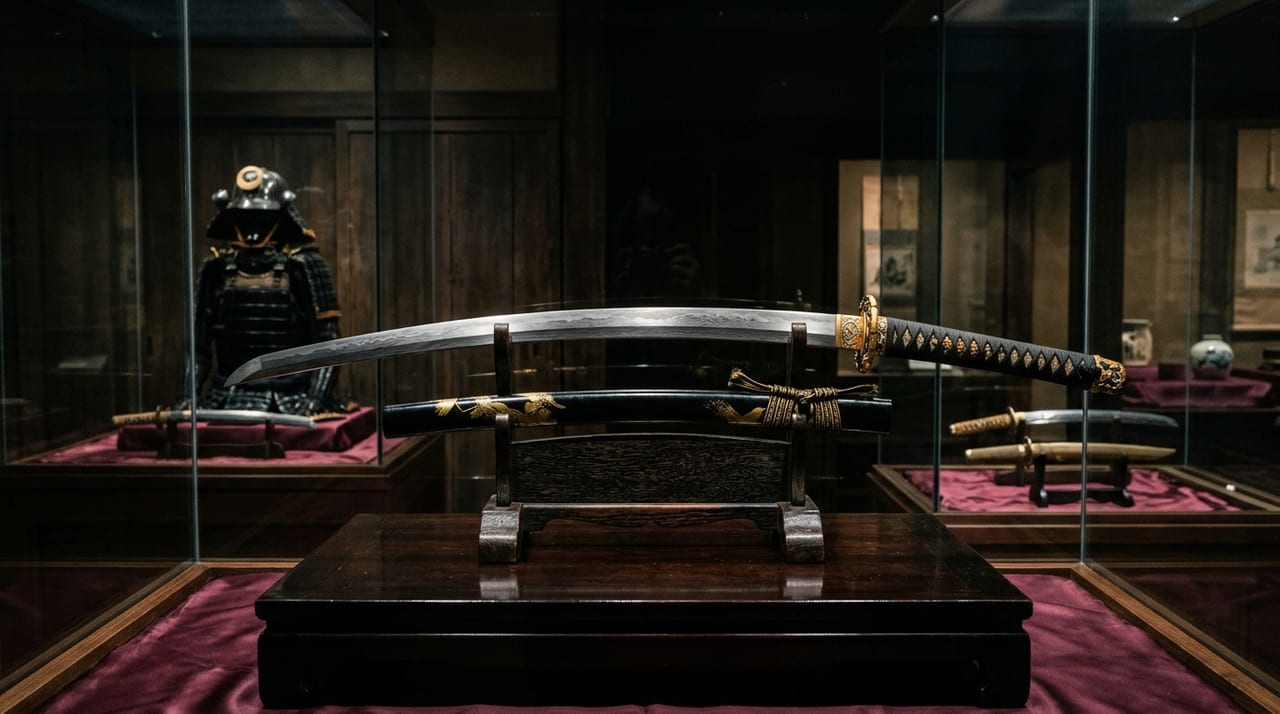
Dōji-giri Yasutsuna is a tachi counted among the Tenka Goken (天下五剣), a group of supreme masterworks in the history of Japanese swordcraft. It is attributed to the swordsmith Yasutsuna (安綱) of Hōki Province (now Tottori Prefecture) and is believed to have been forged in the late Heian period (late 10th to early 11th century). The blade measures approximately 80.0 centimeters and exemplifies the form of a classical tachi.
Its name derives from the legend of Minamoto no Yorimitsu (源頼光, 948–1021) slaying the demon Shuten Dōji (酒呑童子). According to legend, Yorimitsu and his companions used this blade to slay Shuten Dōji, the demon chieftain who dwelt in Mount Ōe, thus earning it the name Dōji-giri, meaning "demon-slayer." This legend was later refined into noh plays, picture scrolls, and kabuki performances, making it a rare example where mastercraft and legend are inseparably entwined.
Yasutsuna the Swordsmith
Yasutsuna was a celebrated swordsmith from Hōki Province (now Tottori Prefecture) and is renowned as a master representative of Ko-Hōki (古伯耆), the Old Hōki school. Few reliable documentary records of Heian-period swordsmiths survive, and Yasutsuna's birth and death dates remain unknown; however, based on the probable date and style of Dōji-giri Yasutsuna, he is estimated to have been active in the late 10th to early 11th century.
Ko-Hōki is characterized by robust jigane (地鉄) with deep nie (沸) and hamon (刃文) predominantly featuring suguha (直刃) or ko-midare (小乱れ). Ironworking techniques brought from the continent took root in the San'in region, and the abundant production of high-quality satetsu (砂鉄) fostered a distinctive forging culture. Yasutsuna's blades possess an archaic elegance distinct from the later Gokaiden (五箇伝) schools—Bizen, Sōshū, Yamato, Mino, and Yamashiro—and exemplify the technical mastery of the earliest period of Japanese sword-making.
Form and Hamon
The current condition of Dōji-giri Yasutsuna is as follows (based on examination records from the Tokyo National Museum):
- Blade Length: 80.0 cm
- Curvature (sori): 2.7 cm (koshi-zori)
- Width at Hilt (moto-haba): 2.9 cm
- Tsukurikomi (造り込み): shinogi-zukuri, iori-mune
- Hamon: ko-midare with ko-chōji (小丁子) mixed in
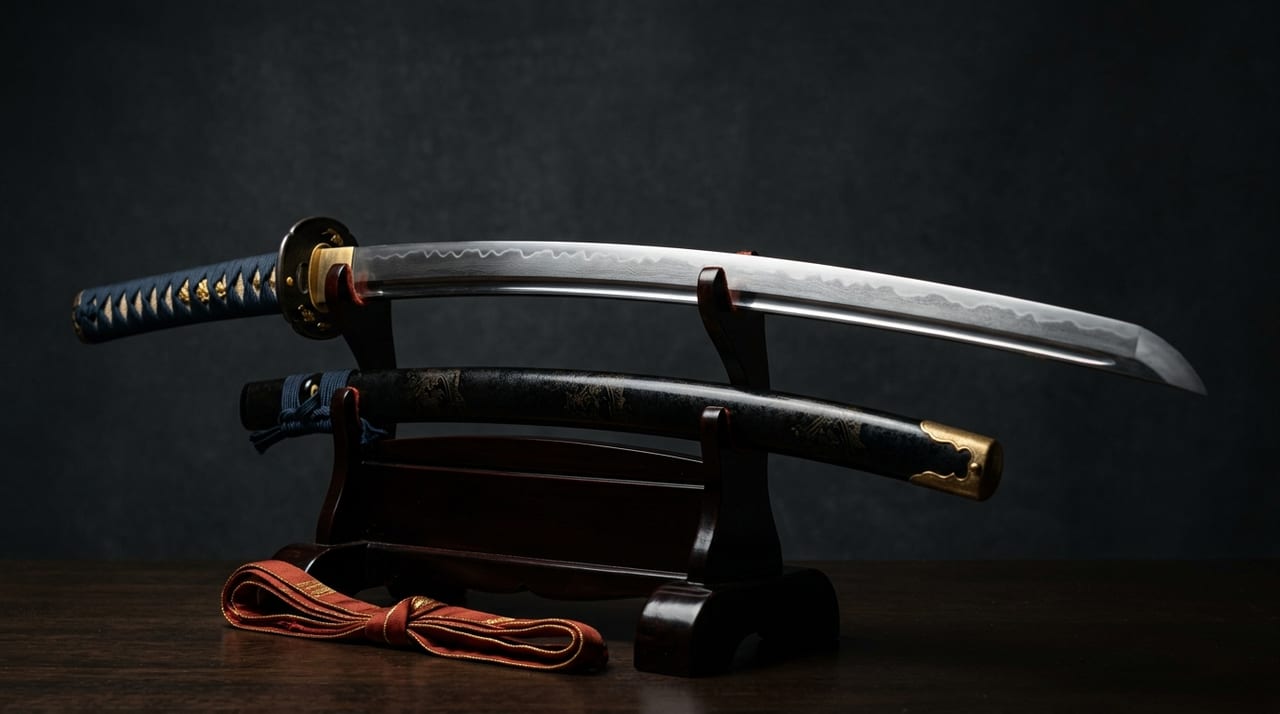
The jigane displays itame (板目) with mokume (杢目) interspersed, and exhibits fine nie throughout. The hamon is primarily ko-midare in style with an archaic elegance, distinguished from the more flamboyant chōji-midare of later schools by its restrained beauty. The kissaki is ko-kissaki, preserving the typical proportions of a Heian-period tachi.
The boushi is ko-maru with a short return. The nakago remains in nearly original condition with no polishing or shortening (suriage). This indicates exceptionally fine preservation for a Heian-period tachi.
Provenance: From Heian to Tokugawa
The provenance of Dōji-giri Yasutsuna can be partially traced through documents, tradition, and rubbings (oshigata), though gaps exist between the Heian and Muromachi periods.
Heian Period: Tradition holds that Minamoto no Yorimitsu acquired or commissioned the blade, though no definitive evidence survives. It is believed to have passed from Yorimitsu through Watanabe no Tsuna and the other members of Yorimitsu's Four Heavenly Kings, then descended through the lines of the Sessho-Kampaku regents and the Minamoto clan.
Muromachi Period: It entered the collection of the Ashikaga shoguns and became subject to appraisal and documentation by the dōbōshū (同朋衆), the cultural arbiters of Higashiyama culture. Records indicate that authentication documents were issued for it as one of the "Higashiyama Gyobutsu" during the late Muromachi period.
Oda and Toyotomi Periods: While tradition suggests Oda Nobunaga may have acquired it, definite records exist that Toyotomi Hideyoshi possessed the blade. Hideyoshi treasured it greatly, according it the status of a famous named piece (meibutsu) with the same reverence he applied to tea ceramics in the wabi-sabi aesthetic (suki).
Edo Period: It became part of the Tokugawa shogunate's collection and was registered in the shogunate's "Okoshi-mono-chō" (御腰物帳), a register of the shogun's most prized possessions. It was inherited by successive shoguns and became a symbol of Tokugawa authority.
Meiji Period Onward: Following the Meiji Restoration, it was transferred as a former shogunate property to the Tokyo National Museum (then the Imperial Museum) and designated as a National Treasure in 1951. The Tokyo National Museum continues to hold it in custody and regularly displays it in special exhibitions.
Authentication by the Honami Family
During the Edo period, the Honami family (本阿弥家), the foremost experts in sword authentication, repeatedly examined Dōji-giri Yasutsuna and left records granting it the accolade "matchless under heaven" (tenka musō). Honami Kōtoku (本阿弥光徳) is said to have written that "this tachi is the finest blade under heaven," and his assessment that it is both the oldest and greatest of the Tenka Goken became canonical.
The Honami family served as official authenticators to the Tokugawa shogunate, responsible for certifying the authenticity and value of all blades listed in the Okoshi-mono-chō. Dōji-giri Yasutsuna received pre-eminent status, and multiple authentication certificates (shōshinjō) were issued for it.
Place Among the Tenka Goken
The Tenka Goken refers to five supreme swords: Dōji-giri Yasutsuna, Mikazuki Munechika, Ōdenta Mitsuyo, Juzumaru Tsunetsugu, and Onimaru Kunitsuna (though alternative lists exist). Among these five, Dōji-giri Yasutsuna is considered the oldest in date of manufacture.
A brief overview of each blade's characteristics:
- Dōji-giri Yasutsuna: Late Heian, Hōki Yasutsuna, Tokyo National Museum
- Mikazuki Munechika: Late Heian, Sanjō Munechika, Tokyo National Museum
- Ōdenta Mitsuyo: Late Heian to early Kamakura, Miike Tenta Mitsuyo, Maeda Ikutoku Foundation (Tokyo)
- Juzumaru Tsunetsugu: Kamakura period, Aoe Tsunetsugu, Honkōji Temple (Hyogo)
- Onimaru Kunitsuna: Kamakura period, Awataguchi Kunitsuna, Imperial Household Agency (imperial collection)
Among the five, Dōji-giri Yasutsuna stands unique as the only blade of Hōki origin, and its rarity is underscored by its provenance from a region distinct from the later major centers—Yamashiro, Sanyo, Kyushu, and Sōshū.
Significance in the History of Sword Culture
Dōji-giri Yasutsuna transcends mere craftsmanship; it is a cultural and political symbol. By association with the mythic narrative of Shuten Dōji's defeat, possession of this blade conferred upon its owner a symbolic power to vanquish demons. Medieval and early modern rulers competed to acquire it not merely for aesthetic appreciation but also for the talismanic and political authority it represented.
In the modern era, exhibitions at the Tokyo National Museum draw large audiences, and the blade has become known to younger generations through popular culture, notably through the game Touken Ranbu. Meanwhile, research employing modern techniques such as X-ray fluorescence analysis and CT scanning is progressively elucidating Yasutsuna's ironworking techniques from the perspective of contemporary science.
That steel forged by a Heian-period artisan persists in a museum over a millennium later, continuing to inspire appreciation and study, testifies to the profundity of Japanese sword culture and the mastery of preservation techniques.