The Etiquette of Seppuku and Kaishaku: A Cultural History of the Warrior's Death and the Philosophy of Life and Death Woven by the Sword
 * Image is for illustrative purposes only.
Table of Contents
What Is Seppuku? — Its Essence and Historical Background
Seppuku is a ritualized form of self-determined death in which a warrior takes his own life by cutting open his abdomen with a blade. It was not merely a means of ending one's life, but a cultural and ceremonial act carried out in a variety of contexts.
- Demonstration of a warrior's honor and innocence
- Loyalty to one's lord
- A declaration of refusal to be captured on the battlefield
In the historical record, seppuku first appears clearly at the end of the Heian period, though it was not systematized as a warrior custom until the Kamakura period and after. From the Sengoku period through the Edo period, the form of seppuku was further refined, elevated from mere self-killing to a "formal ceremony." In the Edo period in particular, it was institutionalized as a form of execution ordered by the shogunate — the death penalty for a warrior that did not entail the abolition of his clan — and came to carry legal and social significance as well.
The act of wounding the abdomen with a blade was grounded, in the warrior's conception, in the belief that "the soul (kokoro) resides within the belly," and cutting the belly was said to be a way of demonstrating to the world the purity of one's own soul. It is the product of a distinctly Japanese view of the body and of life and death that has no equivalent in Western cultural traditions.
Kaishaku — The Role of Minimizing Suffering and the Standards Required of the Sword
As a practical matter with seppuku, cutting the belly alone often did not bring instant death, and the person would die slowly in severe agony. It was to minimize this suffering while also preserving the honor of the person performing seppuku that the institution of kaishaku was established.
In kaishaku, an attendant standing behind strikes off the head of the person performing seppuku immediately after (or just before) the belly is cut. This role is called the kaishakunin. For the seppuku of distinguished warriors or daimyo-class figures, a skilled warrior was assigned this role, and it was required that the neck be fully severed with a single stroke.
The technical standard required of kaishaku was extremely high, and tradition holds that the ideal was a technique called tsuru no kubi, in which the cervical vertebrae were severed in a single stroke yet a thin strip of skin was left so that the head was not completely detached. This was said to be done, for aesthetic and decorum reasons, to prevent the head from rolling away completely. The sword used for kaishaku required a keen edge and a certain degree of blade strength, and the ritual of seppuku thus played a role in culturally sustaining the functional standards demanded of the Japanese sword.
The Harakiri Blade and the Role of the Tantō — The Choice of Blade in the Ceremony
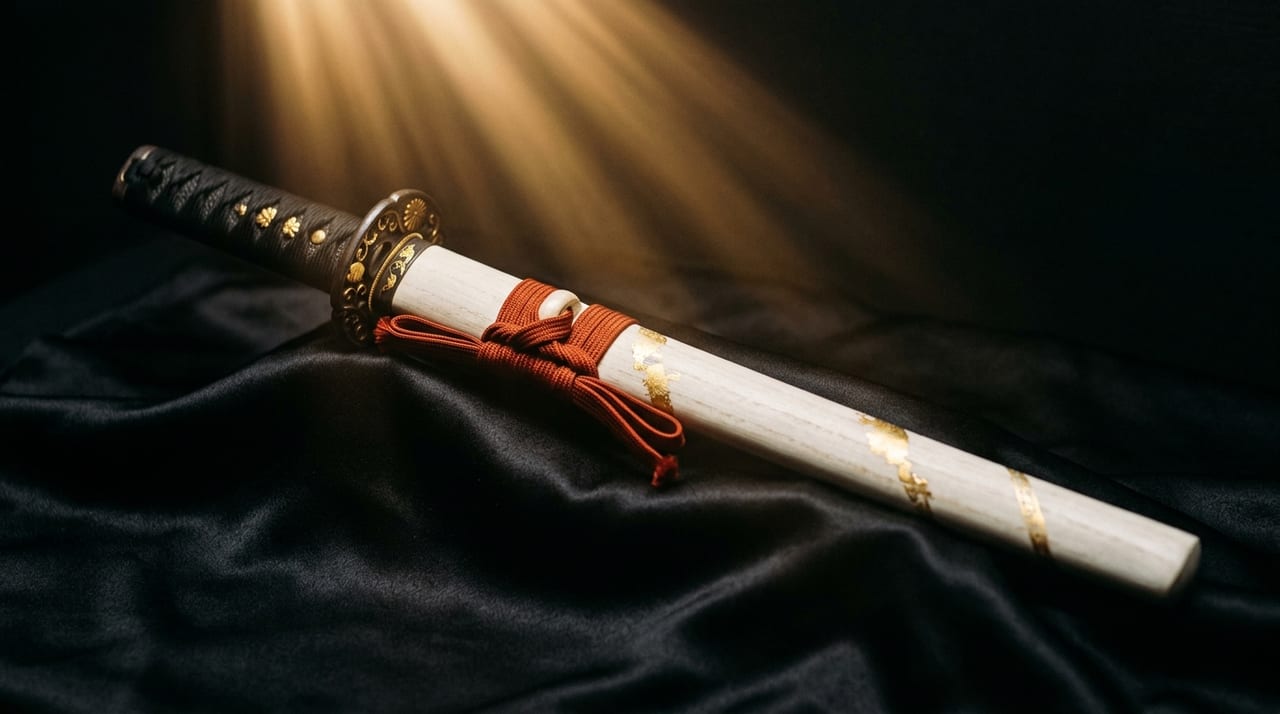
The blade most commonly associated with seppuku is the tantō (though a wakizashi might also be used). Many of the tantō actually used in seppuku are said to have been prepared in a shirasaya (plain storage scabbard) of plain unfinished wood (shirakizukuri), reflecting an emphasis on ceremonial propriety. White is a color symbolizing purity, death, and spiritual cleanliness in Japanese culture, and the placing of a white-wood tantō at the site of seppuku carries deep significance.
In seppuku of the Sengoku period, practical tantō were used, but in the official seppuku of the Edo period, formalization advanced and a symbolic form known as ōgibara — pressing a fan against the belly — also emerged. This was a form of expressing the intent to commit seppuku without a blade, and it is an example of how far the "theatricalization" of an honorable death had progressed.
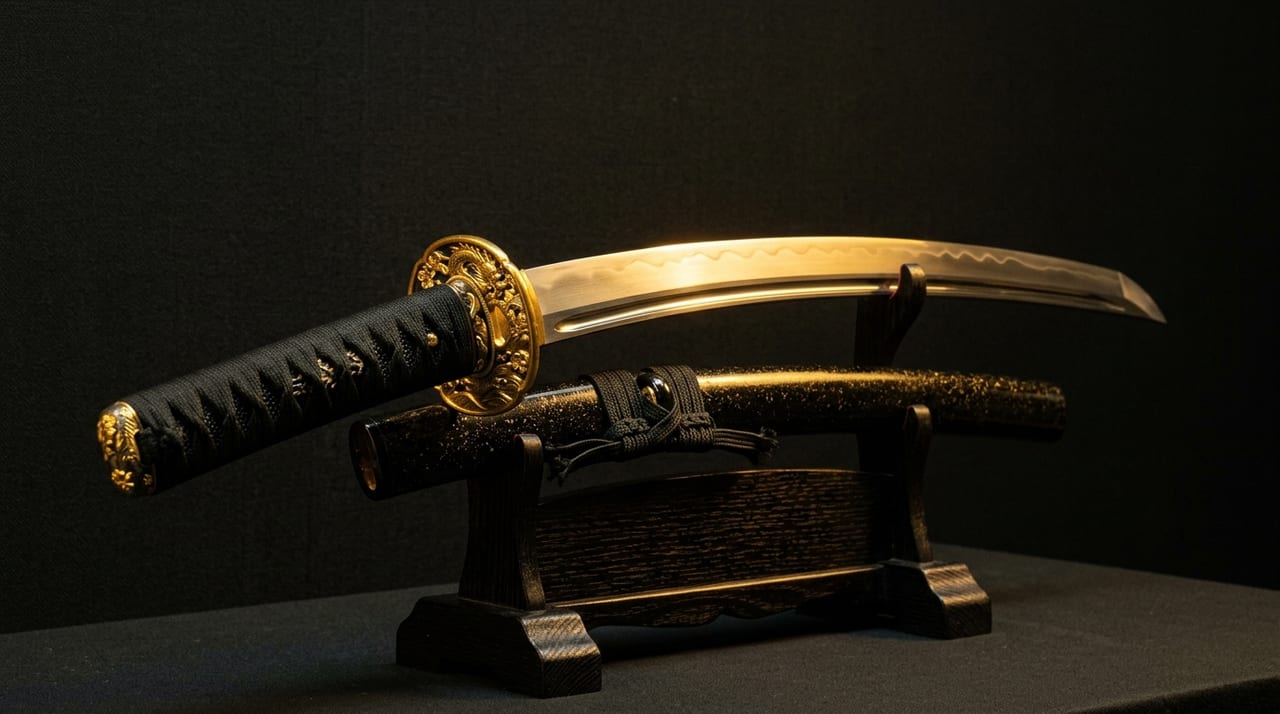
For the kaishaku sword, it was common to use an uchigatana or wakizashi rather than a tantō. A certain blade length was necessary to sever the neck with a single stroke, and works by master swordsmiths of high forging skill were sometimes selected as the kaishaku sword.
The Influence of Seppuku Culture on the Warrior's View of the Sword
The institution of seppuku brought dual significance to warrior society.
- It was respected as a means of self-determination to protect a warrior's honor, and functioned as a path by which one could free oneself from a lost battle or a situation of disgrace.
- The shogunate and domain lords also used it as an "honorable execution," and it functioned as a means of encouraging warriors to die voluntarily.
In relation to the view of the sword, the act of seppuku was linked to a consciousness that positioned the sword not as "an instrument for ending life" but as "a witness to the soul." The cultural attitude by which warriors treated the sword with care and believed that personality and soul resided within it was precisely an extension of this philosophy of life and death. In Edo period manuals of etiquette and writings on bushidō, the metaphor that "the sword is the soul of the warrior" recurs again and again.
Seppuku Culture Viewed from the Present — A Perspective for Historical Understanding
There is no need to glorify seppuku today, but the historical role this custom played in shaping the cultural significance of the Japanese sword cannot be overlooked. This practice, which combined the warrior society's distinctive code of honor with its conception of the body, formed one of the cultural foundations that elevated the Japanese sword from a mere blade to "a precious symbol of the spirit."
When appreciating swords as works of art and cultural artifacts, knowing the philosophy of life and death and the spiritual culture of the warrior that lie behind them is a valuable aid to understanding more deeply the essential appeal of the Japanese sword. The fact that the words seppuku and kaishaku are internationally recognized to the point of being known in foreign languages as "seppuku" and "harakiri" is itself testament to the worldwide attention this custom has drawn as something that symbolizes the uniqueness of Japanese culture.